

Most social selling advice is written by companies selling you the tool. So the playbook always looks the same: post more, connect more, send more InMails. The data tells a different story. Social outreach gets a 42% response rate, nearly double email's 26% and nearly double cold calling's 23%, but only when it's part of a structured program, not a spray-and-pray DM campaign (Prospeo, 2025).
This guide covers B2B social selling: what the research shows, where most programs break down, and how to build something that compounds into pipeline. Not B2C social commerce. Not vanity metrics. Revenue.
TL;DR
- 75% of B2B buyers use social media to inform purchasing decisions (OptinMonster, 2026).
- Reps using social selling are 51% more likely to hit quota and generate 45% more opportunities (Prospeo, 2025).
- Most programs fail because they're not programs. They're ad hoc DMs with no content engine behind them.
- SSI score and follower count don't predict revenue; ICP engagement and sourced pipeline do.
- AI changes the research and drafting workflow, but it can't build trust.
What Is Social Selling?
Social selling is the practice of using social platforms to research, connect with, and build relationships with potential buyers throughout the sales cycle. It's distinct from social media marketing, which is broadcast content aimed at audiences. It's also different from cold outbound on social, which is just spam with a LinkedIn wrapper.
The distinction matters because B2B buyers increasingly make purchasing decisions before they ever talk to a rep. 75% of B2B buyers use social media to inform purchasing decisions, and 71% are more likely to buy based on social referrals (OptinMonster, 2026). That shift turns social presence from a "nice to have" brand activity into a genuine commercial signal. Check out this B2B buyer behavior data if you want the full picture.
What social selling isn't: running LinkedIn ads, posting company page content, or blasting connection requests to everyone who fits a job title filter. Those things have their place in a broader marketing program, but they're a different job entirely.
The Data Behind Social Selling in 2026
The numbers are harder to ignore than most B2B program pitches. Sales reps using structured social selling are 51% more likely to hit quota and 40% more likely to hit overall revenue goals (Prospeo, 2025). These aren't marginal gains. They're the kind of numbers that change how a CRO thinks about headcount.
Program-level results are just as striking. Social sellers create 45% more opportunities, close 48% larger deals, and see 2x pipeline with 16% better win rates compared to non-social sellers, per quota attainment benchmarks from Prospeo's 2025 synthesis. Social selling also influences over 50% of revenue in software, healthcare, and network security, which maps directly to most B2B SaaS ICPs (OptinMonster, 2026).
The ROI is measurable and the benchmarks are specific enough to build a real business case, this isn't a soft argument anymore.
Why Most Social Selling Programs Fail
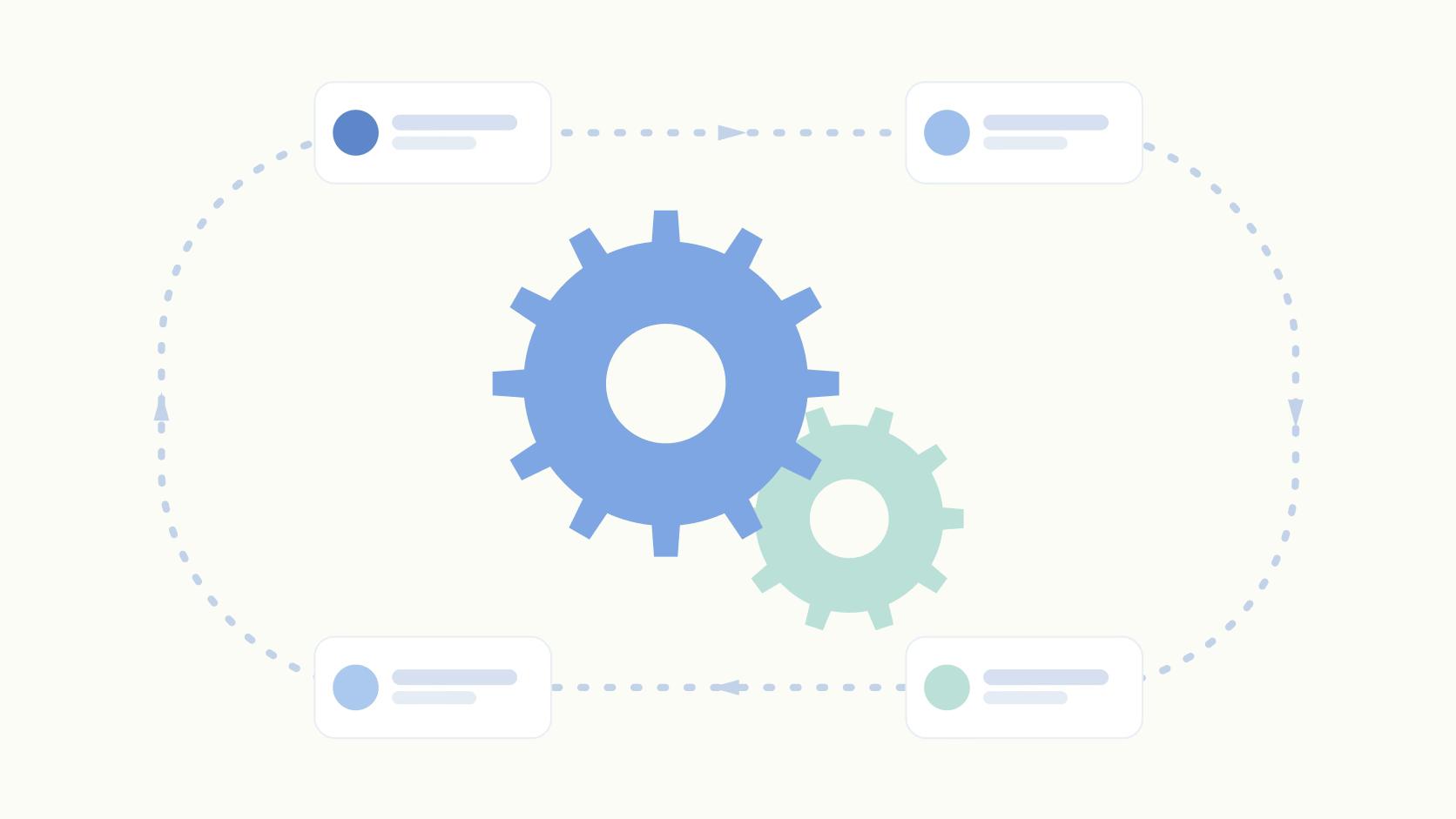
The failure mode isn't strategy, it's structure. Most "programs" are really just individual reps posting occasionally and DMing prospects who engaged with a post. No shared content engine, no measurement, no feedback loop. Without structure, it's just a habit that dies after the first slow month.
A few specific patterns kill programs before they compound. The spray-and-pray connection request (connect, then immediately pitch) trains buyers to ignore you. Treating LinkedIn's SSI score as the goal is a close second. SSI measures LinkedIn activity, not pipeline.
And when sales and marketing operate in separate lanes on organic vs paid LinkedIn, content quality drops and reps end up sharing whatever's convenient rather than what converts.
Posts also die without engagement infrastructure. A well-crafted post that gets zero traction in the first ten minutes gets buried by the algorithm regardless of quality. That's a workflow problem, not a content problem.
The 4-Pillar Social Selling Framework
Good social selling programs share the same structural foundation. The specifics vary by industry and ICP, but the pillars don't.
1. Profile as landing page: Your profile is where buyers decide whether you're worth their time. Optimize the headline and about section for the buyer you're trying to reach, not for recruiters. The featured section should answer "why should I trust this person?" See the personal branding playbook for a full walkthrough.
2. Content that builds trust: The mix that works: point-of-view posts, behind-the-scenes on real work, and customer proof. Buyers follow people who teach them something and tune out people who sell at them.
3. Strategic engagement: Comment on ICP posts before you ever send a DM. Show up in their feed as a thoughtful voice before you appear in their inbox as a stranger. Teams scaling this systematically are investing in employee advocacy tools to coordinate it across reps.
4. Conversational outreach: The move to DM only happens after you've built context. Reference something specific, offer something useful, ask a real question. More than 76% of buyers are willing to talk to salespeople on social when approached right (OptinMonster, 2026). The threshold isn't skepticism, it's relevance.
"When someone engages with a post tied to a pain point you solve, the follow-up doesn't need to be cold. It can be personalized." (Jeffrey Zhao, Co-Founder at Ordinal)
Watch the full video: The LinkedIn Algorithm Has Changed | Here's What Works 2026
Platform-by-Platform Breakdown
LinkedIn is the default starting point for most B2B, and rightfully so. Personal profiles dramatically outperform company pages. Organic reach on company pages has dropped sharply, as covered in the declining company page reach data. If your ICP is a VP of Marketing or a Director of RevOps, they're on LinkedIn and paying attention to people, not brands.
X is worth the investment for technical audiences, developer tools, and founder-led GTM motions. The conversation format suits point-of-view content and real-time industry commentary better than LinkedIn's feed.
Niche channels (Slack communities, Discord servers, Substack comment sections) are underused and high-signal. Buyers hang out there without their professional armor on. Showing up with genuine insight in a 200-person community often outperforms posting to 10,000 LinkedIn followers.
How AI Changes Social Selling in 2026
AI has made the research and drafting layer significantly faster. You can now profile a target account, identify trigger events, and draft a personalized outreach message in a fraction of the time it used to take. MCP-connected workflows go further, letting AI agents draft content in your historical voice using your actual post data, not a generic prompt.
The failure mode is over-automation. Fully AI-generated outreach reads as spam almost immediately. Buyers have pattern-matched on it. The teams getting results use AI for leverage on the mechanical parts (research, first drafts, scheduling) while keeping a human in the loop on anything conversational. AI can simulate voice. It can't simulate judgment, and it has no memory of the relationship you've been building for three months.
How to Measure Social Selling ROI
Measuring social selling ROI starts with tracking ICP engagement, warm reply rate, sourced pipeline, and deal size lift. Not SSI score or follower count. Those vanity metrics are easy to report and nearly useless for predicting revenue.
ICP engagement is the leading indicator that matters most: who is engaging, not how many. A comment from your target buyer's CFO is worth more than 200 likes from people outside your ICP. Track it by name and company, not just aggregate count. Clay's revenue playbook is the clearest real-world proof point for this. They tied social engagement directly to closed revenue with a single-person social team.
For attribution: UTM parameters on links, self-reported attribution on demo forms, and CRM enrichment are the three levers worth building. Review key LinkedIn metrics to see how those connect to a reporting framework your CRO will actually read.
Where to Start
Social selling works when it's treated as a program with real infrastructure behind it. The teams seeing pipeline impact aren't posting more. They're building a system: optimized profiles, consistent content, coordinated engagement, and measurement tied to revenue, not activity.
The practical first move: pick one channel, set a posting cadence you can hold for 90 days, and track one metric that connects to pipeline. Add complexity from there. If you're ready to build the tooling layer, LinkedIn social selling is where most B2B teams start with Ordinal. Scheduling, engagement automation, and analytics in one place.
Frequently Asked Questions
What Is Social Selling?
Social selling is the practice of using social platforms to research, connect with, and build relationships with potential buyers throughout the sales cycle. It's distinct from broadcast social media marketing and mass cold outreach. The goal is to build trust before any pitch happens, so when a conversation starts, it doesn't feel like one.
Does Social Selling Work for B2B?
Yes. Sales reps who use social selling are 51% more likely to hit quota, according to 2025 benchmarks from Prospeo, and 75% of B2B buyers use social media to inform purchasing decisions (OptinMonster, 2026). It only works as a structured program, not as ad-hoc DMs.
What's the Difference Between Social Selling and Social Media Marketing?
Social media marketing is one-to-many broadcast content. Social selling is one-to-one or one-to-few relationship-building tied to specific accounts and deals. Most B2B teams need both, but they require different metrics, different owners, and different success criteria.
Is LinkedIn the Best Platform for Social Selling?
For most B2B teams, yes. LinkedIn's algorithm now favors personal profiles heavily over company pages, and 76% of buyers say they're willing to talk to salespeople through social channels (OptinMonster, 2026). X and niche Slack or Discord communities can outperform LinkedIn in specific verticals like developer tools or fintech.
How Do You Measure Social Selling ROI?
Track ICP engagement (who's engaging, not just how many), warm reply rate on outreach, pipeline sourced from social, and deal size lift on social-influenced deals. SSI score and follower count don't predict revenue. The measurement framework that matters runs through your CRM, not your LinkedIn dashboard.
What Is a Social Selling Index (SSI) Score?
LinkedIn's Social Selling Index is a 0-100 score measuring how actively you use LinkedIn for sales-related behaviors. It's directional at best. Optimize for pipeline and let the score follow as a byproduct.
How Long Does Social Selling Take to Show Results?
Most programs see meaningful pipeline contribution within 3 to 6 months of consistent execution. Trust and presence compound, so the early months feel slow before the curve steepens. Teams expecting results inside 60 days typically quit before the program pays off.
Can AI Handle Social Selling?
AI handles the mechanical work well: research, drafting, scheduling, and personalizing outreach at scale. It can't build trust or read a conversation. The teams winning with AI use it for leverage on the repeatable parts while keeping human judgment on anything conversational.
Related Posts
Looking to learn more? The below posts may be helpful for you to learn more about social media and content marketing.