

Your next opportunity is being decided by what shows up when someone searches your name. Before you walk into that interview, before you hop on that sales call, before you pitch that investor - or before a potential client decides whether to book your services - they've already formed an opinion based on your personal branding. The data is unambiguous: 44% of employers have hired someone because of their personal brand, while 54% have rejected candidates due to a weak or problematic online presence. Your digital presence now serves as the first filter in every professional interaction, opening doors for some while closing them for others before conversations even start.
TLDR:
- Personal branding drives measurable results - 44% of employers hire based on personal brand strength
- LinkedIn generates 80% of B2B social leads and personal profiles get 5x more engagement than company pages
- Sales professionals with active personal brands close deals 31% faster than those without visibility
- Ordinal helps teams manage personal branding at scale with collaborative workflows and auto-engagement features
What Is Personal Branding and Why It Matters in 2026
Personal branding is the practice of defining and communicating what makes you distinct as a professional. It's the reputation you build through your expertise, values, and public presence across social channels and professional networks.
In January 2026, personal branding has shifted from optional self-promotion to a strategic career asset. Your digital footprint now precedes you in every professional interaction, from job applications to sales conversations, from consulting pitches to coaching discovery calls.

The numbers tell the story. 44% of employers have hired someone because of their personal brand, while 54% have rejected candidates due to a weak or problematic online presence. Your personal brand functions as a filtering mechanism that either opens doors or closes them before you ever get a chance to interview or pitch.
For B2B professionals, founders, and executives, personal branding directly impacts trust and deal velocity. Buyers research people, not just companies, before making purchasing decisions. The same principle applies to consumer-facing professionals - potential clients research coaches, consultants, real estate agents, and service providers before booking initial consultations.
The Business Case for Personal Branding
Strong personal branding delivers measurable business results beyond reputation. Half of American professionals believe a strong personal brand will matter more than a strong resume, with that number jumping to 61% among business executives.
The revenue impact shows up clearly in B2B sales cycles. Sales professionals with active personal brands on LinkedIn see 45% more opportunities and close deals 31% faster than those without a visible presence. Buyers want to purchase from people they know and trust, and a developed personal brand accelerates that trust-building process.
For consumer-facing professionals like coaches, consultants, and service providers, personal branding directly influences booking rates and premium pricing power. When potential clients can see your expertise demonstrated through consistent content, they arrive at discovery calls already convinced of your value rather than requiring extensive persuasion.
For executives and founders, personal branding translates into fundraising advantages and partnership opportunities. Investors routinely evaluate founder LinkedIn profiles and content history before taking meetings. A thoughtful posting cadence that demonstrates expertise can be the difference between a cold email that gets ignored and one that secures a call.
Career mobility also improves with personal brand strength. Professionals with established thought leadership receive 3.5 times more inbound recruiter messages than those without visible expertise. The opportunities find you rather than requiring active job searching.
Personal branding isn't vanity. It's a business development tool that generates tangible returns across hiring, sales, partnerships, and career growth.
Building Your Personal Brand on LinkedIn
LinkedIn drives 80% of B2B social media leads, making it the clear priority for building your personal brand in professional contexts. The ROI gap between LinkedIn and other channels isn't marginal - it's decisive. While consumer-facing professionals may also leverage Instagram or TikTok for lifestyle-oriented content, LinkedIn remains essential for establishing professional credibility. To maximize your presence on the platform, focus on these three core strategies:
• Optimize Your Profile Fundamentals. Your headline should communicate your specific value proposition, not just your job title. Replace headlines like 'Marketing Director at Company X' with something like 'Helping B2B SaaS companies turn social content into pipeline'. Your About section also needs to read like a conversation, not a resume. Write in first person, explain who you help and how, and include a clear way for people to reach you.
• Prioritize Consistency Over Perfection. Post 2-3 times weekly with a mix of insights, observations, and experiences from your work. LinkedIn's algorithm rewards genuine engagement over viral gimmicks. Regular, authentic content builds credibility and keeps you visible to your network.
• Engage Strategically with Your Audience. Comment thoughtfully on posts from your ideal audience. Strategic replies to relevant content put your name in front of the right people and build relationships before you need them. Quality engagement often matters more than the content you publish yourself.
Personal Branding vs. Corporate Branding
Personal branding and corporate branding serve different functions but work together. Corporate branding establishes what your organization stands for and delivers. Personal branding showcases the expertise and perspectives of the individuals behind that organization.
The performance gap between these two approaches is substantial on social channels. Personal LinkedIn profiles generate 2.75x more impressions and 5x more engagement compared to company pages. Algorithms favor person-to-person connections over branded broadcasting.
This doesn't mean company pages are worthless. They function as credibility anchors and information hubs. But the growth happens through people.
The strategic approach pairs both. Your personal brand attracts attention, builds trust, and starts conversations. Your corporate brand provides the infrastructure, case studies, and formal proof points that close deals.
For B2B teams, this means executives and employees posting authentic insights from their personal profiles while the company page houses announcements, culture content, and evergreen resources. For solo practitioners and service providers, your personal brand is your business - every post you share directly represents your services and expertise.
You can't hide behind a logo anymore. Buyers and clients want to hear from real people with real expertise before they'll consider your company or book your services.
Executive Thought Leadership as Personal Branding
Executive visibility through thought leadership creates compounding advantages that extend beyond individual reputation. 73% of decision-makers say thought leadership matters more than marketing materials when evaluating potential partners. Your executive team's public expertise becomes a competitive differentiator.
Thought leadership from executives signals organizational direction and capability. When your CEO or VP posts insights on industry shifts, buyers interpret that as evidence that your company understands where the market is heading. This perception shortens sales cycles because prospects enter conversations already believing you're credible.
The talent acquisition impact is equally significant. Top candidates research leadership teams before applying or accepting offers. An executive who shares clear thinking about industry challenges attracts people who want to work with smart leaders solving interesting problems.
Start by developing a distinct point of view on one specific area within your industry. Generic takes on broad topics get ignored. Sharp perspectives on narrow problems get remembered and shared.
Dedicate time to content creation like any other business priority. Most executives fail at thought leadership because they treat it as an afterthought. Block 90 minutes weekly to write, comment, and engage with your network.
Employee Advocacy and Personal Branding
Employee advocacy turns individual networks into organizational reach. Your employees likely have 10x more connections than your company page followers, and posts from personal accounts receive far higher engagement than corporate broadcasts.
When employees share company content or industry insights from their profiles, they act as trusted sources rather than marketing channels. Their authentic voices carry credibility that branded messages simply can't match, especially in B2B contexts where relationship trust drives purchasing decisions. The most effective employee advocacy programs provide team members with content frameworks and scheduling tools that make participation effortless rather than mandatory.
Creating a Content Strategy for Your Personal Brand
A functional content strategy removes guesswork and prevents the feast-or-famine posting pattern that kills most personal branding efforts. The goal is to create a repeatable system that produces consistent output without requiring you to invent new ideas from scratch each week. Here's how to build a sustainable content system:
• Establish Your Content Pillars. Identify three to five topics that align with your expertise and professional goals. A sales leader might focus on pipeline generation, team management, and market trends. A fitness coach might focus on sustainable nutrition, strength training, and mindset. These pillars provide boundaries that make content decisions faster and ensure everything you share reinforces your positioning.
• Batch Create and Schedule Content. Build a simple content calendar that maps ideas to specific dates. Write four posts in one sitting, schedule them across two weeks, and free up mental space for actual work. Batch creation during dedicated blocks is more efficient than trying to write posts daily.
• Repurpose Your Existing Work. Turn a client presentation into three LinkedIn posts. Extract insights from team meetings into commentary on industry shifts. Summarize the key points from your latest blog post. Your daily work already generates content material if you capture and reframe it—this multiplies your output without additional effort.
• Use Scheduling Tools to Automate Publication. Scheduling tools eliminate the daily publishing burden. Draft posts in batches, schedule them for optimal times, and let automation handle publication while you focus on engagement and relationship building. For teams managing multiple personal brands or executives who need collaborative workflows, purpose-built tools become essential.
Managing Your Personal Brand Across Multiple Channels with Ordinal
Managing personal branding across social channels becomes unsustainable without the right infrastructure. Most executives, consultants, and coaches abandon their personal brand strategy within three months because manual posting, formatting, and coordination drain too much time. We built Ordinal as the most comprehensive solution for professionals serious about building their personal brand across LinkedIn and all major social platforms.
Key Features
• Intuitive Editor with Formatting Control. Draft thoughtful posts with proper formatting in minutes, not hours. The intuitive editor makes it easy to create professional content that looks polished across LinkedIn, X, Facebook, Instagram, and other platforms - without fighting clunky text boxes or losing formatting between drafts.
• Approval Workflows for Compliance. Route drafts to the right stakeholders with Slack notifications for executives who need legal or communications review. Posts don't go live until they're approved, protecting both personal and corporate reputation across every channel you publish to.
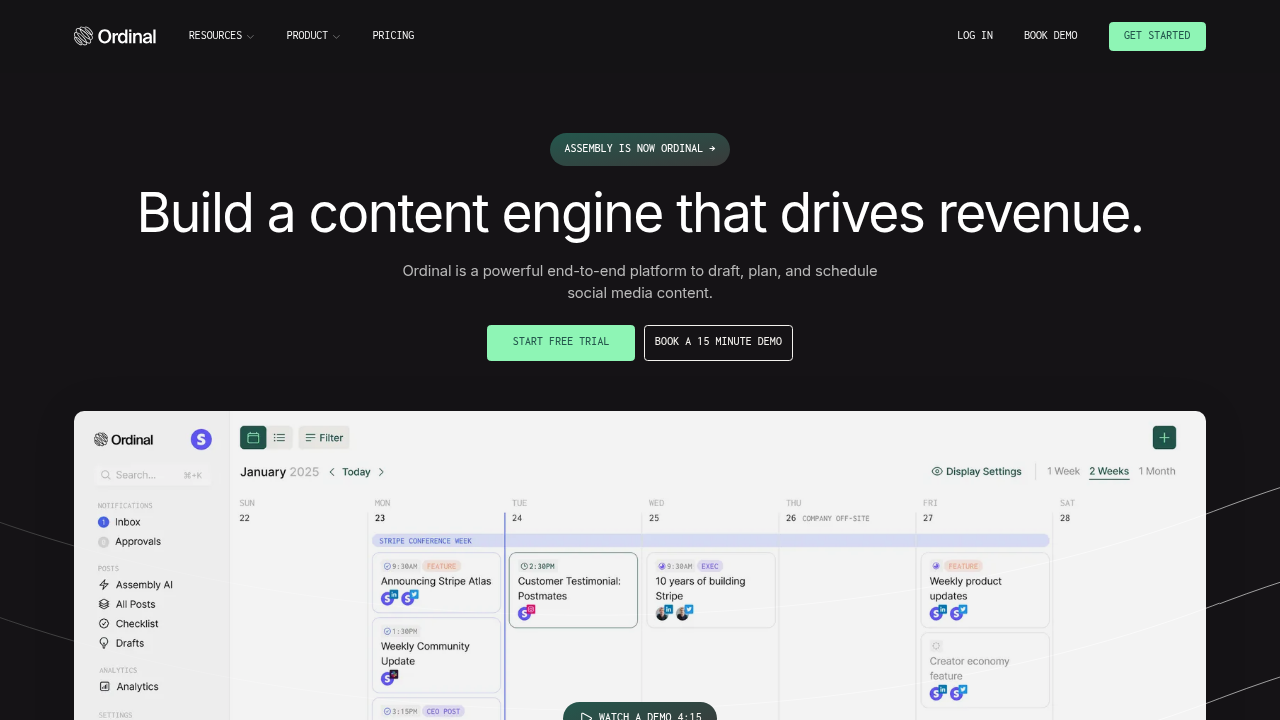
• Unified Content Calendar for Multi-Platform Consistency. Schedule your batched content across weeks and multiple platforms simultaneously, group posts into campaigns, and visualize your publishing cadence to avoid gaps that kill momentum. Maintain consistent personal branding across all your social channels from a single dashboard.
• Multi-Account Management at Scale. Switch between managing different social accounts for different team members, maintain distinct content strategies for different platforms, and handle dozens of personal brands across LinkedIn, X, and other networks from one centralized dashboard. Perfect for agencies and consultants managing executive profiles, coaches scaling their practice, or teams coordinating employee advocacy efforts.
LinkedIn-First Features
While Ordinal supports all major social platforms, our LinkedIn-specific features give you an unmatched advantage on the platform that drives 80% of B2B social leads and remains essential for professional credibility.
• Realistic LinkedIn Previews. See exactly how your post will appear on LinkedIn before publishing, including the critical 210-character "see more" cutoff that determines whether readers engage with your content. This precision preview ensures your hook lands perfectly every time.
• Personal Tagging for Network Expansion. Ordinal's intuitive tagging interface lets you quickly mention collaborators, clients, or industry peers without disrupting your writing flow. Search and tag relevant professionals directly in the editor, expanding your reach to their networks while building strategic relationships through authentic engagement.
• Auto-Engagement Features. Schedule a follow-up comment to post automatically after your main content goes live, perfect for adding context, links, or hashtags without cluttering your opening hook. This keeps your main post clean while still providing additional value - a proven tactic for maximizing LinkedIn engagement.
• Slack Boost Notifications. Alert your team the moment your post goes live so colleagues can engage immediately, triggering the algorithmic momentum that determines whether LinkedIn amplifies your content. Early engagement in the first hour is the single biggest factor in post performance.
• Advanced Analytics Across All Platforms. Comprehensive engagement insights and performance tracking across LinkedIn and all your social channels. Identify which topics, formats, and posting times drive the most engagement on each platform, then refine your personal brand strategy based on actual performance data rather than guesswork. Cross-platform analytics reveal where your message resonates strongest.
Final Thoughts on Personal Branding for Professionals
Personal branding isn't a quick win - it's a long-term investment that pays dividends indefinitely. The professionals who succeed don't have more time or better ideas. They simply commit to consistency and let the compound effect do the work.
Start smaller than feels comfortable. Two posts per week beats zero posts every time. Choose one platform where your audience already spends time. Batch your content creation so publishing doesn't become a daily burden. Tools like Ordinal handle the scheduling, formatting, and coordination so you can focus on the thinking and relationship-building that actually matter.
Your personal brand either works for you or against you - there's no neutral position. Six months of consistent effort creates visibility that lasts for years. The question isn't whether you have time to build your personal brand. It's whether you can afford not to.
FAQ
How long does it take to build a personal brand on LinkedIn?
Most professionals see initial traction within 2-3 months of consistent posting (2-3 times weekly), with measurable business impact like inbound opportunities appearing around the 6-month mark once you've established credibility and audience recognition.
What's the difference between personal branding and thought leadership?
Personal branding is the broader practice of defining your professional reputation and expertise, while thought leadership is a specific strategy within personal branding where you share original insights and perspectives to establish authority in your field.
Can I build a personal brand while working full-time?
Yes, batching content creation into 90-minute weekly blocks and using scheduling tools makes personal branding sustainable alongside full-time work, allowing you to draft multiple posts at once and automate publication without daily effort.
Why do personal LinkedIn profiles perform better than company pages?
Personal profiles generate 2.75x more impressions and 5x more engagement because social algorithms favor person-to-person connection over branded broadcasting, and audiences trust individual voices more than corporate messaging.
When should executives prioritize personal branding over other marketing activities?
Executives should prioritize personal branding when entering new markets, fundraising, recruiting senior talent, or shortening B2B sales cycles, since 73% of decision-makers value executive thought leadership more than traditional marketing materials when evaluating partners.
Related Posts
Looking to learn more? The below posts may be helpful for you to learn more about social media and content marketing.