


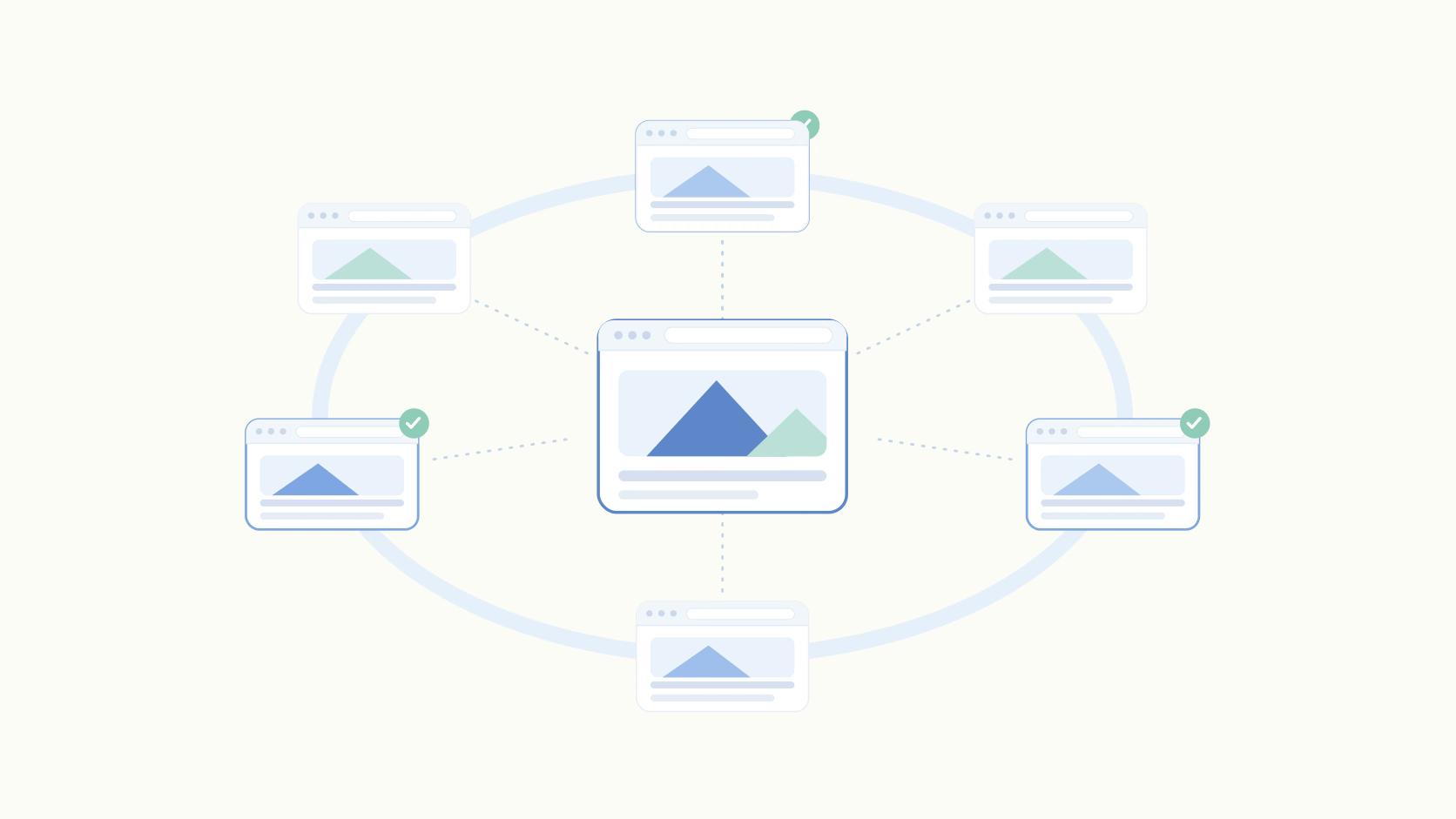
Finding competitor websites is a fifteen-minute job.
Competitive research feels useless because most teams stop there. The competitor surface worth monitoring is the set of 8 to 12 personal LinkedIn profiles at each rival, because that's where your buyers meet them and where nobody can edit the record afterward.
TLDR:
- G2, Crunchbase, and a few searches will hand you every competitor domain you need in under fifteen minutes
- Traffic estimates for smaller rivals are noisy enough to be unreliable, and the homepage is the one surface a rival fully controls
- Convert the domain list into a people list: founder, head of product, two AEs, marketing lead, an engineer who ships in public, and a customer who posts unprompted
- Measure cadence, format mix, and share of voice inside your named rival set, then bring that to the board instead of seven screenshots
- Ordinal tracks competitor profiles, breaks analytics down by format, and prices the gap in earned media value
For more help, these 5 competitor website tools can help you run even more in-depth research.
How to Find Competitor Websites in Fifteen Minutes
Five sources cover the entire job. Run them in order, and stop when you have 5 to 7 names (don't spend an afternoon on it).
- G2 and Capterra category pages, plus the "alternatives" tab on your own listing. Fastest complete map of who sells into your category.
- A search for "alternatives to [your product]" and "[your product] vs" to surface the comparison pages other people have already written about you.
- Crunchbase filtered by category and funding stage, which catches the funded rivals that haven't started ranking yet.
- BuiltWith, or a quick look at a lost deal's tech stack, when you want to know what the account you just lost bought.
- Review mining on G2 and Reddit, where buyers name the two or three products they shortlisted alongside you.
The same names surface if you run a Twitter advanced search on your category terms. Pick five:
- Two direct
- Two adjacent
- One upstart growing faster than its funding suggests.
Fifteen minutes, done. Now the useful part starts.
Every Competitor Homepage Says the Same Thing
A homepage is the one asset a competitor fully controls, revises on demand, and optimizes to say exactly what they want said. It's also the surface where an entire category converges fastest.
That's why the seven tabs you just opened all promise roughly the same outcome in roughly the same layout.
The numbers back up the convergence. 72% of B2B SaaS websites have a public pricing page, while only 9% offer a calendar scheduler and 33% include an interactive demo (Chili Piper, 2025). Pricing transparency stopped being a differentiator years ago. And the top 50 B2B SaaS websites convert at an average of 1.1% (Tapflare, 2025), so even the best sites in the category aren't doing much worth copying.
Traffic estimates are the other trap.
Real dominance looks like ClickUp at 1,931,886 and Smartsheet at 1,905,758 estimated organic visits per month (B2BSaaS.com, 2025). Your competitive set doesn't look like that.
Most Series A rivals you're benchmarking sit in a much smaller, mid-five-figure range of estimated visits, close enough to the margin of error of the tools producing the estimate that you can't reliably tell from it who's winning (and a board member who has seen a SimilarWeb chart before knows it).
The Two Things Worth Doing on a Competitor's Site
First, submit a demo request with a real-looking work email and time the response.
16% of companies never responded at all to a buyer inquiry in Chili Piper's 2025 test, which means one in six of your rivals is losing deals at the front door. How fast they reply, who replies, and what they send tells you more about their go-to-market than the entire site does.
Second, read their organic footprint as an acquisition signal.
Organic search produces a $147 cost per lead in SaaS versus $280 for paid search, per First Page Sage data cited in Ahrefs' B2B SEO statistics. A rival with 400 indexed blog posts and no ads is running a different economic model than one bidding on your brand name. That difference should change how you respond.
Turn the Domain List Into a People List
A people list is the set of 8 to 12 public LinkedIn profiles at each competitor whose posts, together, show you what that company is building, selling, and saying to buyers this quarter. It's the same research the domain list was supposed to produce. The source is individuals instead of a marketing department's approved copy.
When we vetted agencies for our vetted directory, the site was never the tiebreaker. The tiebreaker was whether the founder had published anything in the last 60 days, whether anyone on the team was arguing about the craft in public, and whether clients mentioned them without being asked.
That test is repeatable, and it works on competitors as well as on vendors.
Five competitors times ten profiles is fifty people. That's a manual afternoon of reading public posts. It stays inside LinkedIn's terms, because everything on that list is content the person chose to publish.
What to Measure Once You Have the Profiles
1. Cadence and Format Mix
Count posts per person over the last 90 days, then sort by format: text, image, document carousel, video, poll, repost. In our experience, short posts tend to pull noticeably higher engagement than long-form thought leadership, which usually falls flat by comparison. A rival publishing long-form essays every couple of weeks may be putting effort into a format that just doesn't return much.
The gaps matter more than the volume. If nobody in the competitive set has published a document carousel or a poll in three months, that's an opening you can take next week without asking anyone for budget. We go deeper on the mechanics in our guide to social competitor analysis.
2. Share of Voice Within the Competitive Set
Measure share of voice inside your five named rivals, not across the whole market. A category-level number is unmeasurable at Series A. A set-level number is calculable in an afternoon. Total the impressions or the post count across all six companies including yours, then take your slice.
We've seen why the people list is the right denominator. Company pages tend to post at a modestly higher engagement rate than personal profiles, but personal profiles generate the overwhelming majority of impressions, while company pages reach comparatively few. The pages perform better per post and reach almost nobody. A share-of-voice number built on company pages is measuring the wrong slice of the conversation.
Reading a Competitor's Content Strategy in an Afternoon
Patterns show up fast once the data is in a spreadsheet.
A founder posting four times a week with every AE silent is a top-down brand play. Their pipeline depends on one person's calendar, and it slows the moment that person raises a round or takes a vacation.
Five people posting inconsistently with no shared format is no strategy at all. It's individuals who each read the same LinkedIn advice in different months. That's the most common pattern we see, and it's the easiest to beat, because consistency alone puts you ahead of it.
Three or more people posting weekly, using the same formats, amplifying each other in comments within the first hour, is a funded program with someone running it. Treat that rival differently in planning. Their reach compounds while yours resets.
The slide that comes out of this is one page: a bar chart of posts per company over 90 days, a format-mix table showing which formats nobody has touched, and three named posts from the set with their engagement numbers. It answers the question the domain list couldn't. What are these companies telling our buyers while we're not in the room?
How Ordinal Fits
Building the people list is the easy half. Keeping it current is the part that quietly dies after the board meeting. Ordinal's LinkedIn product handles the ongoing side: analytics filtered by format, label, and campaign, earned media value on every post so the gap between you and a rival carries a dollar figure, and scheduling plus approvals so your own execs publish on a cadence instead of in bursts.
We don't scrape profiles or automate anything LinkedIn's terms prohibit, and we won't. The competitor reading stays manual and public. What we automate is your side of the ledger.
Where to Start This Week
Take the seven domains already on your slide and cut two.
Spend Thursday afternoon pulling ten LinkedIn profiles from each of the five that remain. Count their posts over the last 90 days and note every format nobody has used.
That count is the first defensible number anyone on your competitive slide has produced in a year. It also tells you exactly which format to publish on Monday.
Frequently Asked Questions
How Do I Find Competitor Websites for a B2B SaaS Company?
Check G2 and Capterra alternatives pages, search "alternatives to [your product]" in Google, and pull funded-but-unranked rivals from Crunchbase. That gets you a list in fifteen minutes, which is the easy step rather than the useful one.
Is SimilarWeb Accurate for Small B2B SaaS Competitors?
Not reliably. Traffic estimation gets shakier below a few hundred thousand monthly visits, and most Series A and B rivals sit in a range where the margin of error swallows the signal.
How Many Competitors Should I Track?
Five to seven is the workable range. Fewer than that and you miss real threats; more and nobody on the team reviews the data, which defeats the point of tracking it.
What's the Difference Between Direct, Indirect, and Adjacent Competitors in SaaS?
Direct competitors sell the same product to the same buyer. Indirect competitors solve the same problem with a different approach, like a spreadsheet template competing with a workflow tool, and adjacent competitors serve your buyer with a different product that could expand into your category next. Only direct competitors need deep, ongoing monitoring.
How Do I Find Competitors That Don't Rank for My Keywords Yet?
Look at Crunchbase for companies that raised in your category in the last 18 months. Newer, well-funded rivals often haven't built SEO traction, so keyword searches miss them entirely even though they're showing up in your sales calls.
How Often Should I Re-Check My Competitor List?
Quarterly for the list itself, weekly for the LinkedIn activity underneath it. Competitor websites barely change month to month, while posting cadence and format mix change constantly.
Can I Track Competitor LinkedIn Activity Without Violating Their Terms of Service?
Yes, as long as you stick to manually reviewing public posts. Scraping profiles or automating data pulls crosses LinkedIn's terms, and watching 8 to 12 named people by hand gives you the same intelligence without the exposure.
What Should Go on a Competitive Slide for a Board Deck?
Skip the domain list and traffic screenshots. Show posting cadence per person, format mix, and share of voice within your named competitive set, which is a slide someone can act on.
Related Posts
Looking to learn more? The below posts may be helpful for you to learn more about social media and content marketing.