


Most social media marketing strategies fall apart by February because they're built on vague goals and unrealistic posting schedules. You start strong, then life happens, and suddenly you're scrambling for content ideas at the last minute. Consumer and B2B teams that actually see results from social take a different approach. They set specific goals tied to pipeline, choose fewer channels to focus on, and build systems that make execution manageable. Here's the framework we recommend for building a strategy that survives past the first quarter.
TLDR:
- Set SMART goals tied to revenue metrics like cost per lead and pipeline growth to prove ROI
- Focus on 2-3 channels where your buyers actually make decisions - LinkedIn drives 80% of B2B leads, while Instagram and TikTok dominate consumer discovery
- Employee-shared content converts 7x better than company posts and reaches wider networks
- Track detailed engagement metrics and performance patterns to optimize your content strategy
- Use a tool like Ordinal to combine drafting, approvals, scheduling, and engagement tracking in one platform
Set Clear Goals and KPIs for Your Social Media Strategy
Starting with vague objectives like "grow our presence" sets your team up for confusion and misaligned efforts. Without clear goals, you can't measure what's working or justify your social budget to leadership.
The SMART framework gives you a structure for defining goals that actually move the business forward. Each goal should be Specific (target 50 qualified leads from LinkedIn), Measurable (track engagement rate and click-throughs), Achievable (based on current resources), Relevant (aligned to Q1 pipeline targets), and Time-bound (by end of quarter).
For consumer and B2B teams, the metrics that matter go beyond follower counts. Track engagement rates that indicate genuine interest, content performance by type and topic, and which posts drive the most meaningful interactions. B2B teams should monitor professional network engagement and thought leadership impact, while consumer brands should watch for engagement patterns that indicate strong audience connection. Connect these social metrics to your broader analytics tools to understand what content drives the strongest audience response.
When you establish clear metrics and demonstrate consistent improvement, proving the value of social media becomes straightforward. You can show leadership exactly how social content drives engagement, builds brand authority, and reaches your target audience - securing the budget your team needs to scale efforts.
Identify Your Target Audience and Choose the Right Channels
More than 5.2 billion people actively use social channels, but trying to reach all of them will drain your resources and dilute your message. The winning move is selecting fewer channels where your specific audience actually spends time making decisions.
Start by mapping your ideal customer profile. If you're selling to enterprise IT directors, they're on LinkedIn during work hours, not scrolling TikTok. If you're targeting Gen Z consumers, Instagram and TikTok make sense. Look at your existing customer data to identify patterns in demographics, job titles, industries, and content preferences.

For B2B teams, the data speaks clearly. LinkedIn drives 80% of all B2B leads. That concentration makes it obvious where to focus your efforts if you're selling to businesses. For consumer brands, Instagram and TikTok dominate discovery, with TikTok users 1.5x more likely to immediately purchase products they discover on the platform. Channel selection depends heavily on your product category and target demographics. Beauty and fashion brands see strong ROI on Instagram and TikTok, where visual discovery drives purchases. Food and beverage companies thrive on Instagram for recipe inspiration and product showcasing. Gen Z-focused products perform on TikTok where viral trends can move serious volume.
Choose two or three channels maximum to start. Going deep on fewer networks beats spreading thin across six. You'll produce better content, engage more authentically, and actually see results worth measuring.
Your audience research should answer where your audience consumes content, what formats they prefer, when they're most active, and which topics drive engagement in your space. Use this intelligence to double down on channels that match your strengths and customer behavior.
Create a Content Strategy That Drives Engagement
Your content strategy needs pillars that organize what you talk about and why. These core themes should align with business objectives while giving your audience real reasons to pay attention instead of scrolling past.
Most teams benefit from three to five content pillars. For a B2B software company, that might look like industry insights, customer success stories, product education, team culture, and CEO thought leadership. For a consumer brand like an activewear company, pillars could include workout tips and fitness education, customer transformation stories, sustainability and brand values, lifestyle and community spotlights, and behind-the-scenes product development. Each pillar serves a purpose in the buyer journey and keeps your feed from becoming a one-note sales pitch.
The 80/20 rule works well here. Dedicate 80% of content to educating, entertaining, or inspiring your audience. Save the remaining 20% for direct promotional asks. When you lead with value, the occasional product mention feels earned rather than pushy.
Posts shared by employees get more engagement compared to company profile posts. This reality should shape your content mix. Prioritize content that real people on your team can share, comment on, and reshare from their personal accounts.
Focus on formats that match each channel's strengths. LinkedIn rewards text-based thought leadership and carousel posts with actionable frameworks. Instagram favors visual storytelling. Twitter thrives on hot takes and timely commentary. Match your content type to where it will actually perform.
Human stories outperform corporate speak every time. Share customer challenges you've solved, lessons your team learned the hard way, or candid takes on industry changes. Authenticity builds the trust that eventually converts followers into customers.
Build and Manage a Content Calendar
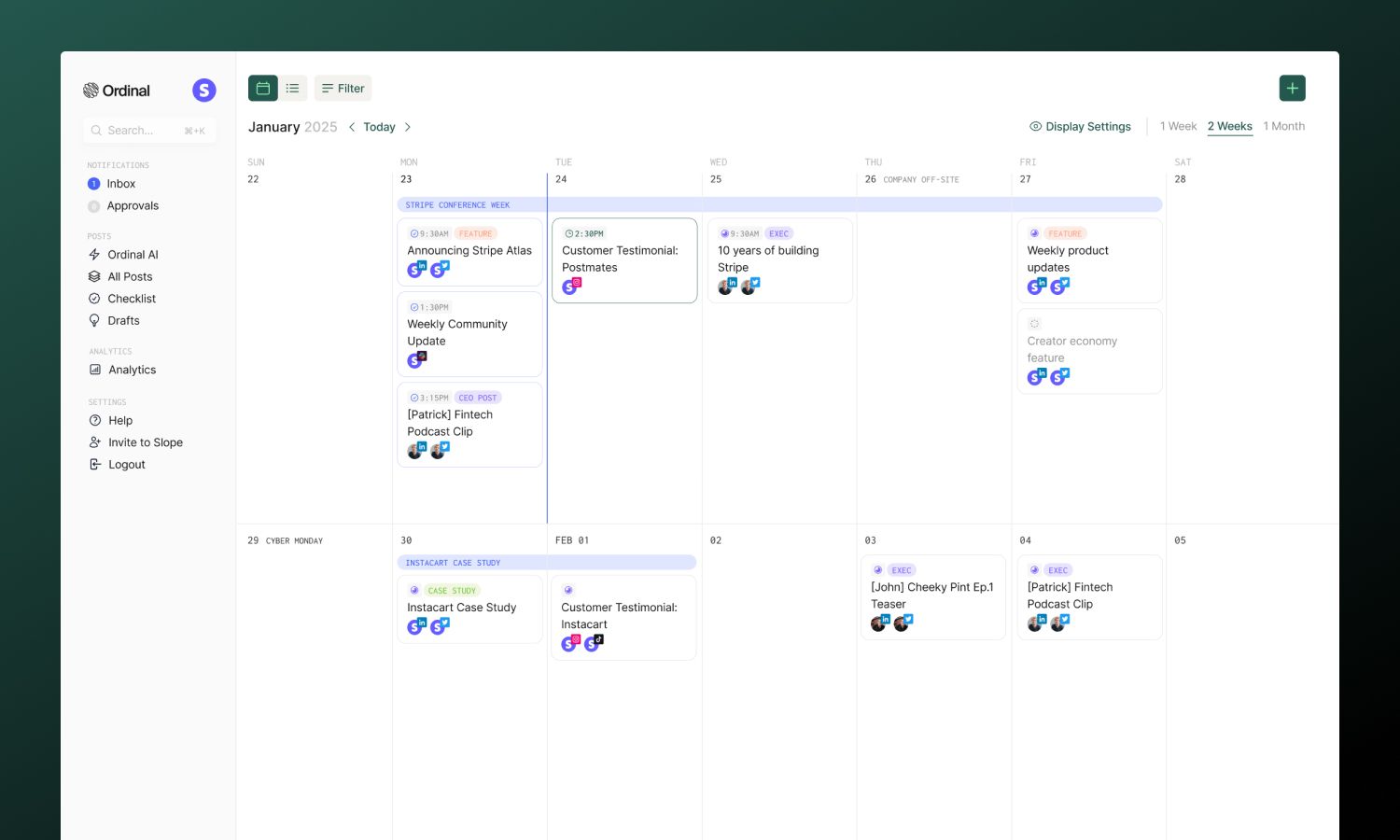
A content calendar turns your strategy into scheduled action. Without one, your team ends up scrambling for ideas at the last minute or posting inconsistently, which kills momentum with your audience.
Most teams schedule posts 1 to 4 weeks in advance to maintain flexibility while staying organized. Strategic campaigns and evergreen content get mapped 3 to 6 months out. This split approach lets you plan big initiatives while keeping room for reactive posts that jump on trending topics or news in your industry.
Your calendar should capture publish dates, channel assignments, content themes, campaign tags, and approval status. When everyone can see what's going live and when, collaboration gets easier and duplicate efforts disappear.
Block out key dates early. Product launches, industry events, holidays, and seasonal campaigns need content built around them. Map these anchor moments first, then fill gaps with your regular content pillars.
For B2B companies, this means mapping content around product launches, industry conferences, and fiscal quarters. Consumer brands should plan around shopping holidays (Black Friday, Prime Day), seasonal transitions, cultural moments, and product drops that align with customer buying cycles.
Leave 20% of your calendar open for timely posts. The best social teams balance planning with agility. When something relevant happens in your space, you want the bandwidth to respond quickly without derailing your entire schedule. A powerful end-to-end tool like Ordinal makes this balance manageable with visual calendars that let you drag, drop, and reorganize posts while keeping campaigns organized and approval workflows intact.
Leverage Employee Advocacy to Amplify Your Reach
Your company page on LinkedIn might have 5,000 followers, but chances are your 50 employees collectively have networks reaching 25,000 or more professionals. That multiplier effect makes employee advocacy one of the highest-ROI tactics available to B2B teams.
Leads developed through employee-shared messages are 7 times more likely to convert compared to other content types. Personal endorsements carry trust that branded posts simply can't match, especially on LinkedIn where buyers research vendors through their professional networks.
Consumer brands can adapt employee advocacy differently. Your team members sharing authentic product experiences, behind-the-scenes content, or styling tips creates trust that polished brand content can't replicate. A skincare brand's estheticians sharing application techniques, or a food company's chefs posting recipe variations using your products, gives customers real-world validation from people they perceive as experts rather than marketers.
Building a structured employee advocacy program removes the guesswork for your team. Provide pre-written posts employees can share with light personalization, clear guidelines on tone and messaging boundaries, and simple training on best practices. Most people want to support company goals but need direction on what to share and how to do it effectively.
Sales and marketing teams should be your first focus. They already understand your value proposition and have networks full of potential buyers. When account executives share customer success stories or product updates, they're reaching decision-makers who trust their perspective.
Measure ROI and Tie Social Media to Revenue
Vanity metrics like follower counts and post impressions are directionally interesting but give you a limited picture of actual business impact. The metrics that matter track whether social content actually generates leads, moves prospects through your funnel, and closes deals.
Start with conversion tracking. Set up UTM parameters on every link you share so you can see exactly which social posts drive website visits, content downloads, and demo requests (alternatively you can use a native link shortener with a tool like Ordinal). Tag campaigns consistently in your analytics tools to attribute conversions back to specific social initiatives.
Attribution gets complex because buyers rarely convert on first touch. Someone might see your LinkedIn post, visit your website a week later through search, then book a demo after reading an email. Multi-touch attribution models help you understand how social fits into that journey rather than only crediting the last click.
For B2B teams, the breakthrough happens when you can identify which specific prospects from target accounts engage with your content. Generic analytics show 1,000 post views, but knowing which decision-makers from enterprise companies liked or commented turns social data into sales intelligence. You can export that engagement list, enrich it with contact details, and route warm leads directly to your sales team for outreach. For consumer brands, tracking engagement from influencers, repeat customers, or high-value customer segments helps you understand which audiences drive the most revenue and lifetime value.
Tools like Ordinal can automate this process and also integrate your data with CRMs or enrichment tools like Clay.
Optimize Your LinkedIn Strategy for B2B Success
Since 80% of B2B leads generated through social come from LinkedIn, mastering this channel is non-negotiable for teams selling to businesses. The tactics that drive visibility here differ from other networks.
Post length matters on LinkedIn. Text posts between 1,300 and 2,000 characters see strong engagement, giving you room to develop ideas without losing readers. Short posts work too, but the sweet spot lets you add context that sparks real conversation.
Document posts (PDF carousels) get 3x more reach than standard text posts because LinkedIn's algorithm favors content that keeps users on the platform. Turn frameworks, guides, or data into slide decks that people can scroll through natively.
Video content performs well when it delivers value quickly. Skip the polish and focus on authentic takes from your team on industry trends or customer challenges. Native uploads beat YouTube links every time.
The real leverage comes from executive thought leadership. When your CEO or subject matter experts post regularly from personal profiles, they build authority that company pages can't match. Their networks trust their perspective, making warm introductions and inbound opportunities far more likely.
Streamline Workflows with the Right Social Media Management Tools
Fragmented workflows kill productivity when your team juggles Google Docs for drafting, Slack for approvals, native apps for publishing, and spreadsheets for tracking performance. The right tool consolidates these steps into one place.
Your social media management solution should handle drafting with a clean editor, routing posts through approval workflows, scheduling across multiple channels, and surfacing analytics that inform decisions. Teams managing several accounts need quick profile switching and campaign organization to avoid chaos. Consumer brands managing Instagram, TikTok, Pinterest, and Facebook need tools that adapt to each platform's unique formats and posting requirements while maintaining brand consistency across channels.
Look for cross-posting capabilities that let you publish to LinkedIn, Twitter, Instagram, and other channels with one click. Auto-engagement features like scheduled first comments and team boost notifications help content gain early traction that algorithms reward with wider reach. Ordinal was built specifically to address these workflow challenges for modern marketing teams.
Build a Winning Social Media Marketing Strategy with Ordinal
Executing a comprehensive social media strategy requires the right infrastructure. Ordinal consolidates every step of your social workflow - from initial drafts to performance analysis - into one powerful platform.
- Draft, Collaborate, and Schedule Content - Ordinal's editor provides a clean workspace for crafting posts across all major channels. Built-in approval workflows with Slack integration streamline stakeholder feedback, while realistic social previews show exactly how your post will appear before it goes live.
- Cross-Post to Multiple Channels - Publish to LinkedIn, Twitter, Instagram, and other major platforms with one click. Customize content for each channel's unique format while maintaining brand consistency, eliminating the need to manually post the same content across multiple networks.
- LinkedIn-First Features - Ordinal is built with LinkedIn's unique requirements in mind. Tag individuals and companies directly in posts, schedule PDF carousels (document posts), and leverage auto-engagement features specifically optimized for LinkedIn's algorithm to maximize reach and engagement.
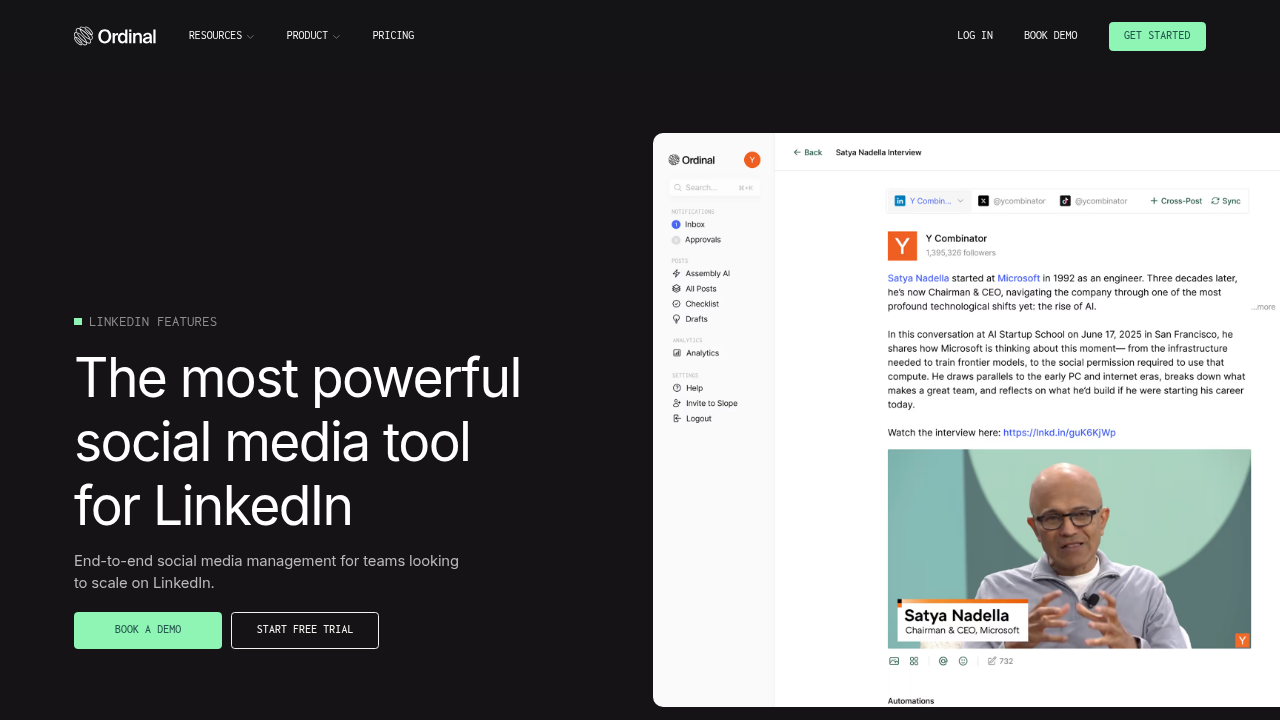
- Visual Content Calendar and Campaign Management - Plan your strategy with a visual calendar that lets you drag, drop, and reorganize posts. Switch between accounts instantly, tag posts with campaign labels, and schedule content weeks or months in advance while maintaining flexibility for timely posts.
- Auto-Engagement to Boost Performance - Slack boost notifications ping your team when posts go live for coordinated engagement. Auto-likes, scheduled comments, and automatic reposts drive the early traction that algorithms reward with wider distribution.
- Advanced Analytics with Optional Lead Intelligence - Comprehensive engagement insights and performance tracking across all channels. For teams interested in attribution, Ordinal offers the ability to identify individual engagers and connect to CRM systems.
Ordinal is built for teams that take social seriously - whether you're selling to businesses or consumers - and need to move fast without sacrificing quality. Start with a free trial at tryordinal.com.
Final Thoughts on Building a Social Media Strategy That Works
A social media strategy that drives business results starts with clarity on who you're reaching and what success looks like. You need measurable goals, focused channel selection, and content that gives your audience real reasons to engage beyond promotional asks. When you activate your team to amplify reach and track engagement back to revenue, social stops being a guessing game. Start with two channels that match your audience behavior, build content that serves your customer journey, and measure the metrics that actually matter to your business - whether that's pipeline for B2B or purchase conversions for consumer brands.
FAQ
How many social media channels should I focus on when starting?
Choose two or three channels maximum where your target audience actively makes decisions. Going deep on fewer networks produces better content and measurable results compared to spreading resources thin across six platforms.
What percentage of my social content should be promotional?
Follow the 80/20 rule: dedicate 80% of content to educating, entertaining, or inspiring your audience, and save the remaining 20% for direct promotional asks. Leading with value makes occasional product mentions feel earned rather than pushy.
How far in advance should I schedule social media posts?
Most teams schedule posts 1 to 4 weeks in advance for regular content while mapping strategic campaigns 3 to 6 months out. Leave 20% of your calendar open for timely posts so you can respond quickly to relevant industry news without derailing your schedule.
Why does employee advocacy generate better results than company posts?
Leads developed through employee-shared messages are 7 times more likely to convert because personal endorsements carry trust that branded posts can't match. Your employees' collective networks also reach far more people than your company page alone.
How can I tie social media activity to actual revenue?
Set up UTM parameters on every link to track conversions, identify which specific prospects from target accounts engage with your content, and sync that engagement data into your CRM. This turns social interactions into qualified pipeline your sales team can act on.
Related Posts
Looking to learn more? The below posts may be helpful for you to learn more about social media and content marketing.