

The LinkedIn algorithm has undergone its most significant transformation in years. What worked in 2024 and early 2025 no longer guarantees reach or engagement. The platform has fundamentally shifted from rewarding viral content and high engagement volume to prioritizing expertise, meaningful conversations, and on-platform engagement depth.
Understanding these changes is crucial for professionals, creators, and businesses using LinkedIn to build their brand, generate leads, or grow their influence.
The Big Shift: From Virality to Value
LinkedIn has made it clear that going viral is no longer the goal. The platform is refocusing on its professional roots, moving away from the engagement-bait era that dominated 2023 and 2024. LinkedIn wants to be a destination for [professional knowledge and meaningful networking](https://www.linkedin.com/top-content/marketing/linkedin-content-and-ads/recent-changes-to-the-linkedin-algorithm/#:~:text=Summary,authority and boosts your visibility.), not another scroll-heavy social feed filled with personal stories and clickbait.
How the 2026 Algorithm Works
The Three-Stage Evaluation Process
When you publish a post on LinkedIn, it goes through a multi-stage filtering process:
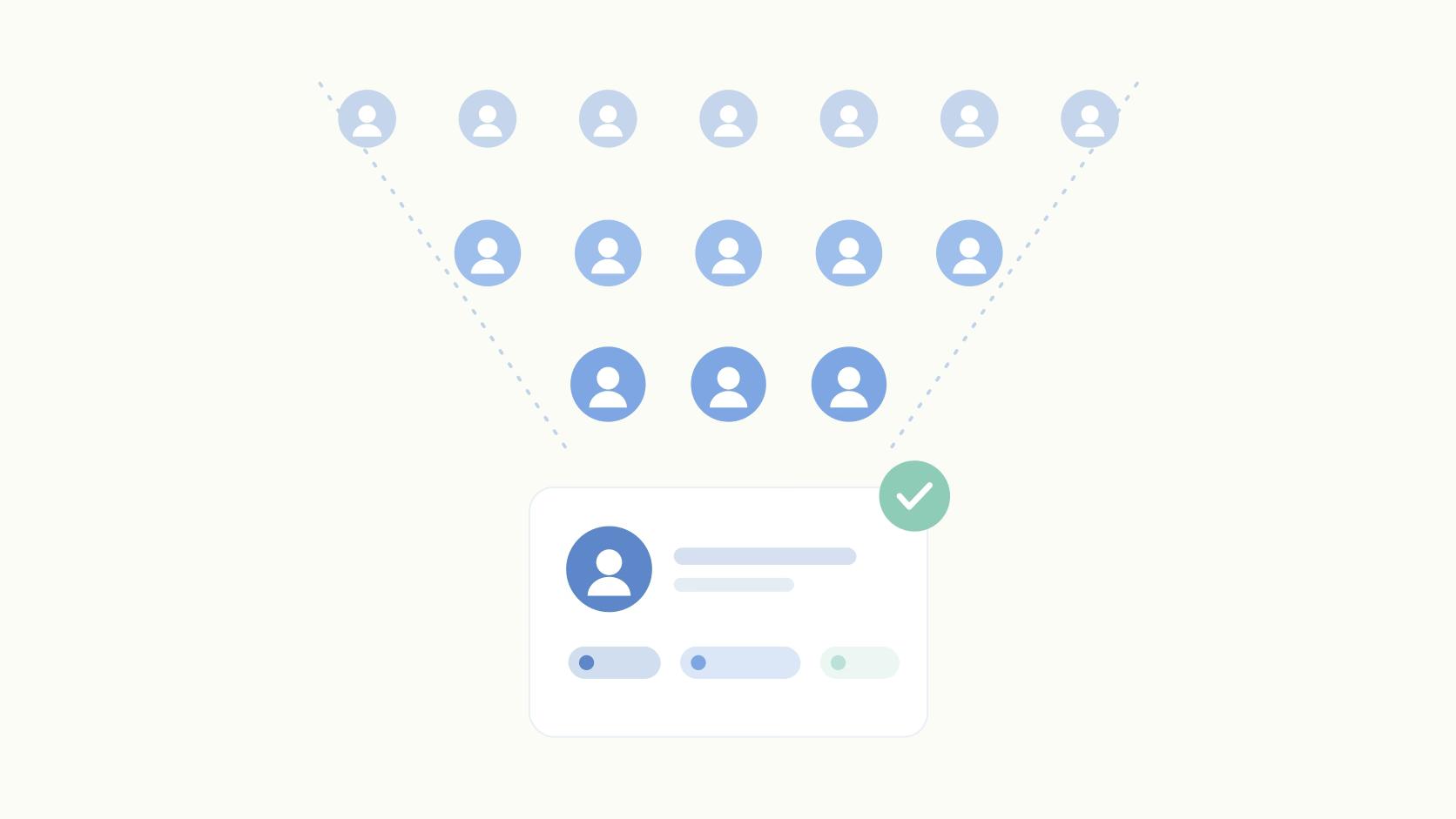
Stage 1: Quality FilteringYour post is first shown to a small sample of your connections (typically 2-5% of your network). The algorithm performs an initial quality check, looking for spam indicators, engagement bait, or content that violates platform policies.
Stage 2: Initial Engagement TestingIf your post passes the quality filter, LinkedIn monitors how your closest connections respond within the first 60-90 minutes. This "golden hour" is critical. The algorithm evaluates not just whether people engage, but how they engage.
Stage 3: Extended DistributionPosts that generate strong engagement signals in the first hour get pushed to a wider audience, including second-degree connections and users with similar professional interests. This distribution can continue for 48-72 hours if the engagement remains strong.
The Three Core Ranking Signals
LinkedIn's 2026 algorithm prioritizes three main factors when evaluating content:
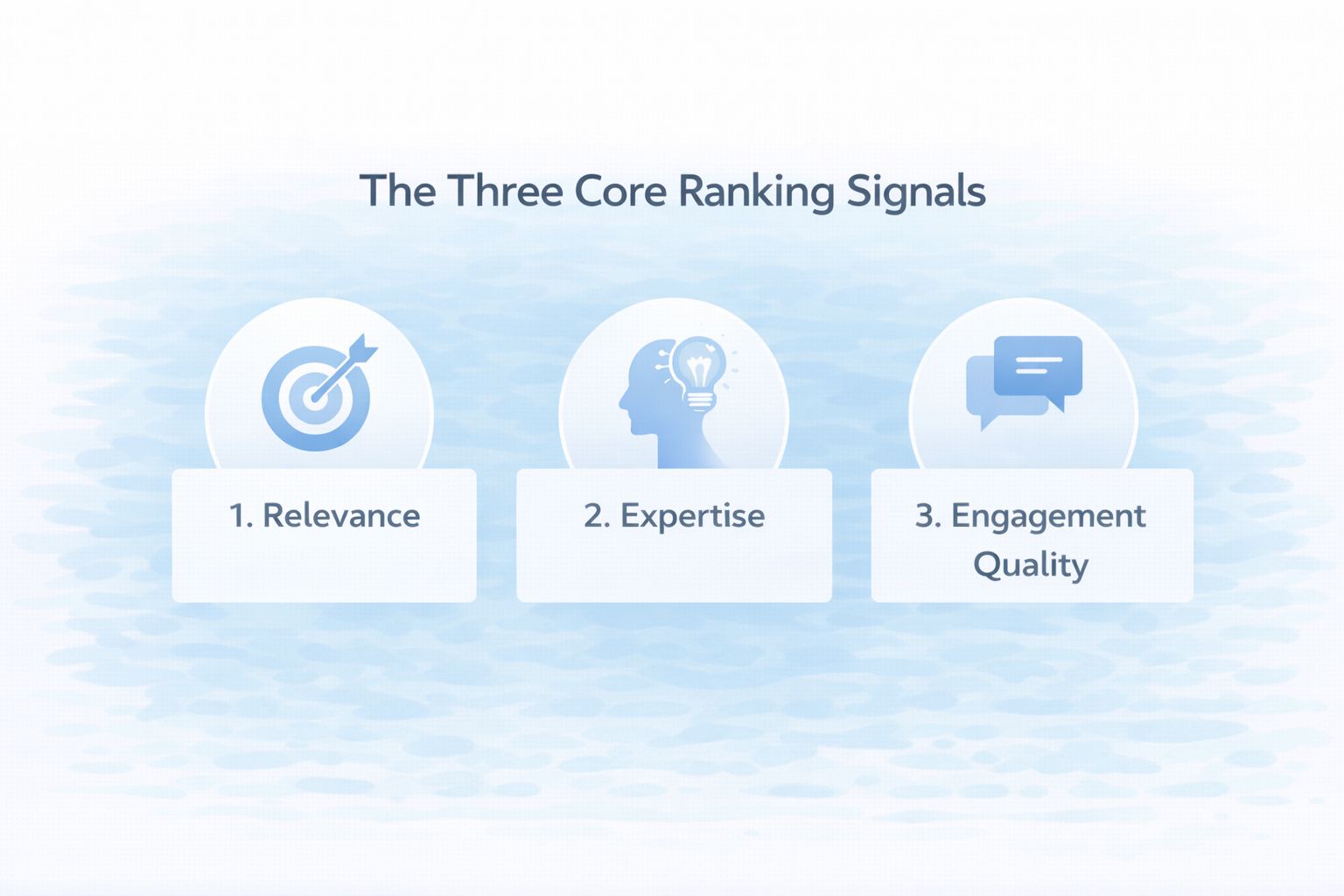
1. RelevanceHow closely your post matches the professional interests and needs of specific audiences. The algorithm analyzes your post content, the topics you consistently discuss, and matches it with users who have demonstrated interest in those subjects.
2. ExpertiseWhether you have demonstrated authority and knowledge in the subject you're posting about. LinkedIn evaluates your profile information, past content performance, and consistency in a particular niche to determine your expertise level. Building credibility on LinkedIn isn't just about what you say—it's about demonstrating genuine subject matter expertise through consistent, valuable content.
3. Engagement QualityNot all engagement is created equal. The algorithm now weighs different types of interactions:
- Multi-sentence comments (highest value) - Thoughtful comments that demonstrate the post sparked real thinking
- Shares with added context (high value) - When someone shares your post and adds their own perspective
- Saves (high value) - Indicates the content has lasting value worth referencing later
- Comment threads (high value) - Back-and-forth conversations under your post
- Simple reactions (lower value) - Generic "Great post!" comments or single emoji responses
The Introduction of "Depth Score"
One of the most significant additions to the 2026 algorithm is what industry experts are calling the "Depth Score".
What Is Depth Score?
According to Future's analysis of LinkedIn's 2026 algorithm changes, Depth Score is:
"LinkedIn's new ranking signal [that] measures how long people actually engage with your content—not just whether they clicked or tapped."
This represents a massive departure from previous years when the algorithm primarily tracked surface-level engagement metrics like likes, shares, and comment counts. Now, LinkedIn is evaluating the quality and depth of engagement rather than just the quantity.
The Components of Depth Score
Depth Score is calculated based on multiple engagement depth signals:
1. Reading Time (Dwell Time)How long users spend reading or viewing your content before scrolling away. This is the primary component.
2. Comment DepthNot just how many comments, but how substantive the discussions are. Multi-reply threads carry significantly more weight.
3. Saves for LaterA strong quality signal indicating the content has lasting reference value.
4. Shares to Private MessagesIndicates content valuable enough to share one-on-one with specific contacts.
5. Content Completion RateFor videos: did users watch to the end? For carousels: did they swipe through all slides?
According to the Future analysis:
"Reading time, comment depth, saves for later, and shares to private messages all factor in. Translation: the algorithm finally learned to spot the difference between 'I stopped scrolling for 2 seconds' and 'I actually read this and found it useful.'"
Why LinkedIn Introduced Depth Score
The reasoning behind Depth Score comes directly from user feedback and declining platform quality.
According to LinkedIn's VP of Product in a December 2025 briefing, engagement bait had become so prevalent that genuine expertise was getting buried:
"Their internal data showed that 60% of high-engagement posts in Q3 2025 used at least one optimization tactic, but user satisfaction scores were declining."
LinkedIn recognized that the old system was rewarding:
- Posts explicitly begging for engagement ("Agree? Comment below!")
- Artificial cliffhangers designed solely to drive comments
- Content formatted to game the algorithm rather than serve readers
- Recycled viral content with minimal original insight
The result? Users were spending less time on the platform despite seeing more "high-engagement" content. The disconnect between engagement metrics and actual value was clear.
Major Algorithm Changes in 2026
1. Hashtags Don’t Drive Reach, They Guide It
For years, LinkedIn pushed hashtag use to help categorize content. Now, the platform's text detection and natural language processing models have improved significantly, allowing LinkedIn to understand what a post is about based on the actual content and context.
According to Rishi Jobanputra, LinkedIn's product chief, the algorithm now focuses on keywords and conversation topics rather than hashtags. LinkedIn has even begun removing hashtag-based feeds because very few users search by hashtag on the platform.
Current guidance on hashtags:
- Use them sparingly with a purpose, if at all (1-2 maximum)
- Only include hashtags for specific trending topics people are actively searching
- Focus on writing clear, keyword-rich content instead
- Let LinkedIn's semantic understanding do the work
2. LinkedIn’s algorithm Prioritizes Connections
According to Forbes, the LinkedIn algorithm is all about human connections as opposed to generic content. For example, a post with your face gets much more attention than a CANVA graphic that goes with your post.
Generic, corporate-speak content - even when paired with professional graphics - now performs poorly because it lacks these human signals. The algorithm has gotten sophisticated enough to detect when content feels templated or artificial.
What works best:
- Photos of you actually doing the work—leading workshops, giving presentations, speaking at conferences
- Behind-the-scenes moments that show your professional journey
- Team celebrations and company achievements with real people visible
- Professional headshots and context-appropriate selfies (yes, really)
3. Personal Profiles Dominate Content Consumption
Organic reach on company pages has dropped approximately 60% between 2024 and 2026. Company pages now represent only about 5% of user feeds, while personal profiles dominate 65% of content consumption.
The algorithm clearly favors individual voices over corporate messaging. According to research on the declining reach of LinkedIn company pages, a typical company page post is shown to only 1.6% of its followers - a significant structural disadvantage. For businesses, this means:
- Empowering employees to become brand ambassadors
- Having executives and team members share company content from their personal profiles
- Building authentic personal brands rather than relying solely on company pages
4. AI-Generated Content Isn't Taking Off
Despite LinkedIn offering its own AI writing assistant and the proliferation of AI content tools, CEO Ryan Roslansky revealed that AI-powered posting features haven't caught on as expected.
In an interview with Bloomberg, Roslansky explained that "the barrier is much higher" to post on LinkedIn compared to other platforms. The professional stakes make authenticity critical:
"If you're getting called out on X or TikTok, that's one thing. But when you're called out on LinkedIn, it really impacts your ability to create economic opportunity for yourself."
According to Social Discovery Insights, Roslansky acknowledged that users generating overly polished AI content often "get called out" for lacking authenticity in a professional setting. This social pressure creates a self-regulating mechanism beyond just algorithmic detection.
Interestingly, Ryan Roslansky himself revealed he uses Microsoft's Copilot AI to write "almost every email", including to his boss, Microsoft CEO Satya Nadella.
The key distinction? He uses AI as a drafting assistant, not as a content generator. The process involves:
- AI asking questions to shape the response
- Hands-on involvement beyond pressing "AI reply"
- Personal voice and perspective maintained
- Content reviewed and edited before sending
This reveals the actual opportunity: AI as a tool, not a replacement.
The 80/20 Rule for AI Content
Think of it as: 80% human, 20% AI assistance.
Your content should be:
- Based on your real experiences and insights (AI can't replicate this)
- Written in your authentic voice (AI struggles with individual style)
- Tied to specific details from your work (AI deals in generalities)
- Offering unique perspectives (AI averages existing content)
AI can help with:
- Improving clarity and grammar (refinement)
- Optimizing structure (organization)
- Finding supporting data (research)
- Suggesting better word choices (editing)
What Content Performs Best in 2026
Based on analysis of hundreds of posts throughout 2026, clear patterns have emerged:
Text Posts with Strong Formatting
Text-only posts with compelling hooks and clear formatting continue to get the best reach per follower. The key is to make them scannable with:
- Short sentences and paragraphs
- Strategic use of white space
- One clear idea or insight per post
- Strong opening lines that stop the scroll
Posts with 1,000-1,300 characters often outperform shorter posts because they generate more dwell time while still being consumable. Understanding LinkedIn's character limits helps you optimize post length for maximum impact.
Native Document Uploads (PDFs)
Document uploads are currently experiencing exceptional reach, often outperforming equivalent text posts by 5-10x. This format works because:
- It requires more investment to create (signals quality)
- It keeps people on LinkedIn (the platform rewards this)
- It generates longer engagement times
- It's still relatively uncommon (first-mover advantage)
Educational documents, frameworks, templates, and guides perform particularly well.
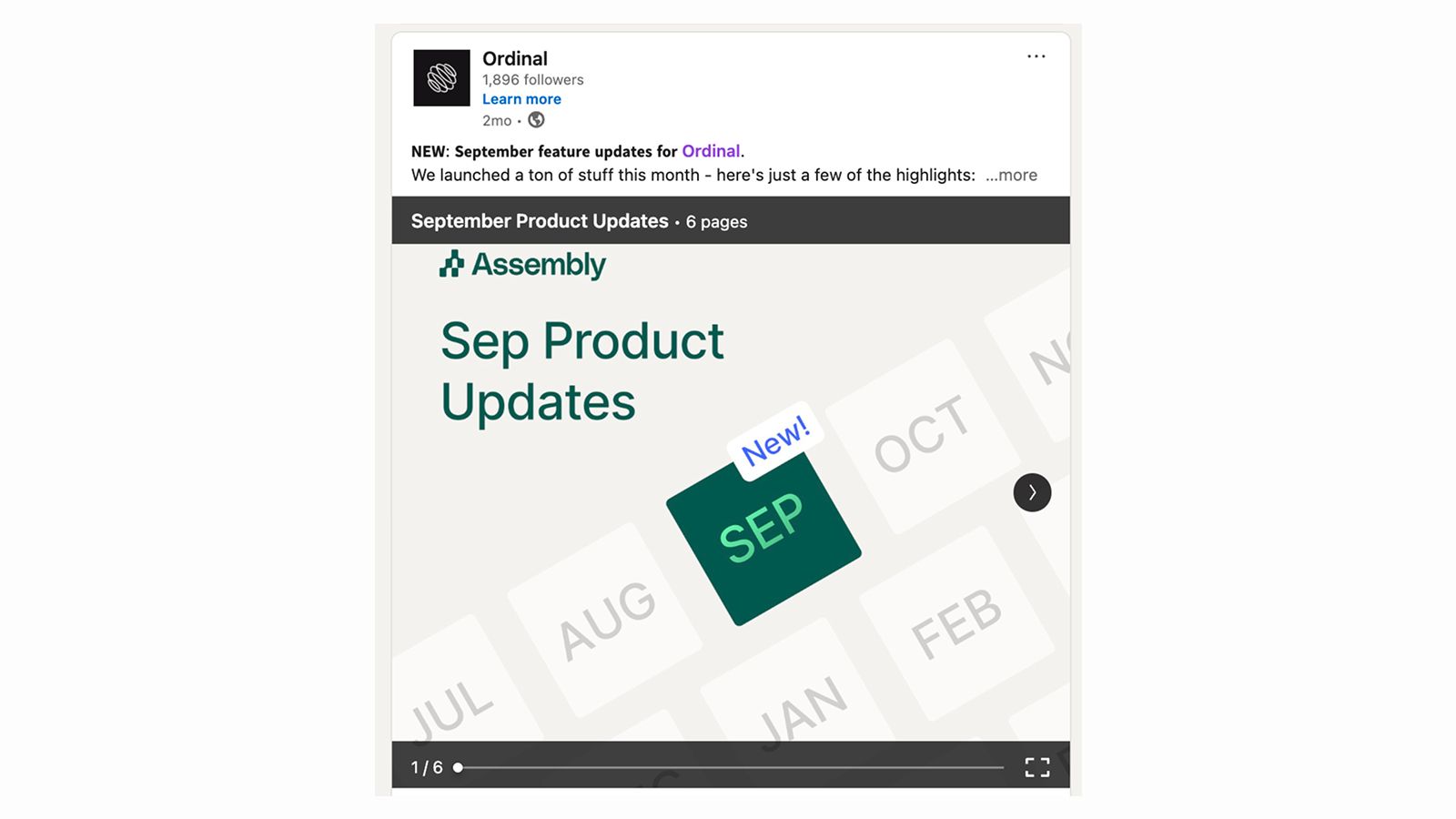
Carousel Posts
Multi-slide carousels generate significant engagement and dwell time. Each swipe counts as an engagement signal. Educational carousels with 8-12 slides tend to perform exceptionally well, particularly those that teach frameworks, provide step-by-step processes, or break down complex topics.
Multi-image carousel posts achieve approximately 6.6% engagement rates compared to 4.85% for single images and 4% for text-only content.
Video Content Under 90 Seconds
Short-form video continues to gain traction on LinkedIn. The platform has expanded its video infrastructure and ad inventory, signaling a strategic investment in video content.
Best practices for LinkedIn video:
- Keep videos under 30 seconds for maximum completion rate
- Upload natively to LinkedIn (don't link to YouTube or Vimeo)
- Add captions (85% of users watch without sound)
- Focus on teaching one specific thing clearly
- Use face-to-camera delivery when possible
- Portrait orientation performs 62% better than landscape images because they take up more feed real estate on mobile devices, where most LinkedIn consumption happens. The ideal dimensions are 1200 x 1500 pixels.
However, completion rate matters more than view count. Videos under 30 seconds achieve 200% higher completion rates than longer formats.
What Doesn't Work Anymore
Single-image posts now underperform text-only content by about 30%, reversing the trend from 2024-2025.
Engagement bait (asking for likes, shares, or comments) is actively suppressed and can hurt your reach.
Carousel "hacks" (the "swipe for more" format that delivered shallow insights with nice gradients) are no longer rewarded as the algorithm has gotten better at detecting low-value content.
Poll posts generate comments but show lower overall reach compared to other formats in 2026.
Creating Content That Works: Practical Strategies
1. Lead With a Powerful Hook
Your first two lines are everything. If you don't capture attention immediately, you've already lost the reader. The algorithm measures how many people expand your "see more" section, and this engagement signal significantly impacts distribution.
Effective hook patterns:
- Curiosity-driven: "What if I told you a single formatting change could triple your post's visibility?"
- Data-backed: "We analyzed 1.8 million LinkedIn posts and found something surprising about what drives reach..."
- Problem-focused: "For months, my posts barely reached anyone — until I adjusted this one detail."
- Question-based: Opens with a relevant question that your target audience is actively wondering about
2. Focus on Your Niche
The algorithm rewards people who consistently deliver value in one clear niche. Posting about random topics confuses the algorithm and dilutes your expertise signal.
When you consistently post about a specific topic (B2B marketing, sales enablement, HR technology, etc.), the algorithm:
- Understands what you're an expert in
- Can more accurately match your content with interested audiences
- Builds confidence in distributing your posts more widely
The more niche your approach, the better the algorithm can direct your content to the right feeds. For example, AI leaders on LinkedIn have built massive followings by consistently sharing insights within their specific area of expertise.
3. Optimize Your Profile
Your profile is part of the algorithm's evaluation. LinkedIn considers:
- Your headline and job title
- Your skills and endorsements
- Your activity history
- Your consistency in a subject area
A well-optimized profile that clearly establishes your expertise helps the algorithm understand who you are and who should see your content.
4. Post During Peak Engagement Windows
While LinkedIn has downplayed the importance of timing, early engagement during your "golden hour" (first 60-90 minutes) remains critical.
Most LinkedIn users check their feed during work hours:
- 8-9 AM local time
- 2-3 PM local time
- Tuesday through Thursday (highest activity days)
For reaching decision-makers specifically, 8 AM EST on Tuesday through Thursday shows the best results. For a complete guide on the best times to post on LinkedIn, check our blog.
5. Encourage Meaningful Discussions
The algorithm detects and rewards genuine conversations. Generic one-word comments or engagement pod activity is flagged as inauthentic.
To encourage quality engagement:
- Ask specific questions in your post
- Respond thoughtfully to comments
- Create discussion threads
- Tag relevant people when appropriate (but respectfully)
- Share your post with colleagues who can add informed perspectives
A post with 50 thoughtful comments significantly outperforms a post with 500 generic likes.
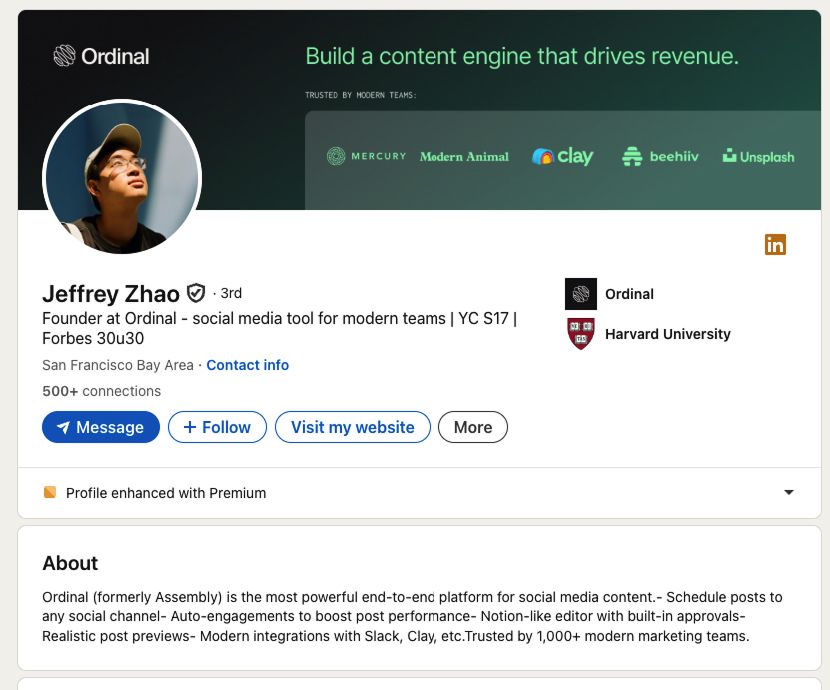
"Across the research, comments are the single strongest signal that drive your LinkedIn performance. A post that earns real comments is far more likely to spread into second and third-degree connections than one that just collects reactions." (Jeffrey Zhao, Co-Founder at Ordinal)
Watch the full video: The LinkedIn Algorithm Has Changed | Here's What Works 2026
6. Use Keywords Strategically
LinkedIn's algorithm now scans the actual words in your post rather than relying on hashtags. This means:
- Use industry-specific terminology naturally
- Include relevant keywords in your opening lines
- Write clearly about specific topics
- Let semantic understanding do the work
This SEO-style approach helps the algorithm categorize your content and match it with the right audiences.
7. Stay Native to the Platform
LinkedIn rewards creators who treat it as a primary publishing destination, not just a distribution channel. Create your best content directly on LinkedIn rather than linking elsewhere. Use LinkedIn to:
- Build relationships and demonstrate expertise
- Spark meaningful professional discussions
- Establish thought leadership
- Drive conversions through profile optimization and DMs
If you are going to use external links, make sure your post gives enough context that it could stand alone without the link. This is according to LinkedIn's Sr. Director of Product Management **Rishi Jobanputra.**
For companies looking to enhance their LinkedIn presence beyond organic posting, LinkedIn Premium Company Pages offer additional features like custom CTAs, visitor insights, and auto-invite capabilities that can boost engagement.
Understanding the First 60 Minutes
The first hour after publishing is critical. During this window, LinkedIn evaluates:
Engagement velocity - How quickly people are interacting with your postEngagement quality - The substance of comments and who is commentingDwell time - How long people are actually readingProfile visits - Whether your post is driving profile views
- *Strong performance in these metrics during the first 60 minutes signals to the algorithm that your content deserves wider distribution. Weak performance causes the algorithm to limit reach quickly.
To track these metrics effectively, consider exporting your LinkedIn analytics to identify patterns in what drives early engagement for your specific audience.
Content Formats Ranked by Performance
Based on latest data, here's how different formats perform:
- Native PDF documents - 5-10x typical text post reach
- Educational carousels (8-12 slides) - 6.6% average engagement rate
- Well-formatted text posts (1,000-1,300 characters) - Most reliable for consistent reach
- Videos under 30 seconds - 200% higher completion vs. longer videos, 5x higher interaction than text for awareness content
- Polls - Generate comments but lower reach
- Single-image posts - Underperform text-only by 30%
Measuring Success Beyond Vanity Metrics
The algorithm shift requires a corresponding shift in how you measure success. Vanity metrics like likes and follower counts matter less in 2026.
Focus instead on:
- Dwell time - How long people engage with your content
- Comment quality - The depth and relevance of discussions
- Saves - Whether people bookmark your content for later
- Profile visits - Whether your content drives people to learn more about you
- DM conversations - Real business discussions sparked by your posts
- Tangible outcomes - Leads, partnerships, opportunities generated
A post with 50 likes that generated three qualified leads is infinitely more valuable than a post with 500 likes that did nothing.
What This Means for Different User Types
For Individuals and Personal Brands
The 2026 algorithm favors authentic personal voices. Focus on:
- Establishing yourself as an expert in a clear niche
- Posting consistently (one substantial post per day works well)
- Creating educational content that teaches something valuable
- Building genuine relationships through meaningful engagement
- Using native LinkedIn formats rather than external links
For Businesses and Marketers
Company pages face significant challenges. The solution:
- Activate employee advocacy programs
- Have executives and team members post from personal profiles
- Create thought leadership content through individual voices
- Use Thought Leader Ads to amplify proven content to specific ICPs
- Treat LinkedIn as a destination, not a traffic driver
For Content Creators and Consultants
Depth over breadth wins. Focus on:
- Building expertise in a specific domain
- Creating evergreen, educational content that earns saves
- Leveraging native LinkedIn formats (especially documents)
- Experimenting with short-form video
- Fostering communities around your content
Common Mistakes to Avoid
1. Overusing hashtags - They're no longer necessary and can look spammy
2. Posting too frequently without quality - Consistency matters more than frequency, but quality matters most
3. Writing vague, generic content - The algorithm can't categorize it and audiences won't engage deeply
4. Asking for engagement ("Like this if you agree") - Engagement bait is actively suppressed
5. Participating in engagement pods - LinkedIn detects artificial patterns and suppresses them
6. Treating LinkedIn like Instagram or Twitter - Each platform has different dynamics; what works elsewhere won't work here
7. Neglecting to respond to comments - The algorithm rewards conversation threads
8. Using 100% AI-generated content - It damages credibility and may be algorithmically suppressed
9. Focusing solely on company pages - Personal profiles get 13x more reach
How to Scale Your LinkedIn Strategy with Ordinal
Understanding how LinkedIn's algorithm works in 2026 is only half the battle. The real challenge is executing consistently at scale while maintaining quality and authenticity. This is where the right tools become essential.
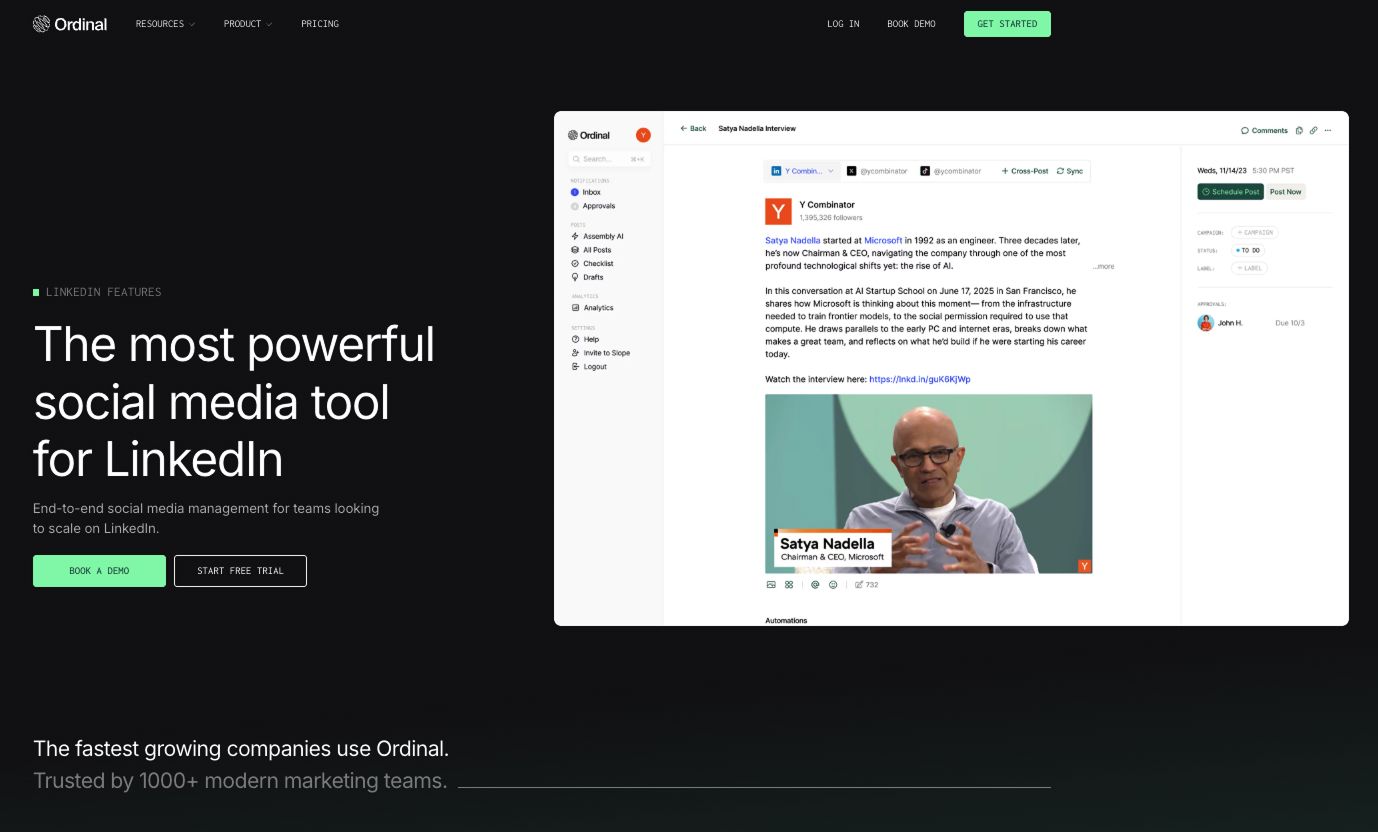
Ordinal has LinkedIn-first features built in to help teams execute on these algorithm requirements at scale:
- Auto-Engagement - Coordinate likes, comments, and reposts from team members to maximize engagement during the critical first 60 minutes, signaling to the algorithm to distribute your content more widely.
- Realistic Social Previews - See exactly where your hook cuts off before "see more" appears, so you can optimize the opening lines that determine whether people expand your post—a key dwell time metric.
- Native Format Support - Upload PDF carousels, videos, images, and polls directly; customize link posts to add URLs as automated first comments, avoiding the 60% external link penalty.
- Smart Scheduling & Collaboration - Batch-create content in a Notion-like editor, schedule across multiple accounts, and manage approvals with ghostwriters or marketing teams through Slack/email integration.
- LinkedIn-Specific Analytics - Track daily performance across personal and company profiles with AI-powered insights, export data, and identify which content types and topics drive the best engagement.
- Multi-Account Management - Scale employee advocacy programs by managing executive and company accounts from one platform, enabling team coordination without sharing login credentials.
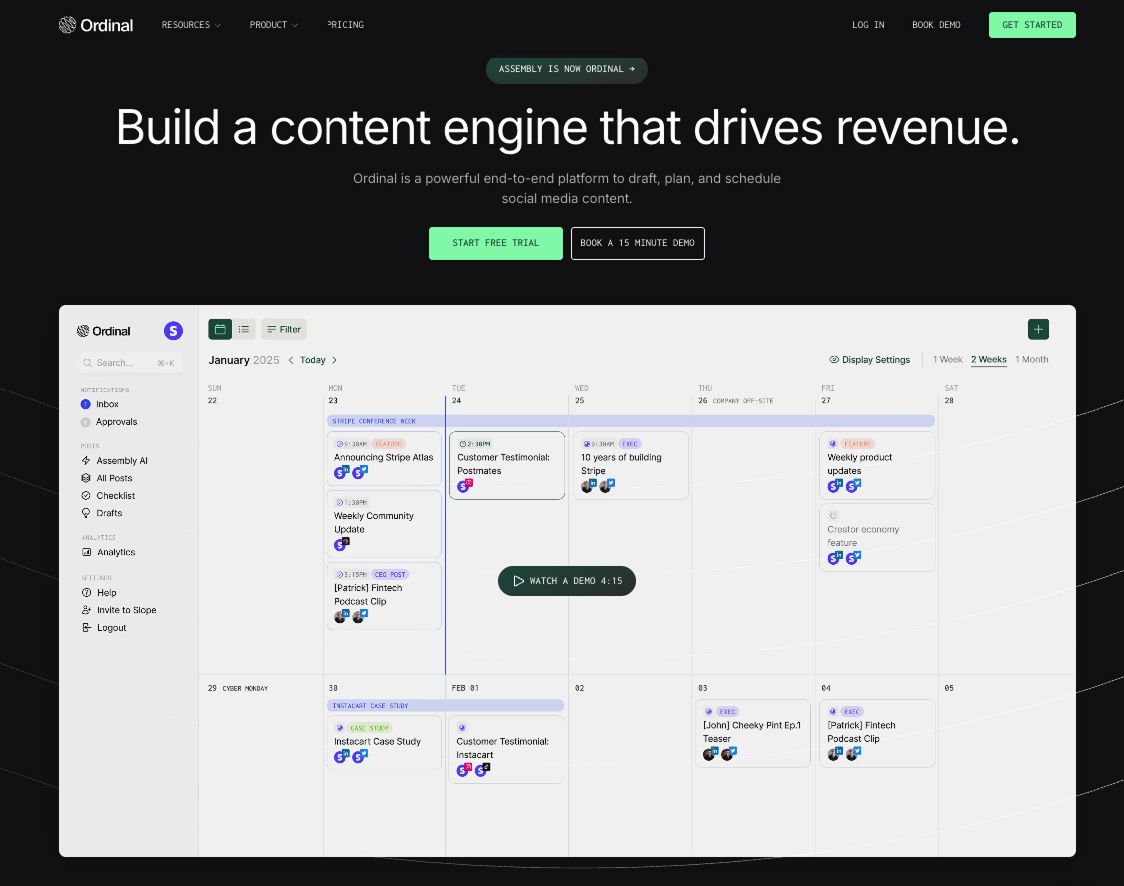
The 2026 algorithm rewards consistency, quality, and strategic engagement - but executing manually makes it nearly impossible to post in your golden hour, coordinate team support, and track what works.
Ordinal provides the infrastructure to do all of this at scale, trusted by over 1,000 modern marketing teams, including Clay, Pylon, Arrows, and Beehiiv.
Try Ordinal free or book a demo to see how it can transform your LinkedIn strategy.
FAQs
How does the LinkedIn algorithm work in 2026?
The LinkedIn algorithm uses a three-stage process: quality filtering (showing posts to 2-5% of your network), initial engagement testing (monitoring the first 60-90 minutes), and extended distribution (amplifying posts that perform well). It evaluates content based on relevance, expertise, and engagement quality—prioritizing "depth score" (how long people actually read) over simple engagement metrics.
Why are my LinkedIn posts getting less reach in 2026?
Several factors could be limiting your reach: inconsistent posting in different topics (confuses expertise signals), poor hook quality (people don't expand "see more"), lack of early engagement in the first hour, using company pages instead of personal profiles, or creating content that doesn't generate meaningful conversations. Focus on establishing expertise in one niche and creating content that generates genuine engagement.
Should I still use hashtags on LinkedIn in 2026?
Hashtags are no longer essential. LinkedIn's algorithm now uses natural language processing to understand your content based on keywords and context rather than hashtags. Use 1-2 hashtags maximum, and only for specific trending topics. Focus on writing clear, keyword-rich content instead and let LinkedIn's semantic understanding do the work.
What's the best time to post on LinkedIn in 2026?
Post during work hours when your audience is most active: 8-9 AM or 2-3 PM local time, with Tuesday through Thursday being the highest activity days. For reaching executives specifically, 8 AM EST on Tuesday-Thursday shows the best results. However, the first 60 minutes after posting matter more than the exact time—focus on when your specific audience can engage early.
How long should my LinkedIn posts be?
Posts with 1,000-1,300 characters often perform best because they generate good dwell time while remaining consumable. However, length should serve the content—focus on delivering value clearly rather than hitting a specific character count. Native PDF documents can be much longer and currently get 5-10x more reach.
Should I include links in my LinkedIn posts?
If you use external links, make sure your post provides enough context that it could stand alone without the link. According to LinkedIn's Sr. Director of Product Management Rishi Jobanputra, the post should offer value on its own. Consider creating native content on LinkedIn, using PDF uploads for longer-form content, or driving conversions through your optimized profile and DMs.
Why do personal profiles get more reach than company pages?
The algorithm heavily favors personal voices over corporate messaging. Personal profiles now get approximately 13x more reach than company pages, which have seen a 60% drop in organic reach since 2024. Company pages represent only 5% of user feeds while personal profiles dominate 65% of content consumption. This reflects LinkedIn's shift toward authentic, individual expertise.
What content formats perform best on LinkedIn in 2026?
The top-performing formats are: (1) Native PDF documents (5-10x typical reach), (2) Educational carousels with 8-12 slides (6.6% engagement rate), (3) Well-formatted text posts (1,000-1,300 characters), (4) Videos under 30 seconds (200% higher completion rates), and (5) Polls (generate comments but lower reach). Single-image posts now underperform text-only content by 30%.
Can I still use AI tools to write LinkedIn content?
While AI tools can help with ideation and drafting, obvious AI-generated content performs poorly on LinkedIn. Users actively call out AI content, and it damages professional credibility. The algorithm may also be detecting and deprioritizing AI-generated posts. Use AI as a starting point but ensure content reflects your authentic voice and genuine expertise.
Are LinkedIn polls still effective in 2026?
Polls generate comments (which the algorithm values) but show lower overall reach compared to other formats. Use polls strategically when you genuinely want to gather opinions or spark discussion, but don't rely on them as your primary content format. Educational carousels and PDF documents typically deliver better reach and engagement.
Related Posts
Looking to learn more? The below posts may be helpful for you to learn more about social media and content marketing.