

Let's face it - as we head into 2026, random posting doesn't cut it anymore. If you want your startup’s content to stand out, you need to be thinking ahead and planning out your content calendar strategically.
When we talk to marketing teams struggling with social media, the conversation usually reveals the same pain points: inconsistent posting schedules, last-minute content scrambles, and difficulty measuring what's actually working. Sound familiar?
The solution isn't posting more content - it's planning better content. With platforms like LinkedIn, Twitter, Instagram, Facebook, TikTok, YouTube, and Threads each requiring unique approaches, having a solid content planning system isn't just nice to have – it's essential for staying competitive in 2026's crowded social landscape.
TLDR:
- Strategic content planning beats random posting by aligning posts with business goals across funnel stages
- Batch content creation weekly saves time and improves consistency across platforms
- A content calendar with themes, status tracking, and performance metrics keeps teams organized
- End-to-end platforms streamline planning, approvals, and engagement tracking
The Building Blocks of Effective Content Planning
Before diving into tools and tactics, let's establish what makes a content plan effective:
1. Goal-Driven Strategy
Every post should serve a purpose. Are you building brand awareness? Driving website traffic? Generating leads? Your content plan should align with specific business objectives.
A practical framework for this is that we generally recommend thinking about your content as Top of Funnel, Middle of Funnel, or Bottom of Funnel content. Essentially, are you looking to create broad content that reaches a wide audience (top of funnel), share industry and competitor-specific insights (middle of funnel), or sell your product specifically by talking about its features and benefits (bottom of funnel). Finding the right balance between these three buckets on a week-to-week basis is critical.
For example, if lead generation is your goal, your content mix might include:
- Personal stories about life as a founder (Top of Funnel)
- Educational content that establishes expertise (Middle of Funnel)
- Case studies showcasing client success (Bottom of Funnel)
2. Audience-Centric Approach
Understanding who you're talking to shapes everything from topic selection to tone of voice. Develop audience personas that capture:
- Demographics (age, location, job title)
- Pain points and challenges
- Content preferences and consumption habits
- Platform preferences
- Location (key tip: you can set your customer’s timezone in Ordinal and we’ll automatically recommend the best time to post)
3. Content Mix and Themes
Variety keeps your audience engaged. A balanced content mix typically includes:
- Educational content (how-tos, tips, industry insights)
- Promotional content (product features, offers)
- Engagement content (questions, polls, trending topics)
- User-generated content (testimonials, customer stories)
- Personal Stories (founder content, thought leadership)
4. Channel-Specific Optimization
Each platform has its own best practices, optimal posting times, and content formats. With emerging platforms like Threads reaching 320 million monthly users and Bluesky hitting 27.44 million users by early 2025, your plan should account for these differences and new opportunities rather than taking a one-size-fits-all approach.
Creating Your Content Planning System
Now let's build a practical system for planning your social media content:
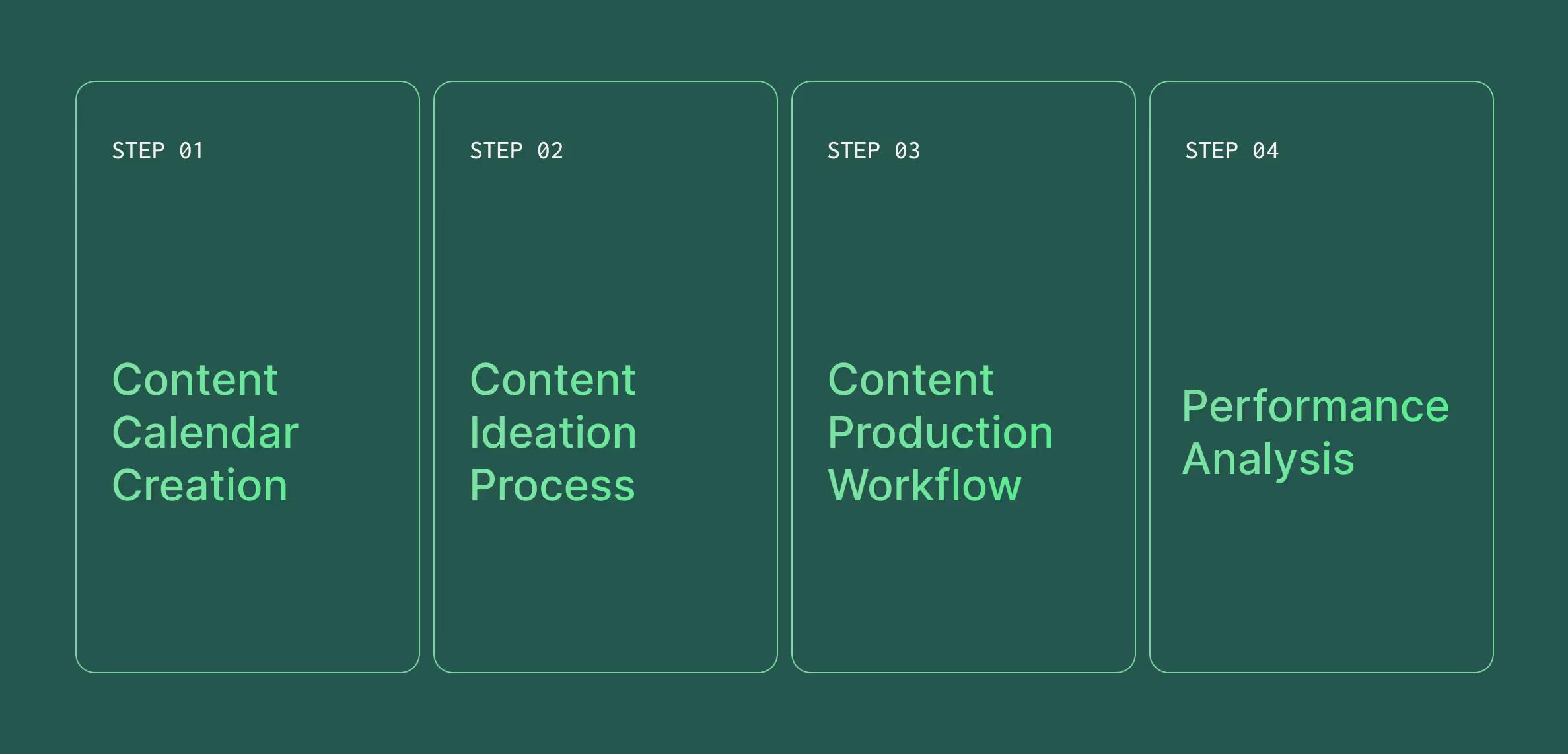
Step 1: Content Calendar Creation
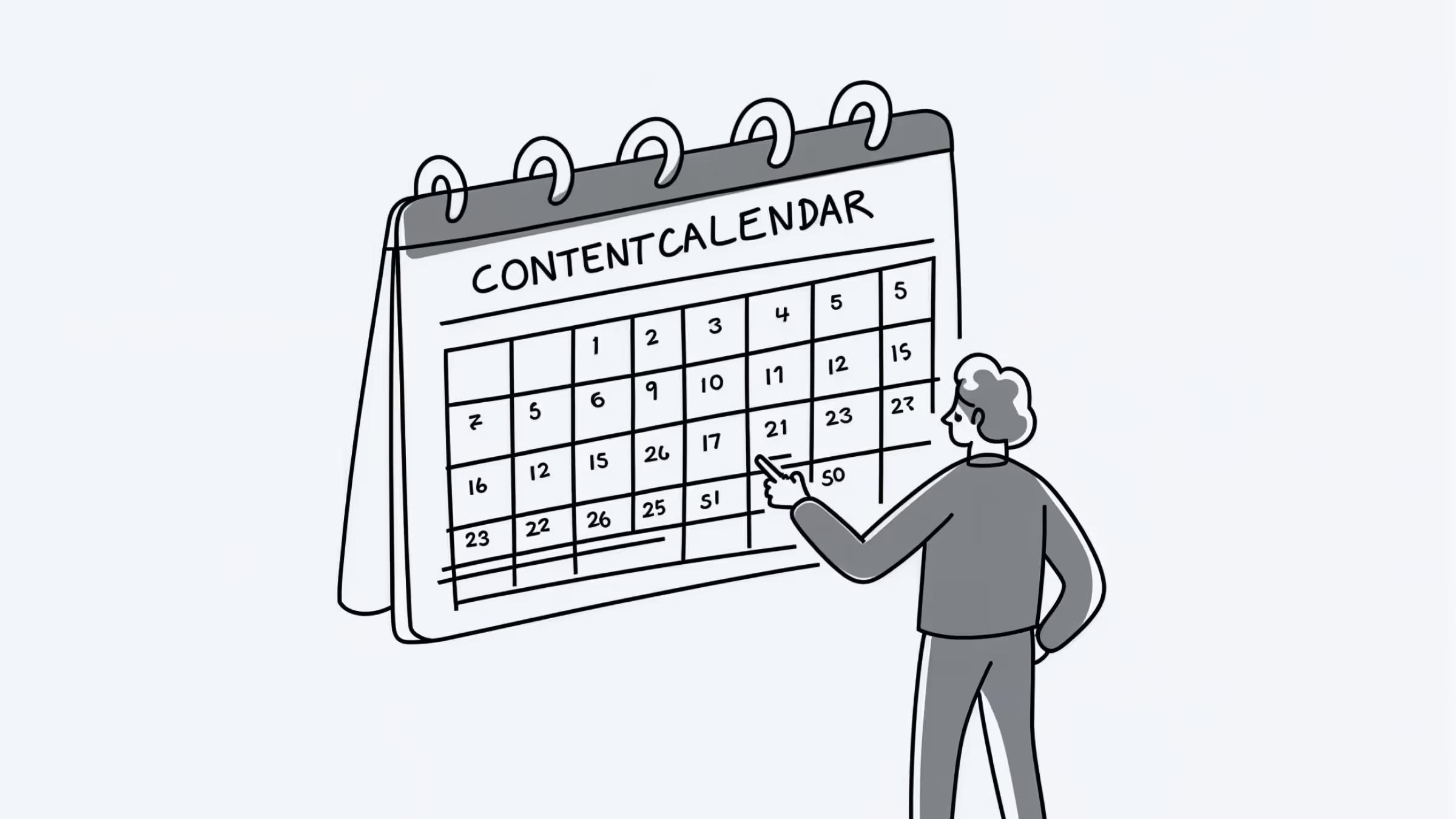
A marketing calendar tool is the backbone of your planning system.
It provides visibility across channels and helps coordinate with broader marketing initiatives.
Your calendar should include:
- Publishing dates and times
- Content themes or campaigns
- Platform-specific variations
- Content status (idea, in progress, approved, published)
- Performance metrics
Step 2: Content Ideation Process
Consistent content requires a reliable ideation process. Here are effective approaches:
- Content pillars: Define 3-5 core topics that align with your expertise and audience interests
- Content repurposing: Plan how to adapt existing content across platforms
- Trend monitoring: Schedule time to identify relevant trends to incorporate
- Competitive analysis: Track what's working for competitors
Step 3: Content Production Workflow
Streamline your production process with clear workflows:
- Brief creation: Document the purpose, audience, and key messages
- Content drafting: Create the initial content
- Internal review: Get feedback from relevant stakeholders
- Revisions: Refine based on feedback
- Final approval: Get sign-off from decision makers
- Scheduling: Add to your publishing queue
Step 4: Performance Analysis
Your planning system should include regular performance reviews:
- Weekly quick-checks on engagement metrics
- Monthly deep-dives on content performance
- Quarterly strategy adjustments based on insights
Tools That Streamline Content Planning
The right tools can transform your content planning process from chaotic to streamlined. Let's compare some popular options:
Why Ordinal Stands Out for Content Planning
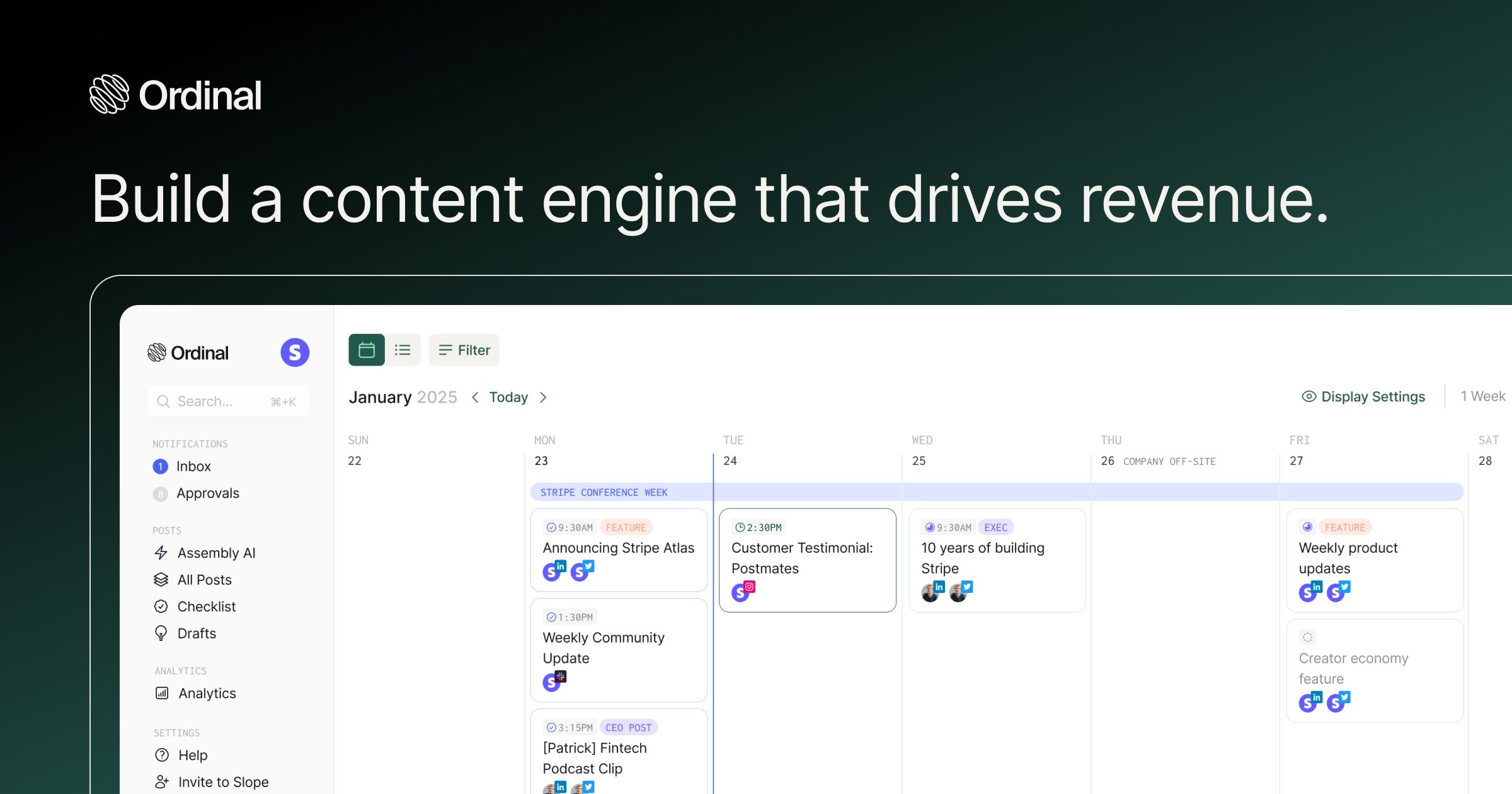
Ordinal has positioned itself as more than just a scheduling tool - it's a complete content planning ecosystem. What makes it particularly valuable for content planning:
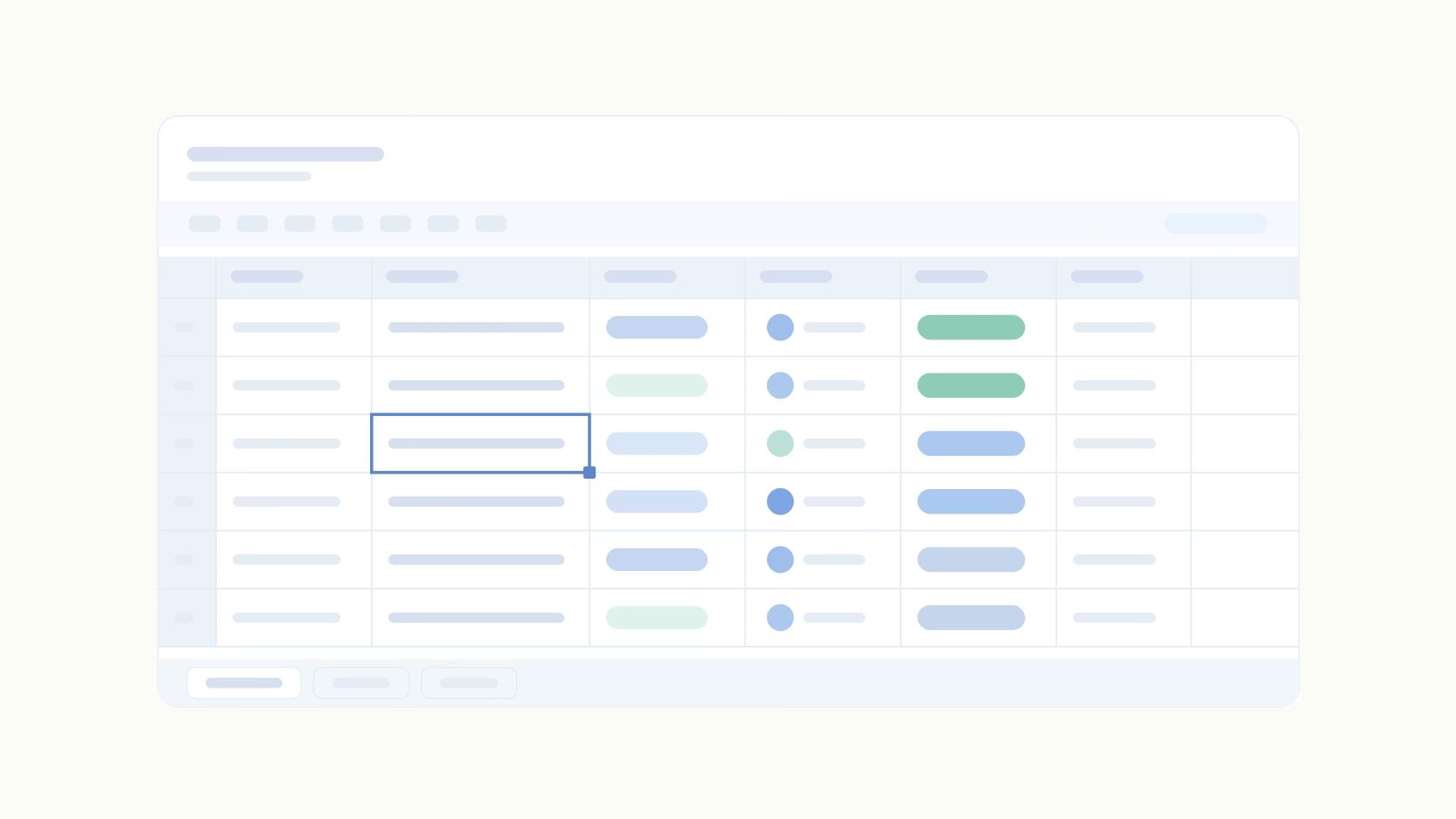
- Modern content calendar: Instead of a simple list, Ordinal helps you visually plan and manage your content calendar with a robust and modern interface.
- Notion-like editor: Makes drafting and organizing content intuitive.
- Built-in approvals: Streamlines the review process and includes a Slack integration to alert users of pending approvals.
- Cross-posting capabilities: Easily adapt content for different platforms with a single click.
- Auto-engagement features: Boost initial performance with scheduled comments and likes.
- Realistic post previews: See exactly how content will appear before publishing.
For teams who want to consolidate their tools and take content seriously, Ordinal serves as a comprehensive end-to-end social media management tool.
Content Planning Best Practices
Beyond the tools and systems, here are proven best practices that elevate your content planning:
Batch Content Creation
Instead of creating posts one at a time, dedicate blocks of time to batch-create content:
- Research day: Gather ideas, statistics, and resources
- Writing day: Draft multiple posts at once
- Visual creation day: Design accompanying images or videos
- Review and scheduling day: Finalize and queue content
This approach improves efficiency and content consistency. Given that content creators spend an average of 70% of their time (up to 10 hours per week) on content creation, batching becomes essential for managing this significant time investment effectively.
For many teams, we recommend setting aside a few hours once a week to do all the above in one continuous session.
Build a Content Library
Develop a repository of evergreen content that can be refreshed and reused:
- Industry statistics and insights
- Product tutorials and tips
- Customer testimonials
- Frequently asked questions
This resource becomes invaluable during content gaps or busy periods.
Incorporate User-Generated Content
Plan for content that encourages and showcases user participation:
- Customer spotlights
- Review highlights
- Contest submissions
- User questions and responses
UGC like this is always high engagement and provides solid Middle of Funnel content to build social proof for your product.
Common Content Planning Pitfalls to Avoid
Even with the best tools and intentions, these common mistakes can derail your content planning:
1. Overcommitting to Volume
Problem: Creating an ambitious calendar that's unsustainable.
Solution: Start with a realistic posting frequency and scale up gradually.
2. Neglecting Platform Differences
Problem: Using identical content across all platforms.
Solution: Adapt content to each platform's unique format and audience expectations.
3. Rigid Planning
Problem: Sticking to planned content when real-time opportunities arise.
Solution: Build flexibility into your calendar for trending topics and timely content.
4. Ignoring Analytics
Problem: Continuing with strategies that data shows aren't working.
Solution: Schedule regular performance reviews and be willing to pivot.
Getting Started with Better Content Planning
If you're ready to ramp up your social media content planning, here's a simple 30-day roadmap:
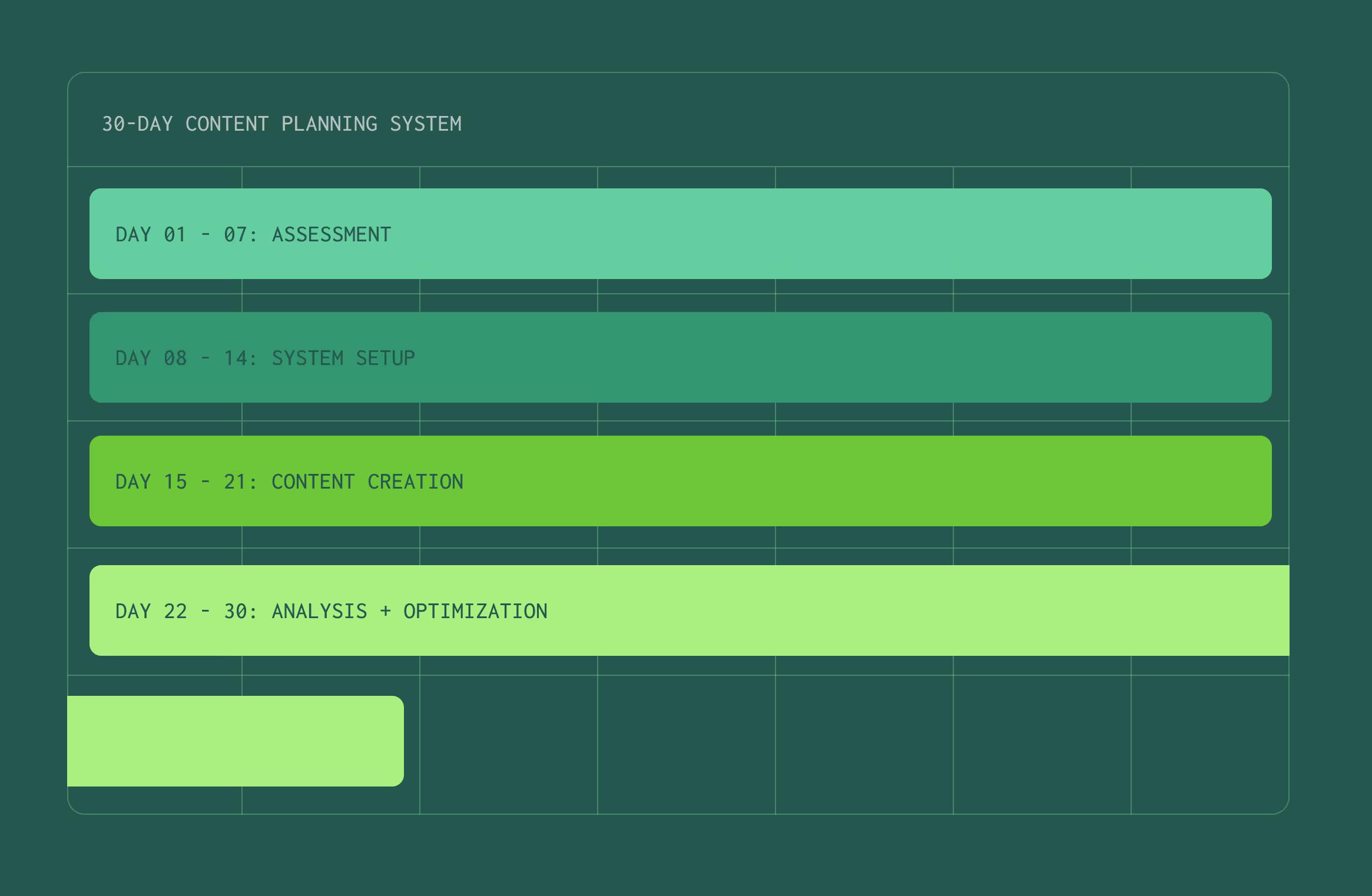
Days 1-7: Assessment
- Audit current content performance
- Define clear goals and KPIs
- Research audience preferences
- Evaluate tool options (consider Ordinal's free trial)
Days 8-14: System Setup
- Create content calendar template
- Define content pillars and themes
- Establish workflow and approval process
- Set up your chosen planning tool
Days 15-21: Content Creation
- Batch-create first month of content
- Optimize for each platform
- Schedule posts with appropriate timing
- Set up engagement monitoring
Days 22-30: Analysis & Optimization
- Monitor initial performance
- Gather team feedback on the process
- Make workflow adjustments
- Plan next content batch with insights
After your first month of content, we recommend moving to a weekly cadence where you set aside one day a week to create the next week’s content, and evaluate analytics and performance on a monthly basis to make any higher-level adjustments in strategy.
Conclusion
Effective content planning isn't just about filling a calendar - it's about creating a sustainable system that produces high-quality, strategic content aligned with your business goals.
Whether you're managing multiple brand accounts or building a personal presence, the right planning approach transforms social media from a daily scramble into a strategic asset. Tools like Ordinal provide the infrastructure to make this possible, combining drafting, planning, scheduling, and analytics in one cohesive platform.
Remember that the best content planning system is one you'll actually use. Start simple, focus on consistency, and refine your approach as you learn what works for your unique audience and objectives.
What content planning challenges is your team facing? Have you found tools or approaches that work particularly well? The conversation around effective content planning is always evolving, and sharing experiences helps the entire marketing community level up.
FAQ
How often should I batch-create social media content?
Most teams find success dedicating a few hours once per week to batch-create the following week's content, covering research, drafting, visual creation, and scheduling in one continuous session. This approach improves consistency and saves time compared to creating posts individually throughout the week.
What's the right balance between top, middle, and bottom of funnel content?
Your content mix should include personal stories and broad insights (top of funnel), industry-specific expertise and competitor analysis (middle of funnel), and product features with case studies (bottom of funnel). The exact ratio depends on your goals, but avoid focusing exclusively on any single category to maintain audience engagement across all stages.
When should I adjust my content strategy based on analytics?
Review engagement metrics weekly for quick performance checks, conduct monthly deep-dives to identify patterns in what's working, and make strategic adjustments quarterly based on accumulated insights. This cadence prevents knee-jerk reactions while keeping your strategy responsive to actual performance data.
How do I create a content calendar that my team will actually use?
Your calendar needs publishing dates and times, content themes or campaigns, platform-specific variations, clear status tracking (idea, in progress, approved, published), and performance metrics all in one view. The key is making it visual and collaborative so team members can see what's coming and coordinate their work without constant check-ins.
Related Posts
Looking to learn more? The below posts may be helpful for you to learn more about social media and content marketing.