


Buffer, Hootsuite, and Ordinal all call themselves social media management platforms. They solve different problems for different teams at different price points, and the wrong choice costs you months of wasted setup before you realize it.
Buffer is a simple, affordable scheduler. Hootsuite is the enterprise monitoring suite. Ordinal is the B2B-native platform built for LinkedIn and Twitter-first teams. This comparison covers what each one actually does well, where each one falls short, and which one fits based on your team size, budget, and what you're optimizing for.
TL;DR
- Buffer starts at $12/month and does scheduling well. It lacks social listening, auto-engagement, and realistic post previews.
- Hootsuite starts at $99/user/month and covers monitoring, listening, and enterprise compliance. TrustPilot scores (1.3-2.1/5) reflect billing and support frustration.
- Ordinal starts at $95/month and is built for B2B teams running LinkedIn and Twitter. Auto-engagement, MCP/API access, realistic previews, and personal profile tagging are native.
- If you're a solo creator or small B2C team, Buffer. If you're enterprise or a B2B SaaS team or agency running LinkedIn-first content, Ordinal.
What Each Platform Actually Does
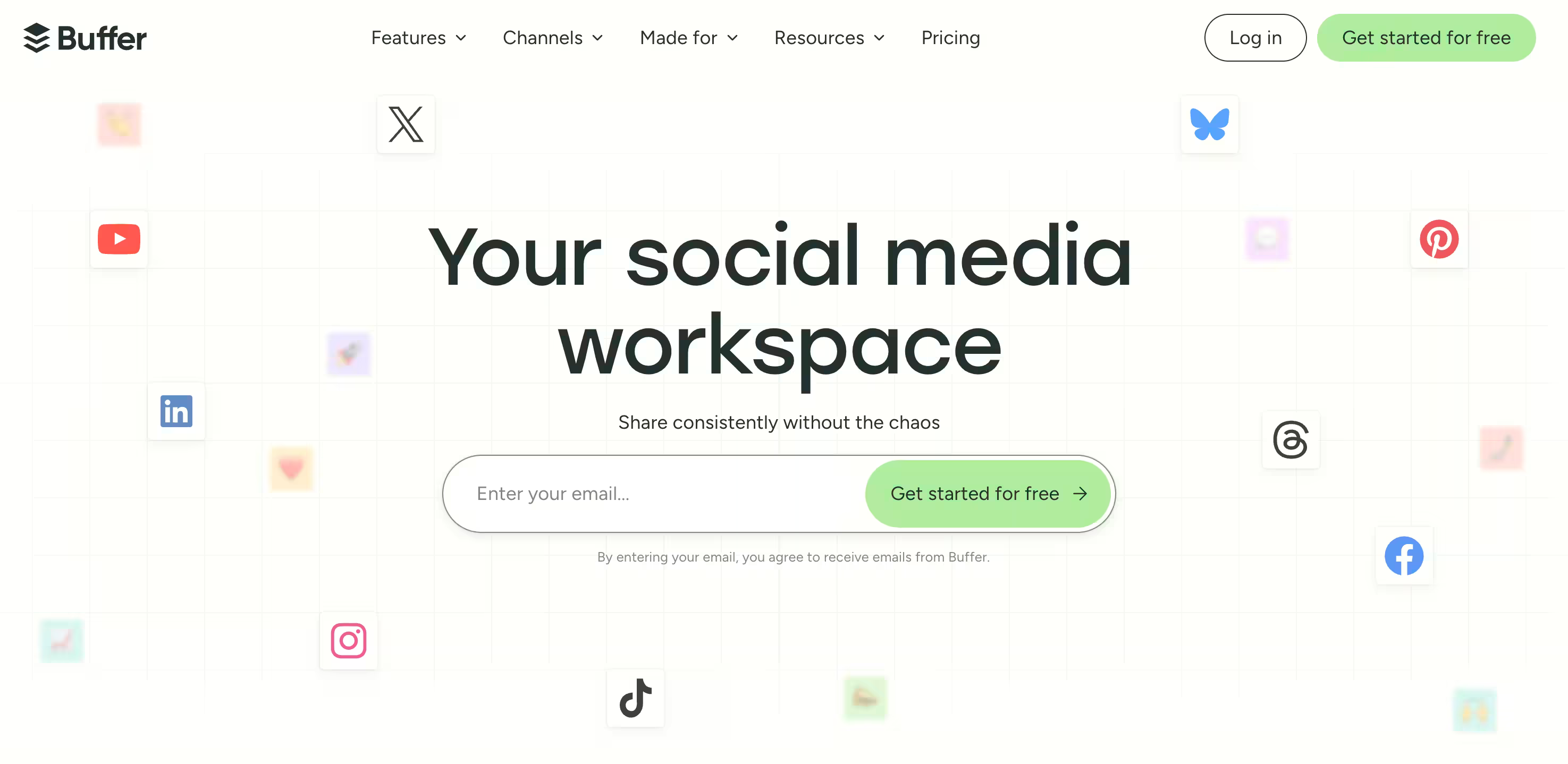
Buffer consolidates scheduling, basic analytics, and comment management into a clean interface across 11 platforms. It supports Facebook, Instagram, TikTok, LinkedIn, Threads, Bluesky, YouTube, Pinterest, Google Business Profile, Mastodon, and X. The forever-free plan covers three channels.
Paid plans unlock unlimited scheduling and team collaboration. Over 100,000 businesses use it, and the 99% post reliability rate is a legitimate selling point. The AI Assistant helps with drafting. The Start Page feature handles link-in-bio pages. That's the scope.
Hootsuite goes wider. Scheduling, analytics, social listening, unified inbox, employee advocacy (Amplify), and 100+ integrations across 30+ social networks. It monitors mentions across 300+ review sites and 150+ million websites.
The platform has been in the market for 18 years with 25 million users. Case studies cite $42.7 million in revenue attributed to social and $1.5 million in equivalent ad value from advocacy programs. If you need to watch the entire digital landscape and report to a C-suite, Hootsuite was built for that.
Ordinal is more niched by design. It's an end-to-end social media management tool for B2B teams that treat LinkedIn and Twitter as revenue channels.
Realistic post previews show exactly where "see more" cuts off, what image grids look like, and how content renders on mobile before it goes live. Personal profile tagging, PDF carousel support, auto-engagement (likes, comments, reposts with randomized timing), inline approval workflows with version history and diffs, Slack-native notifications, and a fully open API and MCP make it the most composable platform in the category.
It also posts to Instagram, Discord, Slack communities, and Webflow blogs. For a deeper look at the scheduling and collaboration features, see the full Ordinal product overview.
Features Side by Side
1. Scheduling and Publishing
Buffer handles scheduling across 11 platforms with best-time-to-post recommendations and browser extensions. Cross-posting syncs content but doesn't let you meaningfully customize each channel's version before the schedule point.
Hootsuite offers unlimited scheduling with AI-generated captions, built-in Canva and Adobe Express templates, and bulk scheduling for loading weeks of content at once. Cross-posting is supported but shares the same UX limitation as most legacy tools.
Ordinal treats each channel as distinct.
When you cross-post, the copy and content sync, but you can fully edit what each channel says. Split a LinkedIn post into a Twitter thread, change an Instagram caption, add alt text to images. Keyboard shortcuts handle Twitter threads. PDF carousels, polls, and reposts are all supported natively. Most schedulers still can't do LinkedIn personal tagging, quote reposts, or PDF uploads because their teams haven't built them.
Ordinal ships these the moment the API supports them. For a broader look at what's available across the market, see the cross-platform publishing tools guide.
2. Analytics
Buffer provides basic analytics with actionable insights and customizable reports. Clean, but limited. No earned media value, no format-level filtering, no competitive benchmarking.
Hootsuite goes deep with hundreds of trackable metrics, competitor benchmarking, revenue attribution, and automated report delivery. If your organization needs to connect social activity to pipeline dollars at the enterprise level, Hootsuite's analytics earn their cost.
Ordinal sits between the two on breadth but ahead on B2B-specific utility. Analytics break down by format, content label, and campaign. Earned media value shows what your organic impressions would have cost in LinkedIn ads at a custom CPM. The MCP integration means you can pipe all your Ordinal data into Claude and build custom dashboards, leaderboards, or AI-generated content briefs on top of it.
Teams like Zapier have built employee advocacy dashboards and analytics tools on top of the Ordinal data layer.
3. Engagement
Buffer pulls comments from all channels into one inbox. Faster than switching between apps, but that's the extent of it.
Hootsuite's unified inbox routes messages automatically, assigns conversations to team members, stores saved replies, and tags conversations. Automated Instagram DMs are supported. For large teams managing high-volume inbound, this is the strongest option.
Ordinal approaches engagement differently. Auto-engagement fires likes, comments, and reposts within the first 10 minutes of a post going live, with randomized timing so interactions feel organic. You set custom time delays, choose reaction types, and coordinate team engagement programmatically. Integrated Slack channels automatically send a ping with the post URL at publish time so employees who aren't connected to Ordinal still know to engage.
Auto-engagement increases total engagements per post by 27% (67.58 vs. 53.12). For teams evaluating employee advocacy platforms, the auto-engagement approach is a different model worth comparing.
4. Collaboration and Approvals
Buffer offers review and approval workflows, custom access permissions, and unlimited user invites on paid plans. Functional but basic.
Hootsuite adds message routing, automated assignments, internal notes, and audit trails. Built for enterprises with complex approval chains and compliance requirements.
Ordinal's approval system is built for content teams. Approvals can be blocking (mandatory) or non-blocking. When a reviewer opens a post, the editor is live. They can leave inline comments on specific text, tag teammates, and the author can resolve comments and push new versions with a tracked diff showing what changed. Public share links let external stakeholders review without needing an account.
The approvals inbox shows all pending and overdue approvals in one place. For agencies managing 20+ clients, this eliminates the Slack-and-email approval chain entirely.
5. Social Listening and Monitoring
Buffer doesn't offer social listening.
Hootsuite monitors mentions across 30+ social networks, 300+ review sites, and 150+ million websites in real time. Sentiment tracking, predictive crisis monitoring, trend discovery, and competitor analysis are all built in. If listening is central to your social strategy, Hootsuite is the only one of these three that covers it.
Ordinal doesn't offer broad social listening. The platform is built for content creation, distribution, and engagement, not monitoring. If you need listening, you'd run a dedicated tool like Brandwatch alongside Ordinal.
Pricing
Buffer's free plan covers three channels with 10 scheduled posts each. The Essentials plan starts at $12/month per channel. The Team plan adds collaboration features. Per-channel pricing means costs scale with accounts: twelve channels runs roughly $60/month. No per-user charges on paid plans.
Hootsuite starts at $99/user/month (billed annually) for the Standard plan, which includes up to 10 social accounts. Advanced and Enterprise tiers offer unlimited accounts, custom reporting, and compliance features at higher price points. A 30-day free trial is available. For a deeper comparison of Hootsuite's pricing and feature gaps, see our Hootsuite alternatives breakdown.
Ordinal's Starter plan starts at $95/month. Pro is $265/month. Pricing is per-workspace, not per-user or per-channel, which means your whole team works from one plan. Auto-engagement, MCP access, realistic previews, and all core features are included at every tier. Enterprise plans add features like leads data (who liked and commented on your posts) and dedicated support.
The pricing math depends on team structure. A solo creator managing three accounts should use Buffer. $12/month vs. $95/month isn't close, and Ordinal is likely overkill for a solo creator. An enterprise team with 10 social staff or a B2B SaaS team with 3-8 people running LinkedIn and Twitter as their primary channels should evaluate Ordinal.
The auto-engagement, composability, and content workflow features aren't available at any price on the other two.
What Users Say
Buffer
Capterra: 4.5/5 from 1,491 reviews. Users praise the intuitive interface and time-saving scheduling. Consistent criticism around limited analytics and no social listening.
G2: 4.3/5 from 1,000+ reviews. Clean interface and reliable scheduling earn high marks. Analytics depth and per-channel pricing draw complaints.
TrustPilot: 3.3/5 from 104 reviews. Mixed.
Reddit: Users like the simplicity but call the per-channel pricing "a major pain point" and note costs scale faster than expected. The full Buffer vs Ordinal comparison covers the feature differences in more detail.
Hootsuite
Capterra: 4.4/5 from 3,796 reviews. Multi-account management and scheduling get praise. Pricing, complexity, and comparisons to cheaper alternatives are recurring concerns.
G2: 4.3/5 from 7,100+ reviews. Strong marks for centralized management and advanced scheduling.
TrustPilot: 1.3-2.1/5 from 540+ reviews. Overwhelmingly negative. Billing surprises, auto-renewal charges, and unresponsive customer support are the dominant themes.
Reddit: Users acknowledge solid functionality for managing 15+ accounts but consistently flag high pricing and poor customer service.
Ordinal
Ordinal is newer to market and doesn't have the same volume of third-party reviews. Case studies from Zapier, Clay, beehiiv, and Gallery document specific results. Clay grew from 8K to 120K LinkedIn followers in a year using Ordinal's scheduling and engagement coordination. Zapier's exec advocacy program drove measurable revenue through Ordinal's MCP-powered content workflows.
Which One Fits Your Team
Choose Buffer if you're a solo creator, small B2C business, or early-stage startup managing 3-6 social accounts. You want clean scheduling and basic analytics without complexity or high cost. You don't need social listening, auto-engagement, or deep LinkedIn-specific features.
Choose Ordinal if you're a B2B SaaS team, agency, or founder-led company where LinkedIn and Twitter are your primary channels. You want auto-engagement, realistic post previews, personal profile tagging, and PDF carousel support out of the box. You want an open, composable platform with an API and MCP so you can build custom workflows, connect AI agents, and pipe data into tools like Claude. You care about content workflow: inline comments, version diffs, blocking approvals, Slack-native notifications. Not just scheduling.
All three platforms let you test before committing. Buffer's free plan never expires. Hootsuite offers a 30-day trial. Ordinal offers a free trial with full feature access.
Frequently Asked Questions
Is Buffer or Hootsuite Better for Small Businesses?
Buffer is the better fit for most small businesses. It starts at $12/month vs. Hootsuite's $99/user/month, offers a forever-free plan, and handles core scheduling across 11 platforms without a steep learning curve. Hootsuite's pricing and complexity are built for larger teams.
Does Hootsuite Offer a Free Plan?
No. Hootsuite discontinued its free plan. A 30-day free trial is available, after which the cheapest option is $99/user/month billed annually. Buffer and Ordinal both offer free or trial access without a credit card commitment.
What's the Best Social Media Management Tool for LinkedIn?
Ordinal is purpose-built for LinkedIn. It supports personal profile tagging, PDF carousel uploads, realistic mobile and desktop previews, auto-engagement, and poll scheduling. Features most schedulers don't have. Buffer and Hootsuite both support LinkedIn posting but lack these LinkedIn-specific capabilities.
Can I Use Buffer and Ordinal Together?
You could, but there's no practical reason to. Ordinal covers scheduling, analytics, collaboration, and engagement for the channels Buffer supports, plus features Buffer doesn't offer. If you're using Buffer for non-LinkedIn platforms like Pinterest or Mastodon and Ordinal for LinkedIn and Twitter, that's a viable split, but most B2B teams consolidate into one tool.
Why Is Hootsuite's TrustPilot Score So Low?
Hootsuite's TrustPilot rating sits between 1.3 and 2.1 out of 5 from 540+ reviews. The dominant complaints are billing surprises, auto-renewal charges, difficulty canceling subscriptions, and unresponsive customer support. The platform's G2 and Capterra scores (4.3-4.4/5) are significantly higher, suggesting the TrustPilot audience skews toward users who had negative billing experiences.
What Is Auto-Engagement and Which Tool Supports It?
Auto-engagement automatically fires likes, comments, and reposts from your team's profiles within minutes of a post going live. Ordinal is the only platform among these three that offers it natively. Likes and comments are scheduled with randomized timing so they feel organic. Data shows auto-engagement increases total engagements per post by 27%.
Which Platform Has the Best API for Custom Integrations?
Ordinal is fully API-first and offers an MCP (Model Context Protocol) server that connects to tools like Claude. Everything you can do in the Ordinal UI is available via the API, which means you can build custom dashboards, connect AI agents to draft and schedule posts, and create automated workflows. Hootsuite has 100+ integrations and a strong ecosystem. Buffer offers Zapier integration but is otherwise a more closed platform.
Related Posts
Looking to learn more? The below posts may be helpful for you to learn more about social media and content marketing.