


Everyone managing social content knows the pain of switching between platforms just to post the same update. Social media cross-posting tools can help eliminate repetitive work, but choosing the right one can often be a difficult choice, depending on your team's needs and goals. We ranked the top options based on what actually matters when you're publishing at scale.
TLDR:
- Cross-platform tools let you draft once and publish everywhere, saving hours of manual posting
- The best cross-posting tools handle platform-specific formatting automatically while maintaining content quality
- Advanced cross-posting platforms include team collaboration, approval workflows, and engagement automation
- Ordinal delivers enterprise-grade cross-posting with automated formatting, team coordination, and built-in amplification features for B2B teams
What is Cross-Platform Social Media Publishing?
Cross-platform social media publishing (also known as cross-posting) lets you create content once and distribute it across multiple social networks simultaneously from one central interface. Instead of logging into LinkedIn, then X, then Instagram separately to post the same update, cross-posting tools handle the distribution automatically.
The workflow is straightforward: draft your post once, select which networks should receive it, and the tool handles platform-specific formatting while posting to each network's API. For teams managing multiple accounts or posting frequently, cross-posting eliminates hours of repetitive work while maintaining a unified view of all scheduled content.
How We Ranked Cross-Platform Social Media Publishing Tools
We assessed each tool based on what matters most when publishing across multiple social networks.
- Multi-channel support – Does the tool publish to all major networks, or just a few? With the average company managing six to eight social channels, broad network coverage is essential.
- Collaboration features – Can teams comment on drafts, route content through approval workflows, and coordinate publishing? These capabilities separate solo creator tools from team-focused solutions.
- Analytics depth and engagement automation – Basic post metrics are baseline requirements. The best tools surface granular engagement data and include features like auto-comments that amplify reach.
- Intuitive interfaces – We prioritized tools that teams can use without extensive training.
Best Overall Cross-Platform Social Media Publishing Tool: Ordinal
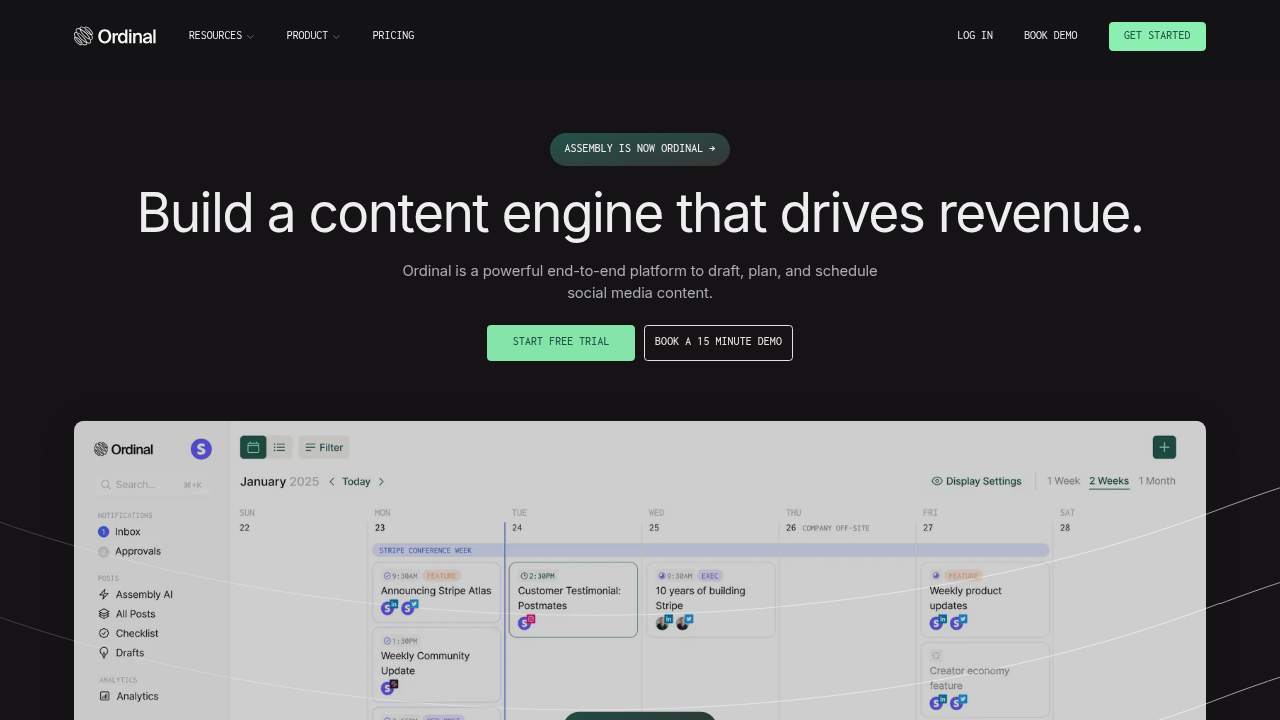
Ordinal is designed for B2B teams that need sophisticated cross-posting capabilities across all major platforms. The tool handles simultaneous publishing to LinkedIn, X, Instagram, Facebook, TikTok, YouTube, Slack, Discord, and Webflow from a single interface.
Key Features:
- One-click cross-posting: Draft once and publish everywhere with automatic formatting adjustments for each platform's specific requirements, character limits, and media specifications. When you cross-post within Ordinal, the tool automatically syncs across copy and content from the original channel - but importantly, still gives you full flexibility to make any edits and changes on a per-channel basis. That way you can optimize the content to best perform for each specific channel.
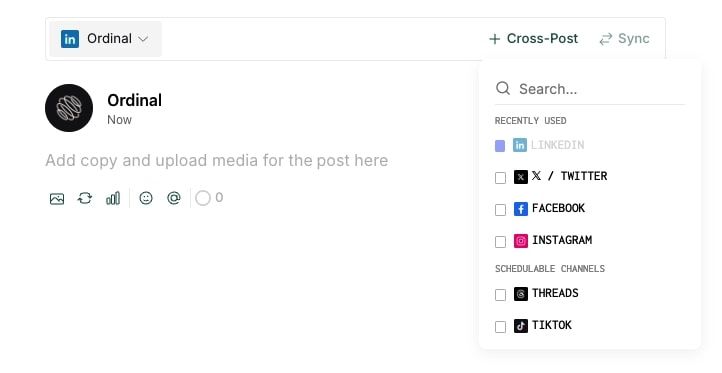
- Cross-platform tagging: Tag companies and users across LinkedIn, X, Instagram, and other networks directly in the editor without switching platforms or manually formatting mentions.
- Realistic post previews: See exactly how your cross-posted content will appear on each social network before publishing, allowing teams to optimize formatting for platform-specific requirements.
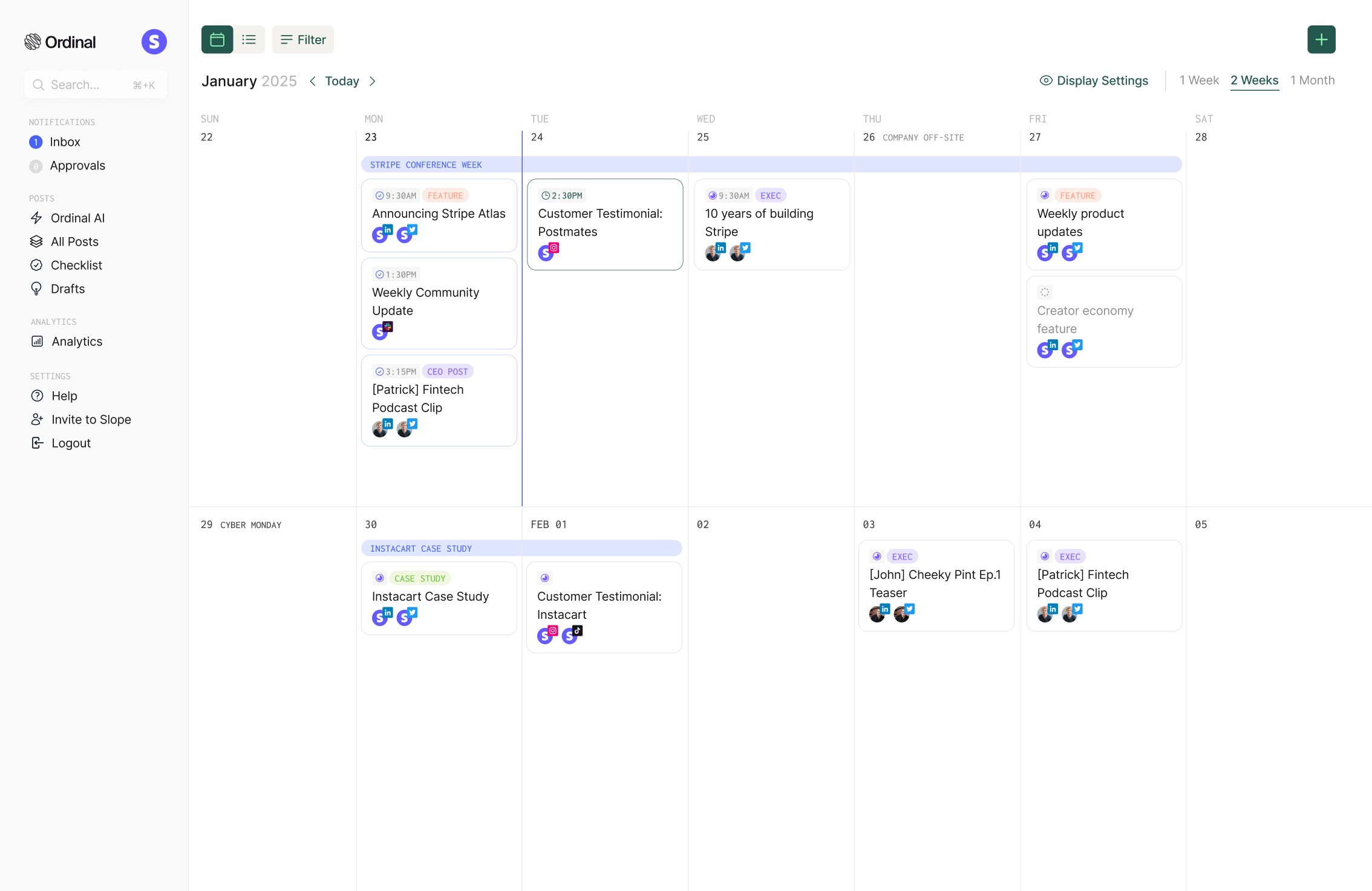
- Visual campaign calendar: Coordinate cross-platform campaigns with a unified view of all scheduled posts across every network.
- Inline collaboration & approvals: Comment on cross-posted drafts, tag teammates, and route content through approval workflows before distribution.
- Auto-engagement features: Drive early visibility across all posted platforms through coordinated comments and interactions that trigger algorithmic momentum.
- Unified analytics dashboard: Track cross-platform performance in one view, with detailed breakdowns showing how the same content performs across different networks.
- Notion-like editor: Draft content in a familiar, flexible editor that shows exactly how posts will appear (including LinkedIn’s “see more” cutoff).
- Cross-platform integration: Connect all social accounts and publishing workflows in one centralized system without switching between tools.
- Platform-specific optimization: Personal & company tagging, bold/italics support, video & PDF attachments, and realistic post previews so your posts perform right the first time.
Ordinal's cross-posting engine automatically adapts content for each platform's technical requirements while maintaining quality and consistency. The tool helps teams understand how identical content performs differently across platforms, enabling data-driven optimization of cross-posting strategy.
For teams viewing social content as a growth channel, Ordinal provides the cross-posting automation and performance insights needed to maximize reach efficiently.
Buffer
Buffer is a straightforward cross-posting scheduler that focuses on basic multi-platform distribution without advanced features. The tool handles simultaneous posting across major social channels with a simple interface.
Pros
- Simple cross-platform content calendar with drag-and-drop scheduling
- Queue-based posting system that distributes content consistently across platforms
- Basic cross-posting to major networks (LinkedIn, X, Instagram, Facebook)
- Mobile app for scheduling cross-platform posts on the go
Cons
- Limited platform-specific formatting options when cross-posting
- No advanced preview showing how content will appear on each platform
- Missing collaboration features for coordinating cross-posted content
- Basic analytics don't compare performance across platforms
- No engagement automation to amplify cross-posted content
Buffer works well for individual creators who need simple cross-posting without team coordination or platform-specific optimization.
Hootsuite
Hootsuite is a legacy cross-posting system designed for large organizations managing numerous accounts. The tool has offered multi-platform publishing for over a decade, though its cross-posting capabilities haven't evolved significantly.
Pros
- Multi-account dashboard supporting cross-posting across all major channels
- Bulk scheduling allows batching multiple cross-platform posts
- Team assignment for coordinating cross-posted content
- Stream-based monitoring provides unified view of responses across platforms
Cons
- Clunky cross-posting interface requires multiple steps
- No automatic platform-specific formatting adjustments
- Cross-posted content previews are basic and often inaccurate
- Calendar views become cluttered when managing cross-platform campaigns
- No engagement automation for amplifying cross-posted content
Hootsuite handles traditional cross-posting but lacks the execution quality and optimization features that maximize cross-platform performance.
Sprout Social
Sprout Social offers enterprise-level cross-posting with a focus on reporting rather than distribution efficiency. The tool provides comprehensive analytics for understanding how content performs across different platforms.
Pros
- Cross-channel content calendar with scheduling across all major networks
- Reporting dashboards compare performance of cross-posted content across platforms
- Publishing workflow with approval routing for cross-posted content
- Consolidated inbox aggregates responses from all platforms where content was posted
Cons
- No automatic formatting adjustments for platform-specific requirements
- Rigid cross-posting workflows slow down iteration
- Missing engagement automation to amplify cross-posted content
- High price point for primarily monitoring-focused features
- Cross-platform tagging requires manual formatting for each network
Sprout delivers enterprise dashboards for tracking cross-posted content, but teams focused on efficient distribution need more streamlined execution tools.
CoSchedule
CoSchedule is a marketing calendar system that includes basic cross-posting functionality as one component of broader content planning. The tool treats social cross-posting as secondary to overall marketing coordination.
Pros
- Marketing calendar consolidates cross-posted social content with blogs and emails
- Basic cross-platform scheduling across major social channels
- Task assignment for coordinating cross-platform campaigns
Cons
- Limited platform-specific formatting for cross-posted content
- No preview showing how posts will appear on each platform
- Lightweight cross-posting features compared to dedicated social tools
- Minimal analytics comparing cross-platform performance
- No engagement automation for amplifying distributed content
CoSchedule handles general marketing coordination, but teams focused on optimizing cross-platform social distribution need more specialized capabilities.
Cloud Campaign
Cloud Campaign is an agency-oriented tool built around cross-posting content for multiple client accounts. The platform organizes cross-posting workflows by client workspace.
Pros
- Multi-client workspace management for handling cross-posting across different accounts
- Cross-channel scheduling across major social networks
- Content approval workflows for reviewing cross-posted content before distribution
- Client-specific content libraries for organizing cross-platform assets
Cons
- Dated interface slows cross-posting operations
- Workspace switching fragments visibility when cross-posting for multiple clients
- No automatic platform-specific formatting adjustments
- Limited analytics for comparing cross-platform performance
- Missing engagement automation for amplifying distributed content
Cloud Campaign works for smaller agencies with straightforward cross-posting needs who prioritize functionality over modern interface design.
Typefully
Typefully is a writing-first tool optimized for composing threads and cross-posting them to X, LinkedIn, Threads, Bluesky, and Mastodon. The tool focuses on clean writing interfaces for solo creators.
Pros
- Thread composer with cross-posting to multiple text-based platforms (X, LinkedIn, Threads, Bluesky, Mastodon)
- AI-powered writing assistance helps adapt content for different platforms
- Auto-retweet and auto-plug functionality for amplifying cross-posted content
- Clean interface prioritizes writing quality
Cons
- Limited cross-posting to visual platforms like Instagram, TikTok, or YouTube
- No platform-specific formatting preview before cross-posting
- Missing team collaboration for coordinating cross-posted content
- Lacks enterprise approval workflows for reviewing distributed content
- Primarily optimized for text-based cross-posting rather than multimedia
Typefully works for solo creators building personal brands who need clean writing tools and basic cross-posting to text-focused platforms. The tool serves individual writers prioritizing composition quality over comprehensive platform coverage.
Oktopost
Oktopost is a B2B-focused social management system with cross-posting capabilities built around compliance-heavy workflows and employee advocacy programs.
Pros
- B2B-focused cross-posting across major social channels
- Employee advocacy workflow tools for amplifying cross-posted content
- Lead tracking connects cross-posted content to conversion metrics
- Social listening capabilities monitor responses across all platforms
Cons
- Rigid cross-posting workflows slow iteration speed
- Complex setup requires significant onboarding for cross-platform publishing
- Limited platform-specific optimization for cross-posted content
- Enterprise pricing excludes smaller teams from accessing cross-posting features
- Less granular LinkedIn execution compared to LinkedIn-native alternatives
Oktopost offers enterprise cross-posting with CRM integrations, but requires developer setup and lacks native content creation tools optimized for cross-platform distribution.
Feature Comparison Table of Cross-Platform Social Media Publishing Tools
Why Ordinal is the Best Cross-Platform Social Media Publishing Tool
Social media management software is a $25.6 billion market, yet most tools focus on basic posting and vanity metrics rather than sophisticated coordination and engagement optimization.
We built Ordinal because social teams waste 63% of their time manually posting the same content across multiple platforms. Cross-posting shouldn't just mean "post to multiple places" - it should mean intelligent distribution that adapts content for each platform's requirements while maximizing reach through coordinated engagement.
Our cross-posting engine automatically handles platform-specific formatting, character limits, media specifications, and tagging syntax so teams can focus on content quality rather than technical requirements. When you cross-post through Ordinal, content is optimized for each platform automatically.
The auto-engagement features drive algorithmic momentum across all posted platforms through coordinated comments, reposts, and Slack boost notifications immediately after distribution. This amplification happens automatically, while competitors require manual coordination across each platform.
Our platform-specific previews show exactly how content will appear on LinkedIn, X, Instagram, and other networks before publishing, eliminating the guesswork and reformatting work that slows down other cross-posting tools.
For B2B teams treating social content as a growth channel, we deliver the cross-posting automation and optimization tools needed to maximize reach efficiently across all platforms.
Final thoughts on social media publishing tools
Choosing a social media cross-posting tool comes down to how sophisticated your distribution needs are. If you need basic posting to a few platforms, plenty of simple options exist. But if you're managing professional cross-platform campaigns that require content optimization, team coordination, and engagement amplification across multiple networks, you need intelligent cross-posting features that most legacy tools don't provide.
FAQ
How do I choose the right cross-platform social media publishing tool for my team?
Start by identifying which platforms you need to reach and how frequently you post. Solo creators may only need simple cross-posting to a few networks, while B2B teams require sophisticated distribution with platform-specific formatting, approval workflows, and analytics comparing performance across platforms. If you're managing coordinated cross-platform campaigns, prioritize tools with team collaboration and engagement automation.
Which cross-platform publishing tool works best for B2B teams focused on LinkedIn?
Tools with platform-specific formatting and preview capabilities deliver the best results when cross-posting to LinkedIn and X, since these platforms have different character limits, media requirements, and formatting expectations. Ordinal automatically adapts content for each platform's requirements while showing accurate previews, eliminating the manual reformatting that basic cross-posting tools require.
Can I automate engagement to help my posts gain traction across platforms?
Most legacy cross-posting tools only handle distribution, but newer platforms include engagement automation features like coordinated comments and scheduled interactions across all posted platforms. These capabilities help cross-posted content gain visibility immediately after publishing on every network without requiring manual coordination from your team.
What's the difference between agency-focused and team-focused publishing tools?
Basic cross-posting duplicates the same content across platforms without adaptation, often resulting in cut-off text, broken formatting, or poor visual presentation. Intelligent cross-posting automatically adjusts content for each platform's character limits, formatting requirements, and media specifications while maintaining quality and consistency.
When should I switch from a basic scheduler to a full publishing platform?
If you're spending significant time logging into multiple platforms to post the same content, manually reformatting posts for each network's requirements, or struggling to coordinate cross-platform campaigns across your team, you've outgrown manual posting. Teams posting the same content to three or more platforms see immediate time savings from dedicated cross-posting tools.
Related Posts
Looking to learn more? The below posts may be helpful for you to learn more about social media and content marketing.