

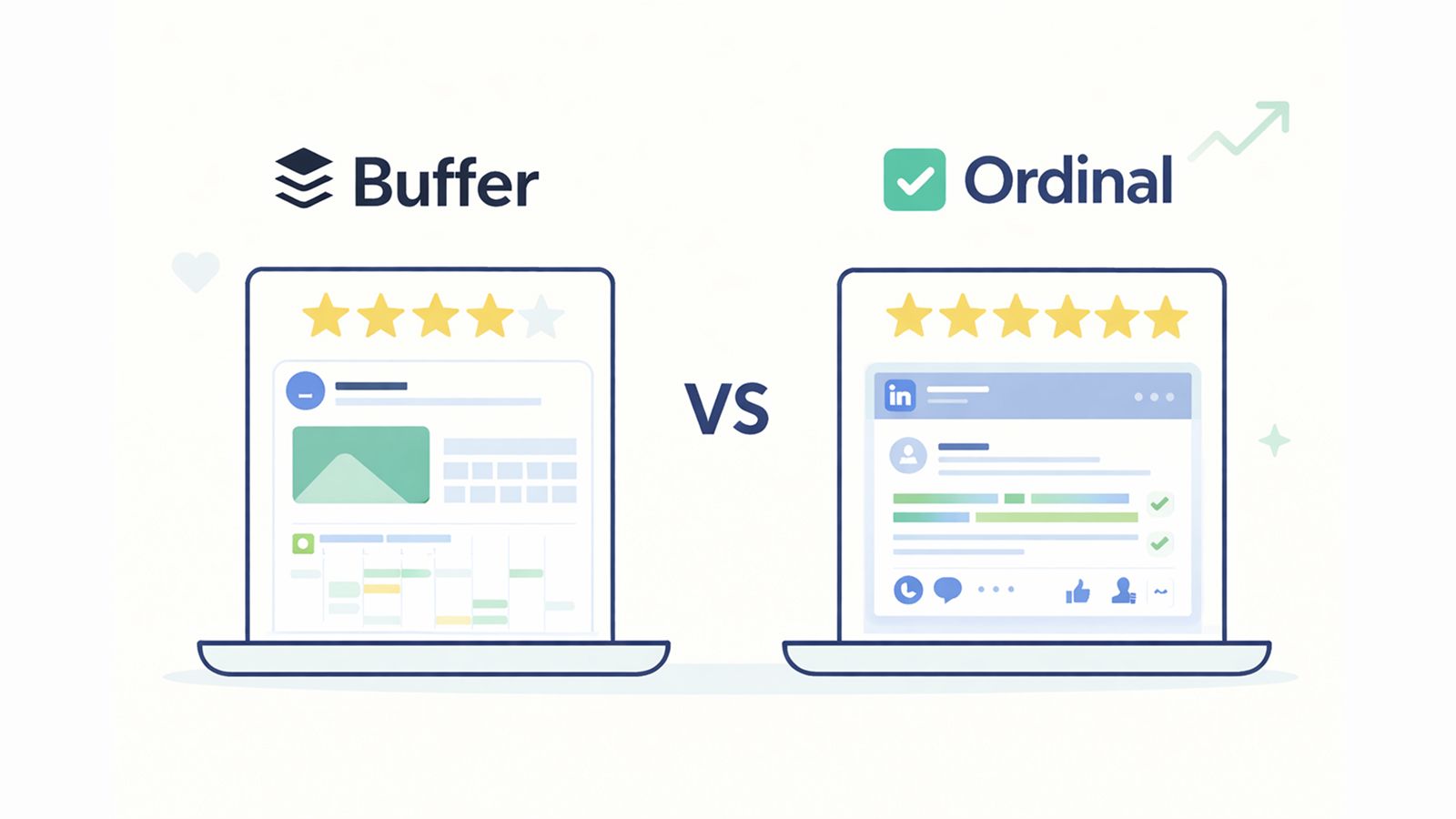
If you're looking for a Buffer alternative, you're likely hitting limitations with basic scheduling and need something built for team collaboration. Buffer does one thing well, which is queuing up posts across your social channels. Ordinal was built to handle everything from content creation and approvals to engagement amplification and revenue attribution. The right choice depends on whether you're managing social content solo or coordinating campaigns across multiple team members and stakeholders. Let's take a deeper look at Buffer vs Ordinal and see what works best for what you need!
TLDR:
- Buffer handles basic scheduling but lacks collaboration tools and engagement features
- Ordinal provides comprehensive team coordination with advanced collaboration and engagement automation
- Auto-engagement features boost post visibility through coordinated team likes and reposts
- Ordinal offers approval workflows and inline collaboration for teams managing complex content
- Ordinal helps B2B teams maximize their LinkedIn presence with sophisticated automation and analytics
What is Buffer?
Buffer is a social media scheduling tool that launched in 2010 with a mission to simplify content posting for individuals and small teams. The product centers on a straightforward calendar interface where you can queue up posts across multiple social networks like Instagram, Facebook, Twitter, and LinkedIn.
At its core, Buffer handles the basics well. You can draft content, attach images or videos, and schedule posts to go live at specific times. The tool offers suggested optimal posting times based on when your audience is most active, and you can set up posting schedules so content automatically publishes at recurring intervals.
Buffer's interface is intentionally lightweight. There's no steep learning curve, which makes it appealing to solopreneurs, freelancers, and small businesses managing a handful of social accounts. The free tier allows up to three social channels, while paid plans scale up to accommodate more accounts and team members.
The tool also includes basic analytics showing post performance metrics like reach, clicks, and engagement rates. These reports give you a snapshot of how your content performs across different networks, though the insights remain fairly surface-level compared to more advanced analytics solutions.
What is Ordinal?
Ordinal (formerly Assembly) is a comprehensive social media management solution for teams that treat social content as a serious revenue driver.
Unlike tools designed for solo users scheduling social media posts, we focus on the complex workflows B2B companies and agencies actually need. That means comprehensive collaboration features where multiple team members can draft, comment, and refine posts together. It means approval workflows that route content to executives or clients before anything goes live. And it means automation features that amplify engagement once the content publishes.
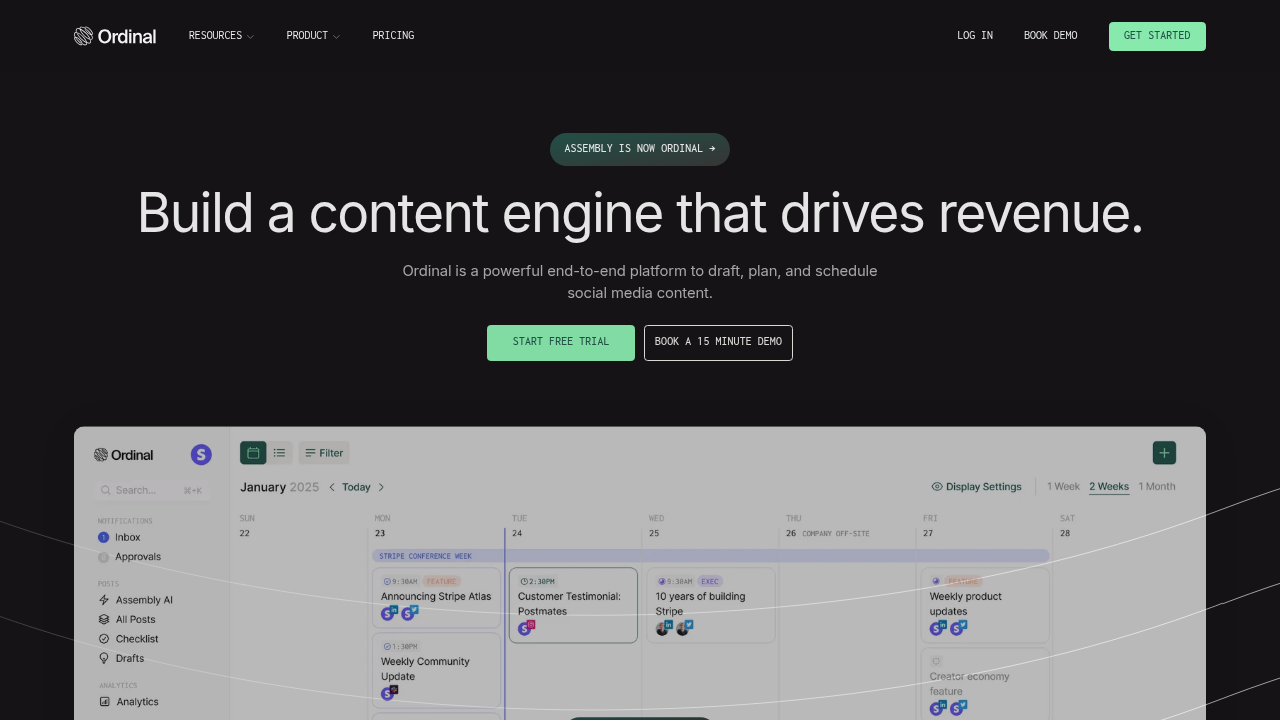
The product handles everything from content creation in a Notion-like editor to scheduling across all major networks (LinkedIn, Twitter, Instagram, Facebook, TikTok, YouTube, and more). It shows realistic post previews so you can see exactly how your content will appear on each network before it goes live.
What separates us from legacy scheduling tools is our focus on sophisticated coordination and automation. We provide advanced collaboration workflows, auto-engagement features that boost algorithmic visibility, and comprehensive analytics that help optimize your content strategy. Over 500 marketers and agencies use Ordinal to manage their social presence, with LinkedIn accounting for more than half of all connected accounts.
Content Creation and Team Collaboration
The content creation workflow is where the two tools diverge most sharply. Buffer functions as a pure scheduling queue, which means you need to write your posts elsewhere before adding them to the calendar.
Buffer has no native content editor or drafting workspace. Teams typically write copy in Google Docs or another external tool, then copy and paste finished text into Buffer's posting interface. This disconnected workflow creates friction when multiple stakeholders need to review content. While Buffer does offer basic approval features in higher-tier plans, there's no inline commenting or real-time collaboration on individual post drafts. For teams coordinating campaigns across multiple decision-makers, this becomes a bottleneck.
Ordinal was designed with an integrated Notion-like editor where teams can draft social content from scratch. The editor supports text formatting and provides a smooth writing experience for both short and long-form posts. Team members add inline comments directly on drafts, so all feedback lives in one place rather than scattered across email threads or documents.
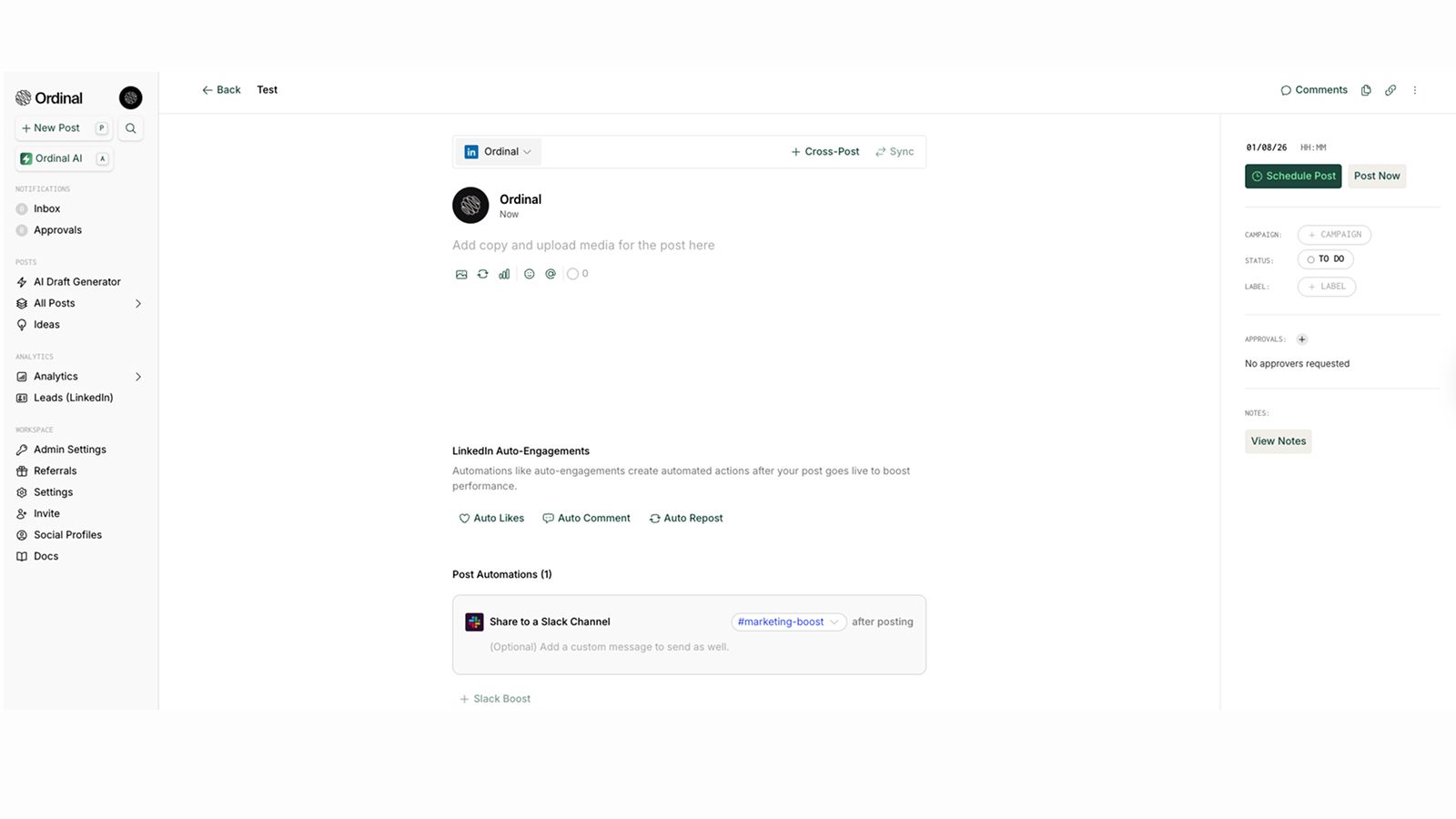
Our approval workflows route posts to the right stakeholders with Slack notifications, ensuring nothing publishes without proper sign-off. The visual content calendar lets you organize posts into campaigns, drag and drop to reschedule, and see your entire content strategy at a glance. This end-to-end approach eliminates the context switching that slows down Buffer users who manage content across multiple tools.
Engagement Amplification Features
Buffer functions solely as a scheduler with no built-in engagement features beyond publishing posts at scheduled times. Once content goes live, the tool offers no mechanisms to coordinate likes, comments, or shares from your team or amplify reach through employee networks.
This is a significant limitation. Employee advocacy can boost brand reach by up to 561% and increase engagement by 800%, but Buffer provides no capabilities to activate this strategy. Teams must manually coordinate engagement efforts through separate Slack channels or email, which means critical momentum is often lost in the first hour after publishing.
Ordinal has a suite of auto-engagement features that jumpstart content performance immediately. The system can automatically trigger likes from multiple team accounts, post pre-scheduled first comments, and repost content from executive profiles to amplify reach across LinkedIn and Twitter.
Our Slack Boost notifications alert designated channels when posts go live with direct links, prompting team members to engage when algorithmic momentum matters most. For B2B teams on LinkedIn where the average engagement rate is just 3.85%, coordinated engagement provides a measurable competitive advantage in reaching target audiences.
Analytics and Revenue Attribution
Buffer's analytics dashboard provides surface-level metrics like impressions, likes, and follower growth across connected networks. The reporting mirrors what each social network's API delivers natively, with limited filtering options or advanced breakdowns. You won't find campaign-level analysis, content bucket comparisons, or insights into which post formats drive results.
The critical limitation is visibility into who engages with your content. Buffer shows aggregate numbers but cannot identify individual profiles that liked or commented on your posts. There's no path to connect social interactions to sales pipeline or demonstrate ROI beyond vanity metrics.
Ordinal's analytics was built to answer the questions B2B teams actually care about. Our dashboard includes granular filters for time periods, content buckets, and post format analysis to identify what drives results. The system provides detailed engagement insights showing patterns in audience behavior, content performance by type, and timing optimization opportunities.
Teams use these comprehensive analytics to refine their content strategy, understand what resonates with their professional network, and optimize posting schedules for maximum reach. This data-driven approach helps you continuously improve your social media performance and demonstrate the value of your content programs.
LinkedIn and Twitter Capabilities
Buffer supports basic LinkedIn and Twitter posting with text, images, and videos. However, the tool lacks Twitter thread support, cannot repost LinkedIn content via URLs, and offers no native polls or carousels for LinkedIn. Text formatting options are minimal, and there are no auto-engagement features for either network.
Ordinal was built with comprehensive capabilities for both networks. Ordinal supports Twitter threads with reordering tools, long-form tweets for X Premium users, and has LinkedIn-first features and supports LinkedIn polls, carousels, and URL-based reposting. Our editor provides bold and italic formatting with pixel-perfect previews for desktop and mobile.
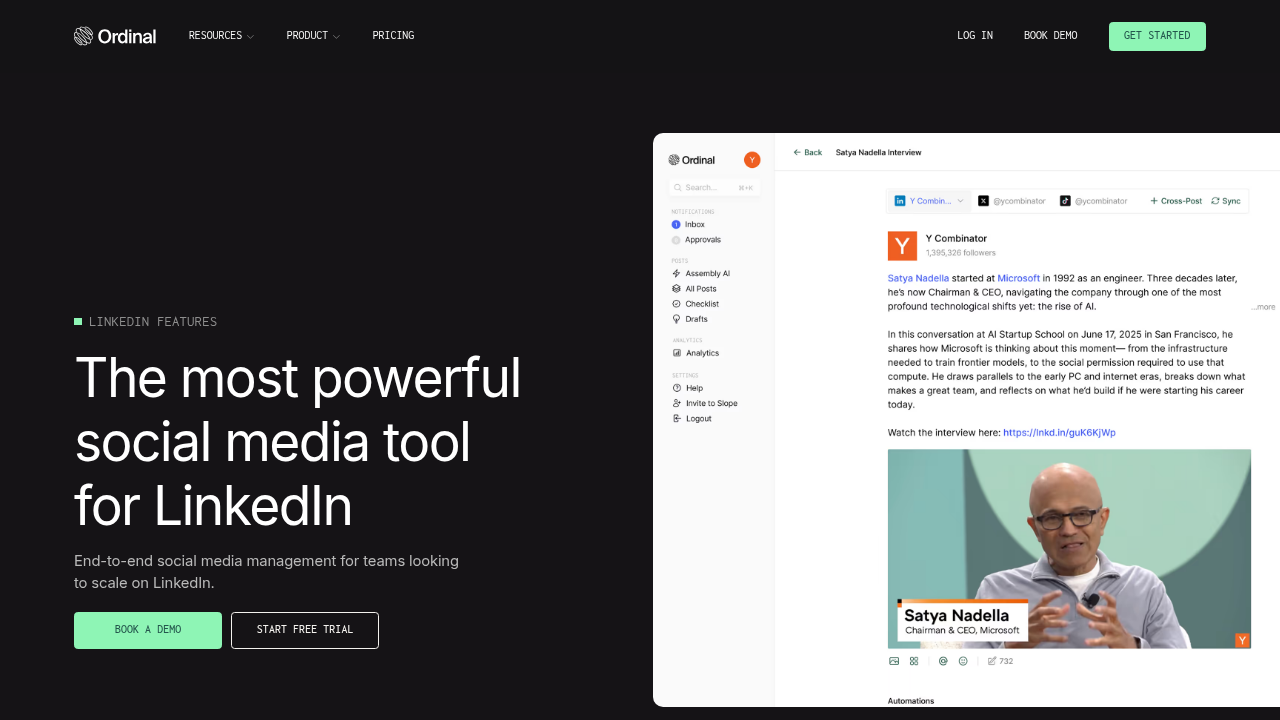
The auto-repost feature lets executive profiles automatically reshare company LinkedIn posts within 12 hours, amplifying reach across personal networks. Combined with auto-engagement coordination, these capabilities address how B2B teams actually operate on professional networks where thought leadership and employee advocacy drive results.
Why Ordinal is the Better Choice
Buffer works well for individual creators or very small teams that need straightforward, affordable scheduling without collaboration complexity. If your needs are basic content posting across a few social accounts with minimal stakeholder coordination, Buffer's lightweight approach may be sufficient.
Ordinal is specifically designed for teams that treat social content as a strategic business channel, not just a posting obligation. The difference shows in outcomes. While Buffer schedules posts and then steps aside, Ordinal coordinates your entire team to amplify engagement when algorithmic momentum matters most. Our approval workflows prevent brand missteps that Buffer can't catch. Our analytics identify which prospects engaged with your content so sales teams can follow up.
For B2B companies and agencies managing professional social content at scale, we deliver what Buffer cannot: sophisticated collaboration workflows, auto-engagement automation, and comprehensive analytics that go beyond vanity metrics. If you're serious about maximizing your impact on social media, especially on LinkedIn, with professional-grade coordination and optimization tools, Ordinal is the clear choice.
Final Thoughts on Social Media Management Tools
We built Ordinal because Buffer and similar tools stop at scheduling when consumer and B2B teams need so much more. You get collaboration workflows, engagement coordination, and the ability to track which prospects interact with your content. Your social presence can drive real revenue when you have the right tools backing your strategy.
Ready to see how Ordinal transforms your team's social media workflow? Start your free trial today and experience the difference between basic scheduling and comprehensive social media management built for modern B2B teams.
FAQ
How should I decide between Buffer and Ordinal for my team?
The decision comes down to your social media goals and team structure. Buffer works for solo creators or very small teams that need basic scheduling across a few accounts without collaboration complexity. Ordinal is built for B2B companies and agencies that need approval workflows, team collaboration on drafts, and sophisticated engagement automation with comprehensive analytics.
What's the main difference in how the two tools handle content creation?
Buffer functions as a pure scheduling queue with no native editor, requiring you to write posts in external tools like Google Docs before copying them in. Ordinal includes an integrated Notion-like editor where teams can draft, format, and collaborate on posts with inline comments and approval workflows all in one place, eliminating the context switching that slows down multi-stakeholder content processes.
Can Ordinal help my team amplify engagement after posts go live?
Yes. Ordinal includes auto-engagement features that coordinate likes from multiple team accounts, post pre-scheduled first comments, and trigger Slack notifications to prompt your team to engage when algorithmic momentum matters most. Buffer offers no engagement amplification capabilities beyond scheduling the initial post.
Who is each tool best suited for?
Buffer serves individual creators, freelancers, and small businesses managing a handful of social accounts with minimal stakeholder coordination. Ordinal is designed for B2B software companies, marketing agencies managing multiple clients, and organizations that require robust collaboration, approval workflows, and sophisticated analytics for professional networks.
Related Posts
Looking to learn more? The below posts may be helpful for you to learn more about social media and content marketing.