

Only about 5% of brands score well on both reach and brand affinity at the same time, according to a 2026 analysis of 1,160 brands and 1 million data points (Sprinklr Social Index). Read that again. Ninety-five percent of brands produce scale or loyalty, and quietly assume they're getting both.
That's the uncomfortable backdrop for any social media growth strategy in 2026: the thing you think is working is usually doing half the job.
We believe that growth stalls because teams optimize for rented reach, the posts and likes the algorithm hands out one round at a time, instead of the two things that compound: consistent volume aligned to what your audience expects, and earned conversation that outperforms your own posts by roughly 10x.
The fix lies in redirecting effort toward volume and community.
TL;DR:
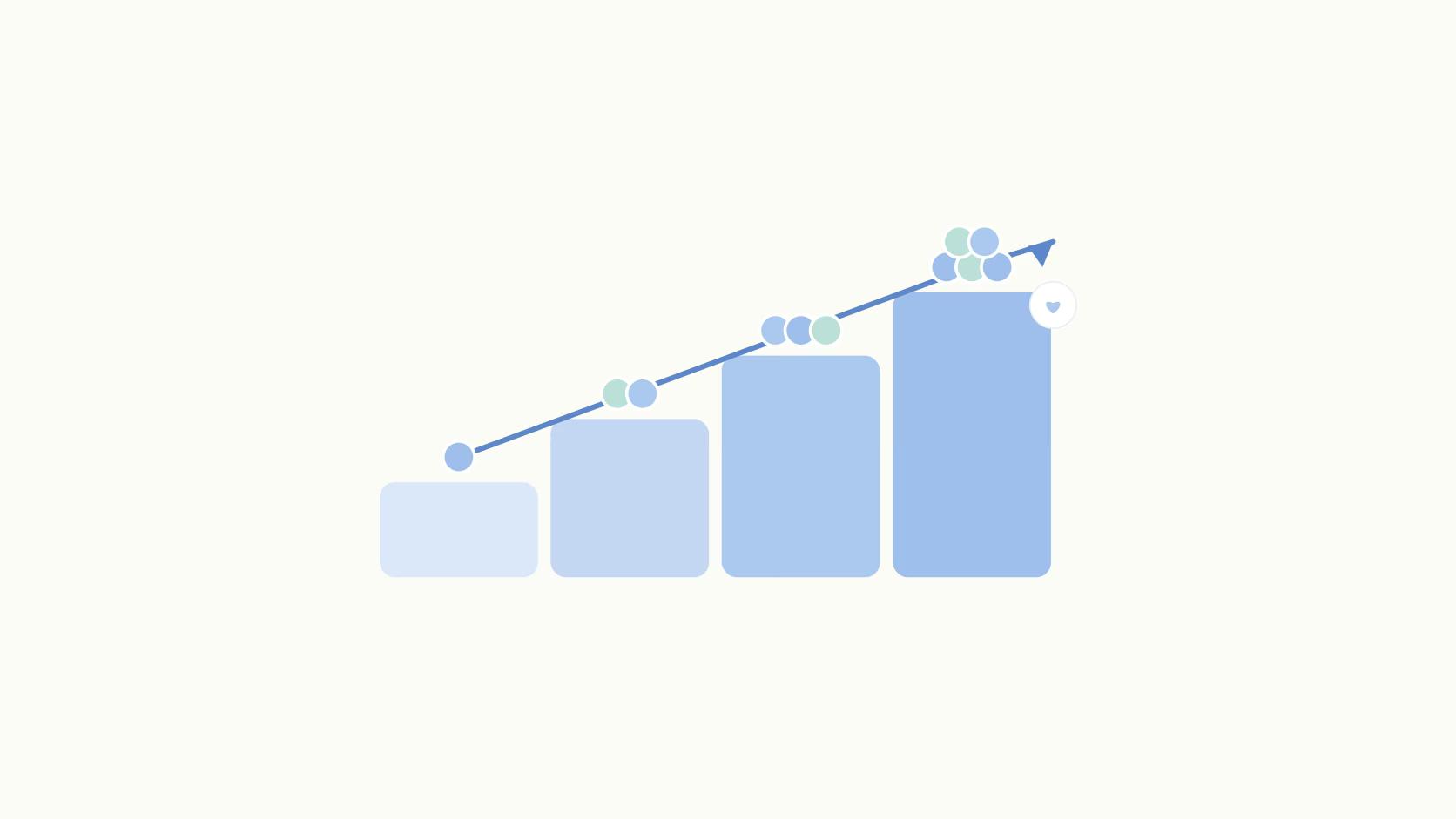
- Deliberately raising posting volume produces outsized engagement lifts. Tech brands going from under 10 to 10-30 posts per week saw 2.3x higher engagement (2026 Sprinklr Social Index).
- Community and earned conversation beats owned-post engagement by roughly 10x in some sectors.
- A plateau is normal, not failure. Average impressions per post drop about 17% from month one to months three through six.
- The point of growth is pipeline, not follower count. Track who from your ICP engages, and hand warm accounts to sales.
This is for B2B marketing leaders and social managers who want a system (not a list of posting tips).
What Is a Social Media Growth Strategy?
A social media growth strategy is a repeatable system for expanding reach, engagement, and audience in a way that compounds into pipeline rather than follower count. It defines which platforms you prioritize, how often you post, who does the posting, and how you measure growth against revenue-adjacent metrics.
A content calendar isn't a strategy. Neither is a posting cadence. Those are inputs.
They tell you what goes out on Tuesday, not whether Tuesday's post moves anything that matters. Plenty of teams have a polished social media marketing strategy deck and a color-coded calendar, and still can't answer the CEO's question about why social is flat.
The framing that separates a real strategy from a busy one is rented versus owned reach. Algorithmic reach is rented. You get it this round, you might not get it next round, and you never fully control it. Community, email, and advocacy audiences are owned. They show up whether or not the algorithm cooperates. A growth strategy that only builds rented reach is renting its whole audience, and paying rent in content forever.
Judge the strategy by whether it moves revenue-adjacent metrics. Followers and impressions are leading indicators at best. Pipeline is the scoreboard.
Why Most Growth Strategies Stall
The reason so many strategies flatline is that teams chase reach or affinity and mistake activity for a system. That 5% figure from the Sprinklr Social Index is inherently. a structural finding. Building scale and loyalty at once is rare, and most calendars are engineered for neither on purpose.
Meanwhile the money keeps flooding in More budget chasing the same feeds makes organic reach harder to win, not easier. That's exactly why a system beats spray-and-pray. When paid competition rises, the teams with a repeatable earned-reach engine pull away from the ones buying attention by the click.
"But we post consistently," you say. Sure, but consistency without volume aligned to audience expectations underperforms.
Posting three polished company updates a week is consistent and quiet. The tech brands that moved from under 10 to 10-30 posts per week saw 2.3x higher engagement, with sentiment climbing from +8.8 to +24.7 percentage points (2026 Sprinklr Social Index). Cadence is a floor, not the strategy.
The other objection is that authenticity wins now, so just be genuine. Relevance beats generic authenticity language. 71% of Gen Z say they value demonstrated relevance over "authentic connection" from brands (Pulse Advertising 2026 Social Trends Report). "We're an authentic brand" is a slide. Showing up in a conversation your buyer actually cares about is the work.
What's Working in 2026: Volume, Community, and Earned Reach
Here's the sequence a team can run this quarter, in order of impact.
- Raise posting volume deliberately: More volume, aligned to what your audience expects, changes outcomes. Start by mapping your current monthly count and setting a real target, then look at posting frequency data to calibrate.
- Shift weight from company pages to people: This is the move most teams skip and the one that changes the math most. If your reach is concentrated on the brand page, you've capped yourself. People are the reach engine.
- Engineer earned conversation, not just owned posts: Public and community chatter is roughly 10x more influential on brand growth than engagement on your own posts, based on the telecom analysis in the 2026 Sprinklr Social Index. Operationalize this with employee advocacy and a first-hour engagement plan so posts don't die in the first ten minutes. And tie it back to revenue."You should be tracking ICP engagements. Look at the people that have actually engaged with your posts, see who hits your ICP, who's a new deal, pass that to your sales team, and have them close deals from there. Your goal with social is to drive pipeline." Jeffrey Zhao
- Match format to goal: Multi-image and document posts tend to win engagement. Text-only tends to win raw reach. Pick per objective rather than defaulting to whatever's easiest to produce.
- Feed the owned audience: Route social discovery into email and community so you stop renting your entire audience from the feed. Every new follower who joins a list is one you don't have to re-earn every round.
What to Do When Growth Stalls
First, calm down.
A drop in impressions is normal. Set that expectation before you troubleshoot anything, because half of plateau panic is a benchmarking problem, not a content problem.
Once you've accepted the baseline, diagnose by cause.
Cause one is a cadence that dropped or flattened. Fatigue sets in, someone got busy, and the monthly count quietly slid. Fix it by returning to deliberate volume increases. Count what you actually shipped last month, not what the calendar planned.
Cause two is format monotony. Six weeks of the same single-image post trains the audience to scroll past. Rotate. Test document posts and multi-image sets against your text-only default and watch what moves.
Cause three is reach concentrated on the company page. If everything runs through the brand account, you've hit the ceiling that page has. Activate people. Get three execs or employees posting on their own profiles and the math changes fast.
Cause four is no earned conversation. Posts that get zero engagement in the first hour get deprioritized. Build a first-hour system: a handful of teammates who reliably comment and share in the opening window, so the post has a signal to ride.
A plateau is a signal to change the input mix. Not a reason to post harder at the same four things.
Where This Goes Next
The strategies winning in 2026 build volume, activate people, cover the first hour, and track which accounts from their ICP are engaging so sales can act on it. Growth compounds when earned conversation replaces vanity-metric chasing, and when the audience you're building is one you own rather than one you rent by the round.
Running that across a team of execs and employees is where the ad-hoc Slack pings and spreadsheets break down.
Raising cadence for ten people, activating advocacy, covering first-hour engagement, and measuring what drives pipeline is more coordination than any scheduler-and-spreadsheet setup handles. A platform like Ordinal exists to run that system so it survives past Q1, which is the same reason it shows up on most shortlists of social media management tools built for teams.
Pick one lever this week. Raise your volume, or get three employees posting on their own profiles. Instrument it. Then measure ICP engagement instead of likes, and see who from your target accounts showed up.
Frequently Asked Questions
What Is a Social Media Growth Strategy?
A social media growth strategy is a repeatable system for expanding reach, engagement, and audience in a way that compounds into pipeline, not just follower count. It defines which platforms you prioritize, how often you post, who does the posting, and how you measure growth against revenue-adjacent metrics rather than vanity ones.
How Long Does It Take to See Results?
Expect a ramp, not a spike. Ordinal's own analysis shows average impressions per post can drop about 17% from month one to months three through six, which is normal as reach normalizes rather than a sign the strategy failed. Compounding growth typically shows up over three to six months of consistent, deliberate posting.
How Often Should You Post?
More often than most teams assume. Ordinal's data shows accounts posting 31 or more times a month reach a median of roughly 33,136 monthly impressions, versus 2,564 for accounts posting just 1 to 5 times. The 2026 Sprinklr Social Index found tech brands moving from under 10 to 10-30 posts a week saw 2.3x higher engagement.
Why Has My Social Media Growth Stalled?
Plateaus usually come down to one of four causes: posting cadence flattened, content formats got repetitive, reach is stuck on the company page instead of people, or posts die in the first hour with no earned engagement. The fix is changing the input mix, not posting harder at the same things that already stopped working.
Is Organic or Paid Better for Social Media Growth?
Both play a role, but organic compounds and paid stops the moment you stop spending. Social ad spend is projected to hit $317.33 billion in 2026, which makes organic reach more competitive, not less relevant. A systematic organic growth strategy becomes more valuable as paid gets more expensive.
Do Company Pages or Personal Profiles Grow Faster on LinkedIn?
Personal profiles win by a wide margin. Ordinal's analysis found personal profiles average roughly 6.7x more reach than company pages, and IBM found leads sourced through employee content convert 7x more often than paid channels. People are the reach engine of any B2B social media growth strategy.
Related Posts
Looking to learn more? The below posts may be helpful for you to learn more about social media and content marketing.