

Run a quick audit of how your B2B team posts on social right now. The "guidelines" probably live in someone's head, a Slack thread from 2022, or a PDF no one has opened since the day it was shared. Meanwhile, 94.7% of the world's internet users are on social media each month, and the average user bounces across 6.5 platforms per month (DataReportal, 2025). Your team is posting across all of them with no shared standard.
The AI gap makes this more urgent. Only 24% of organizational social media policies cover generative AI use, yet 78% of social teams use AI regularly (Ordinal, 2025). Social media guidelines are the documented standard for how your team behaves on social, and most B2B teams don't have real ones.
TL;DR
Effective social media guidelines in 2026 need five things: role-based rules for employees, managers, execs, and partners; explicit AI use and disclosure standards; platform-specific tone and format guidance; an approval workflow that actually runs; and a quarterly review cadence to stay current.
What Social Media Guidelines Cover (and How They Differ From a Policy)
Social media guidelines are a practical, behavioral standard that tells your team how to post well, stay on-brand, and represent the company appropriately across platforms. They aren't the same as a social media policy, which is the binding rulebook that defines what's allowed and the consequences for violations. Guidelines answer "how should I post this?" A policy answers "what happens if I post the wrong thing?"
B2B teams need both, but guidelines are where the bigger gap usually sits. A policy lives in an HR folder. Guidelines need to be in front of whoever is drafting a LinkedIn post at 9am on Tuesday. They should also be a living document. A set of guidelines written before ChatGPT went mainstream is outdated, and it's missing the section that matters most right now.
Build Guidelines by Role, Not One Rulebook for Everyone
A single document trying to cover everyone fails everyone. The rules for a junior employee sharing a company post are different from the rules for a founder publishing thought leadership, which are different again from what an agency partner can publish without sign-off. Segment by role from the start.
For Employees and Advocates
Employees need to know three things. Disclose your employer affiliation when posting about the company or industry. Follow what's shareable, like product announcements, published blog posts, and approved campaign content. And escalate anything that feels sensitive rather than guessing. Keep the tone professional but human. The goal is authentic advocacy, not press releases written in the first person.
For Marketing Teams and Social Managers
This group needs the most operational detail. Document which platforms they own, the approval requirements per post type, and what brand voice looks like across formats. A short-form LinkedIn text post and a PDF carousel have different tone requirements. Social managers should know the posting cadence expectations and who has final sign-off authority when content touches legal, pricing, or competitor mentions.
For Executives and Founders
Exec guidelines should address ghostwriting directly. If a content team is drafting on behalf of a founder, the exec needs a clear sign-off step before anything goes live. Voice authenticity matters here because audiences can tell when a post doesn't sound like the person. Guidelines should require that AI-assisted drafts be grounded in the exec's real posting history, not generic templates.
For External Partners and Agencies
Agencies and partners need to know exactly what they can publish without sign-off and what requires client approval. Document access boundaries, which accounts they can post to directly versus queue for review, and whether they're permitted to tag personal profiles without explicit per-post approval. Assume nothing is obvious.
The AI Rules Every Set of Guidelines Now Needs
Here's the governance gap most teams are ignoring: 78% of social teams use AI regularly, and yet very few companies have defined experience around social media AI usage.
That means three out of four organizations have no documented standard for something their teams do every day. Your social media policies need to catch up, and so do your guidelines.
Three rules belong in every set of guidelines right now.
First, disclosure. Set a clear standard for when AI-assisted content needs to be labeled. Different audiences and platforms have different expectations, so document your company's position explicitly rather than leaving it to individual judgment.
Second, accuracy. AI tools invent statistics, fabricate case study details, and generate fake quotes that read as completely plausible, so any AI-assisted draft needs mandatory fact-checking before it goes near an approval queue.
Third, voice. AI drafts need to be grounded in real posting history to sound like the person they're attributed to, not like every other AI-generated post in the feed.
The practical rule that covers all three: AI drafts, humans approve. No exceptions.
Make Guidelines Platform-Specific
The average user bounces across 6.5 platforms per month (DataReportal, 2025). Your team is posting across most of them, and the same tone and format rules don't transfer. LinkedIn rewards longer-form insight and professional framing.
X (Twitter) runs faster and more direct, with a higher tolerance for blunt takes. Instagram is visual-first and will punish a team that treats it like a caption contest for repurposed LinkedIn copy.
Format matters as much as tone. Document carousels (PDF posts) get three times more reach on LinkedIn than standard text posts, per data in Ordinal's social media strategy guide, which means your approval workflow for PDFs needs to be as tight as for any other post type.
Short-form video is where most approval gaps live. Teams often have a solid review process for static posts and nothing for Reels or quick clips that go live straight off someone's phone. Fix that gap explicitly in the platform section of your guidelines.
Pair Guidelines With Workflow, or They Won't Stick
Policy without tooling is aspiration. Guidelines that live in a Google Doc and get shared once during onboarding are not operational. For guidelines to govern behavior, they need a workflow that enforces them without relying on everyone remembering the rules.
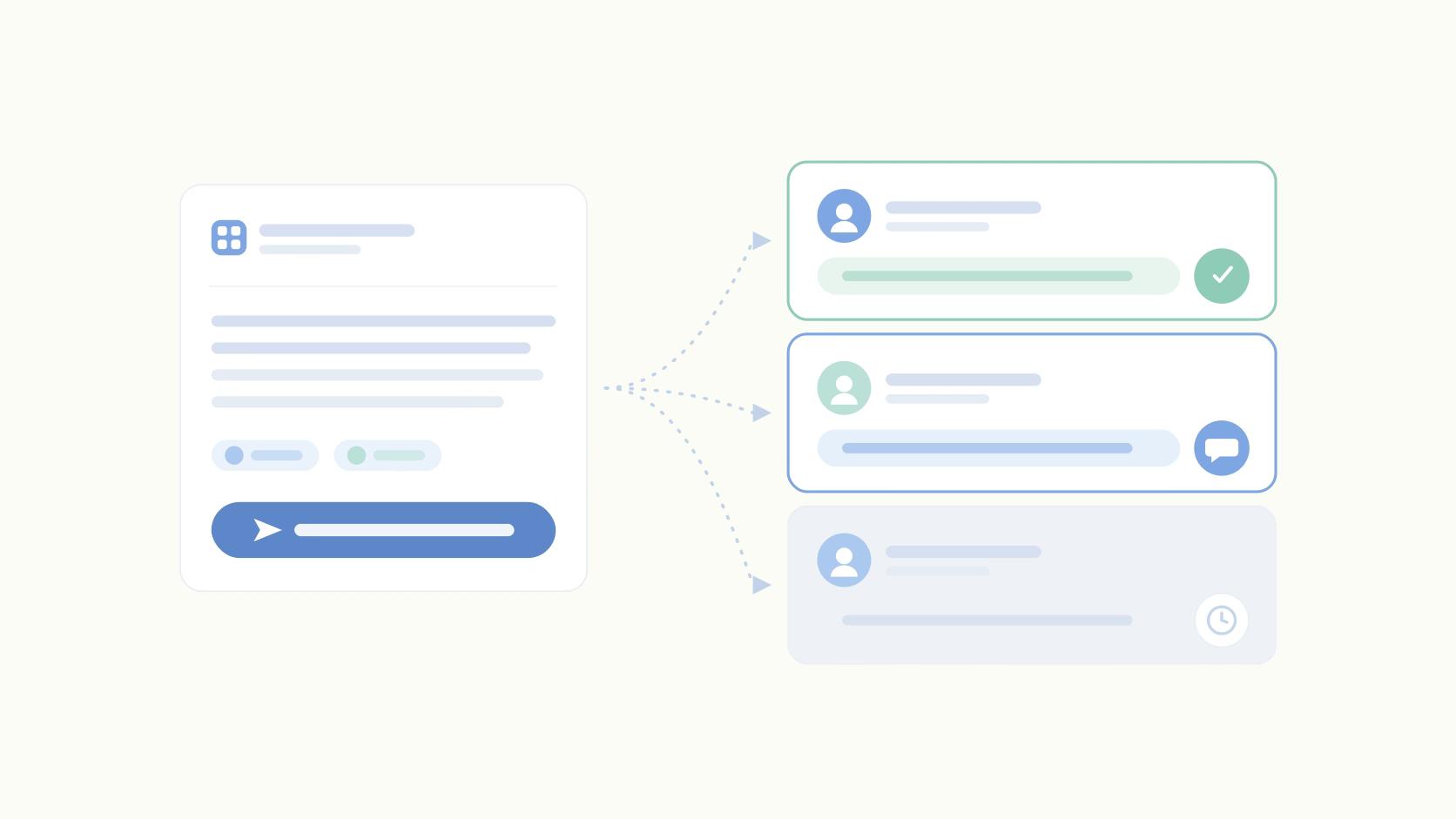
Approval workflows are the minimum. Every post type that carries brand risk should require explicit sign-off before going live, with notifications routed to the right approver and a clear audit trail. For employee advocacy, the problem usually isn't willingness, it's memory. Teams that rely on Slack pings to drive engagement after a post goes live will always get inconsistent results. Auto-engagement tools and dedicated boost channels solve this at the system level rather than the motivation level.
Ordinal's platform handles the operational layer directly: blocking approval workflows, auto-engagement timing, and Slack boost channels that notify team members the moment a post goes live. The guidelines document the standard. The tooling enforces it.
Measure Whether Your Guidelines Are Working
This is the step that determines whether guidelines have any lasting effect, and most teams skip it. Set three things in motion after you publish.
First, track adherence. Are posts going through approval queues? Are they arriving on-brand? Are your advocates actually posting, or did the guidelines document just add friction? Second, measure output quality against the standards you wrote down.
If your brand voice guidelines say "no jargon," run a quarterly spot-check on what went live. Third, schedule a review cadence. Quarterly is the minimum, and any major platform algorithm change or AI tool update should trigger an immediate review. A set of guidelines written before generative AI became a daily workflow tool is already out of date, and that's now a very low bar to clear.
Documenting guidelines is only half the job. The other half is making sure they're still accurate six months from now, and that someone owns the answer when they aren't.
Pick one role gap this week, whether that's exec ghostwriting sign-off, agency posting permissions, or AI fact-checking requirements, and write it down. Put it behind an approval workflow so it actually runs. That's a more useful starting point than trying to build a complete framework in one sitting. Guidelines compound over time when they're treated as a versioned document rather than a one-time deliverable.
Frequently Asked Questions
What are social media guidelines?
Social media guidelines are a documented set of practical rules for how a company's employees, executives, and partners should represent the brand on social platforms. They cover tone, disclosure, content approval, and platform-specific behavior, and they work alongside a formal social media policy rather than replacing it.
What's the difference between social media guidelines and a social media policy?
Guidelines are practical and behavioral, telling people how to post well and stay on-brand. A policy is the binding rulebook that defines what's allowed and the consequences for violations. B2B teams need both: the policy sets the legal floor, and the guidelines make day-to-day execution consistent.
What should social media guidelines include in 2026?
At minimum: role-based rules, AI use and disclosure standards, platform-specific tone and format guidance, an approval workflow, and a review cadence. The AI section is the most common gap, since only 24% of organizational policies currently cover generative AI despite 78% of social teams using it regularly.
Do small B2B teams really need social media guidelines?
Yes. Even a five-person team posting across LinkedIn and X benefits from a documented standard, because it removes guesswork and keeps messaging consistent without the founder reviewing every post. Guidelines also make it safer to scale employee advocacy without losing brand control.
How should social media guidelines handle AI-generated content?
Good guidelines require fact-checking any AI-assisted draft, since AI tools regularly invent statistics and quotes that read as plausible. They should also set disclosure expectations and require that drafts be grounded in real posting history so the voice stays authentic. The practical rule: AI drafts, humans approve.
How often should you update social media guidelines?
Review them at least quarterly, and immediately after any major platform change or algorithm update. A set of guidelines written before generative AI tools went mainstream is already out of date, so treat guidelines as a versioned document, not a one-time PDF.
Who should own social media guidelines in a B2B company?
Marketing usually owns the document, typically the Head of Marketing or social lead, with input from legal on disclosure rules. Whoever owns it should also own the workflow that enforces it, since guidelines without tooling behind them rarely get followed consistently.
Related Posts
Looking to learn more? The below posts may be helpful for you to learn more about social media and content marketing.