For B2B founders in 2026, LinkedIn is still the room where buyers and investors pay attention. But what kind of post wins there, and can a founder realistically produce it every week? We pulled 264,685 LinkedIn posts for our creator playbook to find out.
Longer, mid-length posts won by a wide margin. That's the strongest of any length, and a long way from the punchy one-liner a founder taps out in an Uber between board calls.
Here's the problem: very few people running a company write that much every week.
The founders winning on LinkedIn have someone else writing and a fast way to say yes.
For a founder, being a LinkedIn content creator means owning a ten-minute weekly approval while a ghostwriter handles authorship. The "does it sound like me" worry is a sign-off problem, and one clear review loop fixes it better than you typing into the LinkedIn app at 11 p.m.
TL;DR:
- In our experience, 2,000 to 3,000-character posts tend to get the strongest engagement of any length. Few founders can write that weekly.
- 83% of LinkedIn creators work full-time jobs alongside their content (Yahoo Finance, 2026). Being a creator is about output and cadence.
- Founder accounts go quiet when the founder insists on writing everything, or when drafts ship with no review. Both come from a missing approval loop.
- A ghostwriter can capture your voice from voice memos, past posts and call transcripts you already produce.
- Your job shrinks to one review pass a week.
What Is a LinkedIn Content Creator?
A LinkedIn content creator is anyone who publishes original posts on a consistent cadence, whatever their follower count. There's no threshold to cross, and since LinkedIn folded its Creator Mode tools into every profile, there's no switch to flip either.
That group is growing fast. And it's mostly people with day jobs.
LinkedIn creators are up 60% since 2024, and 83% create alongside full-time work (Yahoo Finance, 2026). Teachers, designers and sales reps are posting between shifts.
Founders fit that profile with one difference. A graphic designer can carve out Sunday afternoons to write. A Series A CEO defending a burn multiple usually can't (and shouldn't).
So the split is simple. The founder owns the ideas, the opinions and the final yes. Someone else owns the blank page.
Why Do Founder Accounts Go Quiet?
Founder accounts die from authorship pride. The founder decides the only way to avoid sounding like AI is to write every word personally. Then the calendar wins.
We see the pattern constantly. Three strong posts in January, one in February, and silence by spring. Meanwhile a competitor's founder keeps showing up in the same investors' feeds.
Run the math on our length data. A post of that length amounts to a few hundred words of considered argument. A fast writer needs 60 to 90 minutes to draft and polish one. Weekly, that's six hours a month from the most expensive person in the company.
It gets dropped the first week a deal slips.
So the founder hires a marketer or agency, and the account fails in one of two new ways:
- Every draft becomes a Slack thread. The founder rewrites line by line, and the writer stops making decisions because they'll get overwritten anyway.
- The founder is too busy to look. Drafts go out unreviewed, and they wince at a post that says "excited to announce."
Both come from the same gap. Neither setup has a defined moment where the founder reviews once and the post ships. Our breakdown of ghostwriter vs. in-house covers the staffing side.
There's a fair objection here. Alex Boyd put it bluntly in our piece on LinkedIn credibility: "If you outsource your thinking to technology, you atrophy your brain."
He's right. And this model keeps the thinking with you. Your opinion on why your category's pricing is broken stays yours. The sentences around it go to someone paid to write sentences.
How Does a Ghostwriter Capture a Founder's Voice?
A ghostwriter captures your voice by working from raw material you already produce, then loading it as context for every draft.
You don't need a three-hour brand interview. You need to stop throwing away what you generate every week.
- Voice memos are the richest source. A two-minute rant after a customer call carries your phrasing, your pacing and the specific thing that annoyed you. That's usually the post.
- Past posts, including the flops, show the writer your sentence length, pet phrases and the jokes you'd never make.
- Call transcripts from sales calls, podcasts and investor updates hold arguments you've already refined out loud dozens of times.
The writer then loads everything into an AI model as reference material. This is where generative AI earns its place. It matches tone. The writer decides what's worth saying.
Ordinal's Jeffrey Zhao described the split this way:
"The best way to capture that is just by loading all of those past posts in as context into something like Claude... your AI is kind of writing in their actual tone of voice, and then your job as the content creator is really the strategy, the thoughts, the insights that go in behind that post." Jeffrey Zhao
The writer should also keep a living voice sheet. It lists words you'd never use ("synergy," "thrilled"), structures you like, and topics that are off limits.
Every review pass adds to it. That's why month-three drafts need far fewer flags than week-one drafts. Your weekly input is one or two voice memos, about five minutes.
What Should One Review Pass Look Like?
Your ten minutes happen once a week, at a fixed time, on the full batch of drafts.
Reacting to drafts as they trickle into Slack fragments your week, and batching gives the writer a predictable deadline.
- Read for the idea first. If you wouldn't defend the argument in a meeting, kill the draft with a one-sentence reason and don't touch the prose.
- Flag lines that don't sound like you instead of rewriting them. A short note works: "too polished," or "I'd say 'cheap,' not 'cost-effective.'"
- Check the facts only you know, like customer names you can mention and numbers you're comfortable sharing.
- Approve or send back with flags attached, once.
Step two does the most work over time. Every flag goes into the voice sheet, so the same flag never appears twice.
Line-by-line rewriting teaches the writer nothing. They just see a different post. A flag teaches them a rule.
Replace the Slack Thread With a Single Approval Step
The approval loop is what keeps a founder account consistent. Your own prose stops showing up the week you get busy. A loop with a fixed review slot and a clear "approved" state keeps shipping through calm weeks and terrible ones.
Here's how the four common setups compare. The figures reflect what we've observed across founder accounts, so treat them as directional.
The Slack row surprises founders. Rewriting feels like quality control. In practice, the writer waits on you, guesses at what you'll change, and eventually stops trying.
Once a second exec starts posting, our guide to approval workflows covers who signs off on what.
With the loop running, the tactical questions get simple:
- Format: Document posts drew 39% more reach and 30% more engagement than average across more than 3 million personal-profile posts (ContentIn, 2026). Have the writer turn one strong post a month into a PDF.
- Length: Lean toward 2,000 to 3,000 characters, per our own data.
- Timing: That belongs to the writer.
- Cadence: One approved post a week beats four you meant to write.
The rest lives in our B2B LinkedIn playbook.
Where Ordinal Fits
Ordinal is built around this loop. Your writer drafts in the editor, and you leave inline comments on the specific lines that sound off. Flags live next to the post, not in a Slack thread you'll lose by Friday.
Blocking approvals mean nothing goes out until you've said yes. Slack notifications tell you when the batch is ready.
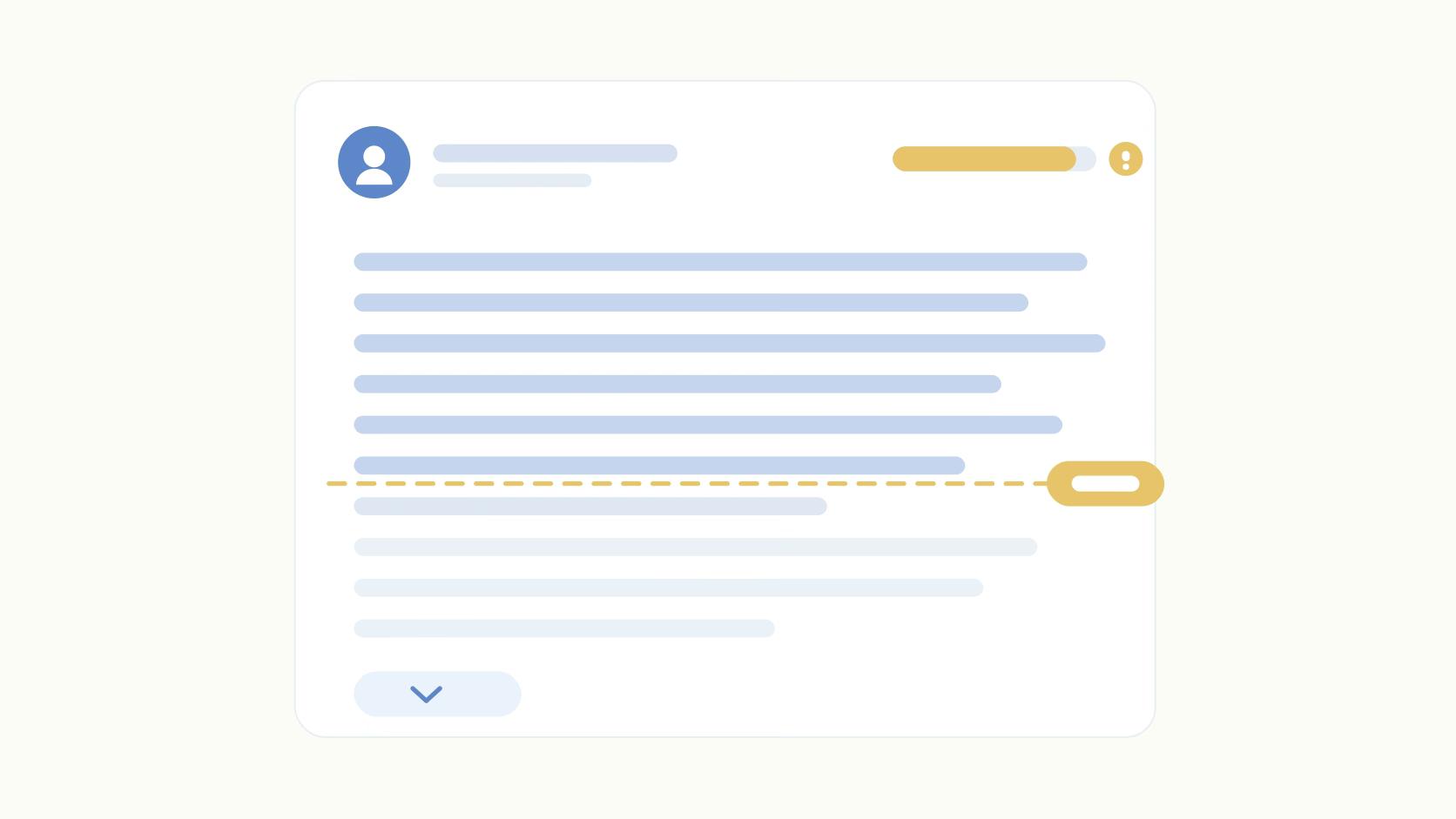
Realistic previews show exactly where LinkedIn's "see more" cutoff falls, so you approve the post your audience will see. Personal profile tagging lets the writer tag your cofounder or a customer's CEO from the scheduler. For what a founder account should build toward, see our guide to the founder personal brand.
Final Thoughts
Put a recurring 15-minute block on your calendar this week. Label it "LinkedIn approvals," and tell your writer that's when drafts get reviewed.
Record one voice memo before then about whatever frustrated you most this week.
Show up four weeks in a row and the voice problem mostly takes care of itself. Your writer will have a month of flags telling them exactly how you talk.
Frequently Asked Questions
How to Make LinkedIn Content?
Start with raw material you already have: voice memos, sales call transcripts and past posts that performed well. A LinkedIn content creator can draft around a single point and aim for a meaningfully long post rather than a quick one-liner. That kind of post tends to see some of the strongest engagement of any length.
Is a High View Count on LinkedIn Good?
For a B2B founder with a modest connection count, a high view count is a solid result. But who saw the post matters more than the count. A modest number of views with a few comments from target buyers beats a much larger view count with no relevant engagement.
Does LinkedIn Monetize Content Creators?
LinkedIn doesn't run a direct creator payout program the way YouTube does. Creators earn indirectly through brand deals, consulting leads, speaking gigs or pipeline for their own company. For B2B founders, that pipeline is the payoff.
How Much Do LinkedIn Influencers Get Paid?
LinkedIn has no standard rate card for sponsored posts. Pricing depends on audience size and niche. Founders using LinkedIn as content creators rarely optimize for sponsorship income, since inbound leads and investor visibility are worth more.
Who Are the Top Content Creators on LinkedIn?
The top LinkedIn content creators vary by industry, but they share one thing: consistency. Founders who show up weekly with a clear point of view outperform sporadic posters regardless of follower count.
Should a Founder Use a LinkedIn Ghostwriter?
Yes, if the alternative is inconsistent posting or Slack threads full of rewrites. A LinkedIn ghostwriter running drafts through one approval step ships more consistently than a founder writing between meetings. And the founder still owns the thinking.
How Do I Make Ghostwritten LinkedIn Posts Sound Like Me?
Feed the writer voice memos, call recordings and old posts that got your voice right. Then flag lines that feel off in one weekly review instead of rewriting them. Each flag becomes a reusable note for the next draft.
Related Posts
Looking to learn more? The below posts may be helpful for you to learn more about social media and content marketing.