

We pulled median engagement by follower tier across our database’s LinkedIn posts, expecting the big accounts to win. But turns out, they lost. Profiles under 1,000 followers posted a higher median engagement rate than profiles over 50,000. If the smallest accounts beat the largest by roughly 2x, then the target list most B2B teams build for influencer outreach is sorted in exactly the wrong direction.
TLDR:
- Sub-1K profiles outperform 50K+ profiles on median engagement in our LinkedIn data
- Your best B2B collaborators are customers, partners, and your own engineers, not creators with a rate card
- Untagged co-created posts forfeit the collaborator's network entirely, which was the whole reason for the collaboration
- Author replies inside hour one lift engagement 12%, and auto-engagement lifts total engagements 27%
What Influencer Outreach Means in B2B (And Who To Contact)
Influencer outreach is the process of identifying, contacting, and co-creating content with people whose audience you want access to. In B2B, that person is usually an operator rather than a creator: a customer who runs the workflow your product replaces, a partner's solutions engineer, an analyst with 800 followers who all happen to be buyers.
This is mainstream budget now. US sponsored content spending hit an estimated $9.29 billion in 2025, up 81.4% since 2021, and 86% of US marketers used influencer marketing that year (eMarketer via Backlinko, 2025). The question is who ends up on the list.
Sourcing takes an afternoon.
Pull the people already commenting on your posts, the customers quoted in your case studies, and the second-degree connections your sales team keeps mentioning. Tiering is simpler in B2B than in consumer, because relevance beats size every time.
Templates are fine. 84% of influencer marketers already use outreach templates (Modash, 2026), and they work as long as the first line names something the person posted. Rate cards rarely come up below 10K followers.
Contracts can be a one-page scope. If money changes hands, disclose it. That's the whole administrative layer. We've written more on the upstream side in our guide to influencer content strategy.
Why Sub-1K Operators Beat 50K Creators
Engagement rate on LinkedIn runs inverse to follower count, and it isn't close. In our experience, the nano tier under 1,000 followers consistently sees meaningfully higher engagement than accounts above 50,000.
The reason is boring. Small accounts post to people who know them, and LinkedIn's early-distribution test rewards a high response rate from a small first audience more than a low response rate from a big one.
The same shape shows up off-platform. Across 70,322 Instagram posts, the 5K-10K tier carried the highest median engagement at 3.32% (more on Instagram creator tiers). Media costs are moving the same direction, with average influencer marketing CPM at $2.68 in 2025, a 42% year-over-year drop (Aspire, 2025).
There's a second number that matters more for how you structure the collaboration. In our experience, personal profiles tend to see dramatically more impressions per post than company pages, often by several multiples. What you're borrowing is a human profile's distribution.
The “Yes” Is the Easy Part
Here's the part nobody writes about. You've landed three collaborations this quarter. The collaborator has approved the copy. The post is supposed to go live Tuesday at 9am.
It goes live Tuesday at 11pm, published by hand from a laptop, with the collaborator's name typed as plain text instead of tagged, because no mainstream scheduler can tag a personal LinkedIn profile.
That single API gap cascades. The post can't be scheduled, so someone publishes manually and it slips to whenever that person is free. The draft lives in a Slack DM rather than a versioned editor, so the copy that ships isn't always the copy the collaborator approved.
And the engagement ping goes out to six teammates after publishing, which means the first people arrive at minute forty, well after LinkedIn has decided how far to push the post.
The cost of arriving late is measurable.
In our review of LinkedIn posts, an author response inside the first hour was associated with a 12% engagement lift (1.10% vs 0.98%), and only 0.63% of posts showed one. Our full first-hour engagement data breaks that down further.
Almost nobody does the one thing that works, and in a co-created post you have two authors who could be doing it.
So the honest diagnosis for a social manager running three collaborations a quarter: the bottleneck is that every yes converts into forty minutes of manual work at an hour when the collaborator's audience is asleep.
Why Tagging the Collaborator Matters
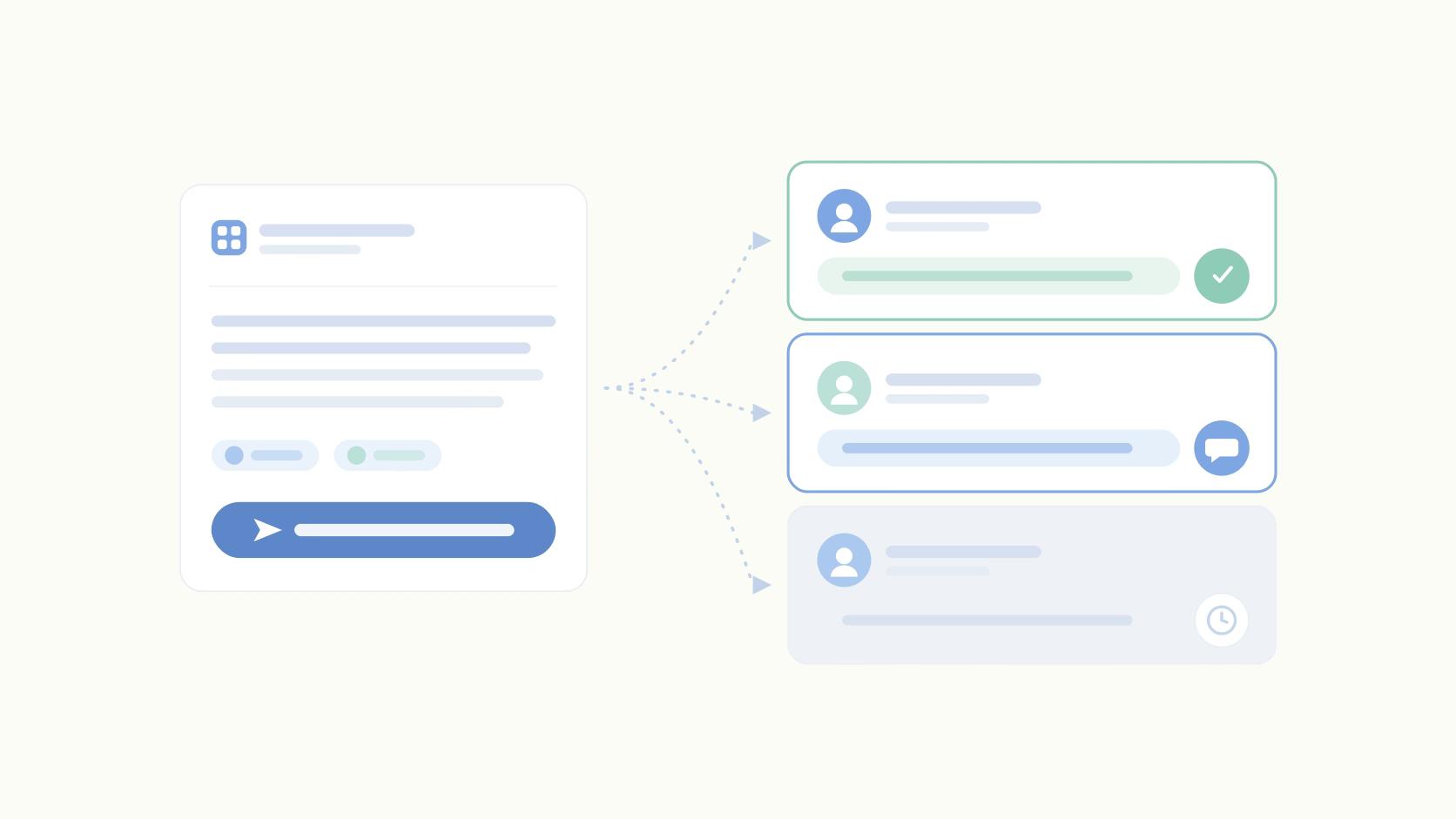
Tagging a personal profile is what converts a mention into distribution. A tag fires a notification to the person, surfaces the post in their network's feed, and gives their second-degree connections a path to it.
Typing their name in plain text does none of those things.
Think about what you gave up. You spent three weeks getting a customer to co-write a post, and the reason you wanted them was that personal-profile reach advantage. Then you published without the mechanism that borrows it. The post reaches your followers, the collaborator finds out when you send them the link, and the collaboration performed like a normal company post with a nice quote in it.
Two practical rules:
- Tag the person rather than their company page, because in our experience the page reaches far fewer people per post than the human does.
- And tag inside the body copy rather than in a comment, since the comment version reaches whoever is already looking at the post instead of pulling in anyone new.
Co-Authored Formats That Carry Two Names
Format choice matters more in a collaboration than in a solo post, because you're optimizing for two audiences that don't overlap (ur LinkedIn format benchmarks go deep on the splits).
Engineering the First Ten Minutes Across Both Networks
Treat distribution as a step in the collaboration, agreed before publish.
- Lock the publish time with the collaborator and put it in both calendars.
- Line up five to eight people on your side to engage inside the first ten minutes, with staggered timing so it doesn't look coordinated.
- Ask the collaborator for two or three people on their side. Most teams skip this ask, and it's the only one that reaches a genuinely new audience.
- Get both authors replying to comments inside hour one. That's when the engagement lift is strongest, and with two authors you have twice the chance of hitting it.
- Repost from the company page after 24 hours, once the personal-profile distribution has run. Employee-shared content carries roughly 8x the engagement of company-page content, so the page follows the person. We covered the mechanics in our employee advocacy workflow.
What To Report Back to Your VP
Collaborations get cut in planning because nobody can say which one did anything. Report on each collaboration separately, with four lines each:
- Impressions
- Engagement rate against the broader LinkedIn median
- Comments from people outside your existing network
- Earned media value
The comparison your VP is already making is cost per lead, so meet it directly. Organic LinkedIn averages around $164 CPL for B2B SaaS against $310 for LinkedIn ads, which we break down in our piece on organic versus paid. Measure a collaboration that cost you a small gift card and a few hours of coordination against that number.
How Ordinal Handles the Post-Yes Layer
Ordinal lets you tag personal LinkedIn profiles inside scheduled posts, publish PDF carousels, quote reposts, and polls natively, and set up auto-likes, auto-comments, and auto-reposts with randomized timing so the first ten minutes are covered without a Slack ping.
Approvals with version history mean the copy the collaborator signed off on is the copy that ships, and per-post earned media value gives you the number to put in the report.
See Ordinal for LinkedIn.
Final Thoughts
Open your current outreach list and re-sort it by relevance instead of follower count. The customers, partners, and engineers sitting under 1,000 followers are the tier posting 2.86% median engagement, and they'll say yes faster and for less money.
Then fix the publishing path before you send the next pitch. A yes you can't ship on time, with the collaborator tagged, is a yes you wasted.
Frequently Asked Questions
What Is Influencer Outreach?
Influencer outreach is the process of identifying, contacting, and coordinating with creators or industry voices to co-create content that reaches their audience. In B2B, this usually means customers, partners, or subject-matter experts with engaged niche followings rather than celebrities. Publishing and distributing the resulting post is where most teams stall.
How Do You Do Influencer Outreach on LinkedIn?
Identify operators with genuine expertise and engaged followings, then send a specific, low-friction ask like co-authoring a document post or quote repost. Once they say yes, the real work is tagging their personal profile and coordinating engagement in the first ten minutes after it goes live.
What Should You Say in a First Influencer Outreach Message?
Keep it specific: name the exact format (a joint document post, a quote repost, a poll), the topic, and the timeline. Operators with smaller followings respond better to concrete, low-effort asks than to open-ended "let's collaborate" pitches, since they're not fielding dozens of these a week.
Do Micro and Nano Influencers Really Get Better Engagement Than Large Accounts?
Yes. In our experience, accounts under 1,000 followers see meaningfully higher engagement rates than accounts over 50,000 followers. Your outreach list should prioritize engaged operators over large names.
Can You Tag a Personal LinkedIn Profile From a Scheduling Tool?
Most mainstream schedulers can't tag a personal LinkedIn profile, which forces teams to publish co-created posts manually. That manual step is usually late and often skips the tag entirely, so the collaborator's network never gets notified.
How Much Does B2B Influencer Outreach Cost Compared to LinkedIn Ads?
Organic LinkedIn content, including influencer collaborations, averages roughly $164 per lead versus $310 for LinkedIn ads in B2B SaaS. That's the comparison most VPs are already running when they ask why marketing needs more ad budget.
How Do You Measure Whether an Influencer Collaboration Worked?
Track impressions, engagement rate against the broader LinkedIn median, and earned media value per collaboration rather than vanity totals. Reporting per post rather than per quarter lets you tell your VP which collaborator or format moved the needle.
How Many Creators Should a B2B Team Work With at Once?
Seed-to-Growth teams can realistically manage 3-5 active collaborators before the publishing and engagement workflow breaks down. Scaling past that without a system for tagging, approvals, and first-hour engagement usually means posts start going out late or untagged.
Related Posts
Looking to learn more? The below posts may be helpful for you to learn more about social media and content marketing.