

Automation has quietly become the default for social teams. As of 2026, 83% of marketing departments automate their social posting process (Stepper.io, 2026), which is why automated social media posting is now table stakes rather than a competitive edge. Here's the part most teams get wrong: they read that number as "automate everything."
The teams pulling real value do the opposite. They automate the mechanical layer (scheduling, cross-posting, engagement timing) and keep a human on voice and judgment.
That split is the whole argument. Automate the wrong layer and your posting frequency climbs while your engagement quality drops. A founder's AI-drafted post goes out unreviewed, lands flat, and now the CEO is asking why the company sounds like a chatbot on LinkedIn.
TL;DR:
- Automating scheduling and first-10-minute engagement is safe and high-ROI. Automating voice, replies, and exec-facing content is where it backfires.
- Consistency is the real payoff. In our experience, posting several times a week drives meaningfully higher engagement than posting just once a week.
- Not every platform allows true auto-publishing. Instagram Stories often need notification-based publishing to keep interactive stickers.
- AI drafts, humans approve. Build the approval gate before rollout, not after an embarrassing post.
This is for B2B social managers and marketing leads who want a system that scales without sounding automated.
What Is Automated Social Media Posting?
Automated social media posting is the use of software to schedule, publish, and coordinate content across channels without manually hitting publish at post time. In 2026 it extends past the queue to cover AI-assisted drafting and engagement automation like scheduled likes and first comments.
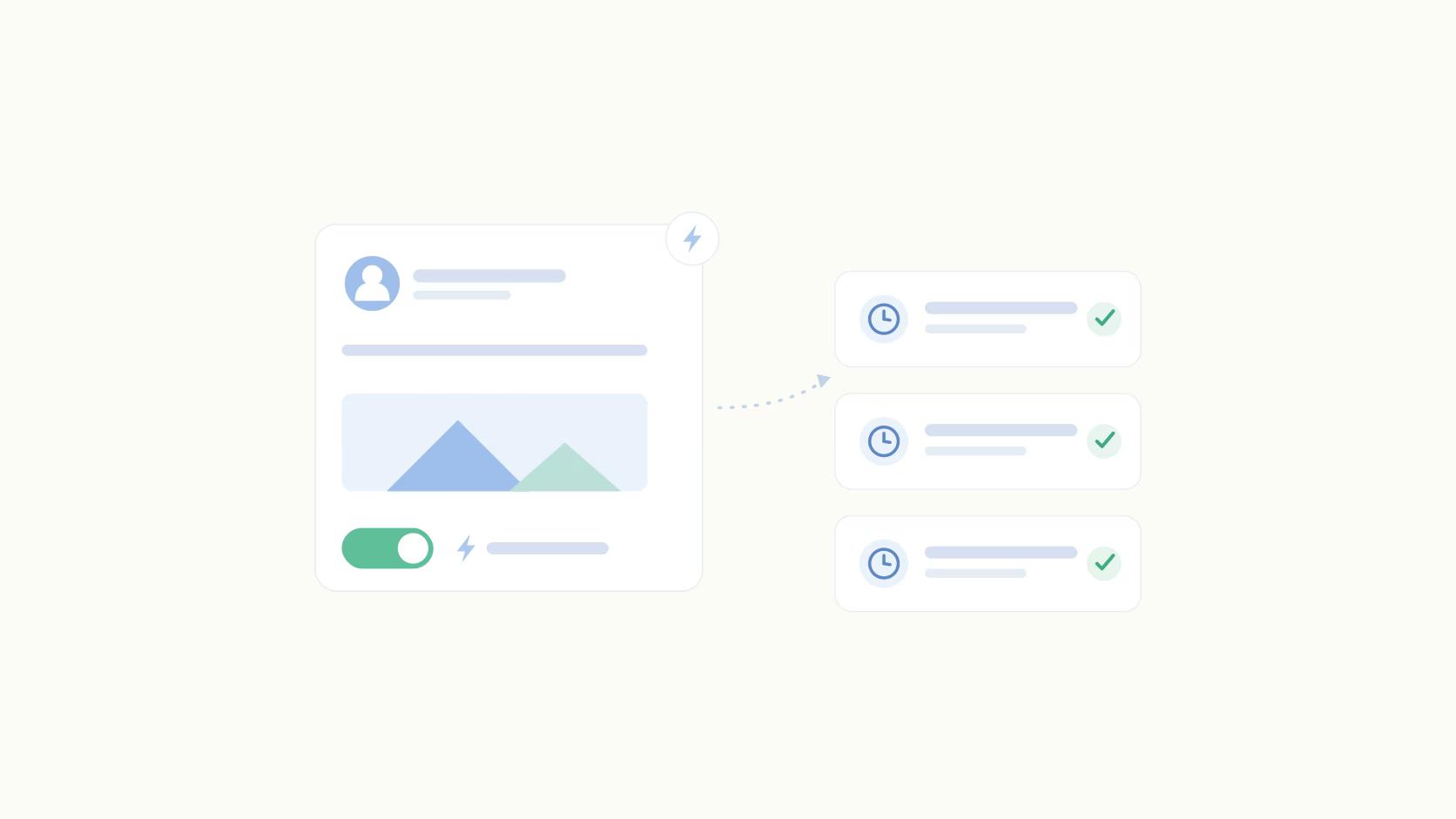
Think of it as three layers. The first is scheduling and publishing: queuing a post to go live at 9:15am Tuesday without you being at your desk. The second is engagement automation, firing likes, first comments, and Slack boost pings in the first minutes after a post lands.
The third is AI-assisted content creation, using a model to draft copy from your own posting history.
The layers matter because they carry very different risk. Scheduling is mechanical and boring, which is exactly why it's safe to hand off. AI drafting touches your voice, so it needs a person in the loop. Lumping all three under "automation" is how teams end up automating the one layer they should have protected.
Why Teams Automate: The Real Time Savings
Automation saves measurable hours and, more importantly, makes a consistent posting cadence possible. Consistency is what moves engagement, not the automation itself. Companies save up to 6 hours per week by automating social content, and automating half of comment moderation can save up to 175 hours per month (Market.us, 2026).
The hours are nice. But the cadence is the actual win.
In our experience, posting several times a week drives meaningfully higher engagement than posting only once a week. No human sustains six-times-a-week posting across five execs by remembering to hit publish. A queue does that without complaint, which is why posting frequency data keeps pointing back to systems over willpower.
The underrated lever is engagement timing. LinkedIn's algorithm weights early engagement heavily, so the first ten minutes decide whether a post travels or dies. Automating likes and first comments across your team accounts, with randomized timing so it reads as organic, covers that window even when everyone's in a meeting.
That's the piece manual workflows almost always drop.
What You Can (and Can't) Automate by Platform
Not every platform allows true auto-publishing. Some formats require notification-based publishing, where the tool preps the post and pings a person to tap publish. Match your tool to the platforms you actually post on rather than chasing the longest feature list.
LinkedIn is the most permissive for B2B. Where the API allows, you can fully auto-post text, personal profile tags, polls, PDFs, and quote reposts. Twitter/X, Facebook, Discord, Slack, and Webflow support straightforward auto-publishing too, which covers most B2B distribution.
Instagram and TikTok are where it gets messy. Instagram Stories often require notification-based publishing to preserve interactive elements. In our experience, auto-publishing tends to strip Stories' interactive stickers, while notification-based scheduling preserves them at the cost of a little extra manual effort. If stickers drive your Stories strategy, "fully automated" quietly costs you engagement.
The practical fix is knowing which formats need a human tap, covered in more depth in these cross-platform publishing tools and this breakdown of scheduling Instagram Stories.
How to Set Up Automated Posting Without Sounding Automated
Build the system in this order. Each step assumes a human stays on the layers that carry your voice.
- Define content buckets and labels first (thought leadership, product, case study). Without labels you can't measure which categories perform, so you're automating blind.
- Batch-draft in one sitting and keep a person on voice. Use AI to draft, not to decide. This is where batch content creation earns its keep, because reviewing ten drafts in a block is faster than writing them one at a time.
- Build a blocking approval workflow so nothing publishes without sign-off. For a five-to-ten-exec program, this is the single most important gate. Approvers should be able to edit, comment, and approve in one place instead of chasing Slack threads.
- Set engagement automation for the first ten minutes: auto-likes, a first comment, and Slack boost pings for teammates who aren't in the tool.
- Review analytics by content type, then adjust cadence and buckets. Kill what doesn't work instead of scheduling more of it.
When Not to Automate
Here's the position: over-automation can quietly erode voice and can trip content classifiers, and the damage shows up in engagement quality long before it shows up in your posting stats. The "almost-there with AI" pitch that founders love is precisely the failure mode a marketing lead needs to guard against.
Draw the line at judgment. Never automate sensitive replies, crisis moments, or reactive commentary, because those need a person reading the room. Never let AI publish unreviewed. AI drafts, a human approves, full stop. And never ghostwrite an exec's post through an unattended pipeline. The moment a founder's feed sounds generic, the executive brand you were building starts working against you.
The common objection is that automation kills authenticity. It only does that when you automate the wrong layer. Automating scheduling and first-comment timing frees hours that a person then spends on the actual writing and the tricky replies. The mechanical automation is what makes the human parts sustainable.
"The AI can ingest hundreds of posts and analytics. It has an infinite memory of essentially what works well and what doesn't. And it's able to basically personalize that. So I think you actually get higher quality content output if you're using the AI correctly." — Jeffrey Zhao
Note the phrase "using the AI correctly." Correctly means grounded in your own performance data with a human approving the output, not a prompt firing straight to the feed. The approval gate is the thing that lets you scale AI drafting without scaling the risk.
AI-Powered Automation in 2026
Automation used to mean scheduling. Now it means AI drafting from your own posting history, and adoption has moved fast: 60% of U.S. companies use generative AI to maintain a 24/7 social presence (SQ Magazine, 2026). The interesting question isn't whether to use AI. It's what you feed it.
Generic prompts produce generic posts, which is how content classifiers start flagging your feed as machine-written. AI grounded in your past posts, your formatting quirks, and what's already performed produces drafts that sound like the person. This is where AI-driven content workflows that pull from real analytics beat a blank ChatGPT box. The model isn't inventing your voice, it's pattern-matching against it.
While AI amplifies a system, it doesn't replace strategy. If your content buckets are wrong or your approval gate is off, AI just helps you publish the wrong thing faster. Get the human layers right first, then let AI handle the drafting volume.
Where to Start
Automate the mechanical, keep humans on judgment. That's the durable split, and it holds for one founder's feed or ten.
Start narrow. Turn on scheduling and first-ten-minute engagement automation, since those are pure upside with no voice risk. Keep blocking approvals on from day one, because retrofitting a governance gate after a bad post is far harder than building it before rollout. Layer AI drafting last, once your buckets are labeled and your approval flow works, and always ground it in your own performance data. The teams winning on LinkedIn in 2026 aren't the most automated ones. They're the ones who automated the right layers and put a human on the rest.
Frequently Asked Questions
What Is Automated Social Media Posting?
Automated social media posting is software that schedules, publishes, and coordinates content across channels without anyone manually hitting publish. In 2026 the definition has widened to include AI-assisted drafting and engagement automation, like scheduled likes and first comments in the minutes after a post goes live.
Is Automated Posting Bad for Engagement or Reach?
No, not when it's done right. Consistent cadence tends to lift engagement rather than hurt it. In our experience, accounts that post several times a week tend to see meaningfully higher engagement than accounts that post just once a week. Reach only suffers when teams automate the wrong layer, like unreviewed AI drafts or generic cross-posted copy.
Can You Automatically Post to Instagram and TikTok?
Partially. Some formats support true API auto-publishing, but Instagram Stories usually need notification-based publishing instead. In our experience, auto-publishing tends to strip interactive stickers, while notification-based scheduling preserves them at the cost of a little extra manual effort per post.
How Much Time Does Automated Social Media Posting Save?
Automating content creation can save up to 6 hours a week, and automating half of comment moderation can save up to 175 hours a month, according to Market.us's 2026 marketing automation data. The bigger payoff isn't the hours, though. It's the consistency that's nearly impossible to sustain by hand.
What Should You Never Automate on Social Media?
Keep humans on voice, strategy, sensitive replies, and anything resembling a crisis. AI can draft a post, but a person should read it before it goes out. Automate the mechanical layer (scheduling, cross-posting, early engagement), never the judgment layer.
Related Posts
Looking to learn more? The below posts may be helpful for you to learn more about social media and content marketing.