Why Employees Will Always Be Better Than Company Social Media Pages (Executive Advocacy)

Full Transcript
Jeffrey: Executive advocacy is the most underused growth lever in B2B right now. Companies like Clay, Pylon, Zapier, and Profound are turning their entire founder and leadership team into a distribution channel, and they all have one thing in common. They use Ordinal.
My name is Jeffrey. I'm a Harvard graduate, YC alum, Forbes 30 Under 30, and I've spent the last few years of my career obsessing over how the best companies and creators grow on LinkedIn. In this video, I sit down and explain exactly what executive advocacy is, how it works, and how the best companies are using it to turn their whole leadership team into revenue-generating channels. With that said, let's get into it.
What Is Executive Advocacy?
Nathan: Excited to talk about executive advocacy. Yeah, it's going to be a good one, especially how you can help executives get a better presence on social media without all the nuts and bolts that it used to take. So, we'll start very simple with when we say executive advocacy, what does that actually mean? So, let's just start there. Define executive advocacy for me.
Jeffrey: Yeah, it's a great question because, I guess to your point, there are a lot of different shapes and sizes of what executive advocacy can look like. But the definition we tend to think about when we think about executive advocacy is basically the motion of having the executives at your company create social content on a regular basis in order to help drive pipeline or leads or whatever your goal is on socials.
Typically, we see this run by some sort of centralized team, usually either the marketing or the communications team, and then helping executives figure out their swim lanes, the right kind of content buckets, what they're going to be posting, and just really getting that motion and system in place.
Why Do Personal Profiles Outperform Company Pages?
Nathan: And more anecdotally, you don't have to pull out any specific stats offhand or anything, but why do you think a personal profile would outperform a company page, especially the weight of an executive profile behind it doing the posting?
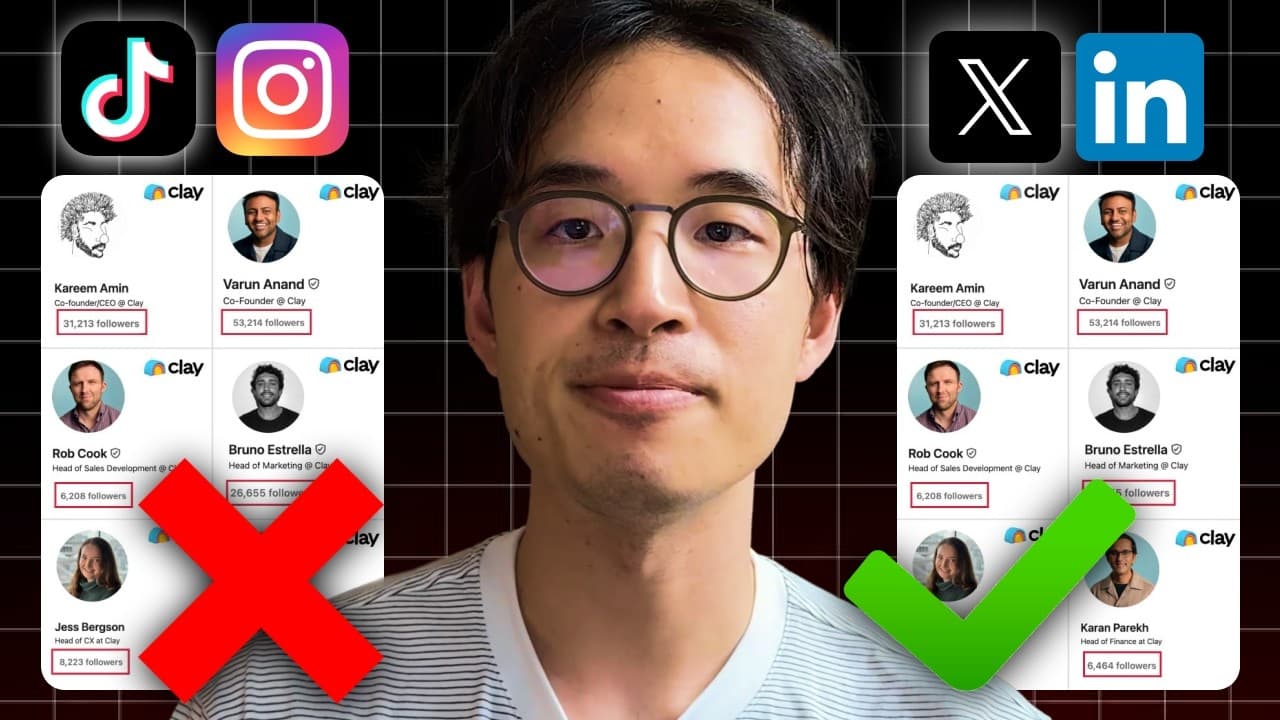
Jeffrey: Yeah, I think this is a factor of a few things. One is just the nature of platforms like LinkedIn and Twitter today, where a lot of executive advocacy is happening, especially if you're a B2B business, right? On those platforms, we're tending to see executive profiles significantly outperform company ones.
And it makes sense. I think algorithmically and from a network perspective, some place like LinkedIn, it's where people want to hear from other people, right? They want to hear the first-party perspective. They want to connect with other people and hear their insights and thought leadership. And that content is inherently going to be a lot more engaging than the generic company content that often gets put out by company pages.
What Does a Company Lose Without an Executive Advocacy Program?
Nathan: All right, we're going to talk more about generic versus personalized content in a few minutes, because I'm sure that people are going to be curious about how AI factors into that. But, well, look, before we do that, let's say I was part of a B2B company. I might not see this as a major pain point yet, because I don't understand the cost of not doing it.
In other words, there's almost a ROI when you start, but if you haven't started, you don't really see the returns just yet. What do you feel like a company is losing out on when they don't have an executive advocacy program in place?
Jeffrey: Yeah, we think they're losing out on revenue. I mean, it's the North Star metric, right? I think it's no different than any other go-to-market channel, and that's really what we believe, is that exec advocacy is another GTM motion nowadays.
It's a way to sign deals. It's a way to create pipeline. It's a way to meet your buyers at where they are and stay top of mind.
And similar to other motions, it's the same reason that if you're not doing ads or if you're not doing outbound or you're not doing any marketing, right? It's hard to figure out what you're missing out on. But I think the thing that we truly believe is two things.
Number one, just like all these other channels, you can generate real meaningful revenue through an executive advocacy program. And the second thing we believe, which is probably more important, is that because of how, I think, early in the wave of executive advocacy we are on these channels, creating a great executive advocacy system almost always outperforms your other marketing channels.
It's a low-cost, purely organic play, but it has this interesting shape where it actually leads to real demand generation. And if you're able to systematize your executive content, distribute it consistently, build a following, voice, and authority, for a lot of the businesses we work with, we see social and executive advocacy become their number one driver of leads.
How Do You Systematize Executive Advocacy and Keep Posts Genuine?
Nathan: Okay, let's talk about systematize, because I totally agree: low-cost, organic growth, you almost can't beat it, and yet there's not a lot of companies that are doing it well. And I suspect that's because in the past, in order to do that, you would have a ghostwriter or someone trying to log into an exec's account, always saying, "Hey, can you text me the login code from your phone?" Or you would have these Slack messages of, "Hey, I need to post X, Y, and Z." Or, "Can you go share a link X, Y, Z?"
How do you specifically solve this in a way that keeps posts genuine and true to the executive who's posting, but without having to corral a bunch of C-suite folks who just don't have the time?
Jeffrey: Yeah, executive advocacy is inherently tricky, right? Because you're managing other people's profiles for them, and there's a lot of logistical challenges that come with that. First of all, we don't ever recommend logging into your exec's profiles on their behalf.
Not only is that annoying, and you deal with 2FAs and all kinds of security codes, you have to manage multiple windows and incognito browsers just to do basic things like posting and get analytics, but it's also actually a terms of service violation for many social networks. And so, generally, we don't recommend account sharing as the solution.
Where this comes into play is we believe in using orchestration tools like Ordinal, right? Ordinal is obviously a software platform, but we are a command center to run your executive advocacy platform, right? It's a place where all your execs can connect their profiles as a one-time connection, and then you as a centralized comms or marketing team have the ability to schedule posts on their behalf, have the ability to use engagements, have the ability to get analytics about what's working and what's not, and none of this involves going directly onto the platforms and having to log in and out. And so logistically, we think using a centralized piece of software makes that really easy.
I think the second part to your question, Nathan, if I'm remembering correctly, is a little bit about how we can retain the executive tone of voice, right? And so this is really where we believe AI has changed the game here. Obviously, we recommend best practices, like you should create a tone of voice guide and your general writing style that you and the executive are aligned on.
But more importantly, one of the things that we've seen work really well is actually just basing your executive posts on their past post history. Execs tend to all have a way they type, prefer to write. They're no different than anyone else, just like you and I have our own preferences about the way we appear on a channel like LinkedIn. Executives do as well.
And honestly, what we found is the best way to capture that is just by loading all those past posts in as context into something like Claude or Codex or Cursor or whatever it might be. And using these AI tools to help generate at least a first draft, right? With some key talking points.
We do want to veer away from creating AI slop, but in some ways we think that having a system helps do that, right? Because you're loading in actual past post history, your AI is writing in their actual tone of voice, and then your job as the content creator is really the strategy, the thoughts, the insights that go in behind that post.
Shameless plug as well is Ordinal can automate this as well, right? We have an MCP, so you can dynamically hook up your executive's past posts natively into [unclear], drafted there, and then pushed on that content back into Ordinal.
Does Executive Advocacy Go Beyond Posting?
Nathan: Yeah, nothing shameless about it. Having played with it, it is one of the best tools I've ever played with in terms of social. And one thing that I know you're too humble to actually bring up yourself, so I'll ask for you. Executive advocacy, does it just limit itself to posting, or are there other interaction signals as well? Commenting, likes, reposts that you can schedule through a tool like Ordinal.
Jeffrey: Exactly, yes. So, with Ordinal, you can also have execs cross-engage with each other's content. They can leave comments, they can repost company content that's going out or other execs' content that's going out. And all of this can get scheduled ahead of time.
And so, really the importance of this is then you have this awesome coordinated system of not just scheduled posts, but also engagements that are happening across those posts. And your execs start to compound each other's presences on social and make each other more effective. So, the larger your executive advocacy program becomes, almost the more effective it becomes at saturating the social channels.
Do Executives Have More Success Selling to Other Executives?
Nathan: That's great. And do you think it's true, again, just anecdotally, and we're talking about lead gen and generating real revenue, have you seen in the past that executives tend to have more success starting those B2B conversations? In other words, a CMO is more likely to buy from a CMO that they're interacting with LinkedIn than a director of marketing or something like that, where CMOs buy from CMOs, CROs buy from CROs. Is there a trust-building factor in terms of talking to other executives as well that you've seen?
Jeffrey: Yeah, the first thing here is this is why we think it's really important to establish swim lanes for different execs. So, let's say, I'll make this hypothetical example. I'm a company, a fintech company, and I sell to CIOs at large banks, right? This is where it's important to segregate the different type of execs at your company and who their content should target, right?
Maybe this fintech company has three co-founders. So, one of the co-founders is primarily responsible for thought leadership for super bottom of funnel CIOs at large Fortune 500 banks. They talk a lot about enterprise motions, the product launches and things they post about tend to be really targeted at this audience. And they're doing a lot of very proactive audience building with their content around this CIO audience.
And then maybe another exec is maybe more targeted at the self-serve motion, right? Or a different kind of, maybe it's targeted at PE, right? Or private equity or some other slice of investors.
And so, we do really recommend, I mean, there's a bunch of different ways to slice it. It could be by types of content, it could be by your ICP, ideal buyer persona. But at the end of the day, one thing that's really important is to make sure your executives have a strategy around the swim lanes that they're posting and what the real goal is. That's the only way to really make it measurable and truly effective.
I think chasing virality is often a difficult metric for execs. But having a consistent posting system that repeatedly hammers the same buyer over and over again with core marketing messages almost always pays off whether or not your post happens to go viral.
Is There a Learning Curve With a Tool Like Ordinal?
Nathan: Okay. And we're talking in a world where these execs are super busy. They want very authentic post, shares, engagement on these social channels that are unique to them. We chatted about how you can make that happen.
But let's say that I was an operator and I was feeling like I'm not a technical person. Is there a learning curve? So, with a tool like Ordinal, do you need a lot of technical experience? Because some people hear AI and they get nervous. Like, oh, I just don't have the chops for that.
Jeffrey: No, not at all. Yeah. So, I think that's the great thing with a tool like Ordinal: we've built a lot of the workflows and systems to run an executive advocacy program for you. So, all you do is sign up, set up the system within Ordinal, and use a lot of the pre-configured things, right? Approvals, drafting, all of the features that come with it, scheduling, etc.
In terms of the AI side of things, that's a great question. The MCP specifically is very easy to configure. It's actually just a native setting inside of Claude, so you just go to settings, connectors, and you add in the Ordinal URL. That's really all there is to it.
It's more complicated than it sounds, but it's truly a two-click process. And so, shouldn't take more than 30 seconds for anyone to set up.
What Is the First Step to Starting an Executive Advocacy Program?
Nathan: All right. And if I am just part of a B2B exec team right now, I'm thinking this is great. How do I get started? What would you say is the first step to getting started with an executive advocacy program?
Jeffrey: Yeah, so the first step we think is always buy-in. Really the reason executive advocacy programs fail, from what we've seen, is not because it doesn't generate enough revenue or the content itself isn't good. It's almost always because there's not enough buy-in universally across the execs.
And the story that we try to educate people on here is we think that oftentimes in executive circles there's a misnomer or misunderstanding of how social has evolved. And social is still thought of as very much so a brand marketing channel.
So the pushback we hear is like, "Hey, I'm an exec, why should I care about posting on LinkedIn or Twitter, right? It's almost like nothing to do with the business. And you guys should just stick to putting up product launches and updates and things like that from the company page."
And so we think it's important to educate execs on how this story has shifted and how this narrative has changed, right? Socials like LinkedIn and Twitter are real demand generation channels. They're real social GTM channels.
They're no longer just places for people to post vibes and interesting company updates at a high level. They're actually places where thought leadership, deals, your ICP customer lives. It's a real business generation channel.
And once you get buy-in from execs, the rest of it is really smooth. The orchestration, using software like Ordinal, all of that is executional. And we think just helps make that ship sail smoothly. But that's probably step number one, is just making sure everyone's bought in philosophically.
How Can People Reach Jeffrey?
Nathan: All right. And for anybody listening, if they wanted to contact you, what would be the best way to reach out if they had questions? The website on a demo, email, LinkedIn?
Jeffrey: Yeah. We would love anyone that's looking for an exec advocacy motion or looking to spin that up, you can check us out at tryordinal.com. More importantly, you can send me an email as well. My email is jeffrey@tryordinal.com. It's J-E-F-F-R-E-Y at tryordinal.com. And happy to give you a demo.
Nathan: That's awesome. Thank you so much, Jeffrey. Really appreciate your time.
Jeffrey: Awesome. Thanks, Nathan.
Chapters
- 0:00Intro
- 0:33Interview Begins
- 0:57Defining Executive Advocacy
- 2:00Why Personal Profiles Outperform Company Pages
- 2:40The Hidden Cost of Not Having an Executive Advocacy Program
- 3:14Executive Advocacy as a Real Revenue & GTM Channel
- 4:33How to Systematize Executive Advocacy Without the Headaches
- 5:14Why Account Sharing Is a Bad Idea (And What to Do Instead)
- 5:46How Ordinal Solves the Logistical Problem
- 6:21Using AI to Capture an Executive's Tone of Voice
- 7:37Beyond Posting: Comments, Likes & Reposts Through Ordinal
- 8:39Do Executives Convert Better With Other Executives? (CMO to CMO)
- 9:11Setting Swim Lanes: Giving Each Exec a Content Strategy
- 10:39Is Ordinal Hard to Use? The Learning Curve Question
- 11:51How to Get Started With an Executive Advocacy Program
- 12:03Step One: Getting Executive Buy-In
- 12:50Changing the Narrative: Social Is a Real GTM Channel
- 13:31Where to Find Jeffrey & Book a Demo
Key Takeaways
- Executive advocacy is a go-to-market motion, the same as ads or outbound. A great system for it almost always outperforms your other marketing channels.
- Executive profiles outperform company pages on LinkedIn and Twitter because people want a first-party perspective from other people.
- Never log into an executive's account on their behalf. It's a terms of service violation on many social networks, and a centralized tool removes the need.
- Base AI drafts on the executive's past post history so the first draft is already in their tone of voice.
- Programs almost always fail on buy-in, so step one is convincing executives that social is a demand generation channel.
The pushback I hear from executives is that posting on LinkedIn or Twitter has almost nothing to do with the business. They'd like the marketing team to stick to putting up product launches and updates from the company page.
I think that's a misunderstanding of how social has evolved, because it treats social as a brand marketing channel. Here's my position: executive advocacy is another go-to-market motion, the same as ads or outbound, and a great system for it almost always outperforms your other marketing channels.
Why Do Executive Profiles Outperform Company Pages?
Here's the definition I use: executive advocacy is the motion of having the executives at your company create social content on a regular basis to drive pipeline, leads, or whatever your goal is on social. It's (usually) run by a centralized marketing or communications team that helps each executive figure out their swim lane, their content buckets, and what they're going to post.
Much of that happens on LinkedIn and Twitter, especially for B2B businesses, and on those platforms I see executive profiles outperform company ones. That makes sense algorithmically and from a network perspective, because LinkedIn is where people want to hear from other people.
"They want to hear the first-party perspective. They want to connect with other people and hear their insights and thought leadership."
That content is inherently going to be more engaging than the generic content that often gets put out by company pages, and we've covered what's happening to LinkedIn company page reach separately.
What Is a Company Losing Without an Executive Advocacy Program?
I think they're losing out on revenue, which is the North Star metric. Executive advocacy is no different from any other go-to-market channel: it's a way to sign deals, create pipeline, meet your buyers where they already are, and stay top of mind.
The cost is hard to see, in the same way it's hard to figure out what you're missing out on if you aren't doing ads or outbound.
I believe two things here. The first is that you can generate real, meaningful revenue through an executive advocacy program, the same as through those other channels. The second, which is probably more important, is that it's still early in the wave of executive advocacy on these platforms, so a great system almost always outperforms your other marketing channels.
"It's a low-cost, purely organic play, but it has this interesting shape where it actually leads to real demand generation."
For a lot of the businesses we work with, social and executive advocacy become the number one driver of leads once they systematize their executive content, distribute it consistently, and build a following, a voice, and authority.
How Do You Post for Executives Without Logging Into Their Accounts?
Executive advocacy is inherently tricky because you're managing other people's profiles for them. I don't ever recommend logging into your executives' profiles on their behalf, for two reasons:
- It's annoying. You deal with 2FA and all kinds of security codes, and you manage multiple windows and incognito browsers just to do basic things such as posting and getting analytics.
- It's a terms of service violation on many social networks.
So account sharing isn't a solution I recommend. A centralized piece of software makes the logistics easy, because nobody has to go directly onto the platforms and log in and out to post or to see what's working. Our guide on how to manage multiple LinkedIn accounts goes deeper on this.
How Do You Keep an Executive's Voice When AI Writes the First Draft?
The standard best practice still applies: create a tone of voice guide and a general writing style that you and the executive are aligned on.
What I've seen work really well, though, is basing executive posts on their past post history. Executives have preferences about the way they appear on a channel such as LinkedIn, the same as you and me. The best way I've found to capture those preferences is to load all of the past posts in as context to something like Claude, Codex, or Cursor, and generate at least a first draft from some key talking points.
I do want to veer away from creating AI slop, and in some ways having a system helps with that. Because you're loading in real post history, the AI writes in the executive's own tone of voice. Your job as the content creator becomes the strategy, the thoughts, and the insights that go in behind the post.
Which Executive Should Talk to Which Buyer?
I think it's really important to establish swim lanes for different executives, and you can slice them by type of content or by ICP and buyer persona.
Here's a hypothetical. Say I'm a fintech company with three co-founders, and I sell to CIOs at large banks. One co-founder is primarily responsible for thought leadership aimed at bottom-of-funnel CIOs at Fortune 500 banks, so they talk a lot about enterprise motions and do a lot of proactive audience building around that audience. Another executive might be targeted at the self-serve motion, or at private equity or some other slice of investors.
Whichever way you slice it, every executive needs a strategy around the lane they're posting in and what the real goal is, because that's the only way to make the program measurable and truly effective. Chasing virality is often a difficult metric for executives.
"Having a consistent posting system that repeatedly hammers the same buyer over and over again with core marketing messages almost always pays off whether or not your post happens to go viral."
Why Do Executive Advocacy Programs Fail?
From what I've seen, executive advocacy programs almost always fail for one reason: there isn't enough buy-in universally across the executives. Weak content and weak revenue are rarely the cause.
That's why the first step is always buy-in. In executive circles, social is still thought of as very much a brand marketing channel, which is where the pushback I opened with comes from.
So I think it's important to educate executives on how the narrative has changed. Socials such as LinkedIn and Twitter are real demand generation channels. They're where thought leadership, deals, and your ICP customers live, which is a long way from a place to post vibes and interesting company updates. Once you have buy-in from the executives, the rest is really smooth, because the orchestration and the software are executional.
How We Run Executive Advocacy in Ordinal
I describe Ordinal as a command center for running your executive advocacy program. Companies like Clay, Pylon, Zapier, and Profound are turning their entire founder and leadership team into a distribution channel, and they use Ordinal to do it.
All of your executives connect their profiles as a one-time connection. From there, the centralized comms or marketing team can schedule posts on their behalf, use engagements, and get analytics on what's working and what isn't. We've also built a lot of the workflows for you, so approvals, drafting, and scheduling come pre-configured once you sign up and set up the system.
Executives can also cross-engage with each other's content. They can leave comments and repost company content or another executive's content, all scheduled ahead of time, so your executives compound each other's presence on social. The larger the program becomes, the more effective it becomes at saturating the social channels.
We also have an MCP that automates the past-posts approach: you hook up an executive's past posts to your AI tool, draft there, and push the content back into Ordinal. It's a native setting inside Claude. You go to settings, then connectors, and add the Ordinal URL, which shouldn't take more than 30 seconds.
Final Thoughts
Before you pick software or draft a single post, make the case to your executives that LinkedIn and Twitter are demand generation channels, and keep making it until everyone is bought in philosophically. Then give each executive one swim lane and one buyer to post for, and load their past posts into your AI tool so the first drafts already sound like them.
Frequently Asked Questions
What Is Executive Advocacy?
Executive advocacy is the motion of having the executives at your company create social content on a regular basis to drive pipeline, leads, or whatever your goal is on social. In my experience it's (usually) run by a centralized marketing or communications team. That team helps each executive figure out their swim lane, their content buckets, and what they're going to post.
Why Do Executive Profiles Outperform Company Pages on LinkedIn?
LinkedIn is where people want to hear from other people. They want a first-party perspective and they want to connect with someone and hear their insights, so I find that content is inherently more engaging than the generic content company pages often put out.
Is It Okay to Log Into an Executive's LinkedIn Account to Post for Them?
I don't ever recommend it. You end up dealing with 2FA, security codes, and incognito browsers just to post, and account sharing is a terms of service violation on many social networks. I'd use a centralized piece of software that each executive connects their profile to once.
How Do You Use AI to Write Executive LinkedIn Posts in Their Own Voice?
Base the drafts on the executive's past post history. I load those past posts in as context to something like Claude, Codex, or Cursor and use it to generate a first draft from key talking points. The content creator's job is then the strategy, the thoughts, and the insights behind the post.
How Do You Start an Executive Advocacy Program?
Start with buy-in. From what I've seen, programs almost always fail because the executives aren't universally bought in, so I'd first educate them on how LinkedIn and Twitter have become real demand generation channels. Once they're bought in philosophically, the orchestration and the software are executional.
Should Executives Try to Go Viral on LinkedIn?
I think chasing virality is often a difficult metric for executives. A consistent posting system that repeatedly puts your core marketing messages in front of the same buyer almost always pays off, whether or not a given post goes viral.