Why Copy-Pasting Posts Across Platforms Is Killing Your Content Strategy

Full Transcript
Jeffrey: Cross-posting across social platforms should not be copy paste and repeat. What works on LinkedIn rarely works the same way on X or Instagram. My name is Jeffrey. I'm a Harvard graduate, YC alum and Forbes 30 Under 30 founder. And I've spent the last few years figuring out how the best teams actually distribute content across channels without losing what makes each platform uniquely work.
In this video, I break down what an effective cross-platform strategy actually looks like, how the tools most teams use to coordinate are a compliance risk, and where AI is about to take content distribution next. Let's get into it.
Should You Write One Post and Publish It Everywhere?
Nathan: All right. I'm here today, as always, with the co-founder of Ordinal, Jeffrey. I'm excited to talk today about social media coordination, but specifically posting across platform. So, cross-platform social media.
And one thing that I've noticed is when I talk to people, they'll say something like, I just want to write one post and then get it out everywhere. Do you think that's the right approach or do you think that they're going to learn kind of a hard lesson over time and get bland results?
Jeffrey: I think it depends, right? It depends on the type of post, right? Certain posts, like if it's low on substance or it's just something that's like an announcement you just need to make sure it gets out everywhere. Sure. Yeah. Just click the cross post button, or just post it as is across a bunch of different channels. I think that's great.
For most posts though, if you're doing more like thought leadership or something that's a little more in-depth, I think for your most important three to four channels, we do generally say, or maybe two to three channels, we generally say it's probably worth the time and effort to take a few minutes and just personalize it a little bit. For example, the things that work well on LinkedIn might just vary a tiny bit on a platform like X.
And so I think taking the time to just personalize it will obviously always be helpful. But it's not necessarily a bad thing per se to just cross post. It's just more like that's an optimization we recommend making if you have the time, especially for an important post.
How Did Teams Manage Multiple Platforms Before Tools Like Ordinal?
Nathan: Okay. And we've talked in the past about how people, if they wanted to personalize their post per platform, let's say it is a thought leadership piece or they have a few different perspectives going on and so they don't want to publish, you know, the same four thought leaders with the same text across all of those.
In the past I think we've talked about have people have used like a duct tape stack, excuse me: Notion, Buffer, Zapier, Sheets, Slack. What was basically, in your experience, what were all these teams doing before tools like Ordinal existed and where would it often break first?
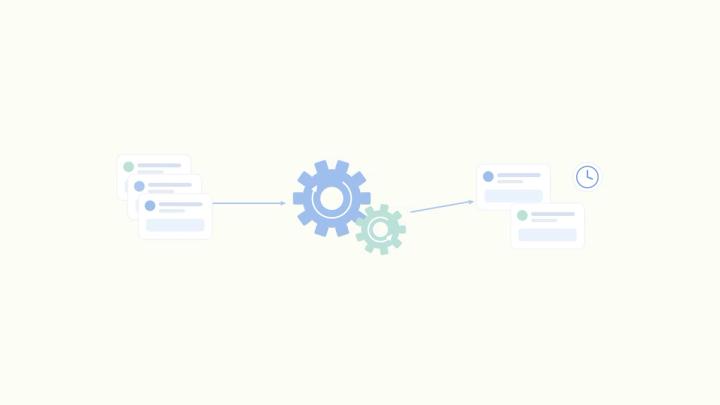
Jeffrey: Yeah, I mean, when it comes to cross-posting specifically, the issue was like, if you're managing, let's say, even four or five channels, it was honestly just a bunch of spreadsheets and shared passwords. And it's like, it's time for the post to go out, let me log into Instagram, post, log out, or go on to TikTok, post, log out, go on to Twitter, write up, split it into tweet threads if I need to, log out.
I mean, it's just a very painful manual process, right? Without a centralized orchestration tool. And so there's no real way to queue up your posts beforehand for all of these platforms simultaneously. And so it just ended up having to be something where you're posting the way that anyone else would on social media, which is like with a phone and time. Those are the two things it took.
Why Are Shared Passwords a Problem?
Nathan: Yeah. The shared password one is actually a felt pain on my end because I do remember having run some thought leadership for LinkedIn, people doing ghost writing and things like that. And every single time I would have to coordinate with them to get their login and their password before I was able to do it.
And then there's 2FA tokens and then you have to ping them again and then the token expires because they're in a meeting and then you're in a meeting and yeah, you know how the dance goes.
Jeffrey: Yes. We think this is a terrible system, for what it's worth, which is why we built Ordinal as well. But yeah, I mean, I think that the other thing that I always like to just flag with the sharing passwords is technically for a lot of platforms like LinkedIn, it's also a terms of service violation.
So you don't actually want to be doing this too much, especially if you're posting on behalf of execs or things like that. It's better to use, you know, compliance software to basically help coordinate this.
Does Ordinal Require Password Sharing?
Nathan: And does Ordinal follow that bracket? In other words, if I was, let's say I was setting up a LinkedIn post for myself and then for you and your co-founder. Is there any of that hassle going through a tool like Ordinal in terms of password sharing?
Jeffrey: There's not. That's the beauty of it, right? We use the official APIs for all of the social platforms. What happens is basically we get issued an authorization token to post on behalf of an account. But there's no storing of password.
There's no sensitive information that's being passed between the systems. And it's the official kind of compliant way to be posting to all of these platforms. And so, no password sharing. Somebody can, you as a social manager could just log in and post across every account that you've been given access to, all at once.
Nathan: All right. So I can delete my LastPass subscription finally. Get rid of it once and for all. That's good.
Jeffrey: Yeah, maybe useful for other things, but yeah, for social media specifically, yeah, stop storing your passwords in LastPass and sharing them with everyone in the company.
How Should the Same Post Differ on LinkedIn vs. Twitter?
Nathan: And we've talked a little bit about this just a few seconds ago, but we've talked in the past about how each channel is distinct, so you don't have, like, Instagram is not just a copy of LinkedIn. Where is an example where the same post should be different on LinkedIn versus Twitter? And what happens if it isn't, like, long term?
In other words, what would you recommend? Is one more video based? Is one more text based? One more carousel based? What would be your best recommendations for those and using different platforms?
Jeffrey: Yeah, I would say that, like, our honest opinion is that every platform has its own idiosyncrasies and nuances and it's a matrix. It's like both what the platform prioritizes and what your audience looks like on that platform. For e.g., like the same company could have a very different audience on Twitter versus LinkedIn, right?
Maybe, I'll make an example up, but like maybe on LinkedIn for example, let's say I'm a DevOps company or something like that, right? Or dev tools company. Maybe Twitter I actually speak more to the engineers. They care more about the actual technical releases and ways that we're thinking about architecting the product.
Maybe on LinkedIn, it's much more about selling, like, enterprise to the economic buyer at these organizations. And so it's a lot more talking about the revenue impact your tool has.
It's a very simple, abstract, completely made-up example, but maybe the point that I'm trying to get across is it's important to know your audience, right? So it's important to know what's working on what channels, why, like the types of people that are on those channels, and then try to curate or tailor the type of content or the way that the same content is phrased based on the channel.
There's also like channel level idiosyncrasies, which I'm sure you all have heard about, which is like, maybe LinkedIn certain things work better, being a little bit more bragging and talking a bit more about how great your feature is, and like how you built this company from zero is a story that works well on LinkedIn. And Twitter just by its format tends to be a little shorter, punchier, maybe it's a bit more meme driven, or there's different kind of attributes to it.
So I think just taking all that into account is important and then personalizing the message that you want to get across for each channel.
Nathan: You're telling me people brag on LinkedIn? I've never come across that. How crazy.
Jeffrey: You're right. It's the most humble social network. I apologize.
What Do Platform APIs Support That Publishing Tools Still Miss?
Nathan: What's a feature that a lot of these social platforms, that their own APIs support, that most publishing tools still haven't incorporated yet? I was blown away by, like, your preview in Ordinal that I hadn't seen a lot of other companies. Is that an API thing? Is that a UI thing? What are some things that you see their own API don't support yet?
Jeffrey: There's a ton. Yeah, I mean, obviously the realistic preview is important. In terms of other scheduling tools, one of the things that we were always frustrated with is a lot of scheduling tools actually assume you're going to post roughly the same content to every channel.
They actually assume if you have this post for LinkedIn, the UI and UX experience of customizing that then for Twitter and then for another channel, for Threads, for TikTok, is really poor. It actually really assumes that you're going to write the same copy for every channel, post the same asset, and some of them don't even let you edit it for other channels as well.
So one of the things that we cared a lot about was treating every channel like it was important, right? So, the same way that on, I'll take LinkedIn for example. Some of the things that we like to call out that we can do on LinkedIn that other platforms don't is, like, your point, Nathan, the realistic social preview, which again is on every other channel we support, where you can see exactly what the post is going to look like on the platform before it goes out.
It's down to like smaller things like even text formatting, right? Like being able to bold and italicize text is something that I think Ordinal is one of the only platforms that supports, but is hugely valuable across every social channel, right? You can do the same thing in Ordinal on Instagram captions or on a Twitter tweet.
And then I think there's just like a focus of understanding what each platform is about and being able to support a native user of that platform. Like, an example that blows my mind is many scheduling tools still don't support tweet threads on Twitter, and I'm like, that's like a core fundamental aspect of the platform, right? If you can't create a thread on Twitter/X, you might as well just not post, right? Nobody's going to read your huge mega, you know, single tweets.
And that's just one of the examples of the features, but then this trickles down to all kinds of things, right? Like the X Premium support is richer on Ordinal, where you can post long form tweets, you can post longer videos, the UX of like being able to customize the asset, the meta description, the tags in every single tweet, like all of that stuff I think is considered.
And so our whole philosophy, not to ramble on for too long, is treating every channel and making it as close to feature parity as native posting as possible, right? Which I don't think is necessarily the same philosophy that other social tools adopt. I think for other social tools they maybe think, they make an assumption, which is I think maybe wrongfully so in a lot of cases, that the same exact content and assets are actually should just be copy pasted over to every channel and no changes need to be made.
Should You Ever Post Directly in the Platform?
Nathan: Is there ever a time that you would recommend somebody, not to put you in the hot seat here. Is there ever a time that you would tell someone not to use a social media scheduling tool at all and that it should be purely directly in the platform? Is there ever a case where you're like, it's actually best to have this type of thing, or has it gotten good enough that it's like if you can do it there, you should be doing it here for better coordination?
Jeffrey: I'm a little biased, but I do think that you should just use the system, right? Like I think there's very little that you can't do within Ordinal or that you would need to post directly for.
Of course there's probably certain exceptions, or I can think of some examples where like maybe you're just reacting to like a meme that you saw and it's like, I'm not sure, I'm not even sure this is a real use case, but like maybe then you want to like post a reaction in real time or something, a spin on it really quickly, and it doesn't make sense to go into a tool to then queue that up.
But for the most part, especially for company content, like company and executive content, like in this business use case where I'm not talking about my own personal Instagram where I'm just like posting stories of me going about my day, when I'm talking about things that a business or an executive would post, I think most of it should just be scheduled.
Nathan: That makes a lot of sense. Yeah. I could see somebody getting crazy with this is me going about my day and how many meal photos we'd end up seeing on Instagram all the time.
Jeffrey: Yeah. I mean, don't schedule your own personal Instagram content unless you want to, right? It's less necessary unless you're an influencer, but like for a business account, yeah, I think that it makes sense.
Has Cross-Posting Ever Gone Sideways for a Customer?
Nathan: Have you ever seen a time on your own platform with a customer where their cross-posting went sideways? I imagine you obviously don't look at every post that your customers are putting out, but have you ever heard like a horror story on, you know, they put something and it was formatted fine on one and then it just did not look very good on the other? Or is it typically with Ordinal, obviously, you can customize it so much.
Jeffrey: I mean, I think it happens all the time with other tools, right? Which is probably why we assume that you should be able to get things like a realistic social preview before you actually post it, right?
So like at Ordinal, I guess not to self-plug too much, but I do think the two things that we really do to make sure this doesn't happen is one, you get the realistic social preview, so you know how things are going to look before they get posted, so you don't end up with these issues. And then the second thing is that we actually run an AI reviewer through every post that goes out.
So if for example you're cross-posting and like on accident, I don't know, for some reason you start to write some filler text or you accidentally delete one of the tweets or something like that, and then the tweet thread no longer makes sense, and Ordinal, the AI reviewer, will actually catch these kinds of mistakes.
So it'll flag to you like, hey, before you schedule, like, hey, we noticed that your post talks about this topic for these four channels, but for your fifth channel, for Twitter, for some reason it just says hello world. And it's like, are you sure you want to post that, right? And so those kinds of mistakes do happen naturally, but I think with the right system, you're able to catch them with a pretty high success rate.
Nathan: I'm embarrassed to say I did not know that Ordinal had those types of stopgaps. It will actually warn you if something looks a little bit off across platforms.
Jeffrey: Yep. It's called the post reviewer. It's on every post page and then it automatically runs every time you try to schedule a post as well.
Nathan: Oh, that's fantastic.
Jeffrey: It's almost like a superpowered Grammarly spell checking slash other mistakes finder.
Nathan: Which is to say all-in-one. I think after three or four slashes, it's just all-in-one at that point.
Jeffrey: Sure. Yeah. An all-in-one writing slash mistake capturer before you finally publish your post.
What Will Cross-Platform Publishing Look Like in 12 Months?
Nathan: All right, let's say, I wanted to ask about five years out, but at the rate all this is going, let's just say 12 months out, does cross-platform publishing even look like a person clicking schedule, or what do you believe AI agents will do to help change or to help fit in the loop? How will they start fitting in?
Jeffrey: Yeah, I think that some distribution will probably get automated by agents, right? Like, let's say that I'm a company posting to six channels. Inevitably, for every example we've seen, there's going to be a core two or three channels that are really important and there's going to be three channels that you're doing mainly for visibility or maybe there's some other strategy behind it, right?
And so I do think that those channels are going to be the first ones to get automated, where like I do think that's possible, right? Like for example, let's say I don't care about Threads as a channel. No offense to Meta, Threads is a great platform, but let's just say in this case, this company doesn't care about Threads and their main channels are LinkedIn and Twitter.
There's a very realistic world where you could have an agent basically understand what the tweet's talking about and then just cross-post it to Threads on your behalf automatically, and it doesn't really need a tweak too much. Just make sure that it makes sense. You give it some general style guidelines and rules for Threads and it would just take care of the rest.
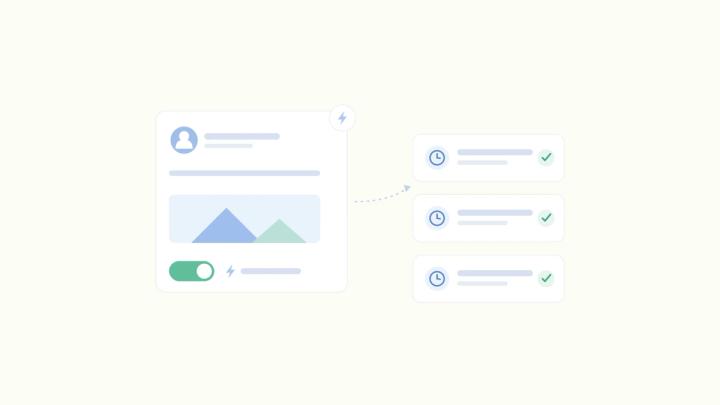
Again, obviously you can run this agent through Ordinal and many teams do, because you could then use, like with Ordinal, right, you could have it hooked up so that every time we create a LinkedIn post and schedule it out, create a version for Threads on the cross-post tab and then just make sure that that one looks good to go as well.
And so I think that's the first level automation that you'll start to see is some channels will start to be run more on autopilot, especially the lower priority ones for a company.
For high priority channels like LinkedIn, like for example in this case for this company, let's say LinkedIn was their most important channel, I do think the role that AI plays still has to do more with like automating distribution and strategy more than it does like fully writing and posting and acting as a social manager itself, and especially in like a 12-month time frame.
So I think that's generally how we think about it, is that there's always going to be that human touch, right? Like, automated content is never really going to stand out that much and it might make sense for your lower touch point channels. But for your most important ones that are actually driving business, it's important to have some human in the loop involved still.
Which Platforms Does Ordinal Support?
Nathan: All right. And let's say that tomorrow I had a brilliant idea for a post and I wanted it across all the platforms. What are the platforms that Ordinal could help me cross post against?
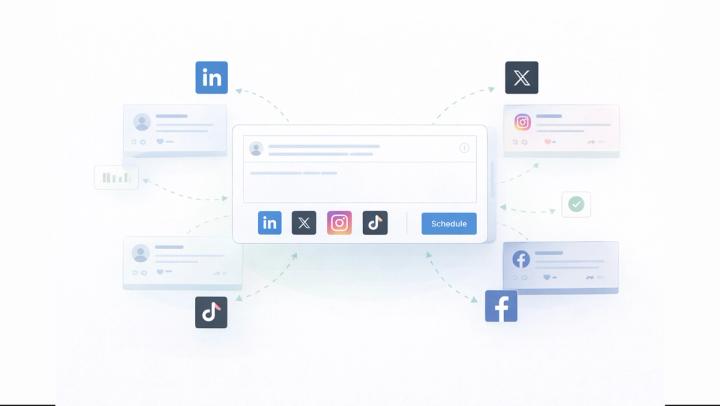
Jeffrey: Oh, we support pretty much every major social platform. So you can post to LinkedIn, to X/Twitter, to Instagram, Facebook, Threads, TikTok, YouTube Shorts. I'm sure I'm forgetting one or two in here.
And then we also let you cross post to Slack communities, Discord communities, so if you're ever running like a community within those platforms. You can also even schedule out Webflow CMS posts. So you can schedule out blog posts as well. So it should be pretty horizontal support for everything you needed for content.
Which Customers Do Cross-Platform Distribution Well?
Nathan: All right. And out of all of your customers, the last question here, well, I know you love all of them equally. Is there one that stands out particularly, though, in terms of they're doing a great job with cross-platform distribution on social media?
Jeffrey: Oh man, that's a great question. I don't want to shout out anyone particularly, but I will say that we have a few podcast agencies and video agencies that are on the platform. And I would say that video agencies always just do such a great job with cross-platform distribution.
Like, there's a lot B2B can learn from traditional consumer video agencies, and now there's more B2B video agencies that do a great job as well. And the reason why I say that is like they do such a good job clipping, cropping, making sure every asset is appropriate for the channel that they're posting to.
And video just does great, you know, generally these days. And so we generally think that they're pretty sophisticated and good, have this whole cross posting motion down.
Nathan: Okay. So a recommendation might be, if you're part of a B2B team, just checking out some of those video agencies and how they are active on social media so that you coordinate a little bit better.
Jeffrey: Yeah, check out some of the video agencies. Check out some consumer brands, too. Like I honestly think, I know Ordinal is very focused on B2B and that's our kind of core customer set, but there's a lot of consumer companies that use Ordinal. And I think like Fi, the dog collar brand, Modern Animal, since I'm thinking about pets now, are just examples of two of the customers, and the veterinary care.
And like, look at how they do content. They're masters at it. I think that the way they are able to spice up things into a bunch of different reels and cross-post that to TikTok and Threads, I know channels might be different than B2B, but the same strategy and formula exists.
Where to Find Ordinal
Nathan: Oh, that's fantastic. Thank you so much. Those are all my questions for you today. If people wanted to get a hold of you or Ordinal, where could they do that?
Jeffrey: Yeah, you can find us on tryordinal.com. That's the marketing website. You can see everything that you need to know about the platform. You can also email me. I'm jeffrey@tryordinal.com as well.
Nathan: Awesome. Thank you so much, Jeffrey. Appreciate the time.
Jeffrey: Awesome. Thanks, Nathan.
Chapters
- 0:00Intro
- 0:29Meet Jeffrey
- 1:02When to Cross-Post vs. When to Customize
- 1:54How Teams Managed Multiple Platforms Before
- 2:31The Manual Posting Nightmare
- 3:18Shared Passwords Are a Compliance Risk
- 4:21How Ordinal Handles Multi-Account Access
- 5:04LinkedIn vs. Twitter
- 5:38Why Your Audience Differs by Platform
- 7:23What Scheduling Tools Still Get Wrong
- 8:20Ordinal's Native Posting Philosophy
- 10:10Should You Ever Post Directly in the Platform?
- 11:43Cross-Posting Horror Stories
- 12:07How Ordinal's Preview Prevents Mistakes
- 12:33The AI Post Reviewer Explained
- 13:55What Cross-Platform Publishing Looks Like in 12 Months
- 14:09Which Channels AI Will Automate First
- 16:15Every Platform Ordinal Supports
- 17:17What B2B Teams Can Learn From Video Agencies
- 18:55Where to Find Ordinal
Key Takeaways
- Cross-posting as-is is fine for announcements and posts that are low on substance. For thought leadership, I'd take a few minutes to personalize the post for your two or three most important channels.
- Every platform is a matrix of what the platform prioritizes and what your audience looks like there, so the same company can be talking to engineers on X and economic buyers on LinkedIn.
- A lot of scheduling tools assume you'll post roughly the same content to every channel, and many still don't support threads on X.
- Sharing passwords to post for someone else is technically a terms of service violation on a lot of platforms, LinkedIn included.
- AI agents will (probably) automate distribution to lower-priority channels first. The channels driving business still need a human in the loop.
Many scheduling tools still don't support threads on X, and that blows my mind. Threads are a core, fundamental part of the platform, so if you can't create one you might as well skip the post, because nobody's going to read your huge single tweets.
That gap shows what those tools assume: you'll write one piece of copy, attach one asset, and send it to every channel unchanged. Here's my position: cross-posting as-is is fine for an announcement, but an important post deserves a few minutes of personalization on each of your two or three most important channels.
Is It Ever Fine to Post the Same Thing Everywhere?
It depends on the type of post. If it's low on substance, or it's an announcement you need to get out everywhere, click the cross-post button and send it as-is across a bunch of channels. I think that's great.
Thought leadership and anything more in-depth is different. For your two or three most important channels, it's (usually) worth the time and effort to take a few minutes and personalize the post a little, because the things that work well on LinkedIn vary a bit on a platform like X.
Why Should the Same Post Change Between LinkedIn and X?
I think of each platform as a matrix.
"Every platform has its own idiosyncrasies and nuances and it's a matrix. It's both what the platform prioritizes and what your audience looks like on that platform."
The same company can have a very different audience on X than on LinkedIn. Here's a simple, completely made-up example: a dev tools company might speak mostly to engineers on X, who care about the technical releases and how the product is being architected. On LinkedIn, the same company might be selling enterprise deals to the economic buyer, so the content talks a lot more about the revenue impact the tool has.
Then there are channel-level idiosyncrasies. On LinkedIn, certain things work better when you brag a little more: how great your feature is, or how you built the company from zero, is a story that works well there. X, by its format, tends to be shorter and punchier, and maybe a bit more meme driven.
So know what's working on which channels and why, know the types of people on each one, and tailor the type of content (or the way the same content is phrased) to the channel.
What Do Scheduling Tools Get Wrong About Cross-Posting?
One thing that always frustrated me about scheduling tools is the assumption built into them. If you have a post for LinkedIn, the experience of customizing it for X, then Threads, then TikTok is really poor, and some tools won't even let you edit the post for other channels.
"A lot of scheduling tools actually assume you're going to post roughly the same content to every channel."
I think that assumption is wrong in a lot of cases. Our philosophy is to treat every channel like it's important and get as close to feature parity with native posting as possible, which means understanding what each platform is about and supporting a native user of that platform.
When a tool gets that right, there's very little you'd need to post directly for. I'm a little biased, but I think (nearly) everything a business or an executive posts should be scheduled, and the exception I can think of is a real-time reaction, like a quick spin on a meme you saw.
Why Are Shared Passwords a Compliance Risk?
Before centralized tools, managing even four or five channels meant a bunch of spreadsheets and shared passwords. When a post was due, you logged into Instagram, posted, and logged out, then did the same on TikTok and X. There was no real way to queue posts for every platform at once, so you posted the way anyone else does on social media: with a phone and time.
It's a very painful manual process, and I think it's a terrible system. The part I always flag is the password sharing itself, because for a lot of platforms, LinkedIn included, it's technically a terms of service violation. I'd avoid it, especially if you're posting on behalf of execs, and our guide to managing multiple LinkedIn accounts without logins covers the alternative.
Which Channels Will AI Agents Run First?
I think some distribution will probably get automated by agents over the next 12 months. Say a company posts to six channels. In every example we've seen, a core two or three of those channels are really important, and the others are there mainly for visibility or some other strategy.
Those lower-priority channels will be the first to run on autopilot. If your main channels are LinkedIn and X and you don't care much about Threads (no offense to Meta, it's a great platform), an agent could understand what a tweet is about and cross-post it to Threads on your behalf. You give it some general style guidelines and rules for Threads, check that the result makes sense, and it takes care of the rest.
For a high-priority channel, I think AI's role over that time frame has more to do with automating distribution and strategy than with fully writing, posting, and acting as the social manager itself. There's always going to be a human touch, and channel priority is where I'd draw the line between what to automate and what to keep human.
"Automated content is never really going to stand out that much and it might make sense for your lower touch point channels. But for your most important ones that are actually driving business, it's important to have some human in the loop involved still."
What Can B2B Teams Learn From Video Agencies?
Video agencies always do such a great job with cross-platform distribution, and there's a lot B2B can learn from them. They're good at clipping, cropping, and making sure every asset is appropriate for the channel they're posting to.
Consumer brands are worth a look for the same reason. Their channels might be different from B2B, but the same strategy and formula exists.
How We Built Cross-Posting Into Ordinal
We built Ordinal in part to replace shared passwords. We use the official APIs for all of the social platforms: we get issued an authorization token to post on behalf of an account, no password is stored, and no sensitive information passes between the systems. A social manager logs in and posts across every account they've been given access to.
Every channel gets treated like it's important. There's a realistic social preview on every channel we support, so you see exactly what the post will look like before it goes out. You can bold and italicize text (including in Instagram captions and tweets), build tweet threads, and use X Premium features such as long-form tweets and longer videos.
We also run an AI reviewer, called the post reviewer, on every post. It's on every post page and it runs automatically every time you try to schedule. If your post covers one topic on four channels and the X version for some reason says "hello world," it flags that and asks if you're sure you want to post it.
For lower-priority channels, you can run an agent through Ordinal, and many teams do: every time a LinkedIn post is created and scheduled, the agent creates a version for Threads on the cross-post tab, and you check that it looks good to go. We support LinkedIn, X, Instagram, Facebook, Threads, TikTok, and YouTube Shorts, plus Slack and Discord communities and Webflow CMS posts.
Final Thoughts
Before your next important post goes out, sort your channels into the two or three that drive business and the ones you keep mainly for visibility. Write a version for each channel in the first group, with the audience on that platform in mind, and let the others take the cross-post as-is. If you want a model for the first group, look at how a video agency clips and crops one piece of content so every asset fits the channel it's posted to.
Frequently Asked Questions
Is It Bad to Cross-Post the Same Content on Every Social Media Platform?
Cross-posting as-is isn't a bad thing per se, and it's the right call for announcements or posts that are low on substance. For thought leadership or anything more in-depth, I'd take a few minutes to personalize the post for your two or three most important channels.
How Should a LinkedIn Post Differ From a Post on X?
On LinkedIn, certain things work better when you brag a little more, like how great your feature is or how you built the company from zero. X, by its format, tends to be shorter, punchier, and a bit more meme driven. Your audience can differ too, so I'd tailor the content, or the way the same content is phrased, to the people on each channel.
Is Sharing Social Media Passwords With Your Team a Terms of Service Violation?
For a lot of platforms, LinkedIn included, it technically is. I'd avoid it, especially when you're posting on behalf of executives, and use software that posts through the platforms' official APIs with an authorization token, so no password is stored or passed around.
Should You Schedule Social Media Posts or Post Directly on the Platform?
I'm a little biased, but I think (nearly) everything a business or an executive posts should be scheduled. The exception is reacting to something in real time, like a quick spin on a meme, where queuing it up in a tool makes no sense. Scheduling your own personal Instagram is less necessary unless you're an influencer.
Will AI Agents Automate Cross-Platform Social Media Posting?
I think some distribution will probably get automated by agents over the next 12 months, starting with lower-priority channels. An agent can take a post from a main channel and create a version for a channel like Threads from some general style guidelines. For the channels driving business, I'd still keep a human in the loop, because automated content never really stands out that much.