

Social media automation has an image problem. Say the words and most people picture a month of posts scheduled in advance, a team walking away, and a feed that sounds like a press release. That version is real, and it does flatten your brand. But automation done right is already the operating model for the teams winning on LinkedIn and Twitter.
83% of marketing departments now automate their social media posting, according to a Templated industry compilation. Manual-only posting is the minority. The question isn't whether to automate. It's what to automate.
There's a clean line between tasks that belong to software and tasks that belong to humans. Cross that line in the wrong direction and your reach tanks. Stay on the right side and you get hours back without losing the voice that makes content worth reading.
TL;DR
- Automate scheduling, cross-posting, analytics, and engagement coordination. Keep writing, replies, and judgment calls human.
- LinkedIn's classifiers now flag flat, generic AI-written posts, so automating the draft itself backfires.
- The duct-tape stack of scheduler, Notion, Zapier, and Slack pings quietly breaks, and consolidating into one platform fixes it.
- Measure engagement rate and reach after automating. If they drop, you've automated too far into the content.
What Is Social Media Automation?
Social media automation is using software to handle repetitive social tasks like scheduling, cross-posting, analytics reporting, and engagement coordination, so your team can focus on strategy and writing. It isn't auto-generating posts and walking away. And it isn't mass DM blasts or fake engagement loops either. Those get accounts flagged or shut down.
The scale argument makes this concrete. According to global social media data from DataReportal's April 2026 update, users are active across 6.5 platforms per month and spend 18 hours and 36 minutes per week on social. No marketing team manages that manually at real volume. The platforms multiplied faster than headcount ever could.
Think of automation as a discipline rather than a software category. The teams that get it right are the ones who drew a clear line: software handles the operations, humans handle the voice.
What to Automate (and What to Keep Human)
Here's the framework in two categories with a clean separation.
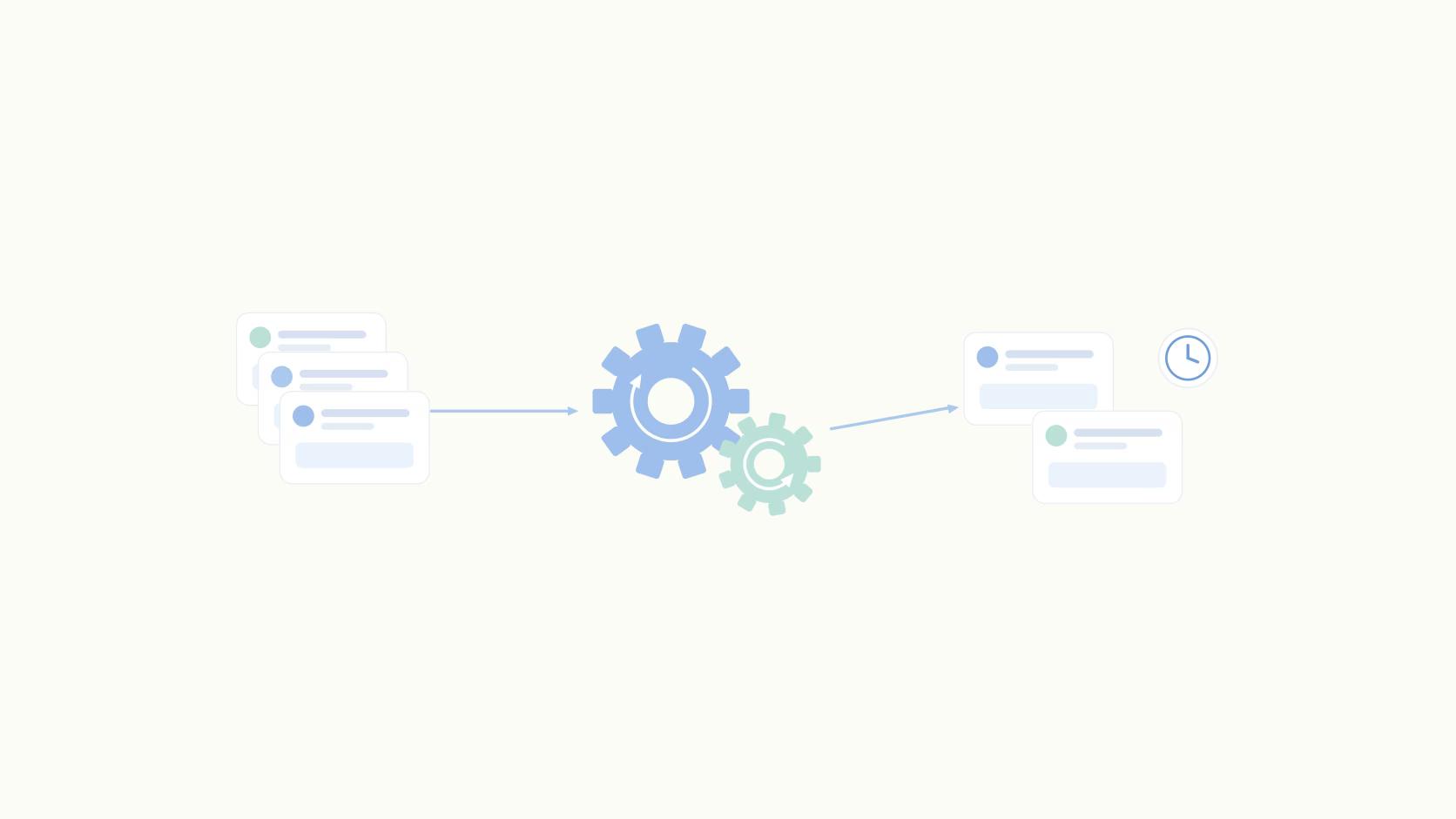
Automate these: post scheduling and timing including algorithmic recommendations, cross-posting tools with per-channel editing, daily analytics refresh and reporting, engagement coordination like auto-likes, first comments, and Slack boost pings to team members, and approval routing so nothing goes live without sign-off.
Keep these human: the actual hook and copy, replies to comments and DMs, real-time judgment calls on breaking news or sensitive topics, and any post that needs a specific opinion or lived experience behind it. Reactive posts, the ones that respond to something happening in the world, should never be automated.
The principle underneath all of this is to automate the operations and never the voice. 93% of marketers already use automation for administrative tasks like scheduling, and 92% use it for data analysis and reporting, per HubSpot's State of Marketing 2026.
Those are the tasks that belong to software. The writing belongs to you.
Smart Automation vs. Spammy Automation
This is where teams cross the line without realizing it. The difference between automation that helps and automation that gets you penalized comes down to one question: does this fake a human relationship or coordinate a real one?
Coordinating your team's likes and comments within the first 10 minutes of a post going live isn't spammy. It's how you give the algorithm enough signal to distribute the content. Mass-DMing cold prospects with a scraper is what gets accounts suspended.
LinkedIn's terms are explicit on this, and they enforce it.
LinkedIn's algorithm has also gotten sharper about AI-generated content. Posts that are structurally generic, written in a flat voice with no specificity, get deprioritized regardless of how they were scheduled. Automating the draft itself backfires. 43% of marketing professionals now say AI is essential to their social media strategy, according to the AI in social data from the Digital Marketing Institute in 2025.
The operative word is strategy, not content generation on autopilot. There's more on where AI helps in using AI authentically.
Randomized engagement timing matters here too. When auto-likes fire at the exact same second from five accounts, it reads as bot behavior. When they're staggered across the first 10 minutes with slight variation, it feels organic because it mirrors how humans actually engage.
Building Your Automation Stack Without the Duct Tape
The common failure mode looks like this: a scheduler for posting, Notion or Airtable for content planning, Zapier to connect them, Google Sheets for analytics, and Slack pings to remind people to engage. Each piece does something, but none of them talk to each other reliably.
Posts error out silently and nobody notices for two days.
Replo ran exactly this workflow before switching. After consolidating, they managed to 3x their content output without adding headcount. The time they used to spend on coordination went back into content. That's what consolidation actually buys you (nbot features, but focus).
Good automation infrastructure has a few non-negotiables: realistic post previews that show exactly where the "see more" cutoff falls, personal LinkedIn profile tagging that most schedulers can't do natively, daily analytics that refresh automatically, and approval workflows that route to the right person without a Slack thread.
For teams running LinkedIn-first content programs, one platform for LinkedIn handles all of this in a single tab.
The social media management tools guide covers the full landscape if you're evaluating options. But the decision criterion is simpler than most people make it: how many tools do you need open to publish one post? If the answer is more than one, you have a consolidation problem.
Bottom line: the duct-tape stack isn't a cost-saving strategy. It's a reliability problem waiting to surface at the worst time.
How to Tell If Your Automation Is Working
Plenty of teams automate and then stop measuring whether the automation helped. That's how you end up running a workflow that's quietly suppressing your reach for months.
Two signals to watch.
First, engagement rate: does it hold steady or climb after you automate scheduling and engagement coordination? If it drops, you've likely pushed automation into the content itself, and the writing got flatter.
Second, reach: are automated posts getting as many impressions as posts you managed manually? A meaningful drop suggests the algorithm is deprioritizing the content, which usually points back to quality, not scheduling.
Clay's social team runs a 120,000-follower LinkedIn account as a social team of one. That's only possible because the operational work, scheduling and engagement coordination and analytics, is handled by software, and the human time goes entirely into content quality.
Filter your analytics that drive decisions by content type and label. If video posts are outperforming scheduled text posts, that's a signal about what automation is doing to your content mix. Tie it to earned media value to get the dollar figure your VP actually wants to see.
Automate the Operations, Keep the Writing Human
The teams winning on social in 2026 have one thing in common: they automated the operations and kept the writing human. That's the whole framework. Scheduling, cross-posting, engagement coordination, and analytics go to software. The hook, the opinion, the reply to a comment go to you.
Start this week by automating scheduling and engagement coordination. Keep writing the posts yourself. If engagement rate and reach hold steady after two to three weeks, you've found your baseline. Then you can measure whether consolidating further buys you anything.
Frequently Asked Questions
What is social media automation?
Social media automation is using software to handle repetitive tasks like post scheduling, cross-posting, analytics reporting, and engagement coordination, so your team can focus on strategy and writing. The best automation handles the operations while keeping the actual voice human.
Does social media automation hurt engagement?
Done wrong, yes. Automating the writing itself produces flat, generic posts that LinkedIn's content classifiers now flag and deprioritize. Done right, automating scheduling and engagement coordination frees you up to write better posts and respond faster, which tends to lift engagement.
What should you automate vs. keep human?
Automate the operations: scheduling, cross-posting with per-channel edits, analytics refresh, and engagement coordination. Keep the hook, the copy, replies to comments, and anything sensitive or reactive human. The principle is to automate the workflow, not the voice.
Is social media automation against platform rules?
Some kinds are. Scheduling, cross-posting, and coordinated team engagement are all fine. Mass DM sending and comment scraping violate platform terms, especially on LinkedIn, and can get accounts suspended.
How much time does social media automation save?
It scales with how many channels you manage. Clay ran a 120,000-follower LinkedIn account with a social team of one by consolidating drafting, scheduling, and engagement into one automated workflow. Teams stitching together multiple tools typically lose several hours a week to coordination overhead.
What's the best social media automation tool for B2B teams?
The right tool depends on what you need. B2B teams posting on LinkedIn and Twitter benefit most from platforms that handle personal tagging, approval workflows, and engagement coordination in one place. The fewer tabs you need open to publish a post, the better the tool is doing its job.
Can you automate LinkedIn without getting flagged?
Yes, as long as you automate the right things. Scheduling, cross-posting, analytics, and coordinating your own team's engagement in the first few minutes after a post goes live are all within LinkedIn's terms. What gets accounts flagged is automation that fakes relationships: mass DMs, comment scraping, bot-driven likes on strangers' posts, and AI-generated content with no human voice behind it.
Related Posts
Looking to learn more? The below posts may be helpful for you to learn more about social media and content marketing.