

Loomly does content planning and approvals well enough for a small team posting to a handful of channels. People usually leave once the feature set stops growing before their program does.
The question worth asking is what kind of social operation you're running.
An agency juggling 14 client calendars needs white-label approvals and client portals, while a B2B marketing team activating five executives on LinkedIn needs something Loomly was never designed to do. A solo marketer just needs cheap and reliable.
Below are seven alternatives, each with its pricing, what real reviewers say, and who it genuinely fits. The table right after this compares them at a glance if you want the short version first.
At a glance
What Makes a Good Loomly Alternative
Per-seat vs. plan-based pricing
How a tool charges, whether through flat per-workspace plans, per-user fees, or account/profile caps, determines when you outgrow it and how costs scale as your team or client roster expands. This is the exact mechanism the article says pushes people off Loomly in the first place.
Approval and client sign-off flow
For agencies and teams that need sign-off before anything goes live, the depth of the approval workflow, including multi-level approvals, client portals, and comment/annotation feedback, is often the whole reason to buy. Weigh how much of this is core versus paywalled add-on.
Engagement and inbox handling
Scheduling is table stakes; whether a tool also handles unified inboxes, comment management, social listening, or LinkedIn auto-engagement determines if you still need a separate advocacy or community tool bolted on.
Reporting depth and ROI tie-back
Some tools stop at basic post analytics, while others connect scheduling data to Google Analytics or offer branded, white-label reports. These features can be a real differentiator for anyone who has to justify social media spending to leadership.
Reliability of publishing
Recurring complaints across reviews center on scheduled posts silently failing, authentication tokens breaking, or uploads freezing, so these issues are worth checking directly since they undercut the core promise of any scheduler.
Platform depth beyond scheduling
Beyond generic multi-network posting, look at how deep the LinkedIn, Instagram, or other channel-specific features go, such as carousel/video support, tagging, or API/webhook access, since gaps here show up as integration complaints later.
The Best Loomly Alternatives Worth Shortlisting
1. Ordinal
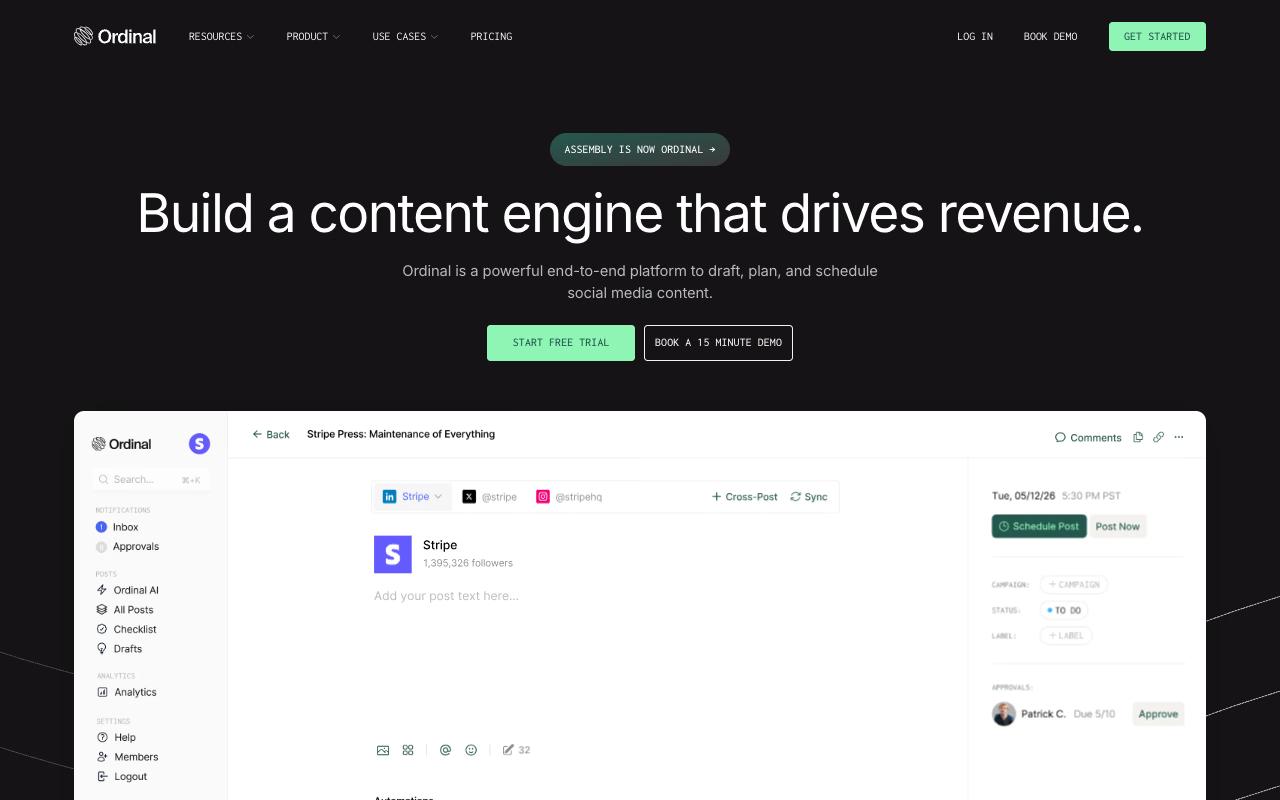
Ordinal is an end-to-end platform for drafting, planning, and scheduling social content, built for teams that treat social as a program rather than a posting chore. It covers LinkedIn, Twitter/X, Instagram, Facebook, Threads, TikTok, and YouTube Shorts from one place, and it's used by over 1,000 marketing teams.
The clearest fit is content agencies, founders and execs, social media managers, and growth teams who need multiple accounts moving in coordination.
Pricing runs $95/mo for Starter (up to 3 seats, 4 social profiles, 50 scheduled posts per month) and $265/mo for Pro, which adds unlimited seats, unlimited scheduled posts, all-time analytics, automated engagement, approval workflows, and API/MCP/webhook access, per Ordinal's pricing page. Annual billing drops those to $85 and $235. Enterprise is custom and adds leads data, employee advocacy, custom permissions, and SAML/SSO. There's a 14-day free trial on both paid plans.
If you're leaving Loomly because your program grew past scheduling, this is the specific gap Ordinal fills. Auto-engagements let you leave likes, comments, or reposts from any connected LinkedIn account, which replaces the Slack message asking ten colleagues to go engage with the CEO's post.
The LinkedIn depth goes further than most schedulers bother with: personal profile and company tagging, video and PDF carousel support, and a realistic preview that shows you exactly where the hook cuts off before "see more." Then there's the open architecture, where REST API, MCP server, and webhooks mean you can point an AI tool at your posting history to draft in your voice, or pipe social data into your own dashboards instead of screenshotting someone else's. For a Head of Marketing who needs to enable five to ten execs and report on what social contributes, that combination replaces a scheduler plus a separate advocacy product.
Verdict: The strongest option if your LinkedIn program involves multiple people, real approval workflows, and data that has to leave the tool.
2. Planable
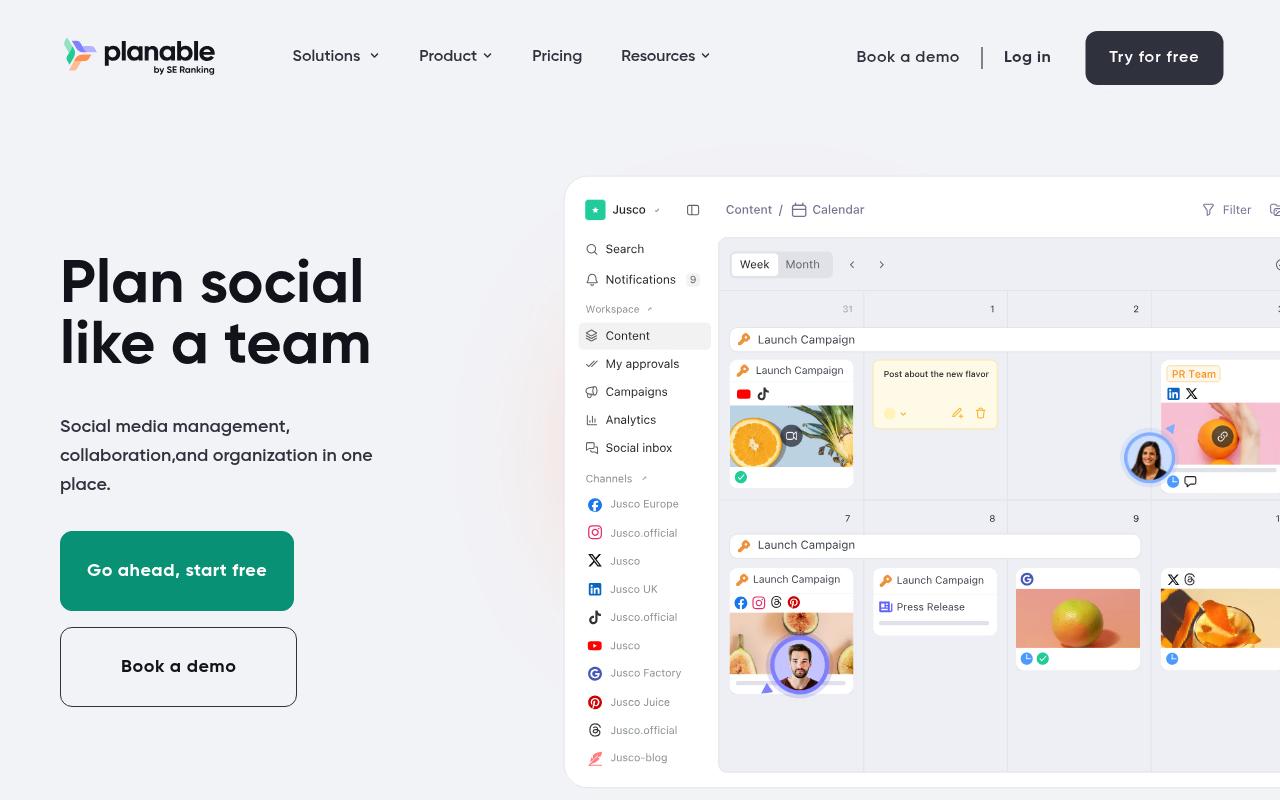
Planable is the closest philosophical match to Loomly: one place to create, discuss, approve, publish, then engage and analyze. It supports nine social networks plus blog posts, newsletters, and campaign briefs, and it sells dedicated solutions for agencies, multi-location brands, and multi-brand companies. Grouped posts let you write once for several platforms and then sync off individual channels for platform-specific tweaks.
Pros:
- Easy to use with a clean, intuitive interface
- Strong collaboration and client approval workflow (reduces email back-and-forth)
- Calendar view with drag-and-drop rescheduling is well liked
- Useful for consultants/agencies managing multiple clients' content
Cons:
- Occasional failures to publish scheduled posts with unclear error messages
- Key features increasingly paywalled/sold as paid add-ons
- Limited storage on the basic plan
- UI can be buggy (unresponsive buttons) on web and mobile
- Platform integration gaps (e.g. Instagram Stories, music/tagging, Pinterest aspect-ratio issues)
Pricing is per workspace with unlimited users: Basic at $33/workspace/month (60 posts, 4 social pages, 3 campaigns) and Pro at $49/workspace/month (150 posts, 10 social pages, Feed/Calendar/Grid views, public API), according to Planable's pricing page. Enterprise is custom and adds multi-level approvals, unlimited campaigns, and SSO. The first 50 posts are free with no card required.
On Trustpilot, Planable holds 4.4/5 across 71 reviews, and the positive themes cluster tightly around ease of use and the approval flow. One reviewer called it "super easy to use and makes scheduling Instagram posts and reels stress-free," and another said the approval process "takes out the back and forth on email trails." The complaints are specific: scheduled posts occasionally failing to publish with unclear error messages, features moving behind paid add-ons, thin storage on Basic, and integration gaps like Instagram Stories and Pinterest aspect ratios.
Reddit users in r/SocialMediaMarketing echoed the praise for visual planning and approvals, while flagging cross-platform tagging limitations and slow support responses.
Planable's LinkedIn product page positions it as a content collaboration platform for agencies and brands, leaning on per-client workspaces, a drag-and-drop calendar, comment and annotation feedback, and customizable multi-level approvals, with the pitch being that it replaces spreadsheets and email chains.
On Capterra, Planable holds 4.5/5. Reviewers commonly praise easy-to-use collaboration for social media teams with streamlined workflows and clear content organization and note feature depth constraints including fewer advanced management options and limited analytics compared to alternatives. See the Capterra reviews page.
On G2, Planable holds 4.6/5 across 1,112 reviews. Reviewers commonly praise intuitive collaborative interface and visual content calendar that simplifies social media planning and approvals and note occasional technical issues and limited advanced features such as deeper analytics and richer video tools. See the G2 reviews and pros and cons pages.
Verdict: The most direct Loomly swap if collaboration and client sign-off are the whole reason you bought a tool.
3. Agorapulse
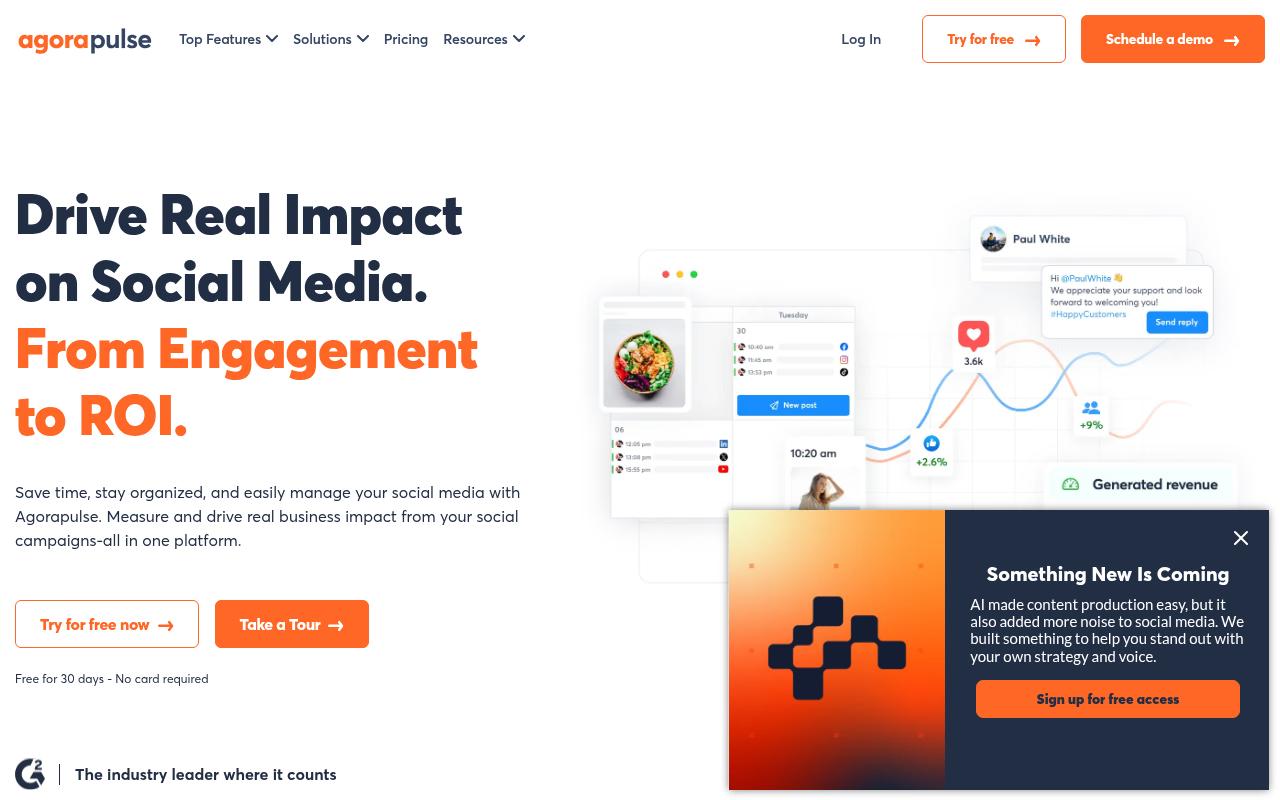
Agorapulse covers the full workflow, publishing through ROI reporting, with a centralized inbox, social listening, and reports that pull from Google Analytics to tie social activity to revenue goals. Its site cites 31,000+ social media managers using it. Businesses of all sizes are in scope, but agencies and in-house social managers who have to prove impact are the natural audience.
Pros:
- Easy to use with little to no training required
- Strong scheduling and publishing features across multiple social accounts
- Unified social inbox makes community management and client comment/message handling easier
- Robust reporting with Google Analytics integration for showing ROI
- Client approval workflow (calendar view, approve/request changes) is popular with agencies
- Highly rated, responsive customer support (per most reviewers)
Cons:
- Some users report reliability issues, e.g. authentication 'tokens' failing and causing scheduled posts to not publish
- Occasional upload/UI freezes (e.g. stuck at 99%/0%, thumbnail selection freezing)
- Support can involve long wait times to reach a human (one user cited a 6 hour wait) and generic chatbot answers
- Customers of the acquired 'Mention' product reported losing scheduling functionality and being pushed to a new subscription
Pricing is per user per month: Standard at $99 ($79 annually), Professional at $149 ($119), Advanced at $199 ($149), each including 10 social profiles, with a Custom tier for unlimited profiles, SSO, API access, and a dedicated CSM, according to Agorapulse's pricing page. The per-user model matters if you're comparing against Loomly's plan-based pricing.
Trustpilot puts Agorapulse at 4/5 from 57 reviews, and sentiment is strongly positive with a handful of harsh recent outliers. Longtime agency users are the loudest advocates, including one who wrote, "I've been using it since 2015 and yes, there have been many changes but this tool is robust, their customer service is top-notch and their online community is fantastic." Reporting comes up repeatedly as a standout, with custom reports described as effortless. The negatives center on reliability and support: authentication tokens failing and killing scheduled posts, uploads freezing at 99%, and one user citing a six-hour wait to reach a human past the chatbot.
A social media agency owner writing on LinkedIn Pulse reviewed it after using it since May 2021, having picked it over the bigger enterprise suites. She highlighted breadth of integration across Twitter, Facebook Pages, LinkedIn profiles and pages, Instagram business accounts, Facebook Groups, Google My Business, and YouTube, and said the unified inbox made community management across all client accounts "a breeze" from one dashboard.
On Reddit, a user in r/socialmedia with experience at two companies said Agorapulse "does all the normal posting and scheduling very well," praised cross-platform posting without duplicating content, and described a region-locking bug where support "were very prompt with answering, admitted a fault and fixed it withing a week."
On Capterra, Agorapulse holds 4.6/5. Reviewers commonly praise easy usability and responsive customer support and note higher pricing and limited feature depth. See the Capterra reviews page.
On G2, Agorapulse holds 4.5/5 across 974 reviews. Reviewers commonly praise intuitive interface and scheduling workflow and note high pricing and limited customization. See the G2 reviews and pros and cons pages.
Verdict: Pick it if inbox management and ROI reporting matter more to you than headcount economics.
4. Sendible
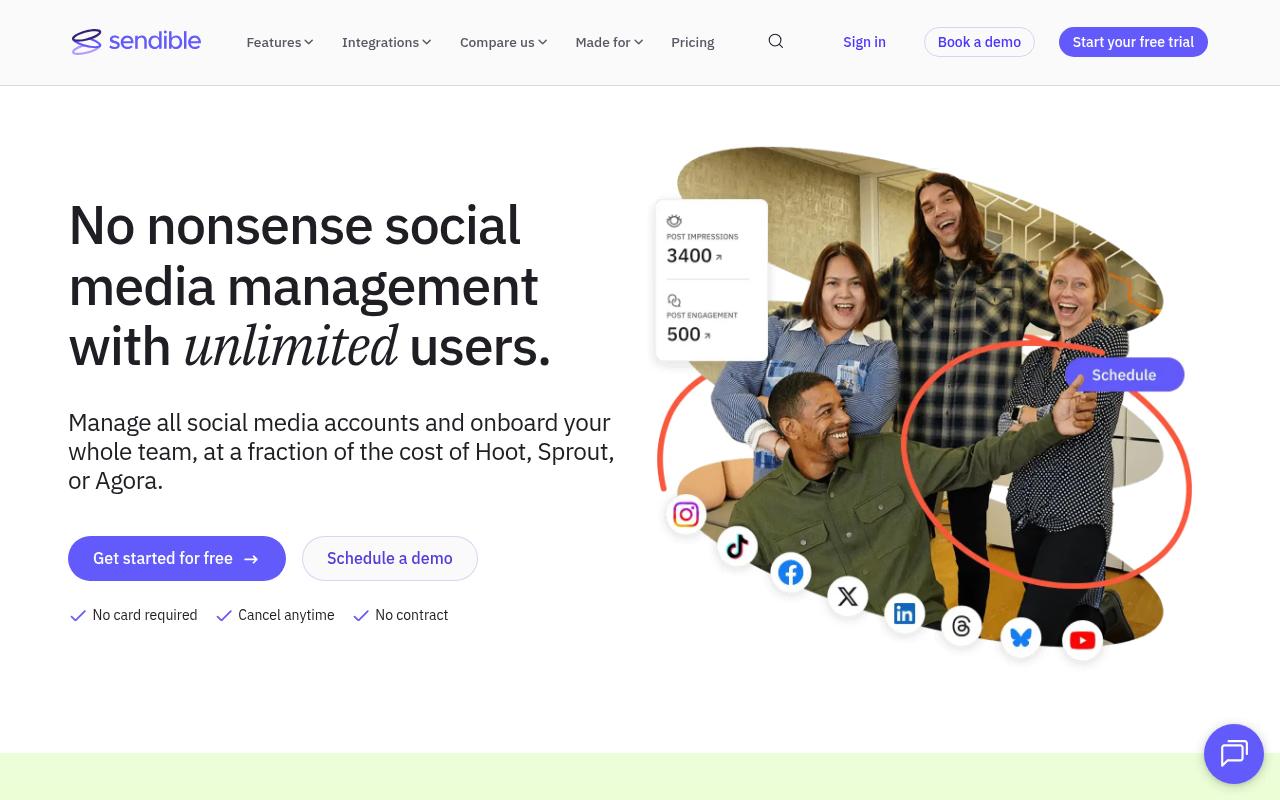
Sendible is built for brands and agencies managing many accounts, organizing clients or locations into separate workspaces with a priority inbox, bulk import, white-label reporting, and approval workflows. Every plan includes unlimited users, which is the pitch against per-seat enterprise tools.
Pros:
- Responsive, helpful customer support praised by many reviewers
- Easy to use / intuitive, even for one-person marketing teams
- Good value and pricing versus competitors like Hootsuite
- Useful features: content calendar, best-time-to-post, Canva integration, analytics dashboard
- Handles large scale (dozens of accounts, franchises with hundreds of branches) and multi-client/agency approval workflows
- Users report multi-year retention and continued renewal
Cons:
- Billing complaints: unexpected auto-upgrades/charges with a strict no-refund policy
- Post-sales support criticized as slow or unhelpful by some users, despite others praising support
- Downgrading a subscription described as deliberately confusing, sometimes with extra fees
Plans run Core at $35/mo (1 workspace, 6 profiles), Plus at $99 (3 workspaces, 18 profiles, approvals), Premium at $199 (7 workspaces, 42 profiles, content libraries, branded reports, dedicated onboarding), Elite at $299, and Enterprise at $750, with annual billing saving roughly 15% per Sendible's pricing page. There's no free plan, but the 14-day trial skips the credit card.
Trustpilot shows 4.3/5 from 25 reviews, and the split is sharp: warm praise for support and value, then a few very angry outliers about billing. Reviewers called support dialed in, with one saying "Every Customer Success Manager we've spoken to has been nothing but positive and helpful," and another noting the platform "makes it easy for a one person marketing team to manage their social media presence online." Cost savings come up often from people who were paying three figures a month elsewhere. The recurring complaints are unexpected auto-upgrades and charges against a strict no-refund policy, plus downgrading described as deliberately confusing.
Reddit is less kind. A thread in r/SocialMediaMarketing titled "Best Sendible alternative in 2025?" opened with "Looking for something more reliable than Sendible. Too many post fails lately, especially on Instagram," and commenters largely recommended alternatives rather than defending it, with one pointing to Planable for cleaner preview and approval workflows.
On Capterra, Sendible holds 4.6/5. Reviewers commonly praise ease of use and customer support and note pricing and occasional mobile app instability. See the Capterra reviews page.
On G2, Sendible holds 4.5/5 across 904 reviews. Reviewers commonly praise ease of use and scheduling workflows and note pricing and occasional upload or tagging issues. See the G2 reviews and pros and cons pages.
Verdict: Good economics for agencies with lots of accounts and lots of people, provided you watch the billing settings.
5. SocialPilot
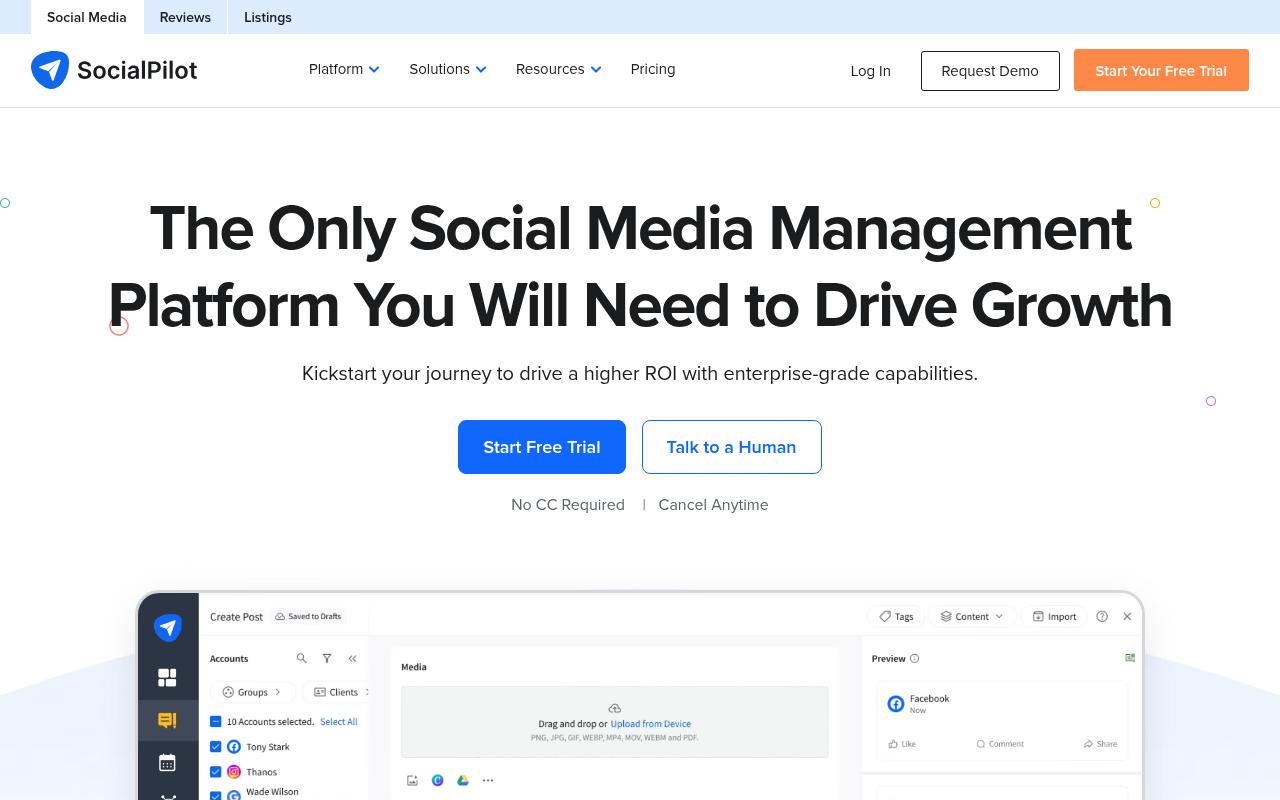
SocialPilot is aimed at scaling agencies and brands, with a post composer, per-platform previews, queue schedules, bulk scheduling of up to 500 posts from a CSV, a content library, tags, first comment scheduling, and UTM tracking built into the composer. It also bundles an AI layer for brand voice, captions, and hashtags, plus review management and inbox.
Pros:
- User-friendly, easy-to-use interface for scheduling and managing multiple social accounts
- Bulk upload feature saves significant time for teams managing many accounts
- Highly praised, responsive customer support and onboarding staff
- Affordable compared to alternatives like Hootsuite/Meta Business Planner, per reviewers
- Handles large volumes of accounts (reviewers cite managing 50+ accounts)
Cons:
- Scheduling can be buggy, e.g. dates for posts scheduled weeks in advance changing without notice
- Error messages for failed posts lack detail on what went wrong or how to fix it
- No refund for unused time when canceling an annual billing plan early
- Some feature gaps noted, such as multiple captions on Instagram carousels or LinkedIn polls
- One reported issue with delayed affiliate/referral commission payment
It's the cheapest entry point here: Essentials at $20/mo (5 accounts, 1 user), Standard at $40 (10 accounts, 3 users), Premium at $100 (20 accounts, 6 users, client approval, white-label reports), Ultimate at $200 (40 accounts, unlimited users), and a custom Enterprise tier with SSO and API access, per SocialPilot's pricing page. Annual billing saves 15% and the 14-day trial needs no card.
TrustPilot has SocialPilot at 3.9/5 from 54 reviews, the lowest aggregate among the well-reviewed tools here, though the individual reviews skew positive. The time savings are the headline: one reviewer wrote, "Social Pilot took my monthly Social Media scheduling from 2 weeks every month to a day and a half. What's not to love?" Another called bulk upload "especially valuable for teams managing multiple accounts at once" and described the support team as "epic!!!" What drags the score down is scheduling reliability, including dates on posts scheduled weeks ahead changing without notice, failed-post error messages that don't say what broke, and no refund for unused time if you cancel an annual plan early.
On Reddit, a commenter in the r/SocialMediaMarketing "Hootsuite vs SocialPilot" thread called it budget-friendly and solid for straightforward scheduling but raised concerns about business ethics, warning others to "Please be weary in this case!" Another commenter, who disclosed working for a competing tool, said SocialPilot is a good product that's been around a long time and supports most of the networks its rivals do.
On Capterra, SocialPilot holds 4.4/5. Reviewers commonly praise user-friendly scheduling workflows and good value for managing multiple social profiles and note limited advanced features and occasional platform reliability issues. See the Capterra reviews page.
On G2, SocialPilot holds 4.5/5 across 846 reviews. Reviewers commonly praise easy-to-use interface and efficient multi-account social media scheduling and note inconsistent customer support responsiveness and occasional technical or billing issues. See the G2 reviews and pros and cons pages.
Verdict: The value play if your requirement is volume scheduling at a low monthly number and you can live with occasional scheduling quirks.
6. ContentStudio
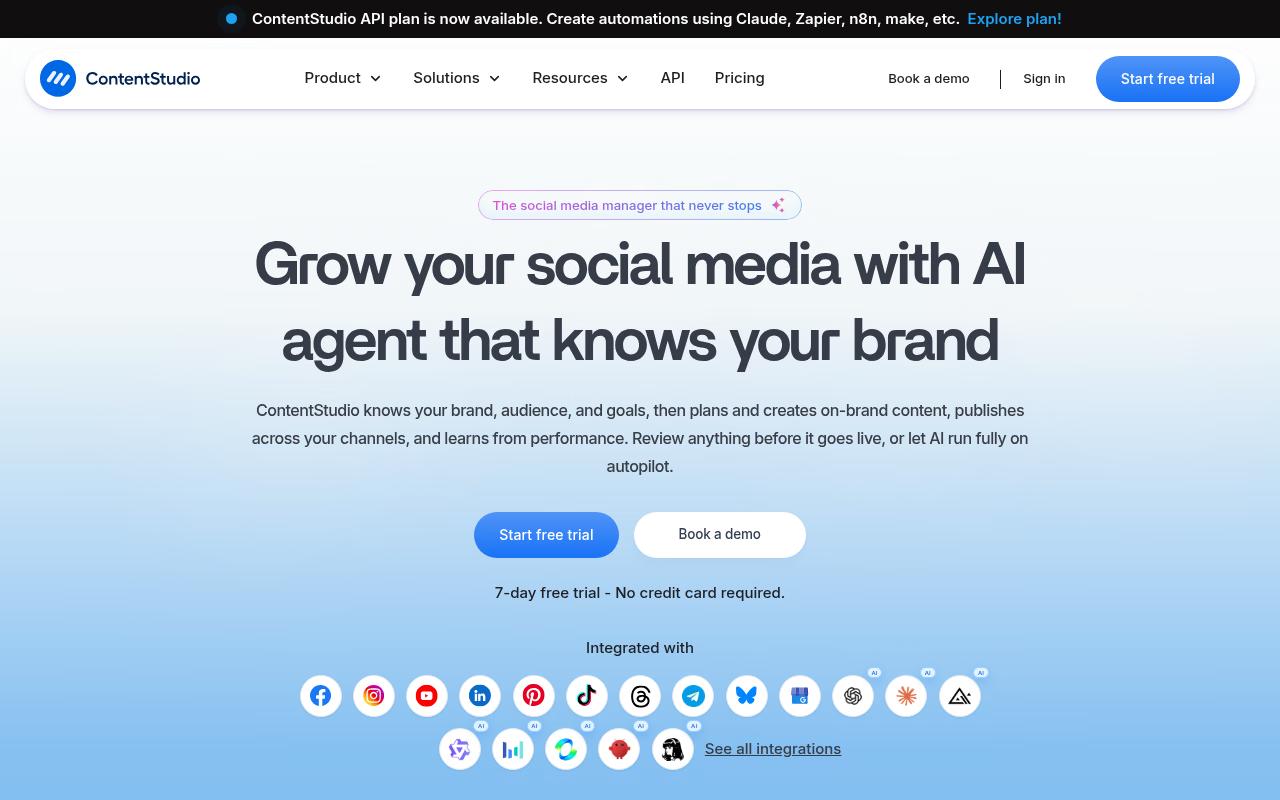
ContentStudio leads with an AI agent that learns your brand, plans and creates on-brand content, publishes across channels, and adjusts based on performance. Underneath that sits a fairly standard stack: unified calendar with list, feed, and grid views, bulk CSV scheduling, evergreen campaigns that recycle top posts, competitor analytics for Facebook and Instagram, an asset library with Google Drive and Dropbox integrations, and a unified inbox. It fits everyone from solo creators to agencies running multiple clients.
Pros:
- Reliable and powerful platform with a consistently growing feature set
- Good value / fair pricing compared to alternatives like Hootsuite
- Free trial does not require credit card details
- Helpful, knowledgeable support team
- Considered one of the most impressive social media management platforms by long-time users
Cons:
- Support can be slow to respond during busy periods
Standard is $19/mo (5 social accounts, 1 workspace, 1 user, 25,000 AI text credits), Advanced is $49/mo (10 accounts, 2 workspaces, social inbox, competitor analytics, approval workflow), Agency Unlimited is $99/mo (unlimited accounts, workspaces, and users plus client management and a dedicated account manager), and Enterprise is custom with SSO, full API access, and white-label options, according to ContentStudio's pricing page.
The verified review base is thin: TrustPilot 4.2/5 from just 6 reviews, so treat those as anecdote. They're mostly long-term users, including one who wrote "Good company, good support, happy customer. Been using for a few years. Does a good job," and another calling it "by far one of the most impressive social media management platform's around." One reviewer specifically appreciated that the free trial didn't ask for credit card details. The one consistent knock is response time, with a reviewer noting support "sometimes get a little busy and can take awhile to get back to you, but they have never disappointed me with their replies."
On Capterra, ContentStudio holds 4.7/5. Reviewers commonly praise efficient social media scheduling, strong content management, and helpful automation tools and note learning curve for some features and limitations or quirks in certain workflows. See the Capterra reviews page.
On G2, ContentStudio holds 4.6/5 across 355 reviews. Reviewers commonly praise ease of use, content discovery features, and efficient social media scheduling and note interface complexity for new users and occasional usability or ui ux issues. See the G2 reviews and pros and cons pages.
Verdict: Strong price-to-feature ratio, especially at the unlimited agency tier, but you're buying with less independent evidence than the others here.
7. Cloud Campaign
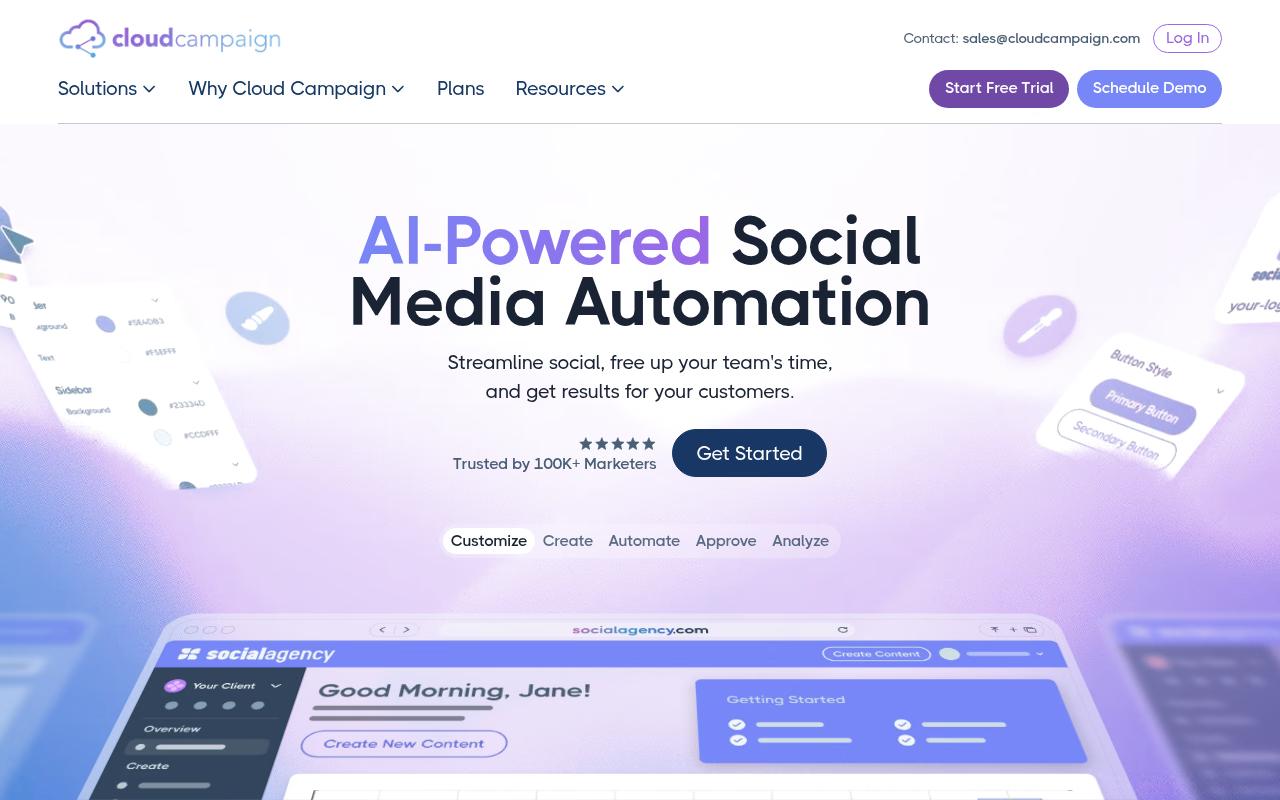
Cloud Campaign is the narrowest tool on this list and that's the point: a white-label platform for agencies running every client from one branded dashboard. The client approval portal sends a single link with a whole month's calendar so clients can comment, request edits, or approve in one click. Scheduling covers drag-and-drop calendars, drip automations, bulk uploads, and evergreen recycling, and the AI toolkit (captions, images, inbox replies, and a CloudStudio fulfillment agent) is included on every plan.
Pros:
- Clean, straightforward interface with easy scheduling
- Automation tools save time on social media management
- AI features for captions, images, and inbox responses speed up workflows
- Built with agencies in mind, with white-label options for client-facing presentation
- Useful, detailed analytics/reporting
- Responsive, outstanding team according to some users
Cons:
- Customer service can be unresponsive, with chat support unavailable during stated hours
- No email invoicing despite using Stripe for billing, causing friction with billing departments
- At least one reviewer described service as 'terrible'
Freelancer is $49/mo ($41 annually) for one or more brand workspaces with unlimited users and 7 social accounts per client. Team is $199/mo ($165) for 5+ workspaces with unlimited users and accounts plus standard white-labeling and phone support. Agency is $299/mo ($249) and adds advanced white-labeling, paid social reporting, client migration, and SSO, per Cloud Campaign's plans page. Extra workspaces are billed separately at each tier.
Trustpilot sits at 3.4/5 from only 4 reviews, which is too small a sample to read as a verdict but worth knowing before you sign. Two five-star reviewers praised the clean interface, straightforward scheduling, and time saved by automation, with one noting it's "clearly built with agencies in mind, and the white-label options make it easy to present a professional experience to clients" and another singling out the AI caption tool. The negatives are operational: chat support unavailable during its own stated hours, no emailed invoices despite Stripe billing (which creates friction with client finance departments), and one reviewer flatly calling the service "terrible."
On Capterra, Cloud Campaign holds 4.9/5. Reviewers commonly praise cost-effective tool for agencies and nonprofits offering unlimited accounts, bulk scheduling, organized content library, and helpful analytics and note intermittent posting failures, constraints around content export, and higher subscription costs when managing only a few client accounts. See the Capterra reviews page.
On G2, Cloud Campaign holds 4.9/5 across 166 reviews. Reviewers commonly praise affordable, easy-to-use social media management with strong content approval workflow and responsive customer support and note occasional posting or integration issues, limited export options, and pricing that can feel high for very small agencies. See the G2 reviews and pros and cons pages.
Verdict: The right call for agencies whose main product is the client-facing experience, assuming you don't need heavy support hand-holding.
FAQ
What's The Cheapest Loomly Alternative?
ContentStudio's Standard plan at $19/mo is the lowest starting price here, covering 5 social accounts, 1 workspace, and 1 user. SocialPilot's Essentials plan is close behind at $20/mo for 5 accounts and 1 user. Both jump considerably once you need multiple users or client approvals.
Which Loomly Alternative Is Best For Agencies Managing Client Approvals?
Cloud Campaign is purpose-built for it, with a white-label client portal that sends a month of calendar in one link for comment, edit requests, or one-click approval. Planable is the strongest general-purpose option, with unlimited users per workspace and up to three approval types on Pro, and Sendible bundles approval workflows from its $99 Plus plan with unlimited users on every tier.
Which Alternative Handles LinkedIn Best?
Ordinal goes deepest on LinkedIn specifically, with personal profile and company tagging, video and PDF carousel uploads, a realistic preview showing where the hook cuts off before "see more," and auto-engagements that leave likes, comments, or reposts from any connected LinkedIn account. That last feature is what separates a scheduler from an advocacy system, and it's on the $265/mo Pro plan.
Related Posts
Looking to learn more? The below posts may be helpful for you to learn more about social media and content marketing.