



Everyone wants one content marketing platform that handles planning, writing, approvals, publishing, and reporting. In practice, the tools in this category do very different jobs. Some are full CMS suites, some are editorial workflow tools, some pair software with a managed writer network, and one is mostly a topic research engine. Picking the wrong type of tool costs far more than picking the wrong vendor within the right type.
We went through each platform's own product and pricing pages, plus the independent reviews we could verify, so you can see what each one does, what it costs (where that's public), and what users complain about.
But remember, once your content plan is set, those posts still need a method of distribution (i.e. Google is only one road that leads back to Rome).
For that, a social media management tool like Ordinal is your best bet.
At a glance
What Makes a Good Content Marketing Platform
AI & Search Visibility Features
A growing split in this category is between tools that just help you write faster with AI and tools built to diagnose and win visibility in AI-driven search, tracking how a brand shows up when buyers ask AI tools questions, or running prompts across models to build category authority. Check whether a platform's AI features are generative (blog writer, prompt templates) or diagnostic (authority index, gap analysis).
Workflow & Approval Depth
For teams whose bottleneck is sign-offs rather than ideation, the depth of the request-to-approval pipeline matters (configurable intake forms, workflow builders with automated notifications, in-line comments, and content calendars). Reviewers on both sides praise strong planning/approval tools and complain when workflows feel rigid or hard to customize.
Pricing Transparency & Jumps
Several entries hide pricing entirely behind a 'book a demo' or 'contact us' page, while others publish tiers that jump steeply between levels or nickel-and-dime extra seats and add-ons. Worth checking whether a vendor's pricing page actually lists numbers, and whether users report surprise costs or confusing billing once they're in.
Content Distribution & Personalization
Platforms differ on whether they help distribute and personalize content you already have (building ABM campaign destinations, dynamic personalization, or syndication) versus focusing purely on creating or planning it. This is a real scope boundary: some tools explicitly leave writing and planning outside their job.
The Content Marketing Platforms Worth Shortlisting
1. HubSpot Content Hub
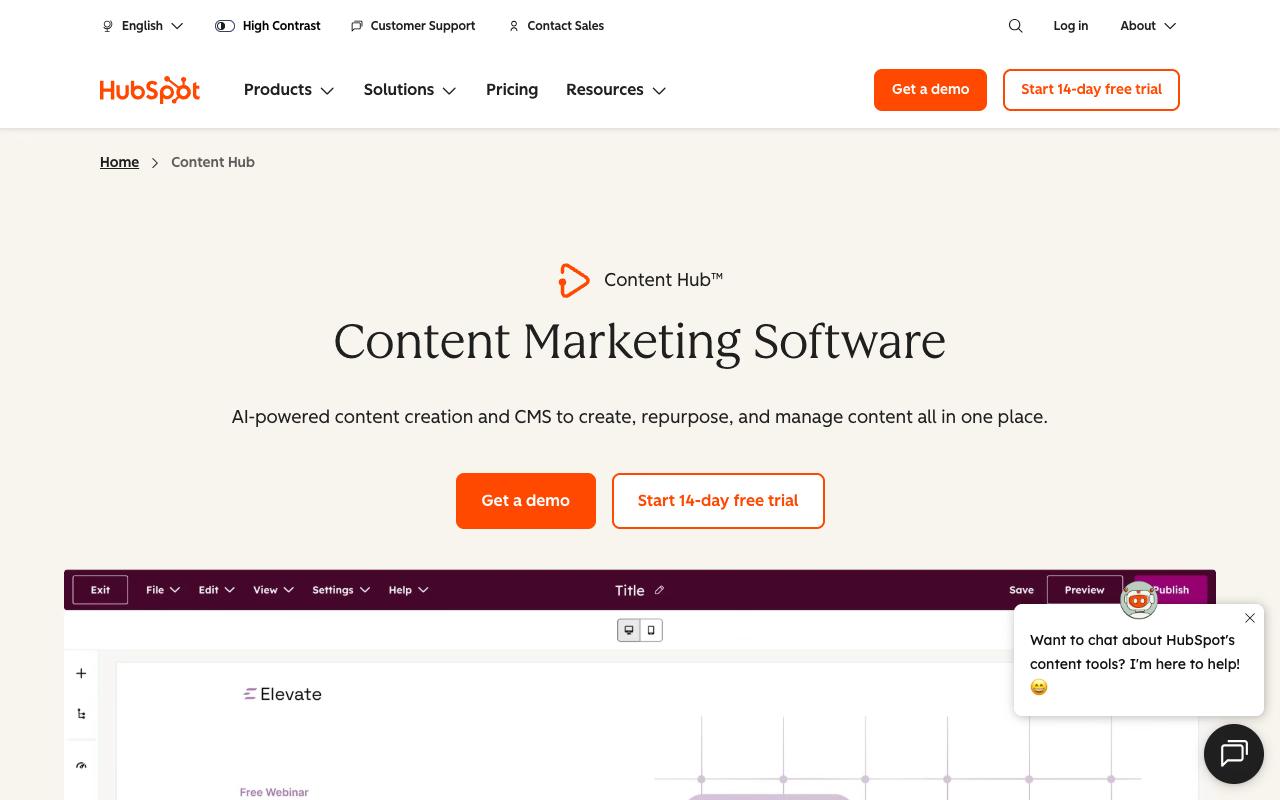
HubSpot Content Hub combines AI content creation with a full CMS, so teams can create, repurpose, and manage content in one place. According to HubSpot's product page, that includes an AI blog writer, landing pages, video clipping, reporting dashboards, and HubSpot AEO, which tracks how a brand shows up when buyers ask AI tools questions. It's built for businesses of every size, with plans ranging from a free tier up to enterprise teams that need content approvals and multi-site management.
Pros:
- Core CMS/CRM functionality is considered fundamentally solid by some users even when they complain about other aspects
- Powerful, feature-rich platform when it works as expected
Cons:
- Unannounced platform updates can break site customizations and editors
- CSS/template customization is described as convoluted and messy
- Customer support often seen as unhelpful or slow to resolve issues
- Aggressive upselling and steep price jumps between plan tiers
- Confusing billing practices, including auto-renewal and charges for unused seats/contacts
Price: According to HubSpot's pricing page, there's a Free plan at $0/month. Starter begins at $20/month per seat (with a $10/month promotional price for new customers), Professional starts at $500/month with 3 seats, and Enterprise starts at $1,500/month with 5 seats. Extra seats, HubSpot Credits for AI features, and add-ons cost extra.
On TrustPilot, hubspot.com sits at 1.5/5 across 1,172 reviews, though those reviews cover the whole HubSpot platform (CRM, CMS, and billing) and aren't specific to Content Hub. The CMS-specific complaints are pointed. One reviewer said updates break sites and editors without warning and that "Using CSS is an extremely convoluted process, and templates get really messy and convoluted." Several others describe aggressive upselling and steep price jumps between tiers.
On Capterra, HubSpot Content Hub holds 4.6/5. Reviewers commonly praise ease of use, integrations, marketing automation, analytics, and content management and note high pricing, limited free features, restrictive templates, and limited design flexibility. See the Capterra reviews page.
On G2, HubSpot Content Hub holds 4.5/5 across 2,206 reviews. Reviewers commonly praise ease of use, intuitive content management, centralized tools, integrations, and analytics and note limited customization, expensive advanced features, learning curve, and occasional performance or navigation issues. See the G2 reviews and pros and cons pages.
Verdict: It's the most complete CMS-plus-content suite here, but budget carefully for the jump from Starter to Professional.
2. Contently
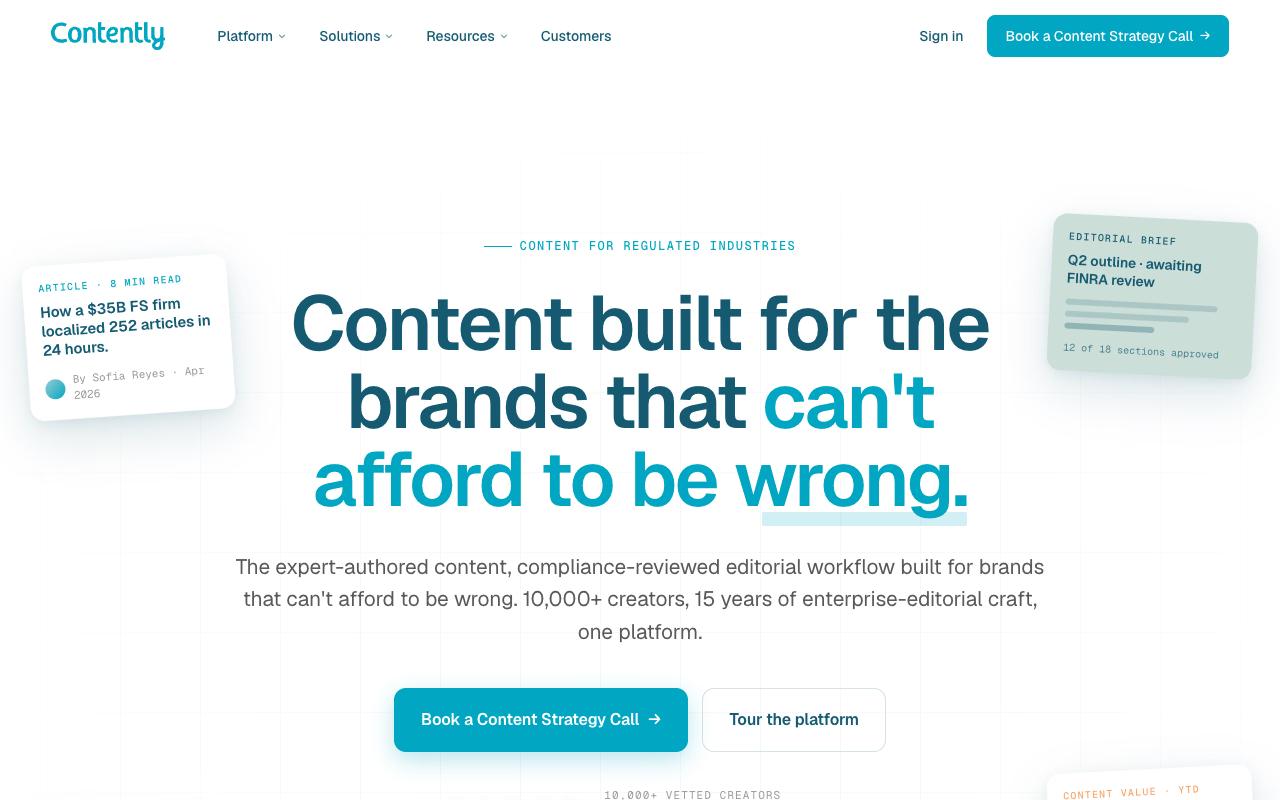
According to Contently's site, Contently pairs an editorial platform with a network of 10,000+ vetted creators, including CFAs, MDs, CPAs, and FINRA-registered reviewers. Each account gets a dedicated Managing Editor who briefs writers, reviews drafts, and routes compliance. It's aimed at enterprise brands in regulated industries like financial services, healthcare, and insurance that need expert-authored, compliance-reviewed content.
Pros:
- Customer support agents can be very effective at resolving account issues (one reviewer praised a support rep by name for recovering a lost account)
- Some users report excellent overall service
Cons:
- Slow, opaque freelancer portfolio approval process (took over a week with no update)
- Freelancers from certain countries can be rejected from the platform without upfront disclosure
- Policy change to automatically include client/creator content in AI model training upset users
Price: No public pricing. Contently's pricing URL redirects to a "Book a Content Strategy Call" page.
The TrustPilot picture is thin: 2.9/5 from just 3 reviews, and the feedback mostly comes from freelancers. One writer spent hours building a portfolio, waited over a week, and was then told they'd been rejected for being "from a banned country," a restriction they say wasn't disclosed upfront. Another reviewer objected to a policy change that automatically included content in AI model training.
On G2, Contently holds 4.6/5 across 96 reviews. Reviewers commonly praise ease of use and content collaboration and note high pricing and limited analytics. See the G2 reviews and pros and cons pages.
Verdict: A strong fit if you need credentialed writers and compliance built into the process. Teams that only want software can look elsewhere.
3. Skyword360
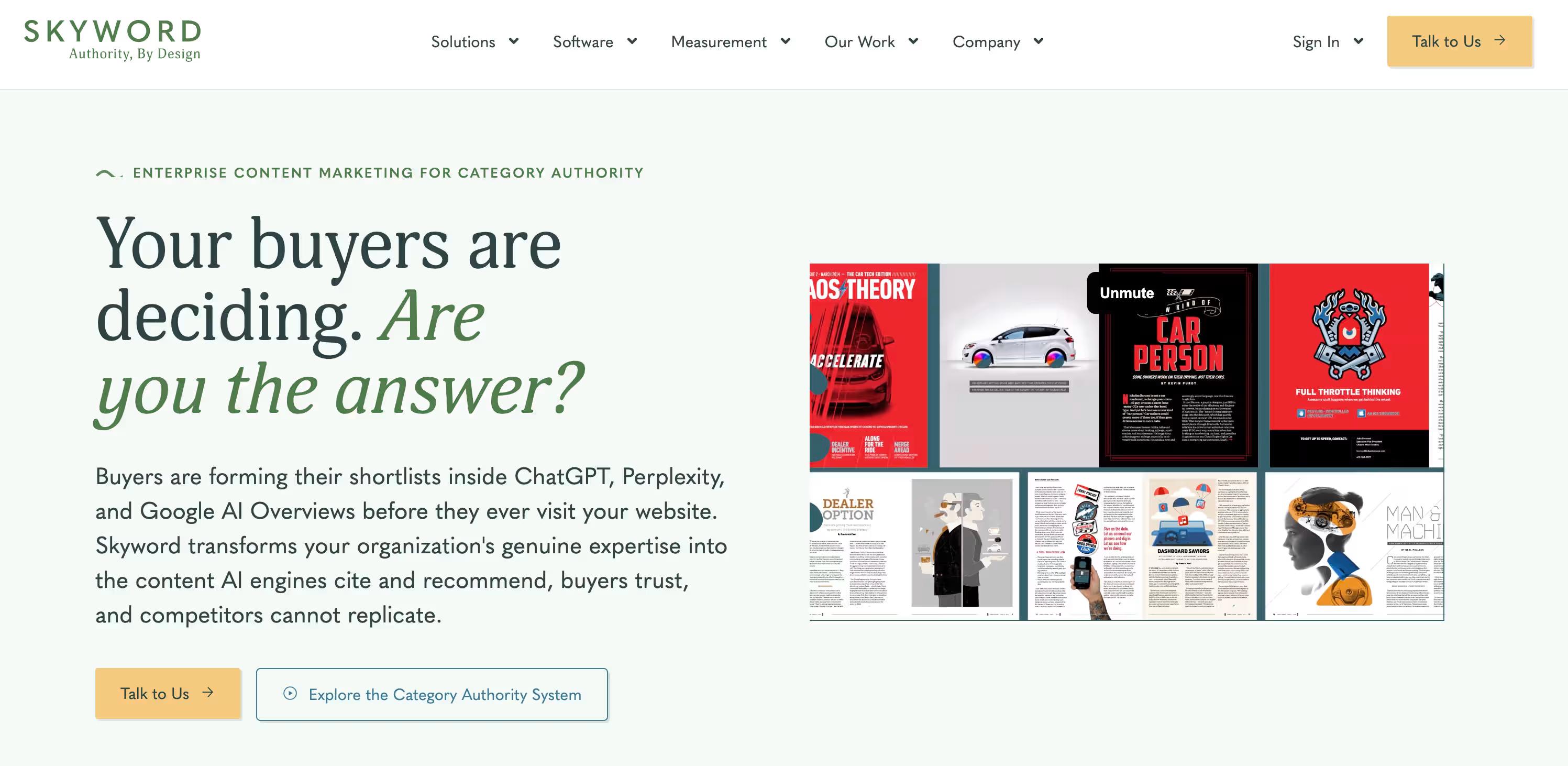
Skyword is an enterprise content marketing agency built around its patented AI platform, Accelerator360, which runs hundreds of prompts across dozens of AI models to diagnose and build a brand's category authority. According to Skyword's platform page, its Plan module includes a Brand Hub, a Category Authority Index that sorts brands into nine archetypes, and a Buyer Trigger Campaign that turns in-market signals into a ranked content roadmap. It's for enterprise teams (Skyword names Colgate, IBM, and GE HealthCare) that want to be the source AI engines like ChatGPT and Perplexity cite.
Price: No public pricing. Skyword's site only offers a "Talk to Us" demo request.
On Capterra, Skyword360 holds 4.4/5. Reviewers commonly praise ease of use, collaboration features, responsive customer service, customizable tools, and integration with existing systems and note premium pricing, platform limitations, and occasional complexity. See the Capterra reviews page.
On G2, Skyword360 holds 4.3/5 across 197 reviews. Reviewers commonly praise content workflows, editorial support, intuitive collaboration, and access to talented creatives and note a learning curve, confusing analytics, interface limitations, bugs, and slow time to results. See the G2 reviews and pros and cons pages.
Verdict: Worth a look if AI search visibility is your main content goal and you want managed services on top of software.
4. Uberflip
Uberflip, now part of PathFactory, is a content experience platform that turns your existing content into personalized landing pages and campaign destinations. According to Uberflip's Campaign Essentials page, marketers can build ABM and demand gen destinations with custom messaging and CTAs without IT help, and they can use personalizer apps powered by data providers like Demandbase. It's built for B2B marketing, ABM, demand gen, and sales teams working target accounts.
Price: No public pricing. Uberflip's pricing page redirects to a contact form.
On Capterra, Uberflip holds 4.4/5. Reviewers commonly praise ease of use, content management, personalized content experiences, helpful analytics, and responsive customer support and note complex backend administration, limited design flexibility, integration difficulties, and high pricing. See the Capterra reviews page.
On G2, Uberflip holds 4.2/5 across 341 reviews. Reviewers commonly praise content organization, analytics and reporting, customer engagement, responsive support, and customization flexibility and note high pricing, difficult setup, limited customization, and a non-intuitive administration experience. See the G2 reviews and pros and cons pages.
Verdict: Pick it for distributing and personalizing content you already have. Writing and planning fall outside its scope.
5. DivvyHQ
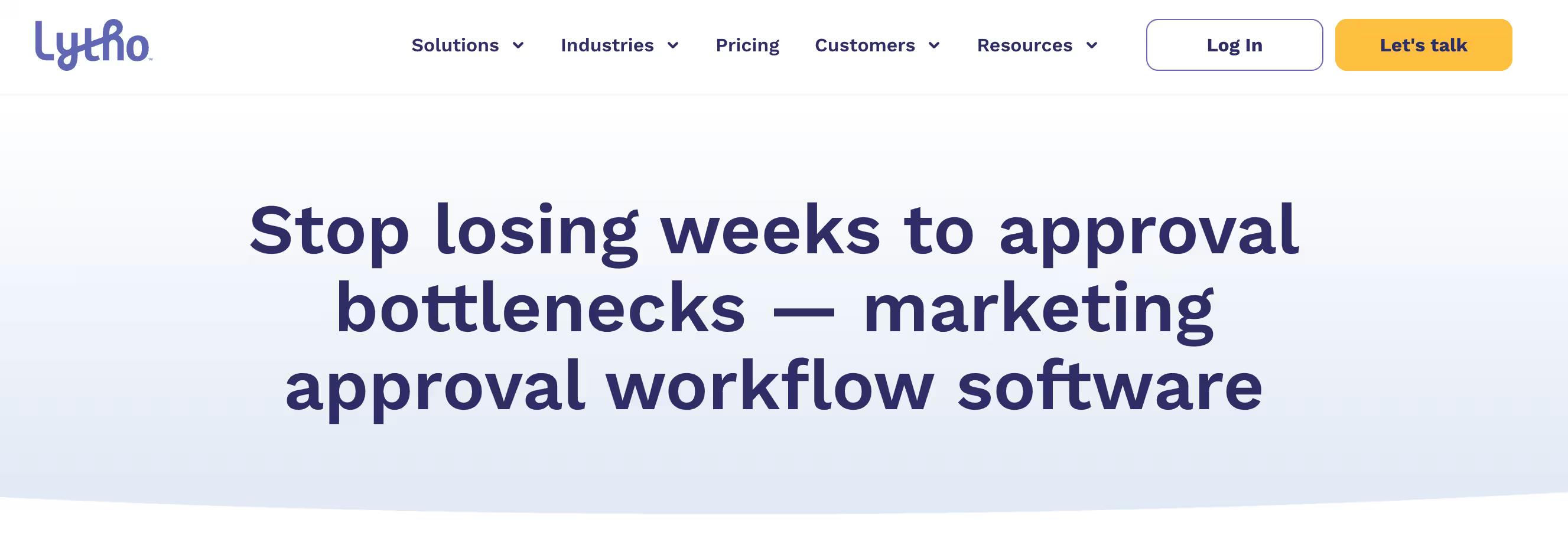
DivvyHQ, now part of Lytho, is a content operations platform covering strategy, ideation, planning, production workflows, and collaboration. Its feature set includes a content strategy builder, configurable request forms for intake, a workflow builder that automates tasks and notifications, and Divvy Analytics for performance tracking. It's aimed at marketing, brand, legal, and creative teams, particularly in regulated, high-volume environments like healthcare and financial services.
Price: According to DivvyHQ's pricing page, Essentials costs $79/user/month billed annually. Enhanced, Ultimate (which adds Lytho's DAM), and Unlimited are contact-for-pricing.
On Capterra, DivvyHQ holds 4.2/5. Reviewers commonly praise content planning, organization, collaboration, intuitive calendars, and responsive customer support and note limited flexibility and customization for workflows, production tasks, and cross-channel content management. See the Capterra reviews page.
Verdict: It's a solid planning and approvals backbone for teams whose biggest bottleneck is getting sign-offs.
6. CoSchedule
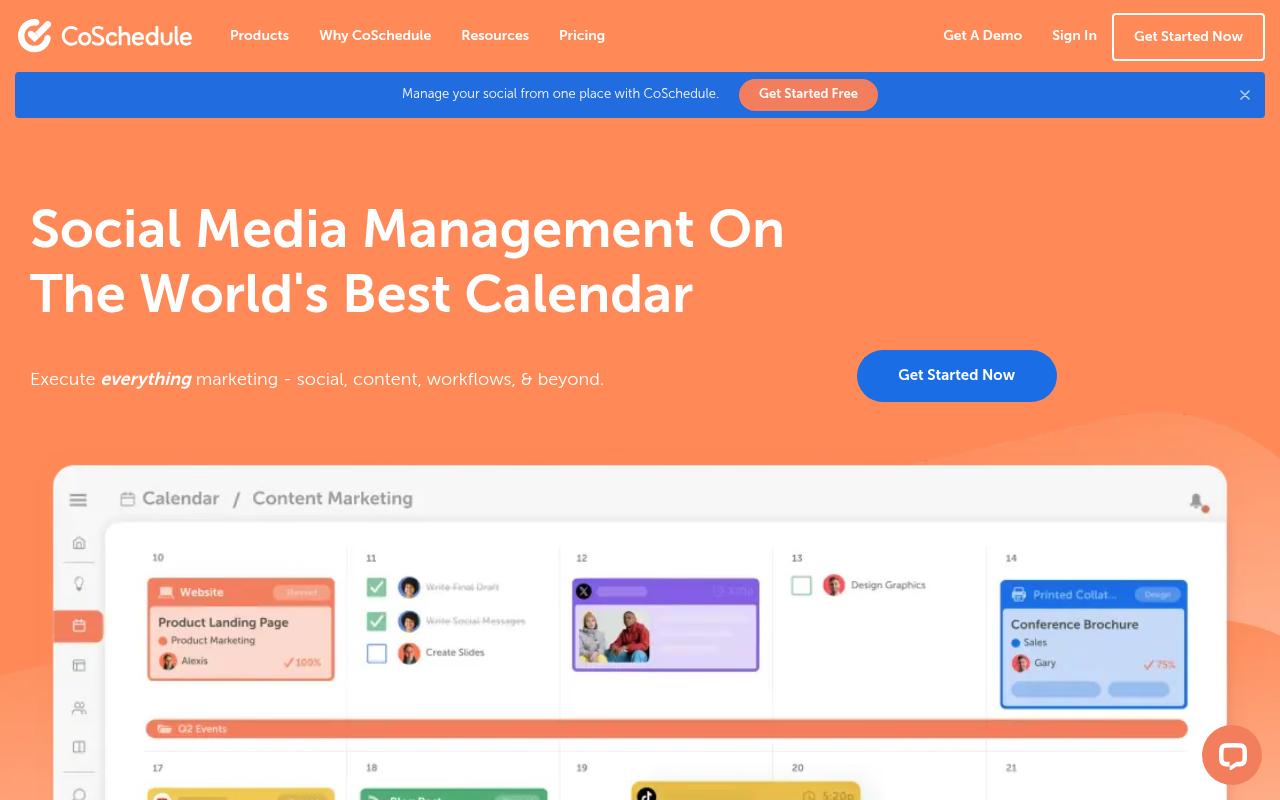
CoSchedule centers on a shared Marketing Calendar that pulls social, content, email, events, and podcasts into one view. According to CoSchedule's marketing suite page, it also includes 1,600+ AI prompt templates, WordPress and Canva integrations, project request forms, and ReQueue for automatically resharing top social posts. It's for marketers and teams, including business owners and freelancers managing client work.
Pros:
- Covers many use cases in one platform (social media management, content management, marketing calendar, project management, reporting)
- Can scale from small teams (1-2 people) to large organizations (20-100 people)
Cons:
- Poor/unresponsive customer support, especially when social platform integrations (e.g. Meta) break
- Clunky software experience for some users
- Difficult to cancel subscription or remove payment card
- Perceived feature reductions while prices increase, pushing customers to upgrade
- Concerns over personal data handling and unwanted marketing emails
- Aggressive content gating and popups on website
Price: According to CoSchedule's pricing page, there's a free calendar (up to 15 posts per profile). Starter is $29/month billed annually ($39 monthly), Professional is $49/month billed annually ($59 monthly), and Suite starts at $69/month with custom pricing.
In a Reddit r/socialmedia thread, one commenter called CoSchedule "solid for multi-platform, but feels a bit heavy."
A LinkedIn post from MarketersClique that rounded up user feedback praised the drag-and-drop calendar, the approval features that "cut down back-and-forth," and direct publishing to WordPress and social. It also flagged a learning curve and costs that can add up for small teams.
On TrustPilot, CoSchedule has 2.7/5 from 6 reviews. Five of those are 1-star, citing support ("Coschedule support is awful"), clunky software, and features shrinking while prices rise. The one 5-star reviewer called it the "Best marketing tool we've found."
On Capterra, CoSchedule holds 4.4/5. Reviewers commonly praise ease of use, content scheduling, and customer support and note slow load times, integration problems, and high pricing. See the Capterra reviews page.
On G2, CoSchedule holds 4.3/5 across 152 reviews. Reviewers commonly praise ease of use and centralized marketing planning and note limited features, integration issues, and expensive pricing. See the G2 reviews and pros and cons pages.
Verdict: It's the most affordable way to get content and social planning on one calendar, as long as you can live with the support complaints.
7. GatherContent (now Bynder)
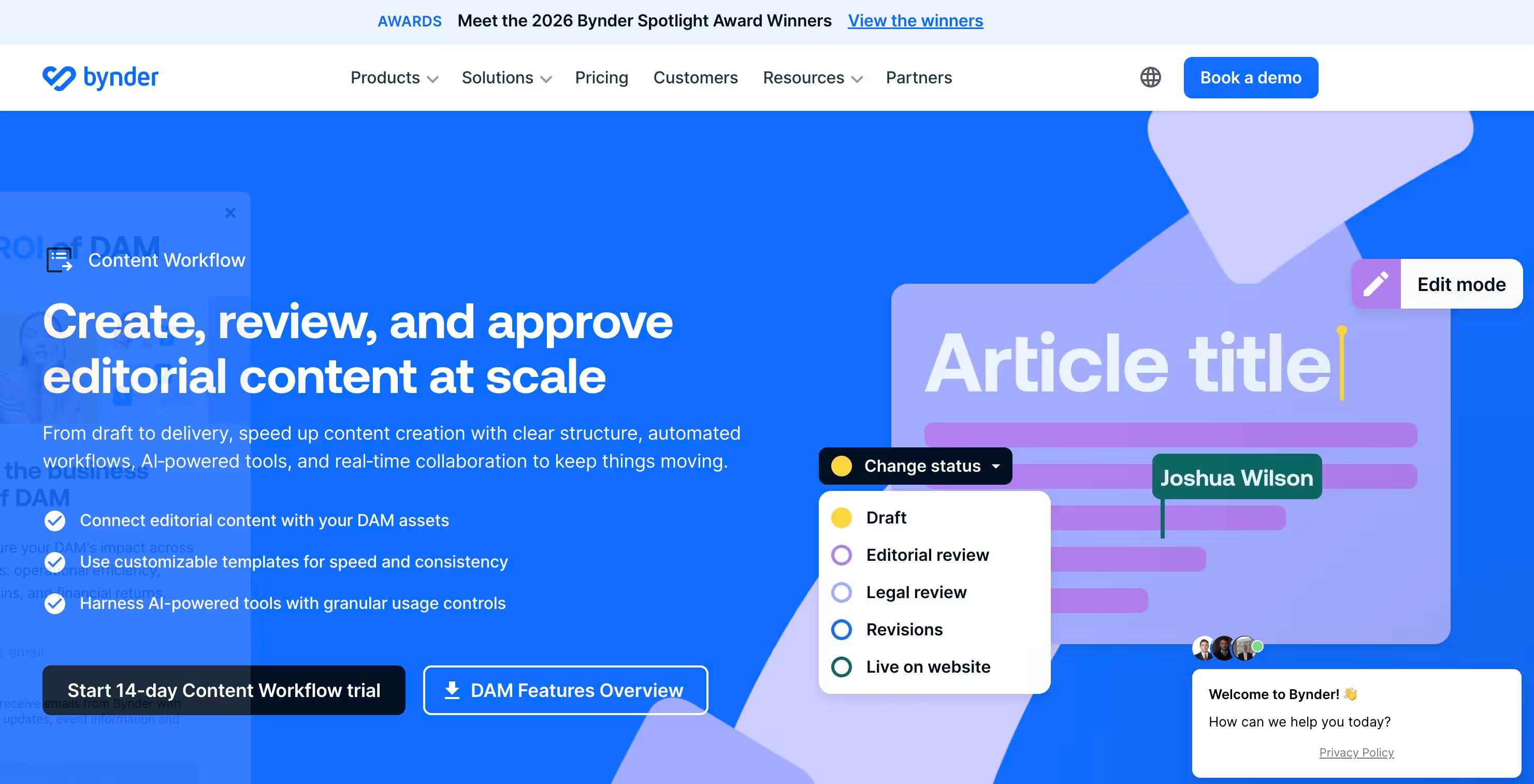
GatherContent has been folded into Bynder and now sells as Content Workflow, and gathercontent.com redirects to Bynder's product page. It helps teams create, review, and approve editorial content at scale through customizable templates, workflows, in-line comments, and AI writing tools (currently running on ChatGPT 3.5). It's for marketing and content teams producing blog posts, website builds, email campaigns, and e-commerce product information, and it connects editorial work to Bynder's DAM library.
Price: No public pricing. According to Bynder's pricing page, plans are modular and quoted per business.
On Capterra, GatherContent holds 4.2/5. Reviewers commonly praise content organization, collaboration, approvals, and helpful notifications and note workflow complexity, occasional slowness, file-size limits, and inflexible billing. See the Capterra reviews page.
On G2, GatherContent holds 4.3/5 across 80 reviews. Reviewers commonly praise content organization, collaboration, and workflow management and note learning curve, notification volume, and occasional performance issues. See the G2 reviews and pros and cons pages.
Verdict: It makes the most sense if you already use Bynder or want your content workflow tied closely to a DAM.
8. MarketMuse
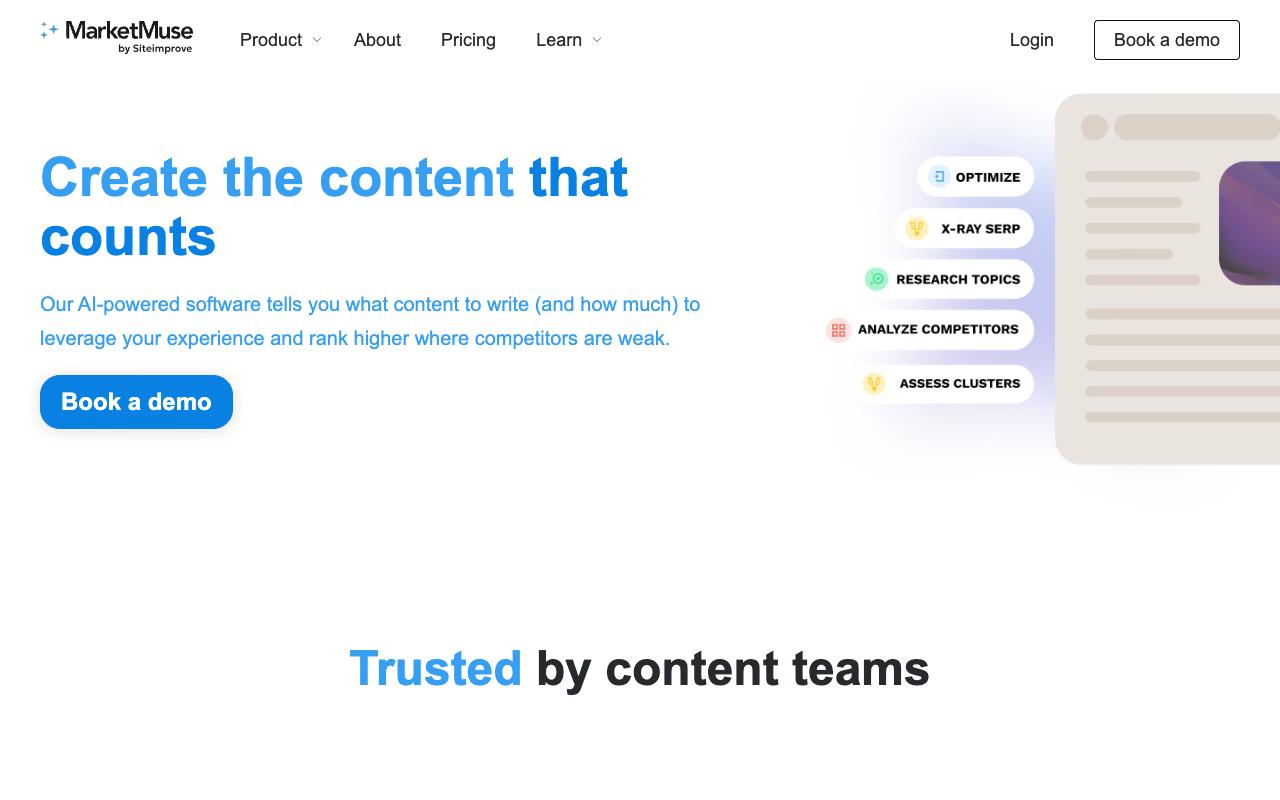
MarketMuse uses patented topic modeling technology to tell content teams what to write, and how much of it, to rank where competitors are weak. Its pitch, per MarketMuse's homepage, is that basic keyword research can't show how competitive a topic is or how much content it takes to own it. The day-to-day users are SEOs, content strategists, editors, and writers at brands, publishers, and agencies.
Price: No public prices. According to MarketMuse's pricing page, there are four plans (Free, Optimize, Research, Strategy), and each one requires a demo. Limits scale from 1 user and 10 queries/month on Free up to 5 users, 10K tracked topics, and 20 Content Briefs/month on Strategy.
A LinkedIn review described the topic modeling as analyzing "what constitutes expertise on specific concepts," with insights that support both page-level optimization and site-wide strategy.
On Capterra, MarketMuse holds 4.6/5. Reviewers commonly praise content optimization, SEO insights, and responsive customer support and note high pricing and limited user-friendliness. See the Capterra reviews page.
On G2, MarketMuse holds 4.6/5 across 216 reviews. Reviewers commonly praise ease of use and actionable content-optimization insights and note an initially overwhelming interface and expensive premium plans. See the G2 reviews and pros and cons pages.
Verdict: Think of it as a research and planning layer that sits alongside your workflow tool.
Once your content plan is set, the posts still have to go out somewhere.
Ordinal handles that social side for content agencies, founders, social media managers, and growth teams, giving them one place to draft, plan, and schedule posts across LinkedIn, X, Instagram, TikTok, and more. It also adds LinkedIn auto-engagements from connected accounts and analytics on what drives revenue.
FAQ
What Is the Best Content Marketing Platform for Regulated Industries?
Contently is built specifically for regulated industries, pairing a dedicated Managing Editor with credentialed writers like CFAs, MDs, and FINRA-registered reviewers. DivvyHQ also targets healthcare and financial services teams that need structured approvals, but it's software only.
Which Content Marketing Platforms Publish Their Pricing?
HubSpot Content Hub (free, then $20/month per seat on Starter), CoSchedule (free calendar, then $29/month billed annually), and DivvyHQ ($79/user/month billed annually for Essentials) all list prices. Contently, Skyword360, Uberflip, GatherContent, and MarketMuse require a demo or quote.
What Happened to GatherContent?
GatherContent has been rebranded and folded into Bynder as Content Workflow. The old domain redirects to Bynder's product page, and pricing is quoted as part of Bynder's modular plans.
Related Posts
Looking to learn more? The below posts may be helpful for you to learn more about social media and content marketing.