


For B2B teams in 2026, an AI that writes LinkedIn posts is table stakes. The real question is whether drafting is the hard part. We built our AI so that it doesn't write the post. It tags the personal LinkedIn profile inside the draft, queues the quote repost, routes the thing to the founder for sign-off, and gets three teammates to comment inside the first ten minutes.
The numbers support that split. Across 1,142 active Pro workspaces on Ordinal, the average workspace generates $566,863 in monthly earned media value, and not one of them is winning because a model wrote a better hook.
Every product sold as an AI social media manager demos the hook.
Drafting is roughly 20% of the job and the only 20% that has to sound like a human, so the AI worth paying for is the one that owns approval routing, personal-profile tagging, silent failure detection, and coordinated first-ten-minute engagement. If a tool's AI stops at caption generation, it's a text box in a wizard hat.
Earned media value is what those impressions would have cost in paid ads at a set CPM. It's an organic reach benchmark, not closed pipeline.
What an AI Social Media Manager Is Sold As
An AI social media manager is software that uses a language model to handle some portion of running social accounts: generating post copy, scheduling, analyzing performance, and coordinating a team's activity. In practice, almost every vendor using the term means the first item on that list.
Which is why the term has stopped meaning anything. 95% of social media professionals say they use AI in their work, 75% use it daily, and 37% use more than four AI tools (Metricool, 2026). Even the supposedly advanced use cases are crowded: strategy design at 62%, trend research at 61%, metrics analysis at 59% (CNET, 2026).
Your team already has this. ChatGPT already handles that work for a modest subscription fee.
Paying a premium for a wrapper on the same capability is the error.
That also settles the "will it sound like me" question every exec asks in the first demo. It's the wrong worry. The human keeps the portion of the work that has to sound human. Your founder writes the take, or edits an AI draft into her own voice in four minutes, and the software handles everything downstream of the words.
The Job That Never Makes the Demo
Here's what nobody says out loud about AI drafting at scale: it increases coordination load rather than reducing it.
Sociality.io's 2026 report found 28.2% of respondents say more than half their posts are now AI-assisted (Sociality.io, 2026). Drafts are no longer scarce. Approvals, tagging, publishing reliability, and engagement are, and every one of those gets harder when you triple the volume of drafts moving through a five-exec program.
"AI makes it easier to generate content. But even if content was free to generate today, aka you had infinite copywriters, that doesn't necessarily mean that most people would be okay doing it without approvals. And I'm not sure that would change." (Jeffrey Zhao, Co-Founder at Ordinal)
Watch the full interview: Why Great Content Never Gets Published (And How to Fix It)
Approval Routing Across Five Execs Who Don't Check Slack
This is where exec content dies, and it dies quietly.
A ghostwriter drafts a post for the CEO and drops it in a Slack DM. The CEO is in a board meeting. By Thursday the post is stale and the ghostwriter has moved on.
Nobody logged the failure because nothing technically broke.
What an AI should own here is the routing itself. A blocking approval that won't let the post publish unsigned. A Slack notification to the right person rather than a channel. Version history with diffs so the exec sees exactly what changed. A public share link for the founder who will never log into another tool.
We built approvals that way after watching agencies do it by hand across 30 client accounts, and it's the same failure mode we see in in-house employee advocacy platforms at Series B.
Tagging a Personal Profile Is Still a Manual Job Everywhere Else
Nearly every scheduler can tag a company page and nothing else. So the moment a post needs to tag a customer, a podcast guest, or a colleague - which describes most high-performing LinkedIn posts - someone logs into the exec's account and publishes it by hand. One manual step at the end voids the entire automation case.
Ordinal tags personal profiles directly in the editor, and you can delete the last name from the tag so it reads like a first-name mention rather than a formal callout. That detail sounds trivial until you've watched a founder reject a draft because the tag looked like a press release. This gap is the main reason teams still keep two social media tools and a browser tab open.
The Post That Errored Out and Nobody Told You for Two Days
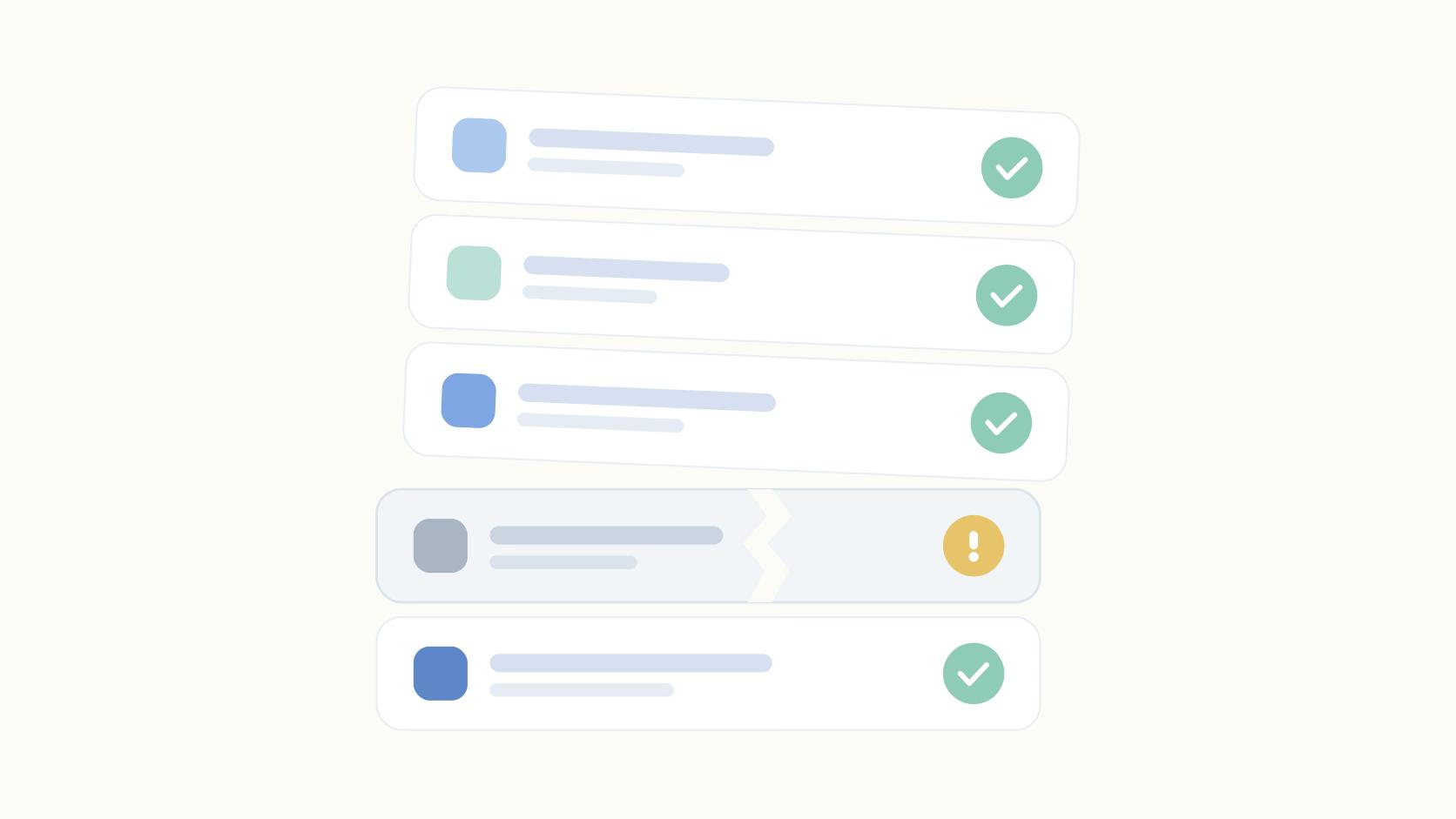
Video is the usual culprit. The file exceeds the API's limits, the scheduler accepts it anyway, the publish call fails, and the failure lands in a log nobody reads. Your VP of Sales thinks his post went out on Tuesday. It's Thursday and he's asking why it got 40 impressions.
The fix is engineering nobody gets credit for. Compress video on the backend to the highest quality that clears the API ceiling, then alert loudly when a post fails.
Silent failures are the cheapest possible way to lose a team's trust, and no caption generator has ever addressed it.
The First Ten Minutes Decide Distribution
LinkedIn tests a post on a small slice of the network before deciding whether to expand it.
Engagement in the first ten minutes sets the ceiling for everything after. Which makes this the automatable task with the biggest payoff, and the one a text generator physically cannot touch.
What it takes: coordinated likes, comments, and reposts from teammates' actual accounts, fired on randomized timing so they don't land in a suspicious cluster. Sanjay Jenkins, Head of Growth at Replo, put it plainly: "The auto-engagement tools are really clutch to drum up initial boosts. Frankly, we just never did it before because you had to do things manually before Ordinal."
Teams don't do this badly. They just don't do it, which is a shame when employee advocacy content tends to significantly outperform company account posts in engagement.
Give the Agent the Keys to the Calendar
An AI that can only return text isn't managing anything, because it has no hands. What makes the operational half automatable is agent access to the calendar itself: MCP, an API, and webhooks. Then a model can read what's scheduled, write a post into Thursday's slot, tag a personal profile, queue a quote repost from a URL, and trigger engagement from a teammate's account without a human clicking through a UI.
That's the dividing line in this category.
Marty Kausas, Founder of Pylon, described the value in exactly those terms: "Ordinal helps us with a lot of the non-content writing tasks like scheduling, editing existing posts, auto-liking, auto-commenting, previewing, and cross-posting to different platforms."
Note what's absent from that list.
Pricing follows from the mechanism. API, MCP, and webhook access sit on Ordinal's Pro plan at $265/month with unlimited seats, so a fifteen-person marketing org pays the same as a three-person one. Compare that to per-seat enterprise management pricing that charges you again every time you add an exec to the program which is the exact thing you're trying to scale.
How to Test an AI Social Media Manager in One Demo Call
Stop asking vendors to generate a post. They will all generate a fine post.
Walk them through one real workflow instead: a founder's post that tags a customer, needs her approval, includes a compressed video, and requires four teammates to engage on publish. Then ask who does each step.
Our 1,142 Pro workspaces average $1,087 in monthly earned media value per active profile, and that's the shape of outcome to benchmark against, rather than output volume.
If the answer to four of those six is "you handle that part," you're being sold a writing tool. That's the same gap that pushes teams off legacy schedulers, and we've written about those scheduler limitations in more detail.
Ordinal's Take on What AI Should Own
We deliberately kept our AI drafting modest, with 30 generations a month on Starter, 500 on Pro, because it isn't the reason anyone should buy us.
The rest of the product is the argument: personal profile tagging, blocking approvals with Slack notifications and version diffs, auto-compressed video, cross-posting where each channel version stays independently editable, PDF carousels, polls, quote reposts from a pasted URL, auto-likes and auto-comments from any teammate's account on randomized timing, and MCP, API, and webhook access so your own agents can drive all of it.
Final Thoughts
Take the next post your CEO is supposed to publish and time the pieces. Count the minutes spent writing it against the minutes spent chasing sign-off, tagging a person by hand, checking whether it went out, and asking four colleagues to comment.
Whatever ratio you get is the ratio your budget should follow. It won't be the one the demo showed you.
Frequently Asked Questions
What Is an AI Social Media Manager?
An AI social media manager is software that handles both content creation and the operational work of running a social program: routing approvals, tagging profiles, catching failed posts, and coordinating engagement. Tools sold under this name usually do the drafting piece only, and the bigger job of approvals, tagging, and distribution is what determines whether a post ships on time and gets seen.
Can an AI Social Media Manager Replace a Human Social Media Manager?
No, and it shouldn't try to. Drafting is now commodity, with Metricool's 2026 survey finding 95% of social professionals already use AI tools. The human's job is voice and judgment; the AI's job is everything downstream of the draft.
What Can an AI Social Media Manager Do Besides Write Posts?
It should route drafts for exec approval, tag personal LinkedIn profiles, catch silent posting failures, and trigger coordinated likes and comments from teammates within the first ten minutes of a post going live. That last piece matters more than most vendors admit, since employee-shared posts tend to substantially outperform company page content in engagement.
Can an AI Social Media Manager Post to LinkedIn on My Behalf?
Yes, if it has API or MCP access to your calendar rather than just a text box that returns copy. That access is what lets an agent schedule posts, queue reposts, and fire engagement without a human clicking through the LinkedIn interface every time.
Will AI-Generated LinkedIn Posts Hurt My Reach?
Generic, obviously AI-written copy can hurt reach, but that's a voice problem rather than an automation problem. Keep a human in the approval loop for the portion of the job that has to sound like a real person, and let AI own scheduling, tagging, and engagement.
How Much Does an AI Social Media Manager Cost?
Tools with full API and MCP access typically sit around $265/month for unlimited seats, versus per-seat enterprise pricing that scales with headcount. In our experience, that tends to translate into a meaningful lift in earned media value per active profile, reflecting organic reach rather than closed pipeline.
Can AI Handle Approvals for Executive LinkedIn Content?
Yes, and it's one of the best places to apply it. Blocking approvals with Slack notifications, version history with diffs, and public share links solve the real failure mode: five execs who don't check Slack and a draft that dies in a thread.
Do I Still Need a Scheduling Tool if I Have an AI Social Media Manager?
If the AI can't schedule, tag, and queue content itself, you're running two tools instead of one. Ask whether your AI social media manager includes scheduling natively through API or MCP access, rather than handing you a caption and leaving the rest manual.
Related Posts
Looking to learn more? The below posts may be helpful for you to learn more about social media and content marketing.