The One LinkedIn Rule That Most People Forget

Full Transcript
Jeffrey: LinkedIn is the most underestimated platform right now. Companies like Mercury, Clay, and Zapier are driving real revenue from it, and they all have one thing in common. They use Ordinal. In this video, I'm going to sit down and explain exactly why personal profiles beat out company pages, how to actually get your executives and employees posting consistently, and the metrics that tell you whether any of it is actually working.
And why should you trust me? Well, I'm the founder of Ordinal, a Harvard graduate, YC alum, Forbes 30 under 30, and I've spent the last few years obsessing over how creators and companies grow on LinkedIn. With that said, let's get into it.
Should B2B Companies Use a Brand Account or Personal Accounts?
Nathan: All right, I'm here with Jeffrey again from Ordinal. Today I'm excited to talk about, we're going to talk about employee generated content on LinkedIn, but also all social media, wherever a company is living, with B2B. I've got strong opinions on this, so I'm happy to have my mind change about employee generated content, because I've seen a lot of people try to get their teams involved and they just struggle to do it through the typical, you know, Slack amplify chat rope.
Let's talk really quickly though about the difference between a company profile and a personal profile. So, a lot of B2B companies are still putting a lot of their eggs in the social effort of using a brand account. But if you could tell a CMO one chart from Ordinal's data, would it really encourage people to use a brand account or personal accounts in terms of reach and engagement?
Jeffrey: Yeah. Obviously, we look at this a lot, especially for channels like LinkedIn and Twitter and places where there's a lot of B2B content distribution going out. I think there's a qualitative argument on why algorithms have sort of shifted, in our opinion, to amplify personal voices more than company voices. I think it's a combination of the type of marketing that's coming out from personal versus company accounts.
So for example, often personal accounts are posting more thought leadership or more interesting personal stories that are higher engagement. But I do think that there is some sort of likely structural algorithm shift as well.
One stat that we think is an imperfect one, but one that maybe points at the trend, is when we look at our data across of like millions of social posts, personal accounts on LinkedIn, for example, get on average around 8,700 impressions per post. And company profiles are only getting around 1,500. So it's a huge multiple of difference that you're seeing between the two types of profiles structurally.
Again, this is not necessarily causal, right? There's a lot of potential explanations, but we do generally believe that's a smarter move for most businesses is to amplify most of their content through personal profiles nowadays.
Nathan: Me so dumbly trying to do mental math in my head, but that's like a five or six x difference. Okay. All right.
Jeffrey: Exactly. Yeah. A little bit more than 5x. So it's a pretty substantial one.
Why Does the Slack Advocacy Channel Not Work?
Nathan: Yeah. And so if a company's hearing this, they're wondering, "How do I get employees to actually post outside of my social media manager who's taking care of that brand account?" Now, every place that I've worked at, they'll have some advocacy program, which really means a Slack channel where someone drops something and they say, "Hey everybody, go like this and go post on it."
I anecdotally have not seen that work often. Walk us through what happens with why that doesn't work. What actually happens when companies do this the manual way? What tends to happen?
Jeffrey: Yeah. So, I think that typically, yeah, this is very common. Even in Ordinal, we actually have automations that make this easier. So, I wouldn't say it's completely ineffective to have a feed of social posts that are going on on Slack. Employees aren't obviously opening LinkedIn on a day-to-day basis.
But I think what we tend to see is as the size of the company scales, the sense of responsibility for helping to advocate for that company on socials also decreases linearly, right? So as an employee in a 500 person org, you're maybe a lot less motivated to go like and comment and take time out of your day to repost, to do all of these things, versus like a five person startup where things are a lot more effective when you're able to run them through Slack in that way.
And at the end of the day, we think this is just like a uniquely human problem, right? It's not that employees aren't willing to like or comment on things. It's just that, hey, that Slack notification is coming in when the post goes out sometime during working hours. Half of the employees are in meetings. They're going to see it. They're going to close it, right?
They would love to like and comment and repost on it. But there's just no way for them to do so. Maybe this is a segue in for some of the features we have in Ordinal, but that's kind of, I think, just a very human issue, and it's the same reason why it's hard to get employees to create content on channels like LinkedIn and Twitter as well, right?
Posting on socials takes effort, and so even if the effort is small as a like or is as large as creating a post itself, it's really a human problem at the end of the day.
Nathan: Well, and you touched on exactly my problem with it. It's not like it was the only channel I had in Slack. So I would have meetings, I would have emails, I would see that Slack no drop. I'd think, "Oh, I got to go check it out." Sometimes I would even get to LinkedIn and I would get distracted when I was on LinkedIn because I'd get there and see notifications going.
Jeffrey: Yeah, exactly.
What Did the Customer That Drove Millions in Pipeline Do Differently?
Nathan: Has solved this. You've said in the past that Ordinal has a lot of features that make it such a great product. So where it's not just one big feature that is the differentiator. It's a lot of different things. And you actually have a customer, not a small company either. We won't say their name unless you're comfortable with it, but they built an advocacy program that drove millions in pipeline last quarter. Is that correct?
Jeffrey: Yeah. Yeah. Yeah. They were able to attribute it back.
Nathan: What did they do structurally that most companies do? What are they doing different? What was their key to success?
Jeffrey: Yeah. So I think when we start to see companies get to a certain scale, there's really a pattern that is pretty replicable in terms of how to activate and get the most out of social content. And there's a few motions. The first is going to be every successful company we see, and let's call this like, I don't know, Series B or greater, or with a certain number of employees.
The first thing they do is they start an executive advocacy program. And noticeably, this is separate from any kind of employee advocacy program. It's separate from the company account. It's basically dedicating folks on their marketing team, or sometimes it's an outside agency, but typically it's internal, that are specifically responsible for driving executive thought leadership and content on channels like LinkedIn and Twitter. Potentially other ones as well, depending on the type of content they're doing.
And so these folks are not just ghostwriting, but they're strategizing. They're distributing all kinds of content from thought leadership to product marketing. They're writing on the executives' behalf and basically managing and scheduling those posts out to make sure that execs are constantly and consistently pushing out 3 to 5x posts per week.
This is, I would say, the number one lever that every company needs to take advantage of, because your exec profiles are, like, it's asymmetrical, right? They hold more weight on these networks. Their voices matter more. They often tend to get more engagement and therefore they drive more leads and downfunnel pipeline.
That's motion, submotion A. And then when you get really good at submotion A and this internal team is writing for the execs, what you do is you scale it out for the employee base as well. And so often then you'll have somebody running what we call an employee advocacy program.
And this is where there is typically, there's a bunch of different ways this looks, but typically the structure that we see is successful is the company has talking points they know they want to post about every week or every quarter or whatever basis they're rolling content out on. Sometimes they'll even write variations of that content that are kind of ready to post.
And then the employees can basically take that content and essentially post it themselves, either using a tool like Ordinal or just from their own personal LinkedIn. And they'll often create variations of that post. They might personalize the voice a little bit, but it's getting them 80% of the way there to basically help amplify the message that's going out, right?
And so when you have these two things together, we think this is really powerful, right? You can think of each employee or company executive profile is like a node in a network and they're all reaching their own network. Imagine you have a big product launch and you have a really great marketing team that's distributing the rollout strategy of content around that launch.
You can see how a large company is able to make this really splashy and really saturate the network, versus if you were to just, say, post from the company LinkedIn account, gets like 20 likes, no one really sees it, and then the launch just passes, right? And so really social at scale is quite a sophisticated effort, and this is usually the kind of motion we see companies run really.
Nathan: And it's one of those things where you think if it was easy you'd see everyone doing it well, but you actually see very few companies that can run a social motion for their thought leadership, their executive team really well. At least from what I've seen on B2B, it's very difficult. Yeah.
Is Auto-Engagement Just Gaming the Algorithm?
Nathan: Well, when we talk about autoengagement, I could just feel people listening right now that are like, "Okay, but does that mean like automated likes and comments? Is it just gaming the algorithm?" What's the actual case for why this is a legitimate distribution strategy and not just like we're just gaming the algorithm here?
Jeffrey: Yeah. So the use case is for employees to leave basically likes, comments, reposts on posts that are going out through the platform, right? I could talk about Ordinal specifically if that's helpful, but in general the idea is like, hey, with a tool like this, right, Ordinal for example, you can actually have your employees engage in content before it actually goes out. So employees can leave comments.
Or if you have, again, some sort of exec advocacy motion or things like that, maybe the centralized marketing team is able to leave likes and comments and reposts on behalf of like the founders or the execs that are otherwise too busy.
And we have all these same approval flows and queues to make sure that everyone is able to see and approve the things that they want to leave from like an engagement perspective, but it just systemizes and productizes this motion to make it a lot more easy, rather than trying to rely on a founder like receiving a ping that a post has gone out and then writing a comment live then and there and stopping their meeting that they're probably in that's very important. So we just think that this ends up queuing off a better system for you to kind of manage this sort of workflow.
Why Does Tagging People Matter for Thought Leadership?
Nathan: I also, and you're very humble when it comes to your product. You're one of the few CEOs that I've met, or co-founders that I've met, that is very humble when it comes to your product. One of the features that you have though with Ordinal that I loved was the ability to actually tag people, that I wasn't able to do with other competing tools.
And I could see how that would be very beneficial when you're having thought leadership and you're trying to reach your entire company base, because what I always did was I try to schedule it. I won't name the competitor tool. It rhymes with rougher. And I would try to tag people. I couldn't do it. And so I would have to go back in right before it post or right after it post and then edit the post. I realized this defeats the whole purpose of
Jeffrey: Right. Yeah. You end up just doing the manual work that it would take to post anyways. Yeah. And we think this is huge, right? So if you're posting thought leadership content, if you're posting more content from personal profiles, if you're doing this kind of motion, things like personal tag can become really important.
How Do You Make It Simple for Executives to Share Their Thoughts?
Nathan: Okay. Now I imagine there's a VP of marketing that's listening and they say, "Look, I just got my CEO to sign off on one post last week and I struggle to get my thought leaders to actually share their thoughts." What is one thing that you would recommend to someone who's in charge of this type of motion to get people more invested? In other words, how do they just make it dead simple for them so it's almost impossible to say no?
Jeffrey: Yeah, I think first is, you have to get buy-in on a social program from execs, from internal stakeholders. It's important, there's partially an education problem. I think a lot of times if execs are not doing socials today, they still view social as a pure brand marketing channel. It's kind of like, why don't I just let the social manager, they'll create some stuff, I'll approve it, but there's no real structure or rigidity around it and it's not really taken too seriously.
And I think it's important to flip this conversation, that we really believe for B2B SaaS, and we think a lot of marketing leaders do nowadays too, that LinkedIn is one of the best acquisition channels, along with other social media channels, but LinkedIn specifically, for B2B SaaS companies. And you really need to approach it as a GTM motion. Like it needs the sophistication, it needs the care, it needs the coordination of that.
Very tactically, I think what this can look like in terms of just getting more content from like a busy CEO, there's a bunch of different ways to do it. One thing we see that's very common is to just set aside time every week where the CEO or whatever exec is taking like 30 to 60 minutes to basically record out their thoughts with someone else on the team who has a bunch of questions prepared, and there's a lot of interesting nuggets that usually come from that conversation that can turn into social posts.
You can ask them about an interesting hiring decision they made this week or a product pivot or whatever it might be, right?
The second thing that's often really helpful is, with AI, there's so much context that lives in all of the various business tools these days. Slack, Granola, Fathom, Grain, wherever your context kind of, when it comes to work, lives. There's so many gold nuggets there that we think would make really interesting posts, whether it's for thought leadership or just pure product marketing or any kind of content.
And so what you can really do is, Ordinal, as a self plug, has an MCP, and so what you can do is, for example, you can plug the Granola notes transcript MCP into your Claude and then also plug Ordinal's MCP into Claude, and then you can just tell it like, hey, review the notes from this exec's sales calls over the past week and give me five ideas for LinkedIn posts and push them up into Ordinal.
And Ordinal MCP will obviously draft it in their tone of voice and everything as well, so it also will just take less approval cycles. So you can basically start to mine passive context with AI to also create a lot of good content on these channels.
How Does the MCP Match an Executive's Style and Voice?
Nathan: Oh, yeah. Because you're also taking their recent posts, like you said, your MCP is taking all of their recent, not even recent, but all of their historical posts and finding their right style and voice. And then you're having sources where they did the thinking and it's combining the two.
Jeffrey: It's dynamic, right? So it's like if you're like, "Hey, write me a product marketing post similar to the other product marketing posts that they've posted in the past," it'll just find them, and it'll find the exact way that product marketing launches are done, the way it's posted on LinkedIn, the formatting and style cues, and it'll apply it all automatically. So, yeah, it's smart, basically, if that's kind of what the question is.
And yeah, I think I totally agree. I feel like when it comes to a lot of these posts that are AI written, there's a concern oftentimes about like, oh, is this genuine, to your point, or is this a good piece of social content versus something that was written by hand. I think denying that AI is a writing tool is sort of being in denial of the future a little bit.
I think what I would argue is that the fact that these posts maybe come from more source material, from actual thought, from actual things that were said in conversations and actual context, versus somebody just typing into ChatGPT, write me a LinkedIn post about why sales matters, and taking that slop and posting it on LinkedIn.
Again, I really think AI is just a tool. It's a means of production, right, and it's definitely lowered the cost of producing content. But if you really want to succeed on socials, it's still important to hook AI up to the right context so that it's not just producing very kind of thin value content and instead is actually content based on real things and real conversations.
Did CEOs Write Their Own Posts Before AI?
Nathan: My mind too though that people think CEOs before AI were writing their own posts and not hiring an intern to write it for them.
Jeffrey: Yeah, maybe this is also a good point is like, I would argue that almost always CEOs have always been using ghostwriters, right?
Nathan: Training them, but this is actually taking their thoughts, like you said, from third party sources like Granola, or if they have call transcripts, or they recently did a podcast, and it's just restructuring the substance with your MCP in the right style and formatting that'll get the most engagement.
Jeffrey: Right. Exactly. So if you're running an exec advocacy program internally, you're the social manager, the content manager, think about Ordinal's MCP as almost like this superpowered supplement that you add to your brain, which has infinite memory about the CEO's posts, analytics, data, ways they prefer to write, things that have happened in the past, and it basically just help kind of give that extra context and boost.
What Is the One Metric B2B Teams Should Track From Social Media?
Nathan: Oh yeah, this is awesome. And I have one more question for you at least before we hit the lightning round. The question that I have is, what is the one metric that you think most B2B teams should be tracking from social media? If they had to throw everything else away, what's the one metric they should be tracking to measure if it's success or not?
Jeffrey: Yeah. Yeah. I think oftentimes there's too much focus on vanity metrics in social. So people care too much about going viral. They're overindexed on things like impressions. When in reality, I think for most B2B teams, your goal with social is to drive pipeline.
And so in reality, what you should be doing is you should be tracking ICP engagements. You should be looking at the people that have actually engaged with your posts, see who hits your ICP, who's a new deal, passing that to your sales team, and then having them close deals from there. It's a signal like anything else, right?
And so making sure your posts are hitting the right audience, not just a wide audience, is probably the thing that I would say. And we don't do this explicitly within Ordinal, but there are a lot of tools you can use to supplement with Ordinal. And we think a combination of like that plus the scheduling basically gets you a full ecosystem.
Nathan: So it's, and in the world I've lived in with content marketing for so long, it's the same with people that look at traffic for blog post and they're like, look, we write and you're getting 19,000 people over to the website. It's like, none of them converted, so what does it matter? And that's, I imagine with social it's the same type of thing.
Jeffrey: Yeah, exactly. Exactly. It's just closing the loop, right? And that feeds your new post data as well. Like when you're seeing which posts are actually driving a lot of ICP engagements, that'll feed what kind of content you want to create in the future.
And I will shout out that a lot of these integrations, again, we don't natively have this in the tool, but we are building a lot of integrations with third-party tools, and it'll exist very soon in the product where you can get some of that data back inside of one.
Why Do Personal LinkedIn Profiles Get More Reach Than Company Pages?
Nathan: Correct. We're going to finish this off with five lightning round questions. So, just short, sweet, concise answers. If you listen to nothing else, listen to this part. Number one, why do personal LinkedIn profiles get more reach than company pages?
Jeffrey: Oh, people want to hear from other people. People don't want to hear from a faceless company. That would be my theory.
What Is Employee Generated Content and How Is It Different From Employee Advocacy?
Nathan: What is employee generated content and how is it different from employee advocacy?
Jeffrey: Yeah, I would say advocacy tends to be more structured in that you have a team that's managing this program at scale, drafting content, drafting variants for employees to easily be able to repurpose and post. Employee generated content is maybe a more broad umbrella term, in our opinion, where it's just about employees writing posts oftentimes themselves. We usually think of something that's more looser, unstructured in that sense.
How Do You Start an Employee Advocacy Program With a Small Team?
Nathan: How do you start an employee advocacy program with a small team?
Jeffrey: Oh, you use Ordinal.
Nathan: That's love. Yes, I love it.
Jeffrey: But, you know, in all seriousness, whether it's Ordinal or not, we think you need a tool. It's really, really hard. You cannot manage this with spreadsheets and with trying to pull everyone's analytics manually and get them to update you on what they posted and what they didn't. It's a nightmare. Use a tool.
How Do You Get Executives to Post on LinkedIn Consistently?
Nathan: How do you get executives to post on LinkedIn consistently?
Jeffrey: Yeah, I would say number one, get buy-in on socials. Educate them that socials is not just a brand marketing channel, it's an actual revenue generation channel. And secondly, the honest answer is dedicate a team to help them do it, right? Help them write the content, help them schedule it out, use a tool like Ordinal to make all of that coordination easy.
What Metrics Should You Track for an Employee Advocacy Program?
Nathan: Yeah, finally, what metrics should you track for an employee advocacy program?
Jeffrey: Oh, I think adoption is really important. Employee advocacy programs are, again, still, even with the structure and the tooling, there's still a human element. So you have to make sure you're incentivizing employees the right way. A lot of teams will use either gift cards or kind of internal point systems, or there's a bunch of different ways you could do it.
But yeah, I would just track adoption, honestly. The rest of the metrics will follow. If they're posting and they're posting about your company, everything else is kind of downfunnel from there, and the economics almost always work out as long as they're actively posting.
Nathan: All right. Well, that does it for our session today. Thank you so much, Jeffrey. This has been great.
Jeffrey: Awesome. All right. I appreciate it.
Chapters
- 0:00Intro
- 0:35The Problem With Employee Generated Content
- 1:15Company Pages vs Personal Profiles
- 2:05The Data: 8,700 vs 1,500 Impressions Per Post
- 3:00Why Slack Advocacy Programs Do Not Work
- 4:10The Human Problem Behind Social Engagement
- 5:20How One Customer Drove Millions in Pipeline
- 6:15Executive Advocacy: The Number One Lever
- 7:40Scaling From Executives to Employee Advocacy
- 9:00Your LinkedIn Team as a Network: Saturating a Product Launch
- 10:05Auto-Engagement: Smart Distribution or Gaming the Algorithm?
- 11:30The Tagging Feature That Most Tools Miss
- 12:40How to Get Busy Executives to Actually Post
- 13:45LinkedIn as a GTM Motion, Not Just Brand Marketing
- 14:50Weekly Recording Sessions: Mining Ideas From Executives
- 15:55Using AI and the Ordinal MCP to Turn Context Into Content
- 17:20Matching Tone and Voice From Historical Posts
- 18:15Is AI-Written Content Still Authentic?
- 19:00Executives Have Always Used Ghostwriters
- 19:45The One Metric That Matters: ICP Engagements
Key Takeaways
- For most businesses, the smarter move is to amplify most content through personal profiles. People want to hear from other people.
- A Slack advocacy channel loses its pull as a company grows, because each person's sense of responsibility shrinks with headcount and the ping arrives while half the team is in meetings.
- The number one lever is an executive advocacy program: people dedicated to strategizing, writing, and scheduling so executives post three to five times a week. Employee advocacy scales out from there.
- AI is a means of production. It earns its place when it's hooked up to real context such as call notes and recorded conversations, and CEOs have (almost) always used ghostwriters anyway.
- Track ICP engagements if the goal is pipeline, and track adoption for an employee advocacy program.
A post goes live sometime during working hours, the Slack notification lands, and half of your employees are in meetings. They see it and they close it, even though they'd love to like, comment, and repost.
I think of that as a uniquely human problem, and it's the same reason it's hard to get anyone to create content at all: social takes effort, whether it's as small as a like or as large as writing the post. Here's my position: for B2B SaaS, LinkedIn is one of the best acquisition channels there is, and it has to be run as a GTM motion through personal profiles, starting with a team dedicated to your executives.
Why Do Personal Profiles Get More Reach Than Company Pages?
There's a qualitative argument first. Personal accounts tend to post more thought leadership and more interesting personal stories, and that content earns higher engagement. I also think there's likely a structural shift in the algorithms toward amplifying personal voices over company voices.
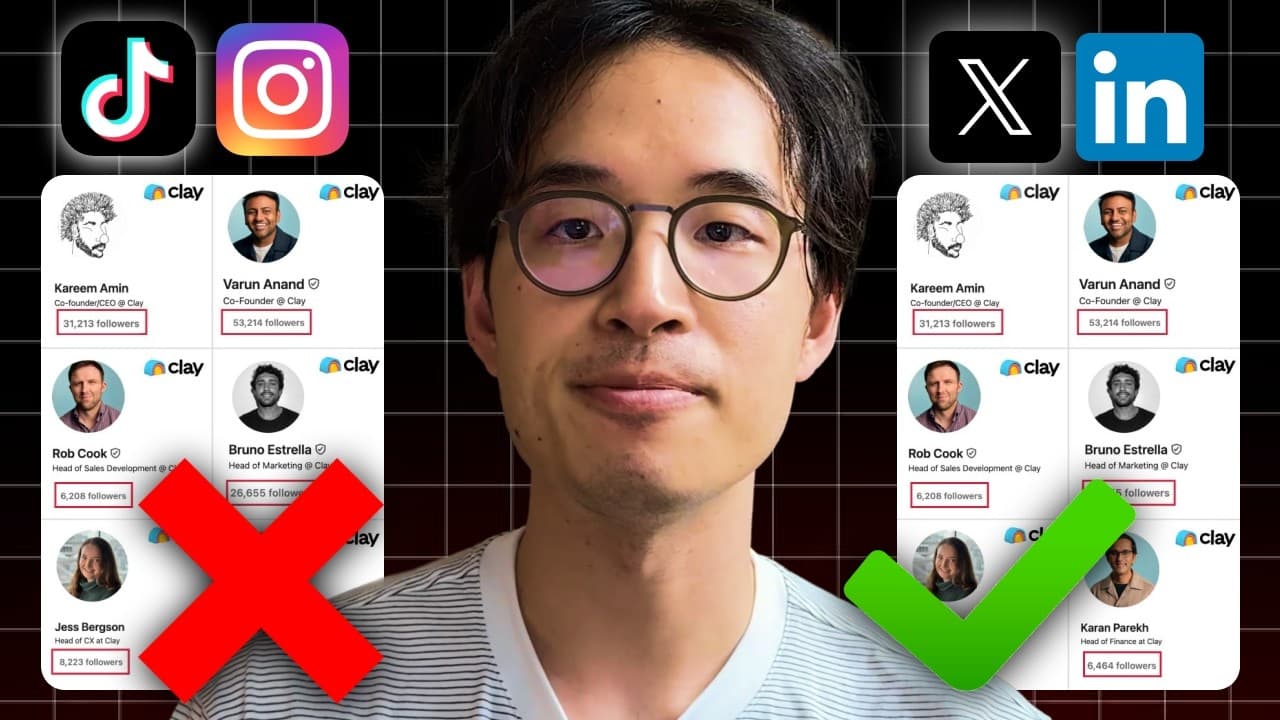
One imperfect number points at the trend. In our analysis of employee engagement on LinkedIn, which looks across millions of social posts, personal accounts average around 8,700 impressions per post and company profiles average around 1,500. That's a little more than 5x, and it isn't necessarily causal.
My theory is the simple one, and it's why I believe the smarter move for most businesses is to amplify most of their content through personal profiles.
"People want to hear from other people. People don't want to hear from a faceless company."
Why Does a Slack Advocacy Channel Stop Working?
A feed of social posts in Slack is very common, and I wouldn't call it completely ineffective, since employees (usually) aren't opening LinkedIn every day. But as a company scales, each person's sense of responsibility for advocating on socials decreases linearly. An employee in a 500-person org is a lot less motivated to take time out of their day to like, comment, and repost than someone at a five-person startup.
Timing does the rest, as our post on why a Slack advocacy channel dies by 11 a.m. explains.
What Do Companies That Run Social Well Do First?
Once companies reach a certain scale (call it Series B or greater), there's a pattern that's pretty replicable. The first thing every successful one does is start an executive advocacy program, separate from the company account and from any employee advocacy program. It means dedicating people on the marketing team, or sometimes an outside agency, to executive thought leadership on channels like LinkedIn and X.
Those people do more than ghostwrite. They strategize, and they write, manage, and schedule everything from thought leadership to product marketing so the exec is consistently pushing out three to five posts per week. Executive profiles are asymmetrical: they hold more weight on these networks, they tend to get more engagement, and so they drive more leads and down-funnel pipeline.
"This is, I would say, the number one lever that every company needs to take advantage of."
When that team gets really good at writing for the execs, you scale the motion out to the employee base. The structure we see succeed is a set of talking points the company wants to post about each week or quarter, sometimes with variations already written. Employees personalize the voice a little and post it themselves, which gets them most of the way there.
Think of each employee or executive profile as a node in a network, each one reaching its own network. With a big product launch and a marketing team coordinating the rollout, a large company can saturate the network. The same launch posted only from the company account gets 20 or so likes and passes without anyone really seeing it.
How Do You Get a Busy Executive to Post Consistently?
First you need buy-in, and that's partly an education problem. Executives who aren't on social today often still view it as a pure brand marketing channel: the social manager creates some stuff, they approve it, and there's no real structure around it. I'd flip that conversation. Social is a revenue generation channel, and it needs the sophistication, care, and coordination of any other GTM motion.
Tactically, a very common approach we see is to set aside 30 to 60 minutes every week where the CEO records their thoughts with someone on the team who has questions prepared. Ask about an interesting hiring decision they made that week, or a product pivot, and the nuggets that come out turn into social posts.
The second approach is to mine passive context. So much of it already lives in business tools such as Slack, Granola, Fathom, and Grain, and there are gold nuggets in there for thought leadership or product marketing.
Is AI-Written Executive Content Still Genuine?
There's often a concern about whether an AI-written post is genuine, or as good as something written by hand. I see AI as a tool and a means of production, and it has definitely lowered the cost of producing content.
"I think denying that AI is a writing tool is sort of being in denial of the future a little bit."
What matters is the source material. A post built from real thought, things said in conversations, and real context is a different thing from typing "write me a LinkedIn post about why sales matters" into ChatGPT and posting the slop that comes back. If you want to succeed on socials, hook AI up to the right context so it stops producing thin content.
I'd also argue that CEOs have (almost) always used ghostwriters.
Which Metric Tells You Social Is Working?
There's too much focus on vanity metrics in social. People care too much about going viral and they over-index on impressions, when the goal for most B2B teams is pipeline. So track ICP engagements: look at who engaged with your posts, see who fits your ICP and who's a new deal, and pass them to your sales team to close.
It's a signal like anything else, and it closes the loop: seeing which posts drive a lot of ICP engagements feeds what you create next.
For an employee advocacy program, I'd track adoption. There's still a human element even with structure and tooling, so a lot of teams incentivize employees with gift cards or internal point systems. If people are actively posting about your company, the rest of the metrics follow.
How We Run This at Ordinal
We have automations in Ordinal that make the Slack feed easier, and the engagement itself can happen before a post goes out. Employees can leave their comments ahead of time, and a centralized marketing team can leave likes, comments, and reposts on behalf of founders and execs who are otherwise too busy, with the same approval flows and queues so everyone can approve what's left in their name. That way nothing relies on a founder getting a ping, stopping an important meeting, and writing a comment live.
Ordinal also has an MCP. Plug the Granola MCP and ours into Claude, then ask it to review the notes from an exec's sales calls over the past week and push five ideas for LinkedIn posts into Ordinal. The drafts come out in that person's tone of voice, which means fewer approval cycles. Ask for a product marketing post similar to the ones they've posted before, and it finds them and applies the formatting and style cues automatically.
We don't track ICP engagements natively. There are a lot of tools you can pair with Ordinal for that, and we're building integrations to bring that data back into the product.
Final Thoughts
Start with one executive this week. Put 30 to 60 minutes on their calendar with someone who brings prepared questions, record the conversation, and turn it into three to five posts. Then look at who engaged, and send the people who fit your ICP to sales.
Frequently Asked Questions
Why Do Personal LinkedIn Profiles Get More Reach Than Company Pages?
My theory is that people want to hear from other people. Personal accounts also tend to post more thought leadership and personal stories, which earn higher engagement, and I think there's likely a structural algorithm shift toward personal voices as well.
What Is the Difference Between Employee Advocacy and Employee-Generated Content?
Employee advocacy tends to be more structured: a team manages the program at scale, drafting content and variants that employees can easily repurpose and post. I think of employee-generated content as a broader umbrella term for employees writing posts themselves, which is looser and unstructured.
How Do You Start an Employee Advocacy Program With a Small Team?
Use a tool, because this is really hard to run by hand. You can't manage it with spreadsheets, pulling everyone's analytics manually, and asking people to update you on what they did and didn't post.
How Do You Get Executives to Post on LinkedIn Consistently?
First, get buy-in by educating them that social is a revenue generation channel as well as a brand marketing channel. Second, the honest answer is to dedicate a team to help them: write the content, schedule it out, and use a tool to make the coordination easy.
What Is the One Social Media Metric B2B Teams Should Track?
I'd track ICP engagements. For most B2B teams the goal of social is pipeline, so look at who engaged with your posts, see who fits your ICP, and pass those people to sales. Impressions and going viral get too much attention.
What Metrics Should You Track for an Employee Advocacy Program?
I'd track adoption. There's still a human element even with structure and tooling, so incentivize employees the right way, for example with gift cards or an internal point system. If they're actively posting about your company, the rest of the metrics follow and the economics (almost always) work out.