

At most B2B companies, the personal profiles of the people who already work there reach far more people than the brand account ever will. That makes those profiles the most valuable distribution channel you have, and most teams underuse them badly.
I realize "just get your employees posting" is one of the most ignored pieces of advice in B2B marketing, mostly because every attempt at it seems to quietly die. So consider this my case for why it keeps failing, and what the teams who actually get it right are doing differently.
The Brand Account Was Never Going to Carry You
Start with the number that reframes everything.
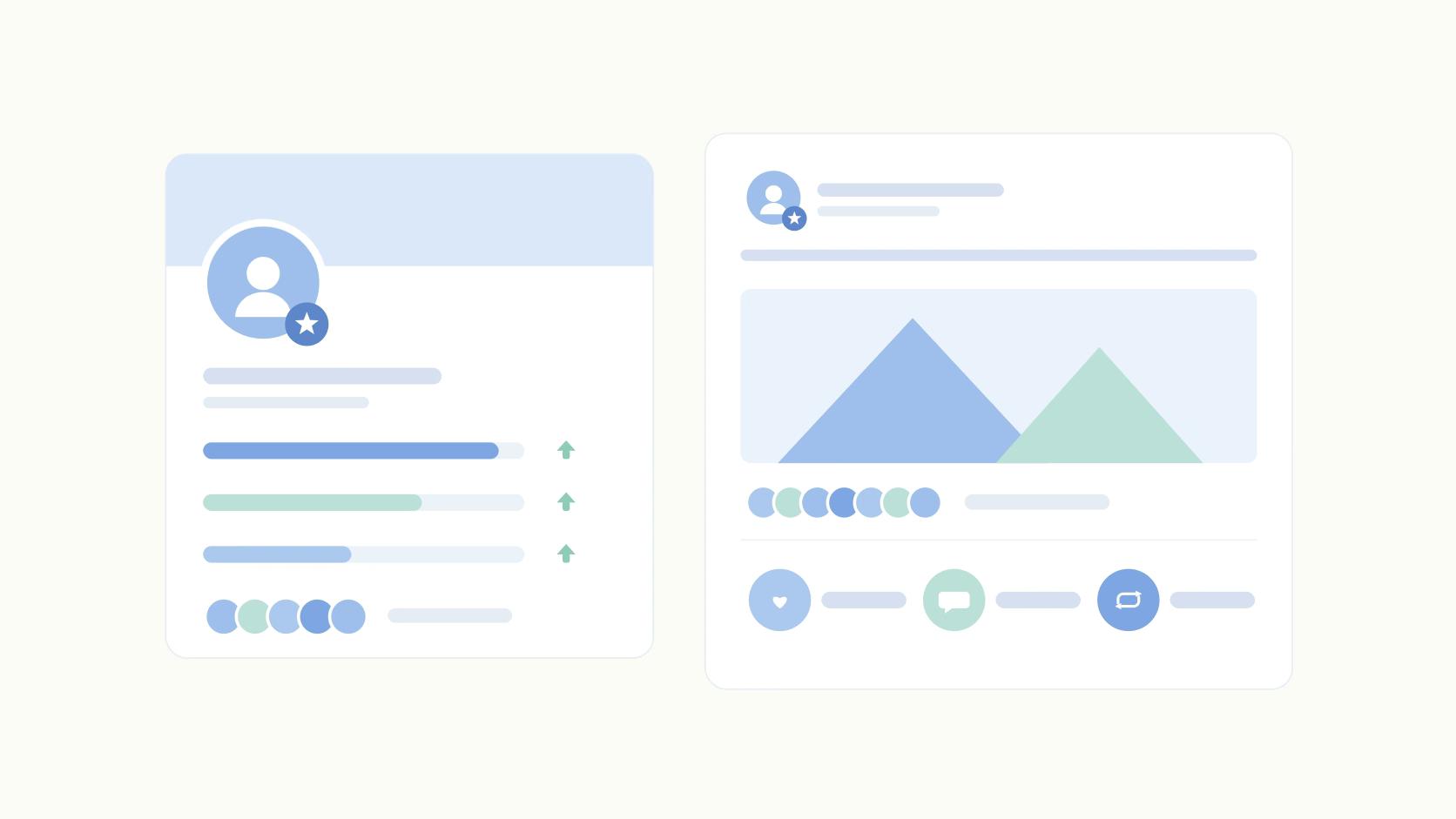
Across the millions of posts we see at Ordinal, a personal LinkedIn profile averages around 8,700 impressions per post. A company page averages around 1,500. Same company, same message, and almost 6x the reach depending on whose name is on it.
I want to be honest about the limits of that number: it reflects correlation and doesn't prove causation.
Personal accounts also tend to post more thought leadership, more personal stories, and more of the human material the feed rewards, so some of the gap comes from the content itself as much as the profile type. Even so, it's too large and too consistent to wave away, and it lines up with a structural shift we believe is real: the algorithms have tilted toward amplifying people over logos.
That tracks with how people actually behave. We want to hear from other people, and nobody opens LinkedIn hoping to hear from a faceless company.
So the strategic conclusion writes itself. If your reach lives in your people, your social program has to live there too. And that's where almost everyone gets stuck.
Why "Everyone Go Like This" Never Works
Here's the version of employee engagement that nearly every company has tried.
There's a Slack channel. Someone on marketing drops a link when a post goes out. "Hey everyone, go like and comment on this." A handful of people do. Most don't. Within a quarter the channel is a graveyard, and leadership concludes that employees just don't care about the company enough to engage.
That diagnosis is wrong, and it's worth being precise about why, because the wrong diagnosis leads to the wrong fix every time.
This comes down to friction. Employees are willing to engage, but the workflow makes acting on that willingness too hard in the moment.
I've never met an employee who refused to like their company's post out of spite.
What actually happens is more mundane: the post goes out at 11 a.m, when half of the team is in meetings. The Slack ping arrives, they glance at it, they genuinely mean to come back to it, and they close the tab. The intent was real, but the timing never lined up. Even when someone does make it to LinkedIn, they get pulled into their own notifications and the original task evaporates.
This gets structurally worse as you grow.
At a five-person startup, everyone feels personally responsible for the company's voice, and a Slack nudge works fine. At 500 people, that sense of ownership thins out almost linearly until a single employee's like feels like it couldn't possibly matter. This is a deeply human problem, and you can't solve a human problem with a louder Slack channel.
What the Teams Who Get This Right Actually Do
When companies cross a certain scale, usually around Series B, the ones who succeed at social tend to run a pattern that's surprisingly replicable. It comes down to two motions, and the order matters.
Motion one: executive advocacy, as its own dedicated function.
This is the single highest-leverage move, and it sits apart from the company account and any broad employee program. It puts one or two people on the marketing team into a dedicated role: driving executive thought leadership by strategizing, ghostwriting, and distributing content so execs post consistently, three to five times a week, on LinkedIn and wherever else their audience lives.
The reason to start here is asymmetry. Executive profiles carry disproportionate weight on these networks. Their voices travel further, pull more engagement, and generate more down-funnel pipeline than the brand page ever will. One founder's post out-performs the company account on a normal Tuesday, so you resource the asymmetric thing first.
Motion two: scale it out to the wider employee base.
Once the internal team is good at writing and distributing for execs, you extend the same machine to everyone else. The structure that works starts with the company choosing its talking points for the week or quarter, then having the central team write ready-to-go variations of that content. Employees take a variant, personalize the voice a little, and post. You've gotten them 80% of the way there, which is the difference between a program that runs and one that stalls.
Put both motions together and you get the thing that actually moves pipeline: a network of nodes. Every exec and employee profile reaches its own audience. When you have a real launch and a coordinated rollout across all of them, you saturate the network. Compare that to posting once from the company LinkedIn, collecting 20 likes, and watching the launch pass unnoticed. Social at scale is a genuine GTM motion, and it's hard, which is exactly why so few B2B companies do it well.
One of our customers built a program like this and attributed millions in pipeline to it last quarter. The structure above produced that number. Luck and viral moments had nothing to do with it.
"Isn't Automated Engagement Just Gaming the Algorithm?"
I get this question constantly, and it's fair, so I'll answer it directly.
The legitimate use case removes the friction between a real person's intent and the action they already wanted to take. It doesn't involve bots or fake accounts. An employee genuinely wants to support a teammate's post. A founder genuinely wants to comment on their company's launch. The problem is purely timing, since the post goes live while they're heads-down in something important.
So rather than relying on a founder to catch a ping mid-meeting and write a thoughtful comment live, you let people queue their genuine engagement ahead of time, route it through the same approval flows as everything else, and let it land naturally when the post goes out. A central marketing team can also engage on behalf of execs who've signed off on it.
The goal is to let people act on enthusiasm they already have without stopping their day to do it. This is a workflow fix.
Making It So Easy Your Execs Can't Say No
Most of the time, the blocker is simply a busy CEO who signed off on exactly one post last week. Here's how the teams who win lower the activation energy.
1. Get buy-in by reframing the channel: A lot of execs still treat social as pure brand marketing: "the social manager makes some stuff, I approve it, fine." That framing is the whole problem. For B2B SaaS, LinkedIn is one of the best acquisition channels you have, and it deserves the same rigor, coordination, and seriousness as any other GTM motion. Make that case first, because nothing downstream works without it.
2. Capture thinking instead of demanding writing: The most reliable way to get content out of a busy executive is a standing 30 to 60 minute block each week where someone sits down with them and asks prepared questions. An interesting hiring decision, a product pivot, a hard call they made. Real conversations produce real nuggets, and those nuggets become posts. The session turns their existing thinking into raw material through conversation, which is far easier for them than facing a blank page.
3. Feed AI real context: This is where most "AI for social" goes wrong, and the diagnosis matters.
The problem with AI slop comes down to a lack of context. When the model is given the right context, the content it produces can be just as high in quality as anything a human would write.
When someone pastes a half-formed thought into a chatbot and ships the first thing it returns, the model knows nothing about who's posting, what their audience responds to, or what's worked before. Of course it comes out generic. But that same exec's thinking is already sitting in your tools, in call transcripts, in meeting notes from Granola or Fathom or Grain, and in Slack. That's the raw material.
Pipe it in deliberately, along with the author's own post history and what's historically performed, and the output becomes genuinely useful.
This is, frankly, what good ghostwriting always was. Executives have used ghostwriters forever. The difference now is that a well-fed AI assistant can hold hundreds of a person's past posts and their analytics in a single window, which is more context than a human ghostwriter typically accumulates in months, and it can match the exact voice and formatting that already works for that person.
One more thing matters more than it should: make the native touches frictionless. Being able to tag the right people directly in a scheduled post, for instance, is the kind of detail that decides whether an exec's thought leadership actually reaches the company's network or quietly underperforms.
The Only Metric That Actually Tells You If It's Working
If you take one thing from this, take this: stop optimizing for vanity.
Most teams over-index on impressions and the dream of going viral. For B2B, that's the wrong scoreboard. Your goal on social is pipeline, which means the metric that matters is ICP engagement: which of the right people engaged with the post, regardless of how many saw it. Look at who's actually liking and commenting, identify the ones who match your ICP, route the new ones to sales, and let your team work them like any other signal.
That single shift closes the loop. It also makes your content smarter over time, because the posts driving real ICP engagement tell you what to make more of. Wide reach that converts no one is the social equivalent of a blog post that ranks for 19,000 visitors and zero customers.
Nice chart, but no business.
For the employee program specifically, the leading indicator is even simpler: adoption. Are people actually posting? If they are, and they're posting about your company, almost everything else is downstream, and the economics tend to work themselves out. Incentivize adoption first, with whatever lever fits your culture, and let the rest follow.
Treat It Like GTM, Because That's What It Is
The reason employee engagement on LinkedIn fails comes down to one thing. Most companies run it as a morale exercise when it should operate as a distribution system.
Run it as a system and the picture changes:
Executive advocacy as its own dedicated motion. Ready-to-post variants that get employees 80% of the way there. Genuine engagement that's productized so it doesn't depend on willpower. And ICP-level measurement that ties all of it back to pipeline.
Your people were always willing to be part of this. The real job is to make saying yes easy enough that their willingness finally turns into action.
Frequently Asked Questions
Why do personal LinkedIn profiles get more reach than company pages?
People connect with other people far more readily than with a faceless company page. There's likely a structural algorithm preference at work too, though the behavioral piece is the core of it. In our data, personal profiles average roughly 8,700 impressions per post versus about 1,500 for company pages, with that gap reflecting content style as well as profile type.
What's the difference between employee-generated content and employee advocacy?
Employee advocacy is the structured version: a team manages a program at scale, drafts content, and produces ready-to-use variants for employees to personalize and post. Employee-generated content is the broader, looser umbrella, usually meaning employees writing posts themselves without a central program behind them.
How do you get executives to post on LinkedIn consistently?
Two things. First, earn genuine buy-in by reframing social as a revenue and GTM channel rather than brand marketing. Second, dedicate people to help them do it, writing and scheduling on their behalf, and capturing their thinking in a short weekly recorded session so they never face a blank page.
Isn't automated engagement just gaming the algorithm?
It stays legitimate as long as real people are acting on intent they already have. The practical use is letting employees and execs queue genuine likes, comments, and reposts ahead of time, through normal approval flows, so timing doesn't kill participation. This is a workflow fix built on genuine activity.
What metric should you track for an employee advocacy program?
Start with adoption: are employees actually posting about the company on a consistent basis? That's the leading indicator. Beyond that, track ICP engagement ahead of raw impressions, so you can route qualified engagers to sales and tie the program back to pipeline.
Can you run an employee advocacy program with spreadsheets?
In practice, no. Pulling everyone's analytics by hand and chasing people to report what they posted falls apart almost immediately. Coordinating content, approvals, and engagement across many profiles needs a dedicated tool, whether that's Ordinal or something else.
Related Posts
Looking to learn more? The below posts may be helpful for you to learn more about social media and content marketing.