

At nearly every company I talk to, the "advocacy program" is really just a Slack channel. Someone drops a link and says, "Hey everyone, go like this." I've watched this fail more times than I can count, and not because employees don't care.
Here's what actually happens. The notification lands while half the team is in meetings. They see it, they close it, and the moment is gone. They fully intend to come back, and most never do. Even the people who make it to LinkedIn get pulled into their own feed before they engage with the post.
The window closes fast. It's just a very human issue (even if those employees had the best intentions of liking, commenting, and sharing).
Auto-engagement on social media is built to close that gap. Not by tricking an algorithm, but by solving the coordination problem no Slack channel has ever solved reliably. This post walks through why the manual approach structurally fails, how the reach math works, and what a two-motion system looks like when it's actually driving pipeline.
Note: This blog post was written based on the conversation in the video above.
Why the Slack Advocacy Channel Always Breaks Down
The failure is structural, not one of discipline.
As a company scales, the sense of individual responsibility to advocate on social decreases roughly linearly. As an employee in a 500-person org, you're a lot less motivated to go like, and comment, and take time out of your day to repost. In a five-person startup, the manual Slack approach can work because everyone feels the stakes. As you scale, that effectiveness drops off.
And it's not that employees aren't willing. That's the part people miss. They're just not in front of LinkedIn at the exact moment a post goes live during working hours. The notification comes in, they're in a meeting, they see it, they close it. They would love to like and comment and repost, but there's no real way for them to do so in that moment.
It's not that employees aren't willing to like or comment on things. It's just that Slack notification is coming in when the post goes out during working hours. Half of the employees are in meetings. They're gonna see it, they're gonna close it.
Timing and coordination are the problem. A Slack channel solves neither.
The Reach Is Already in Your Team's Networks
Personal accounts tend to post more genuine thought leadership and more interesting personal stories, which earn higher engagement, which drives more distribution. But I do think there's likely a structural algorithm shift on top of it, where personal profiles get weighted more heavily than company pages, not just a difference in content quality.
The qualitative case is simple: people want to hear from other people, not a faceless company page.
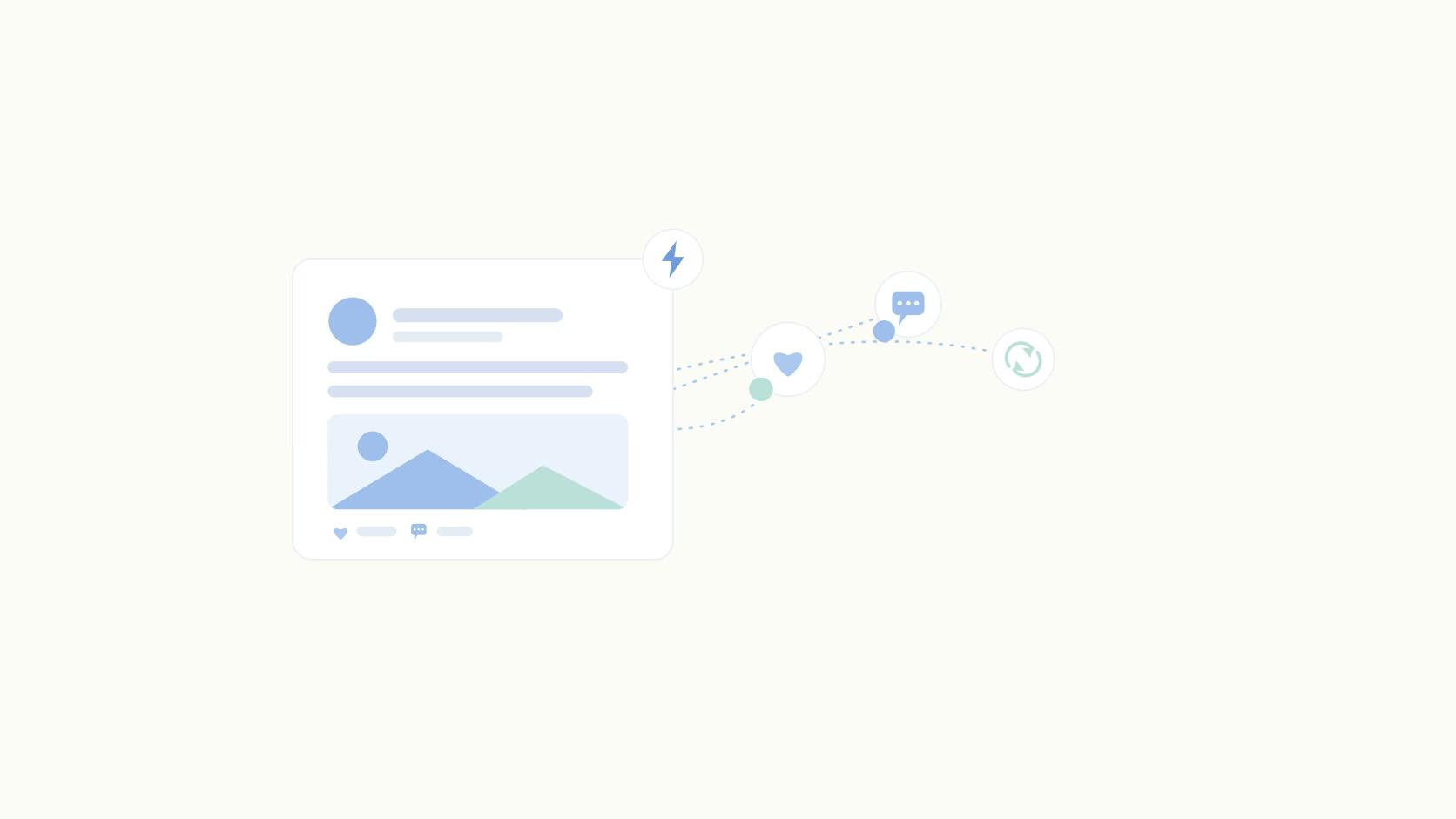
Think of each personal profile as a node in its own network. A coordinated product launch where ten employees and three executives post the same day saturates their collective networks. That same launch pushed only through the company page gets twenty likes, and then it's gone. The reach already exists. It's sitting dormant in individual profiles because nothing activates it.
What Auto-Engagement on Social Media Is (and Isn't)
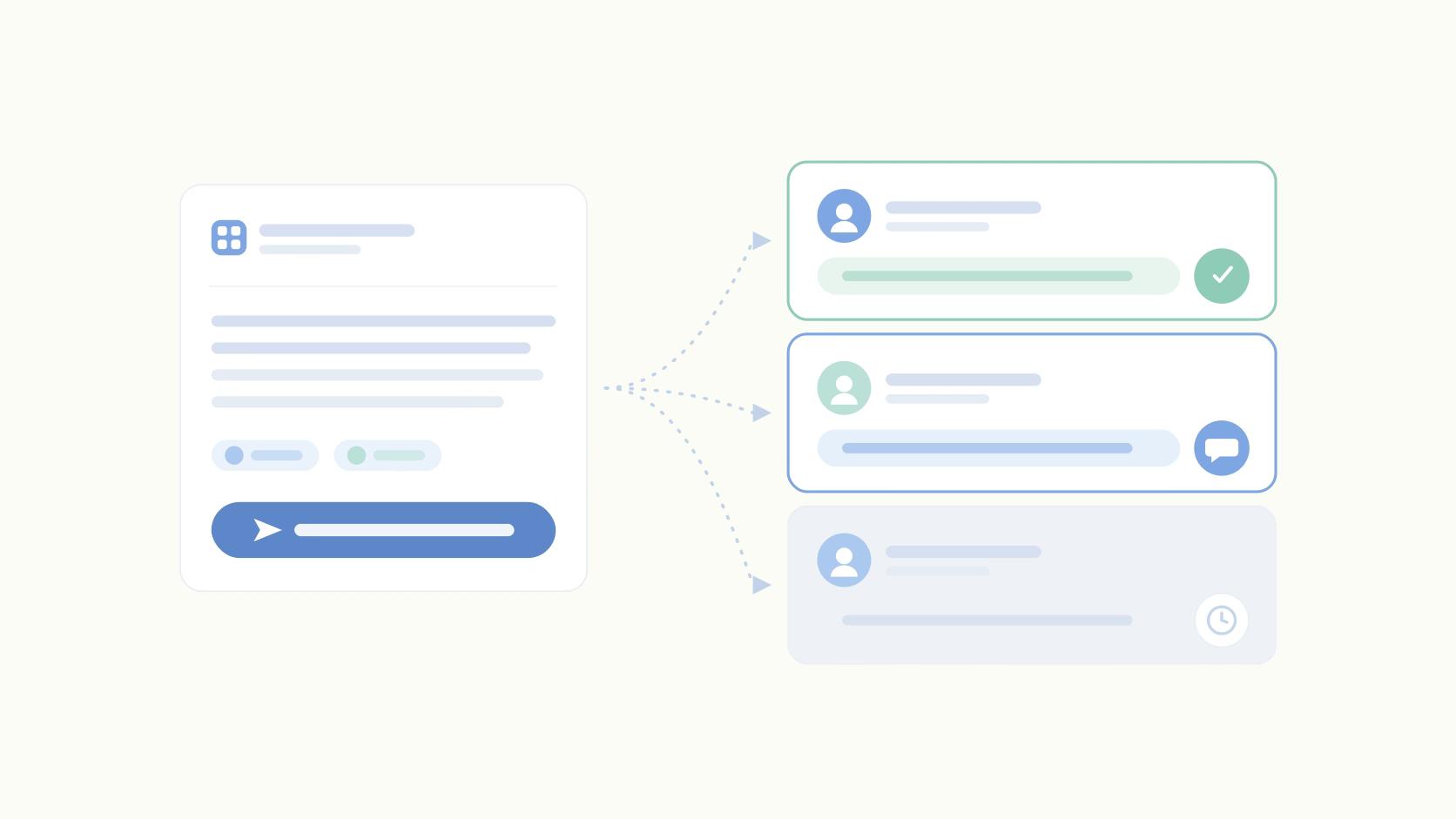
Auto-engagement on social media is when team members queue up likes, comments, and reposts in advance so a post gets coordinated engagement when it goes live, with approval flows so nobody's voice is used without sign-off. No bots. No fake accounts.
Real people from real profiles leaving real engagement, just coordinated rather than left to chance.
I could feel the skepticism the first time I described this to a marketing team: "Okay, but is this just gaming the algorithm?" Here's how I think about it. The engagement is genuine. Employees actually support the content. The only thing auto-engagement fixes is timing. The marketing team can queue a comment from a founder before the post goes live instead of interrupting an important call to leave one live.
The intent was always there.
There's a personal tagging angle worth mentioning too. A lot of schedulers can't tag personal LinkedIn profiles at all, which means you schedule a post, realize you can't tag the people you need, and end up going back in to do it manually right before it goes live.
At that point you're just doing the manual work it would take to post anyway. For thought leadership and content posted from personal profiles, personal tagging isn't a nice-to-have, it's part of what makes the motion work.
The Two-Motion System That Drives Real Pipeline
Executive advocacy comes first. Employee advocacy comes second. Most teams either skip the first or conflate the two, and that's where the program falls apart.
I have a Series B+ customer I won't name that attributed millions in pipeline to their social motion last quarter. Structurally, they dedicated an internal team specifically to executive thought leadership, handling strategy, scheduling, and distribution so each exec is consistently posting three to five times per week.
Exec voices are asymmetrical on these networks. They hold more weight, get more engagement, and drive more down-funnel activity. That's motion A, and it's the number one lever most companies haven't seriously invested in.
Once motion A is running, you scale it to the employee base.
The structure that works: publish talking points and near-ready post variants that get employees about 80% of the way there. They personalize the voice slightly, post from their own profiles, and the message amplifies across every network they touch. That's different from employee-generated content, the looser umbrella where employees write everything themselves.
Advocacy is managed and structured; employee-generated content is broader and more loosely organized. For executive thought leadership specifically, managed advocacy with real infrastructure behind it is what compounds.
Your exec profiles… it's asymmetrical. They hold more weight on these networks. Their voices matter more. They often tend to get more engagement, and therefore they drive more leads and down-funnel pipeline.
On the AI question: denying that AI is a writing tool means denying the future. I'd argue that almost always, CEOs have already been using ghostwriters. The differentiator is whether the AI had real source material to work from.
Feed it Granola or Fathom notes from a sales call, a podcast transcript, or a Slack thread where the CEO said something genuinely interesting, and you get content grounded in real thinking. Typing "write me a LinkedIn post about why sales matters" into ChatGPT produces slop. AI is a means of production.
It has lowered the cost of producing content, but if you want to succeed on socials, you still have to connect it to the right context so it's working from real conversations instead of producing thin, generic content.
Auto-engagement is the operational layer that keeps both motions from depending on whether someone happens to notice a Slack notification at the right minute.
The One Metric That Matters: ICP Engagements
Track ICP engagements, not impressions. It's the same mistake content teams make with blog traffic, celebrating tens of thousands of visitors when none of them converted. Wide reach with the wrong audience is just noise.
Look at who engaged with your posts, filter for who fits your ICP, pass new names to sales, and close deals from there. That feedback loop also tells you what to create next, because the posts driving real ICP engagement show you what kind of content to make more of.
For advocacy programs specifically, track adoption first. Honestly, the rest of the metrics will follow. If employees are consistently posting about your company, the economics tend to work out. If they're not posting, no amount of impression tracking fixes that.
Where to Start
The failure has always been with coordination, and auto-engagement is the system that closes the gap. LinkedIn is one of the best acquisition channels for B2B SaaS, so you have to approach it as a GTM motion, not a brand channel. That means giving it the sophistication, care, and coordination of a real go-to-market effort.
Pick one executive. Dedicate someone on your team to write and schedule for them three to five times a week, ideally pulling from a weekly 30-to-60-minute recorded conversation so it's almost impossible for the exec to say no. Put a real engagement system behind every post so it isn't left waiting on a Slack notification half the team closes without clicking.
Then measure who in your ICP engaged, and pass those names to sales.
The gap between companies running this as a proper GTM motion and companies still relying on a Slack channel is only going to widen. If you want to see how scheduling, personal tagging, and auto-engagement work in practice, that's what Ordinal is built for.
FAQ
Is auto-engagement on social media against LinkedIn's terms of service?
Real accounts leaving real engagement they've approved is different from bots or scraping. At Ordinal we won't build features that violate platform terms, like DM automation or commenting directly on LinkedIn from the tool, because that's too much of a risk to take on. The line we hold is coordination among real people, never fake activity.
What's the difference between employee advocacy and employee-generated content?
Advocacy is structured. A team manages the program at scale and drafts content and variants for employees to repurpose and post. Employee-generated content is the looser umbrella where employees write posts entirely themselves.
Why do personal LinkedIn profiles get more reach than company pages?
People want to hear from people, not a faceless company. We've seen roughly 8,700 impressions per post on personal accounts versus around 1,500 on company pages. That's observational rather than causal, and there's likely a structural algorithm shift on top of the content-type difference.
How do I get executives to post on LinkedIn consistently?
Get buy-in first by reframing social as a revenue channel rather than brand marketing. Then dedicate someone to write and schedule for them, ideally pulling from a weekly 30-to-60-minute recorded conversation so it's almost impossible for them to say no.
Won't AI-written posts sound fake or hurt engagement?
AI is a writing tool, and CEOs have always used ghostwriters. The problem is less about "AI" and more about thin context. Feed it real source material like sales calls and recent posts and it produces content grounded in real thinking instead of generic slop.
What's the one metric I should track for social media?
ICP engagements. Look at who actually engaged, flag who fits your ICP, and pass new deals to sales, because impressions and going viral are vanity metrics if the wrong audience is engaging.
Can I run an employee advocacy program with a small team?
Yes, but you need a tool. You can't manage advocacy with spreadsheets, manual analytics pulls, and chasing people for updates, and that approach breaks fast as you scale.
Related Posts
Looking to learn more? The below posts may be helpful for you to learn more about social media and content marketing.