


For B2B SaaS marketers in 2026, buying a social media management package should be simple. It isn't.
Two quotes for "the same package" can differ wildly, and neither one tells you what you're buying. That's because almost every package on the market is priced per post and per channel, while the value sits somewhere else entirely.
When we measured what our customers' LinkedIn activity was worth, the number only made sense per person: about $1,087 in earned media value per active profile, per month. That's our earlier published figure from 1,142 active Ordinal Pro workspaces, which averaged $566,863 in earned media value (EMV) a month. EMV isn't revenue. But it does show where attention concentrates, and that's in people.
TL;DR:
- Social media management packages are quoted in posts and channels, but for B2B SaaS the unit of value is the active executive profile.
- Re-read every quote by active profiles covered, approval turnaround, and whether first-hour engagement is included.
- Divide the monthly price by active profiles, and a pricier package often comes out cheaper.
- Channel menus and monthly reports barely matter, because neither answers the pipeline question your CEO will ask next quarter.
What Do Social Media Management Packages Cost in 2026?
Social media management packages run $27-$265 a month for software, $500-$7,000 for a freelancer, and $2,000-$25,000+ for an agency, based on the ranges in our 2026 pricing guide. Those retainers exclude ad spend. And nearly every quote inside those ranges uses the same unit: posts per month multiplied by channels covered.
That unit exists because it's easy to sell. Grand View Research valued the global market at $29.9 billion in 2025, forecast to reach $36.4 billion in 2026, roughly 22% management market growth in a single year. That's a lot of vendors who need a menu buyers can compare at a glance. Posts are easy to count. Posts are easy to invoice.
So "12 posts, 4 channels, monthly report" tells you how much production the vendor will do. It tells you nothing about whether your CEO shows up in a buyer's feed.
Why the Value Sits in Executive Profiles
The gap between people and pages is big enough to decide the whole purchase. Personal profiles consistently outperform company pages by a wide margin in impressions per post. Employee content also tends to earn meaningfully more engagement than brand posts.
Run that forward. A few executives posting regularly put far more reach into the feed each week than the company page manages on its own. That's the math behind the question your CEO just asked. The competitor's founder is everywhere because a person is posting, and no amount of page volume closes that gap.
Channel menus mostly don't matter for B2B. Instagram, Facebook and TikTok coverage inflates the channel count on a quote. Your buyers are reading LinkedIn.
How to Count Active Profiles in a Package
An active profile is a real person's LinkedIn account that publishes on a steady weekly cadence, in a voice that person has approved, with teammates engaging in the first hour. Miss any one of those and the profile usually goes quiet within a month or two.
Quotes rarely name a single person. Find the line that says "LinkedIn," then ask whose LinkedIn. If it's the company page, that line is worth comparatively little reach per post, no matter how many posts it promises. If it's "the CEO, when there's time," that's a profile on paper and nothing more.
We ask vendors three things before we count a profile as covered:
- Which named people will post, and how many times a week each?
- Who drafts for each person, and how do they learn that person's voice?
- Who engages in the first hour after each post goes live?
Notice what's missing: "how many posts." Engagement rates hold fairly steady regardless of posting frequency. Adding a second and third human buys more attention than going from 12 page posts to 20.
How Fast Can an Executive Approve a Draft?
Executive profiles usually die in the approval queue.
Here's the usual sequence. The ghostwriter sends a draft on Monday. Your CEO opens it Thursday night between board prep and a hiring loop, rewrites two lines over Slack, and the post slips a week. Two slipped weeks later, the cadence is gone. The retainer keeps billing. The quote said 12 posts, and the profile published four.
This is a big part of why only 25% of organizations rate their social media programs as intermediate or advanced, and just 9% call themselves advanced (Meltwater, 2026). The gap is operational more than creative. The Causal CEO's comment on our pricing page makes the same point: drafting is the easy part. Sustaining five-plus posts a week is the hard part.
So ask every vendor four things. Where do drafts live? How does an executive approve one: a link, a Slack message, or a 40-minute call? What's the typical turnaround? And what happens when the executive goes dark for a week? We'd treat anything slower than 48 hours as a warning sign.
You could have the CEO approve whatever you send. Then the posts stop sounding like the CEO. And "does it sound like me?" ends executive programs faster than any scheduling problem.
Is First-Hour Engagement in Scope?
Our LinkedIn playbook flags first-hour engagement as a core tactic. It's also the line item quotes leave out most often. A post that gets thoughtful comments from colleagues early keeps getting shown. One that sits untouched for an hour tends to stall.
Agencies usually treat this as your job. In practice, that means a marketing lead posting "can everyone go like this?" in Slack. It works for about two weeks before people tune it out. If a package doesn't say who engages, when, and from which accounts, assume nobody will. Discount that profile.
How to Calculate Cost Per Active Profile
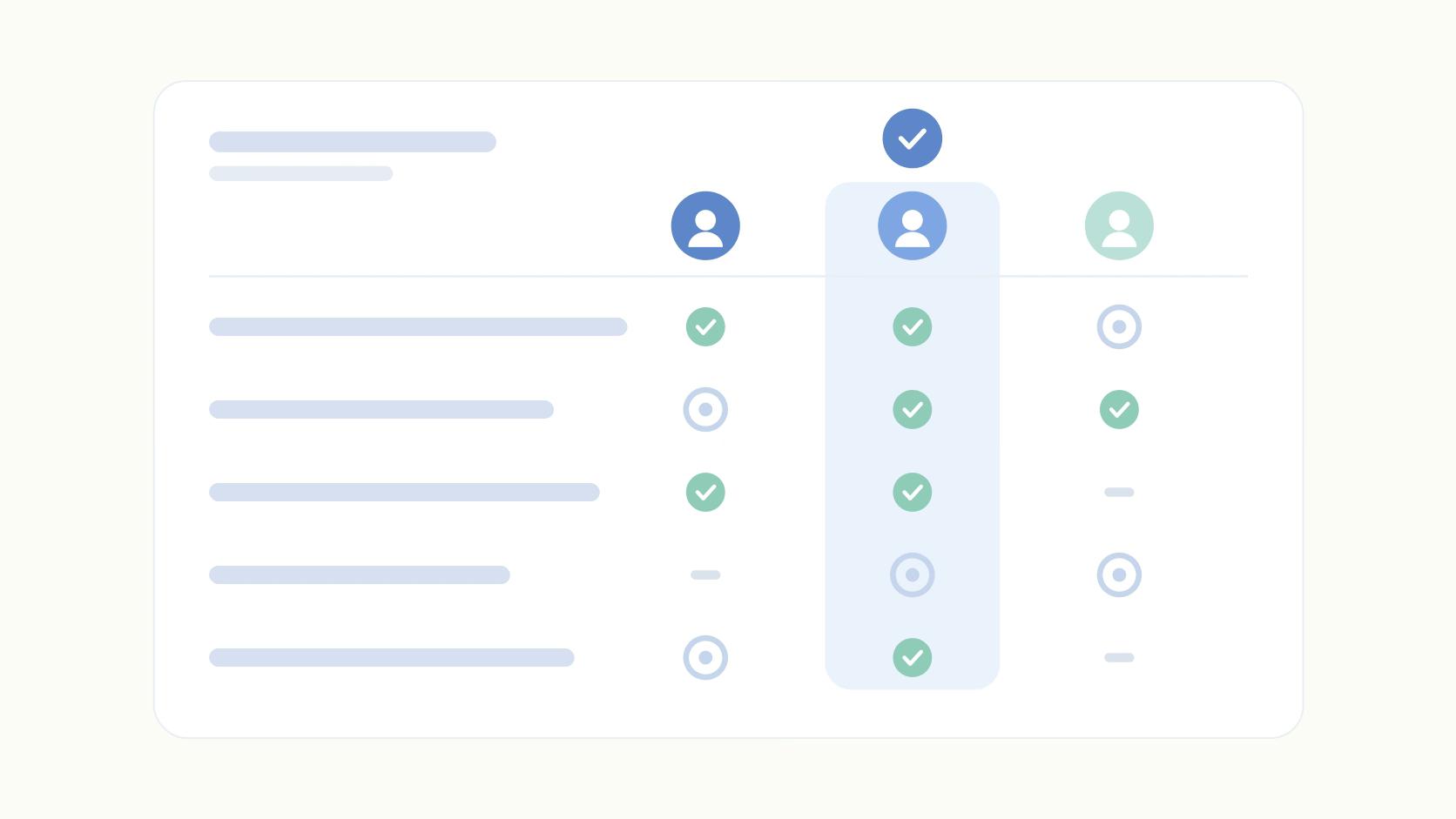
Cost per active profile is the monthly package price divided by the number of executive profiles that meet the active definition. It turns incomparable quotes into one comparable number. Here's how we re-price a quote:
- Cross out every channel your buyers don't use, which for B2B SaaS is usually everything except LinkedIn and maybe X.
- Count the named profiles with a weekly cadence, a real approval path, and first-hour engagement.
- Add any software you'd still need alongside the package.
- Divide the total by the profile count. If the count is zero, the quote is buying page posts.
The quotes below are illustrative. They're built from the ranges in our pricing guide and shaped like the ones sitting on a typical Head of Marketing's desk.
The $9,000 agency quote is twice the price of the $4,500 one. It's also a third cheaper per profile. Keep the earlier EMV figure in mind for scale. It isn't a breakeven line, but it shows which quotes pay for attention and which pay for output.
Hiring changes the math less than you'd expect. A fully loaded social media manager costs $65,000-$110,000 a year per our 2026 pricing guide, or roughly $5,400-$9,200 a month. You'd still need software, plus executives who approve on time. Agencies sell capacity. Freelancers sell a writer. Our social media tools guide covers the software side.
Some teams consider skipping the tool entirely:
"It's 2026, and any technical founder can vibe code a working social media scheduling tool in just a weekend. So why would anyone pay for a software tool when you could just build your own?" (from our YouTube video)
A weekend build handles scheduling fine. Approvals, voice and first-hour engagement across several people are where homegrown setups (and cheap packages) quietly break.
Reporting add-ons get one line from us: a monthly PDF of impressions and follower growth doesn't answer pipeline, so don't pay extra for one. Budgets aren't growing fast either, with 31% of companies planning to increase social media budgets in 2026 (Meltwater, 2026). You're probably reallocating. Cost per active profile is the number that defends it.
Where Ordinal Fits
We built Ordinal around what keeps a profile active. Approval workflows block a post from going live until the executive signs off. Drafts arrive as a share link or Slack notification. AI drafting pulls from each person's own posting history, so first drafts start closer to their voice.
First-hour engagement is built into the post itself. Auto-likes fire within the first 10 minutes with randomized timing. Comments can be pre-written and assigned to specific teammates with custom delays, and the company page can repost hours later. Slack boost channels ping everyone else with the live URL.
The Pro plan is $265 a month with unlimited seats. That's why the tool line in the table doesn't grow as you add executives. Details are on our Ordinal pricing page.
Final Thoughts on Social Media Management Packages
Before your next vendor call, send each agency and freelancer the same question in writing: "Which named executives will be posting weekly at the end of month three, how will they approve drafts, and who engages in the first hour?" Drop the answers into the table above and divide.
The quote that survives is the one you can defend when the CEO asks what it did for pipeline.
Frequently Asked Questions
What Does Social Media Management Include?
Social media management packages typically cover content creation, scheduling, basic reporting and sometimes community management. For B2B SaaS, the packages that matter go well beyond company page posting. They include executive ghostwriting, approval workflows and early engagement on personal profiles.
How Much Should I Charge a Month for Social Media Management?
Freelancers typically charge $500 to $7,000 a month, agencies run $2,000 to $25,000+, and tools alone cost $27 to $265 a month, according to our 2026 pricing guide. The right number depends on how many executive profiles the package keeps active. That's the unit that drives reach.
What Is the 3-3-3 Rule for Social Media?
The 3-3-3 rule suggests spending 3 minutes engaging with 3 posts from 3 different accounts each day. It's a decent personal habit. It doesn't scale to a B2B team activating several executive profiles at once.
What Is the 70:20:10 Rule for Social Media Posts?
The 70:20:10 rule allocates 70% of content to original posts, 20% to curated content and 10% to promotion. On LinkedIn, the bigger lever is who posts: personal profiles tend to significantly outperform company pages in reach.
What Is the 5-3-2 Rule on Instagram?
The 5-3-2 rule recommends 5 curated posts, 3 original posts and 2 personal posts out of every 10. It's an Instagram framework, and it doesn't translate well to B2B LinkedIn. There, executive voice and approval speed matter more than content ratios.
Are Social Media Management Packages Worth It for B2B SaaS?
Social media management packages are worth it when priced per active executive profile rather than per post or channel. Our 1,142 Pro workspaces average $566,863 in monthly earned media value, roughly $1,087 per active profile. That's a far more useful benchmark than any "12 posts, 4 channels" quote.
How Many LinkedIn Profiles Should a Package Cover?
Three to five consistently active executive profiles is a strong starting point for a B2B SaaS company. A few profiles with fast approvals and first-hour engagement will outperform a long roster of names who post once a quarter.
Related Posts
Looking to learn more? The below posts may be helpful for you to learn more about social media and content marketing.