
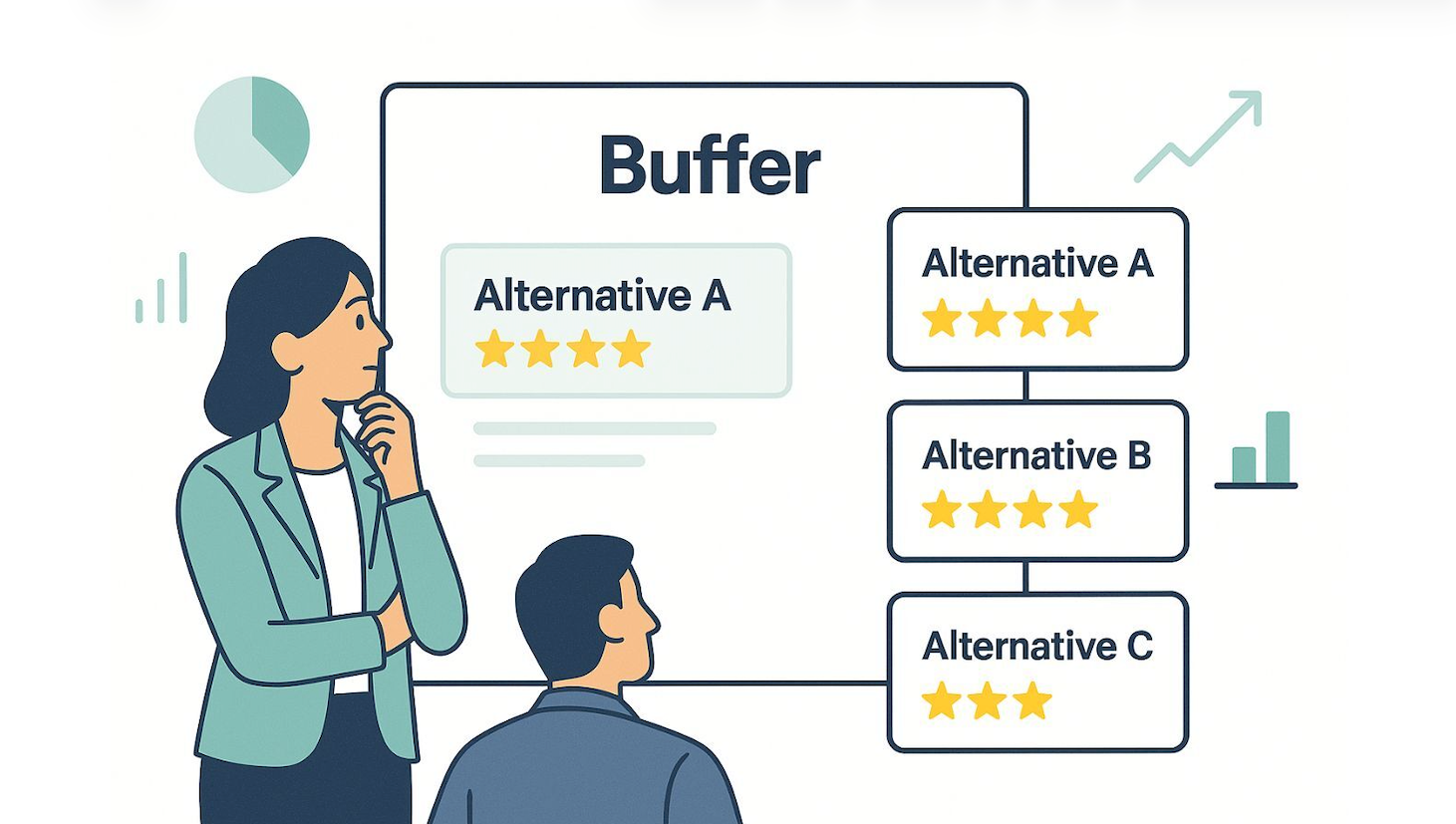
Most marketing teams start with Buffer because it's simple, but basic social media scheduling isn't enough when you're trying to build a real presence online. We reviewed the best Buffer alternatives for teams who take socials seriously. If you need collaborative workflows, deeper platform support, and engagement features that actually boost reach on LinkedIn and other networks, this social media management tool comparison will help you decide which platform fits your needs.
TLDR:
- Buffer handles basic scheduling but lacks auto-engagement and team collaboration for B2B teams
- Buffer lacks collaboration features for teams managing 5+ profiles like approval workflows, in-line comments, and more.
- Alternatives like Ordinal combines inline editing, approval workflows, and cross-posting in one platform built for modern teams
What is Buffer and How Does It Work?
Buffer is a social media scheduler designed for solo creators and small businesses that want to manage posts across multiple platforms "without the chaos." The tool relies on its queue feature, where you set preset time slots and drop posts into the lineup for consistent publishing.
You get a visual calendar to view upcoming posts and an AI assistant to help draft captions. Buffer handles the basics of multi-channel posting, letting you manage several social profiles from a single dashboard. The platform includes basic analytics to track post performance across your connected accounts.
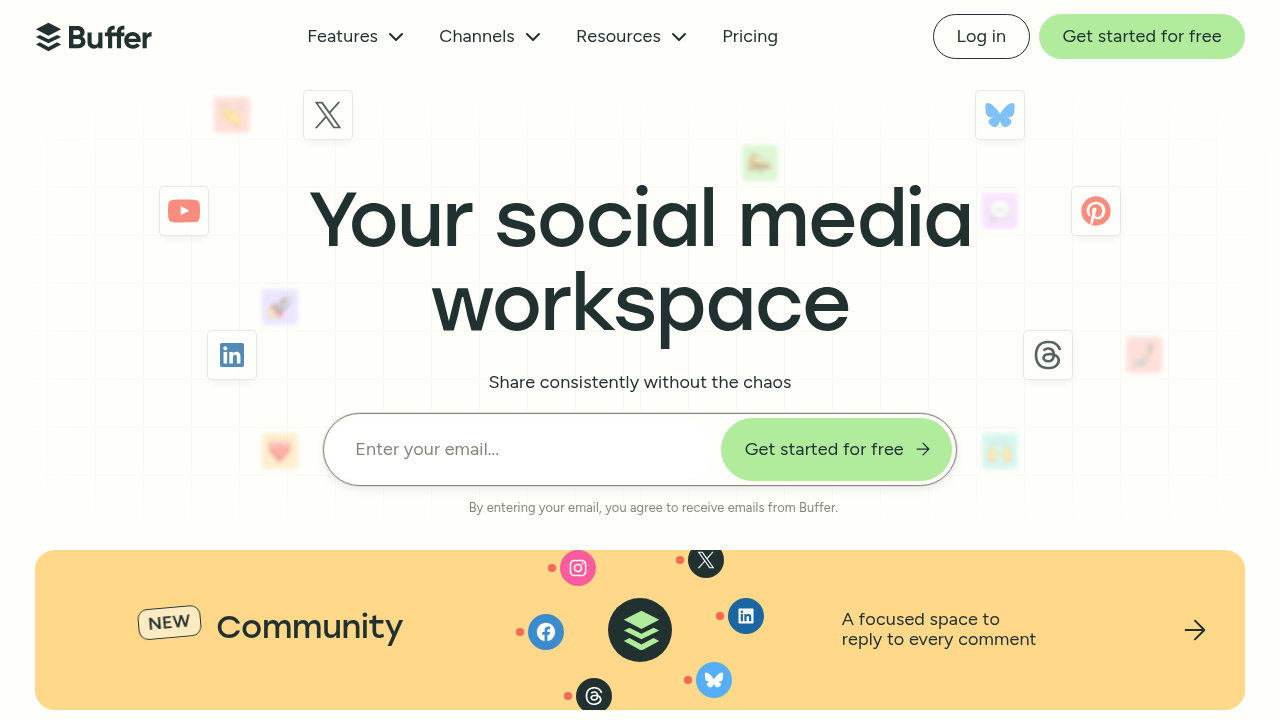
For teams, Buffer provides approval workflows on higher tiers, though these are limited compared to dedicated collaboration platforms. You can assign posts for review before they go live, but the system lacks inline commenting or real-time feedback loops that modern marketing teams expect. The tool focuses primarily on scheduling and publishing, not on engagement or community management features.
Why Consider Buffer Alternatives?
Buffer remains a solid entry point for freelancers and solo creators who prioritize simplicity. It serves its purpose well if you manage a small number of accounts and need a straightforward scheduling queue. The interface is intuitive for anyone starting their social media journey.
The most significant gap is Buffer's lack of engagement features. With social media advertising spending projected to reach $275.98 billion globally in 2025, organic reach is becoming increasingly difficult. This makes automated capabilities like auto-likes or auto-reposts essential to jumpstart visibility without relying solely on paid promotion.
Collaboration workflows are also limited for larger organizations. While basic approvals exist on higher plans, complex teams often require dedicated workspaces to keep client assets separate. Without clear boundaries, managing approvals across dozens of accounts becomes a logistical challenge.
Best Buffer Alternatives in December 2025
Ordinal (Best Overall Buffer Alternative)
Static scheduling rarely guarantees visibility in 2025. Ordinal is designed for marketing teams who take socials seriously. More than a basic queue system, Ordinal is a powerful end-to-end platform to draft, plan, and schedule social media content. With it, you can build a content engine that actually drives revenue.
Here's why Ordinal is the best Buffer alternative:
Ordinal Pros
- Inline collaboration – Teams can draft, comment, and approve content directly in the Notion-like editor before it goes live on LinkedIn, X, Instagram, Facebook, or any other connected platform. This eliminates the back-and-forth of external docs and email threads.
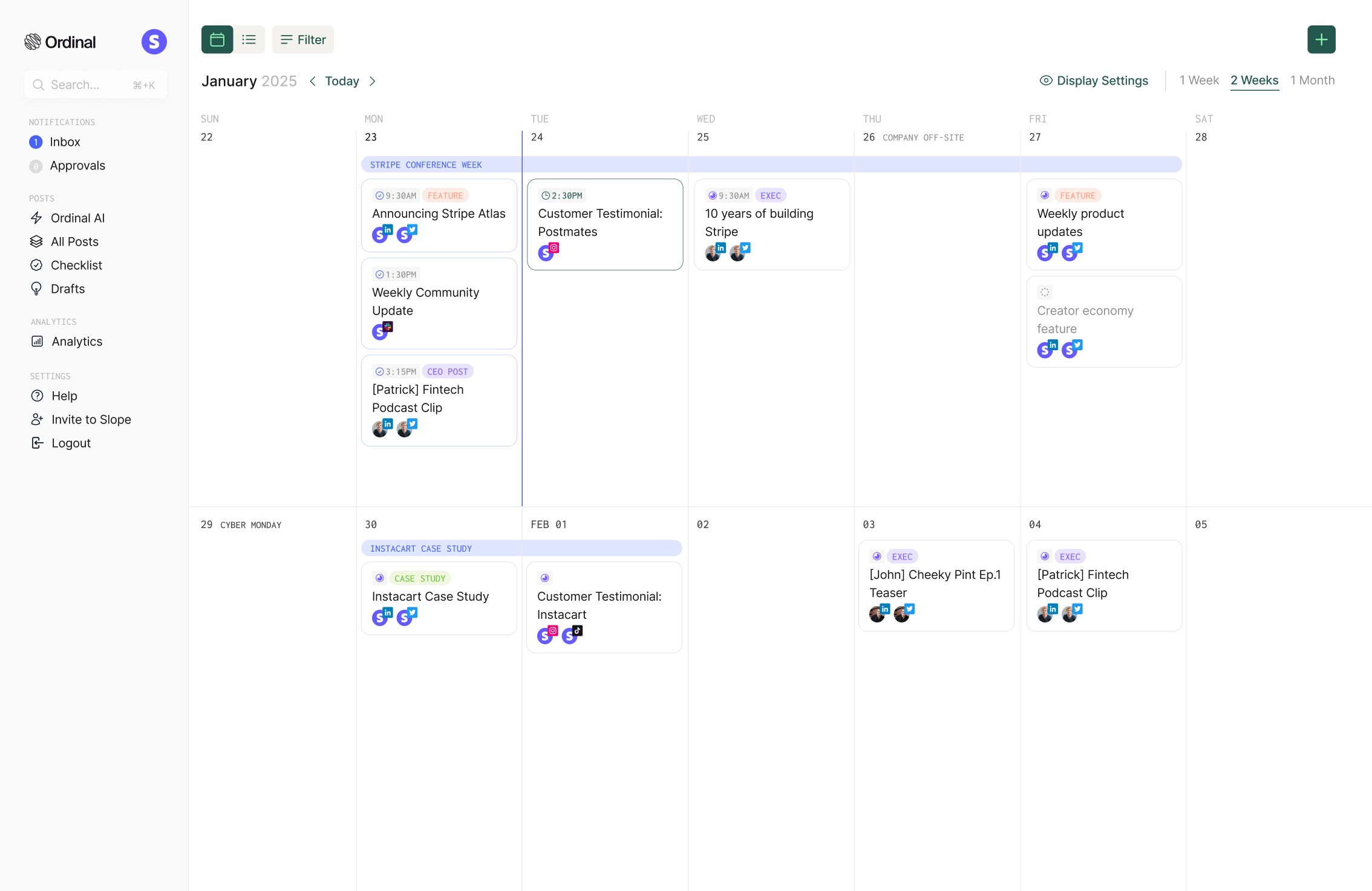
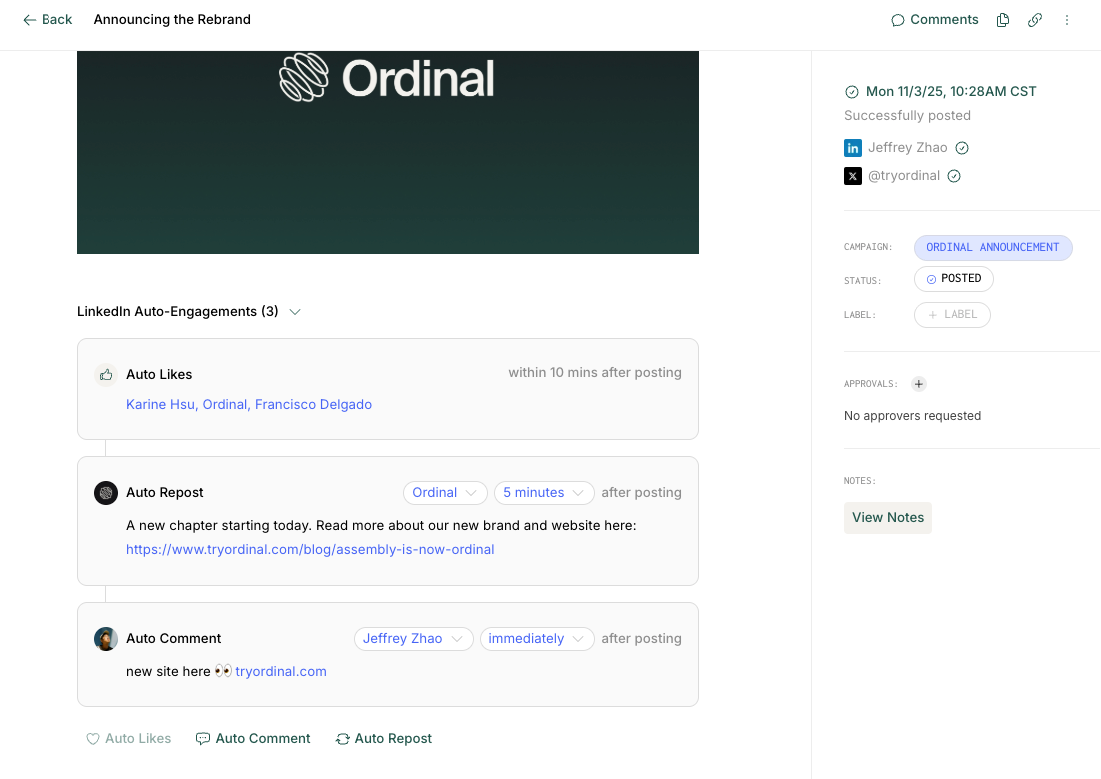
- Auto-engagement features – Automated likes, comments, and reposts generate the early signals needed for algorithmic reach across networks. This coordination jumpstarts visibility the moment content goes live.
- Social-to-CRM integration – Ordinal identifies which prospects engage with your content and syncs that data to your CRM, connecting social activity directly to revenue rather than relying on vanity metrics.
- Cross-platform tagging – Tag both companies and users across all major social channels directly within the platform, streamlining mentions and collaboration without switching between networks.
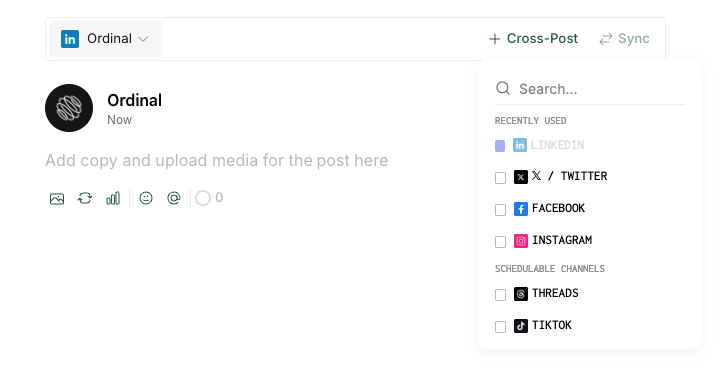
- One-click cross-posting – Distribute content across LinkedIn, X, Instagram, Facebook, TikTok, YouTube, and more with automatic format adjustments for each network, eliminating manual copy-pasting.
- Employee advocacy programs – Connect multiple team accounts to coordinate posting and engagement for employee advocacy initiatives, amplifying reach through your team's personal networks. Research shows that employee advocacy content reaches 561% more people and receives 8x more engagement than brand channel posts.
- Comprehensive analytics – Access detailed performance insights that go beyond basic metrics, including individual profile engagement data to inform your social media strategy and identify warm leads.
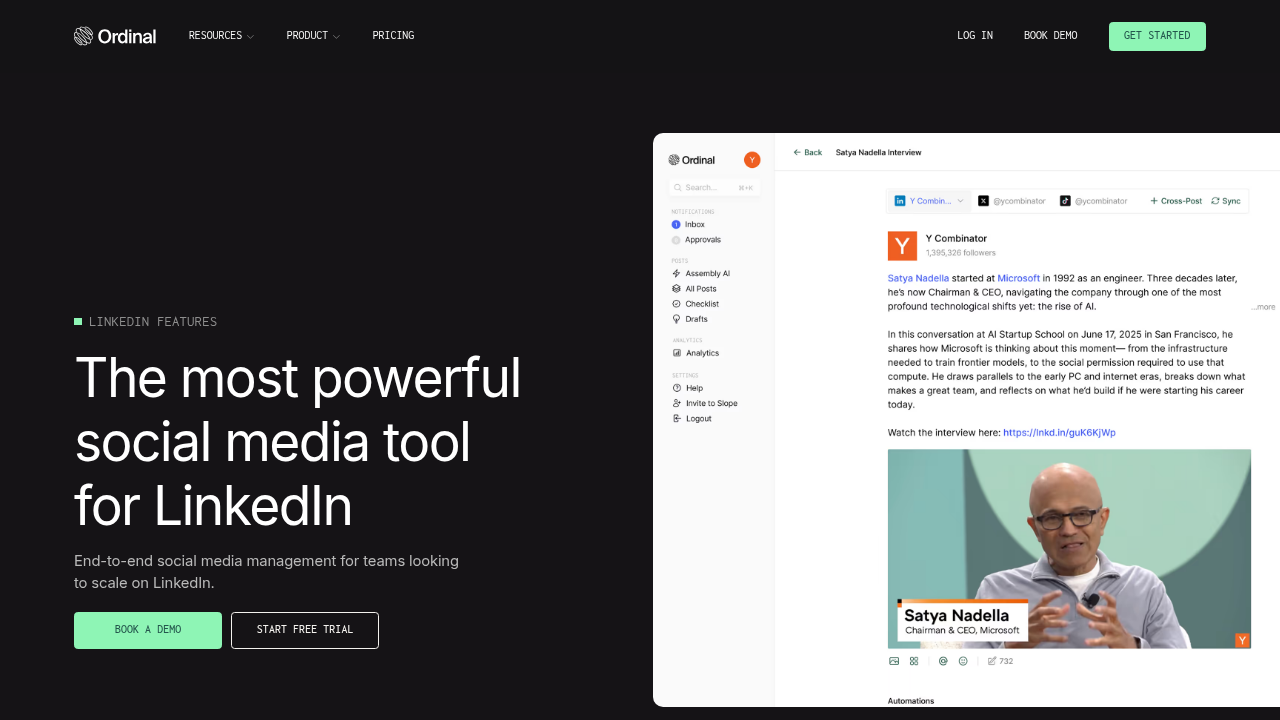
- LinkedIn-first features - From real-time character counting and “See more” fold previews to post approvals, scheduling, and performance tracking, Ordinal helps teams plan, format, and publish LinkedIn content with confidence.
Buffer serves solo creators well, but growing teams need more than basic scheduling. Ordinal prioritizes collaboration to solve the friction of managing content across multiple stakeholders.
Sprout Social
Sprout Social is a veteran in the social media management space, offering tools for scheduling, analytics, and social listening designed to help businesses manage their social presence effectively.
Pros
- Comprehensive reporting dashboards – Detailed analytics help large organizations track performance and demonstrate ROI to stakeholders.
- Social listening capabilities – Monitor brand mentions, industry trends, and competitor activity to inform content strategy.
- Unified inbox – Manage customer service and engagement across all social profiles from a single interface.
- Team collaboration features – Task assignment and approval workflows help larger teams coordinate content creation.
Cons
- High price point – Enterprise-focused pricing often excludes growing teams, startups, and agencies on tighter budgets.
- No auto-engagement features – Lacks automated likes, comments, and reposts to jumpstart algorithmic visibility.
- Complex interface – The feature-rich platform can feel overwhelming for smaller teams who need straightforward scheduling.
- Limited LinkedIn optimization – Missing specialized features like character counting, fold previews, and individual profile engagement insights.
Hootsuite
Hootsuite operates as a legacy tool known for social listening. It manages scheduling across many networks, making it a standard pick for generalists.
Pros
- Extensive Platform Integrations - Supports a wide range of social networks and third-party apps for comprehensive social media management.
- Social Listening Tools - Track brand mentions and industry conversations across multiple channels to stay informed.
- Bulk Scheduling - Upload and schedule large batches of content at once, saving time for high-volume posting needs.
- Established Platform - Long track record and large user base provide stability and extensive documentation.
Cons
- Outdated Interface - The platform feels dated compared to modern tools, with a cluttered dashboard that slows down workflows.
- No auto-engagement features - Lacks automated likes, comments, and reposts to boost content visibility when posts go live.
- Per-user Pricing - Costs scale quickly as teams grow, making it expensive for agencies managing multiple client accounts.
- Limited LinkedIn Capabilities - Missing specialized features for LinkedIn content optimization and individual profile engagement tracking.
Typefully
Typefully offers a distraction-free writing interface focused on crafting threads and posts for X, LinkedIn, Bluesky, and Threads, designed primarily for solo creators and writers.
Pros
- Clean writing experience - Minimalist editor helps creators focus on drafting engaging threads without distractions.
- Thread formatting tools - Built-in features for structuring and previewing multi-tweet threads before publishing.
- Analytics for individuals - Basic performance tracking helps solo creators understand what content resonates with their audience.
Cons
- Limited platform support - Only supports X and LinkedIn, lacking integration with Instagram, Facebook, and other major social networks.
- Limited team collaboration - Missing approval workflows, inline commenting, and multi-user features needed for marketing teams.
- Solo creator focus - Not built for agencies, employee advocacy programs, or coordinated brand content strategies.
- No CRM Integration - Cannot sync engagement data to sales tools or identify which prospects interact with your content.
Feature Comparison: Buffer vs Top Alternatives
Selecting the right tech requires looking beyond basic scheduling capabilities. For B2B marketing teams, the priority is finding a solution that supports complex workflows and revenue generation. We put together this comparison to highlight the functional differences between these popular options.
The data indicates a significant gap between legacy schedulers and revenue-focused solutions. While Buffer handles the basics of posting, it lacks the infrastructure for deep team collaboration or lead attribution. Ordinal is specifically engineered to bridge that gap.
From inline editing and approval workflows that eliminate email threads, to auto-engagement that jumpstarts visibility, to LinkedIn-specific features like character counting and fold previews, Ordinal enables teams to use social media as a genuine performance channel rather than a simple broadcasting tool.
Final Thoughts On Evaluating Buffer and Its Alternatives
If you're managing a handful of accounts solo, Buffer gets the job done. But teams looking for a Buffer alternative need collaboration workflows and engagement features that actually move the needle. We created Ordinal to help B2B companies connect social activity to pipeline, not just vanity metrics. Your marketing budget deserves tools that support growth, not just scheduling.
FAQ
What's the main difference between Buffer and Ordinal for B2B marketing teams?
Buffer focuses on basic scheduling with per-channel pricing, while Ordinal combines collaborative editing, auto-engagement features, and CRM integration to tie social activity directly to revenue.
Can social media management tools help identify which prospects engage with your content?
Most schedulers like Buffer only provide general engagement metrics, but Ordinal surfaces exactly which individual profiles liked or commented on your LinkedIn posts. You can export this data to your CRM to turn social engagement into qualified leads for your sales team.
What are auto-engagement features and why do they matter?
Auto-engagement includes automated likes, comments, and reposts from team accounts when content goes live. These features jumpstart algorithmic visibility on LinkedIn and X by generating immediate engagement signals, helping your posts reach a wider audience than static scheduling alone.
When should I switch from Buffer to a more advanced social media tool?
Consider switching if you manage more than five social profiles, need team approval workflows for brand consistency, or want to connect social engagement data to your sales pipeline. Teams focused on LinkedIn thought leadership will benefit most from platforms built for B2B revenue generation.
Related Posts
Looking to learn more? The below posts may be helpful for you to learn more about social media and content marketing.