The Marketing Playbook Top B2B Teams Use to Win Deals

Full Transcript
Jeffrey: A lot of B2B companies still run social media as a pure brand awareness channel. They post, watch the likes trickle in, and that's really where it ends. However, the teams that are really pulling ahead in 2026 are using the same channel to build pipeline and close deals. And why should you trust me? I'm a Harvard graduate, YC alum, and Forbes 30 under 30 founder.
And I've spent the last few years figuring out how companies actually turn LinkedIn into a real revenue generating channel. So, in this video, I'm breaking down the whole playbook: how the best teams treat content as a go-to-market strategy, the three layers of distribution they use to spread a message, and how they all tie back into revenue. Let's get into it.
Is Social Media a Brand Awareness Function or a Go-to-Market Function?
Nathan: All right, I am here today with Jeffrey, co-founder of Ordinal, social media strategy expert, I would argue. And I wanted to talk about social media strategy specifically for B2B, or having a good social media strategy.
In 2026, mid-2026, would you sooner classify a good social media strategy as a marketing function tied to brand awareness or more as a go-to-market function tied to revenue goals? Which category would you put it in and why?
Jeffrey: It's a great question. Yeah, I feel like historically, social media has been tied much more to brand awareness, but this is changing really quickly, especially for B2B.
So, nowadays, we think about social, for at least the best B2B teams that we see that are executing at the highest levels, social and social content is much more of a revenue generating function. So, it's a way to drive pipeline and deals, and almost looks a little bit more like a go-to-market strategy.
Are Some Companies Still Stuck in the Old Model?
Nathan: Do you think some companies are still stuck in that old model just out of habit?
Jeffrey: 100%. Yeah, I think there's a lot of inertia, right? So, everything from corporate structure to, you know, more traditional ways of thinking about the role of social. There's a lot of reasons, I think, that a lot of companies still think about social as maybe just a pure brand marketing channel in B2B.
Our argument and take is that really social can become one of your highest leverage growth channels if you treat it more as a GTM and revenue generating channel, but if you continue to treat it as just a brand channel, then, you know, it'll kind of stay in the past as well and it'll kind of play its more traditional role and function.
How Do You Move From Brand KPIs to Revenue Metrics?
Nathan: Say someone's kind of stuck in that old model. How would you recommend they transition from brand focused KPIs to revenue tied metrics? What would you suggest they start looking at?
Jeffrey: Yeah, from a metrics perspective, this is an interesting question because I think that for most B2B teams we see, the really important thing is connecting social efforts to pipeline, right? So, it's great that you're posting, it's nice to get some likes, even get a viral post here and there. I think the real million-dollar question, literally, is, is it driving deals, right? Are we getting new customers from it? Are we getting more pipeline?
And I think most teams that are not thinking about social in a sophisticated way don't have a great answer to that. They can maybe tell you the number of impressions they drove or the number of comments, but they can't actually tell you how many deals they've driven. The best teams have done some of the engineering work and effort required to figure out how to actually attribute a lot of their social content to real pipeline and deals.
Does MCP Make Social Attribution Easier?
Nathan: And I imagine, because Ordinal does have an MCP, I would imagine if you have a CRM or anything that's tracking pipeline and that MCP connected as well, it's probably pretty easy now, or easier than it was before, to add those layers of data together.
Jeffrey: Exactly, yeah. It's so easy now with AI to just coordinate all of this data together. Obviously, we've helped with that at Ordinal, but yeah, you know, and we have an MCP that they're sitting there freely even chat with that data and, you know, create the custom connections that you need to create. But we really think in the age of AI there's no excuse to not be doing a better job at attributing social to revenue.
What Keeps Executives From Seeing Social as a Pipeline Generator?
Nathan: I love that. And yeah, there is no excuse, and yet a lot of companies aren't doing it yet. It kind of bugs me a little, but that's okay. I agree. I do think sometimes, and correct me if I'm wrong, I feel like when a lot of people think about social media, they still think in terms of, I think, B2C, where the goal is virality.
What is keeping companies from seeing it as that B2B pipeline generator? Is it just like a lack of understanding from the top? Is it still stuck in that, oh, you're a social media marketer, you make these posts and then move on with your week? I mean really, what is keeping the top level executives from understanding how it can be a pipeline generator?
Jeffrey: Yeah, I think there's two things. One is just, I think old habits die hard, right? It's very natural. Social used to play this role even in B2B as well. Even though that's transformed and changed very rapidly over the last few years, it does take time for often times the industry to realize this and kind of make those changes.
And a lot of execs are maybe stuck behind, right? Because they're not thinking about socials day-to-day as an actual growth channel. And so it's easier to just, you know, lean on the muscle that's already developed, right? And continue kind of doing more brand content.
The other side of things, I really think, is that they just haven't seen great examples, right? I would argue as of today, like really truly great teams on B2B social are still few and far between. And there is, you know, in our opinion, somewhat of a playbook, right? Obviously, there are variants to the playbook that are specific to each company and industry and what your goals are.
But we really do believe that the best teams are running, you know, a pretty consistent playbook on how to turn socials into like an actual deal generating channel in B2B. And I think a lot of companies just haven't seen that playbook be run before. So they're not familiar with some of the top companies, whether it's like a Clay or a Zapier or etc., and how they're executing on socials. And so it's easy to kind of not realize what you're missing out on when you don't see the best actually execute in front of you.
Are There Case Studies That Show the Playbook?
Nathan: Are there any case studies? I know you hate to sell yourself, but are there any case studies with Ordinal that would have that somewhat mapped out or show good examples of what those larger enterprises are doing?
Jeffrey: Yeah, 100%, and I'm happy to talk about them, too, and like what that playbook generally looks like, obviously. But we also have case studies on our website with, you know, a lot of these companies and how they're actually running the successful playbook on socials. The two examples I mentioned, Clay and Zapier, for example, are Ordinal customers and do run this playbook pretty much through the platform as well.
Nathan: Only Clay calls them Clay books, which I really like. I think that's very clever.
What Is Clay Doing Differently?
Nathan: So let's talk about Clay. So what is Clay doing? What would a company like Clay, what are they doing differently that a lot of companies just don't understand yet?
Jeffrey: Yeah, and I think this generalizes, by the way. So, you know, I think any B2B company that's thinking of socials, they don't need to be like, oh, are we a GTM company like Clay. I think this is a generalizable strategy that most B2B teams should be able to successfully execute.
So in our opinion, a successful B2B strategy, if you're just thinking about it from scratch, again, grain of salt and modify it for, you know, your specific goals, etc. But it usually looks like three kind of concentric circles or motions, right? So at the very core of it, you have company socials and executive advocacy.
And the reason we kind of categorize these together as a motion is, A, they share a very similar operational back end, which I'll talk about in a second, and B, they are your highest leverage profiles to be distributing content from. They are the tier one profiles that have the highest impact and visibility on socials.
And so if you're not doing this, this is like P0, number one thing to get right is make sure you have a great executive advocacy program, that all the execs are posting on LinkedIn, on Twitter if they're, you know, visible there. And obviously making sure that the company account is really active.
Typically this looks like a very managed motion in the back end. So what that means is there's some centralized team at the company, if it's a larger company, right, that's writing the posts on behalf of all the different executives and working with them one-on-one to getting those posts out, as well as the company content. And on a smaller scale, it could be like the founder still doing content themselves, right?
But I would say most successfully we often see a managed team almost treating this as like a truly end-to-end managed service of getting content out for execs consistently, systematically.
And then important caveat I'll give to this is this is not just thoughtless random posting. It's really important to make sure you understand what pull each executive has, the nuance behind their pull, and almost assign them different swim lanes around content, right?
So, your CTO and CEO and COO might all be posting about slightly different takes around the same core value prop and message, but they might be reaching slightly different audiences, and it's important to take that into consideration in terms of the type of content that you're then distributing from their profiles.
So, yeah, high-level story, that's priority number one of the playbook, is get that motion running. Think about your exec, every single executive is a new distribution point inside of the LinkedIn network to help saturate it with content.
Second level of that motion is then expanding that same motion out to the rest of the employee base. So, what you and I call an employee advocacy program, right? And so, obviously we facilitate both of these motions in Ordinal, so talk to us if this is ever interesting, but employee advocacy motion is, you know, to put it more simply, a way to get the broader employee base posting as well.
There's different kind of nuances to consider here, right? Like employees might be less comfortable with certain permissions, with granting certain access to their profiles. The content might change a little bit, but at the end of the day what this looks like is having content dripped out to employees, so giving them a lot of different options they can post about every week that all again ladder up to the same swim lanes, the same messaging that the execs are amplifying, and having them obviously put their own variant or spin on it, but making that as low friction as possible.
So, ideally, you know, whether you're a 50-person company or a several hundred-person company, a good percentage of your employee base should be activated as part of employee advocacy. Like every single one of those employees is just going to compound your social efforts and drive more deals.
And then at the very like end of the range, you then want to start actually activating people in your network that are not necessarily directly in the company. So, you want to activate investors, advisors, webinar co-hosts, event attendees. All of them start to kind of broaden your company's reach.
So, these three concentric circles, and sorry, I'm rambling a little bit here, but these three concentric circles, I think, is how we think about the push motion or what the different distribution points from a company usually looks like.
When it becomes really successful is when you almost start to define an internal formula of how each of those circles gets activated. So, let's say that you have a fund raise or a huge product announcement. We might call that a tier one announcement. The best companies know that the second that they know that they have a tier one announcement, that team, whether it's marketing or comms or whoever, knows exactly what that means.
That means, you know, and this is where it's different for every company, but like the best teams will know, like Clay, if you tell Clay that there's a tier one announcement coming out, their marketing team knows exactly who's posting. It could be the founders plus like three VP levels plus like at least 50% of the employee base.
And then here's what engagement looks like, right? How many comments are we leaving? How many investors and advisors are we activating outside of the network? What asks are we having for them when it comes to engagement and amplification?
It's all written down and documented and formulated somewhere, right? And so, having very clearly defined versions of the distribution push, given the resources that you've set up in these three circles, is what we would call the ultimate combination.
And then the last part is, once you're doing all of this, if you're doing all of this, you're going to be very successful. So, you're probably doing great on social. You're driving a ton of deals. The last part of it then is obviously just doing the analytics and the work to tie it back to pipeline. So, long answer, but I really do think that is kind of the playbook to run if you're a B2B company.
Nathan: I think it's hilarious that you laid out detail for detail the exact strategy that companies can use to be successful on social media in three minutes and called it rambling. If there's like three minutes every company should listen to for social, it was those three minutes. That was great.
That's great. The whole playbook. That's fantastic.
Should You Start With the Center or Run All Three Circles in Parallel?
Nathan: And those are the priorities you'd start with. You'd start with that center, executive and company page. Then, after you've mastered that, then you would broaden it, or would you do these in parallel?
Jeffrey: It's a resources question. It's always going to be better to move faster, right? And there's no reason why you can't have employees start up that program at the same time execs are. If you've got a team that's able to manage it, then amazing. I would say just go all out.
But it's always easier to start small, right? So, you know, for a lot of teams that are more resource constrained, or if you just want to, you know, get a little bit more buy-in internally, I would start with the managed services. I would start with the exec posting and expand out from there.
Does B2B Social Media Work Beyond LinkedIn and X?
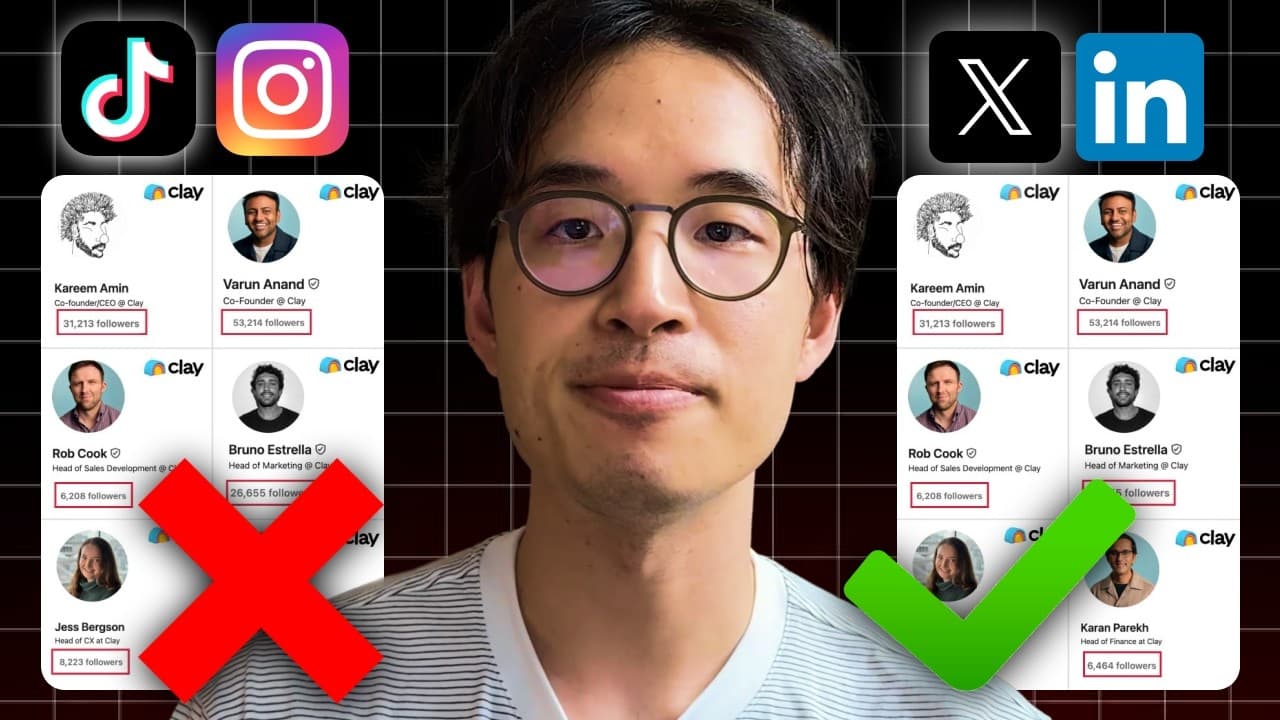
Nathan: Okay. And one thing I was going to ask is, in B2B social media, a lot of people think, okay, that just really means LinkedIn and X, or Twitter. Have you seen companies, large enterprises, with success on different platforms, Instagram, TikTok, Reddit, YouTube, these other social media platforms?
Jeffrey: It is much more LinkedIn and Twitter heavy. I think this is partially just by the nature of the industry. But you can definitely be successful on other channels.
I would say like if you're doing a lot of video content, for example, there's almost no harm, especially if you're using a tool like Ordinal, it's truly just one extra click. There's no harm to just cross-distribute that content to a TikTok, to a YouTube Shorts, you know, to every other channel as well.
I would actually argue a lot of the quote-unquote more consumer channels like Threads and TikTok and YouTube are sort of underutilized by B2B. So in some ways there's actually a big opportunity there. But, you know, naturally your buyer is going to live a little bit more actively on LinkedIn and Twitter. So those do tend to be the channels that people focus more on.
And I would say that's approximately right. Like unless you have a good reason or a thesis on why you should be posting on the other channels, make sure you're getting those two right first.
Nathan: That's good. Okay. So, unless you're being very intentional about it, start with those two. But if you do know your audience lives on Instagram and TikTok, you'd kind of be silly not to, I would imagine.
Jeffrey: Yeah, exactly. And this is a little in the nuances, but like it's important to think about what kind of content you're creating. Is it a little more funny and meme-like, or, you know, does it have kind of elements that would do well on other platforms? Even purely format-wise, right? Like is it a video?
Because if you're just posting a bunch of static images as carousels on TikTok or something, maybe it would do well, but like it's less likely to perform, right, than if you're being a bit more native to this platform. So, if you're already creating great video for LinkedIn, then I would say go for it. But if you're just like doing pure LinkedIn thought leadership and you're like, "Should I start a TikTok account?" I would say only if you have a reason to.
Do You Need to Build Authority Before Social Drives Pipeline?
Nathan: That's great. Okay. Now, here's a question I was wondering in terms of B2B and testing social media platforms. You went through the whole plan and then you said that last step, very important, is testing and tracking everything to make sure it's doing what you want it to do.
One of my questions is, when it comes to like the world of, let's say, content marketing, and you have a world like SEO and AEO, you almost need to build up the topical authority in whatever niche that you're doing before you can get to conversions.
Is it the same with social media? Do you need to have some that aren't necessarily tied directly to pipeline and you're just building that awareness before it goes to pipeline, or have you seen companies that they can, with social media, directly to their audience, start driving pipeline right away?
Jeffrey: Well, the great thing with socials is anything can get impressions and eyeballs, right? And so, in some ways, you know, it's not obviously a truly meritocratic space, right? As an arena, if I think about socials, it's not like a person with a hundred followers is getting as much reach as someone with ten thousand that's really built their authority and domain authority over the years.
But it's not as lopsided as I would say the SEO, AEO world is, right? Where like if I'm a new startup, I'm never going to outrank some large public company writing articles that has 20 years of SEO authority. That's not the case, right? A brand new founder, new to LinkedIn for the first time, could very well go viral and drive a ton of leads from one of their first posts, right?
And I think that is the beauty of social, right? It is more democratic in this way, or meritocratic, I guess. And so like, I would say if you have good insights, there's nothing that should stop you from posting. But obviously, the more you post, the more followers you build, the more domain authority you build, then the more likely it is that you get, you know, more eyeballs as well.
The last note, which is a little bit of a side note and not really the focus of this video, but I do want to call it out, is LinkedIn is amazing for AEO as well. So if you're a team that's thinking about AEO, you should also be doing more LinkedIn content, too.
What Should You Post About When You Don't Know Where to Start?
Nathan: Well, sounds like we got our next week's video mapped out, because that is a great topic that we got to dive into. But my last question for now is, let's say, you know, we have those concentric circles, you have executive advocacy, employee advocacy, and then the third-party partners, referrals, webinar hosts, those things. What if an enterprise is just like, I don't even know what to post about?
How can they start thinking about topics that they should be posting about? Is it just someone on the social media marketing team like brainstorming? Is there any research that they need to be doing? Does Ordinal help them learn over time what's working, what's not? How can they get started?
Jeffrey: Yeah. Well, the first thing is, I think people often have more to say than they think they do, right? And this may be more applicable to the exec advocacy use case when we're thinking about that, because I know it's a common concern. A lot of execs might feel like they're not that socially native, or they don't really have that many interesting thoughts that they want to put out on socials.
But I would say in reality, for most people, yeah, they have a lot of interesting stuff to say, whether it's about, you know, insights about your role in your job. You know, without realizing it, even if you just work in an industry for a few years, you probably have some pretty deep insights that your average LinkedIn user would never even imagine, right? And so, I think there's a lot of unique perspective that can get mined out.
There's a lot of tactical ways to do it that we've seen a lot of internal social teams do. You know, you could have weekly video recordings with execs, or, you know, you could start to have like a larger topic brainstorming session, see what people are comfortable with, and then dive a bit deeper into there.
But I actually think if you really sit down and take some time, think about what you can post about, what could work for your company, I'd be very surprised if you came up empty-handed. I think that this is a concern that usually comes up when you haven't tried. And it's a valid one. It's scary.
But it's easy to say I have nothing to post about, but very few of those people, I think, have ever actually sat down and really tried to lay out, "What could I post about if I were forced to post?" And once you start to do that, I think you'll find the list actually starts to grow.
Nathan: It would also be worrisome if you're an executive in some field, there's really nothing to say about your industry. You sit there, and you're like, "I've spent three days, and I got nothing." That would be worrisome.
I love that. It's a concern that comes up when you haven't really tried. That is wonderful advice.
I think we will close it off there. Jeffrey, thank you so much. You just laid out the entire B2B social marketing strategy. Really appreciate that.
Jeffrey: Yeah, hopefully somebody finds it helpful.
Chapters
- 0:00Intro: Why B2B Social Is No Longer Just Brand Awareness
- 0:23What This Video Covers: The Full Playbook
- 0:50Brand Awareness or Revenue? Classifying Social in 2026
- 1:34Why Companies Are Still Stuck in the Old Model
- 2:00Making the Switch From Brand KPIs to Revenue Metrics
- 2:19The Million-Dollar Question: Is Your Content Driving Deals?
- 2:56Attribution: Connecting Social to Pipeline With AI & MCP
- 3:41The B2C Virality Trap in B2B
- 4:18Why Executives Don't See Social as a Pipeline Generator
- 5:00There's Actually a Playbook (Most Teams Just Haven't Seen It)
- 5:17Learning From the Best: Clay, Zapier & "Clay Books"
- 5:40Ordinal Case Studies: Who's Running the Playbook
- 6:18The Playbook: Three Concentric Circles of Distribution
- 6:38Circle 1: Company Socials + Executive Advocacy
- 7:21The Managed Backend: Swim Lanes for Every Executive
- 8:23Circle 2: Building an Employee Advocacy Program
- 9:33Circle 3: Activating Investors, Advisors & Your Network
- 10:14Building an Internal Formula for Tier-One Announcements
- 11:15Tying It All Back to Pipeline
- 11:37Where to Start: Center First or All at Once?
- 12:20Does B2B Social Go Beyond LinkedIn & X?
- 12:46Cross-Distribution & the Underutilized Consumer Channels
- 13:27When to Actually Bother With Instagram & TikTok
- 14:01Do You Need to Build Authority First, Like SEO?
- 14:48Why Social Is More Democratic Than SEO
- 15:51Bonus: Why LinkedIn Is Amazing for AEO/GEO
- 16:11"I Don't Know What to Post About": Where to Start
- 16:30Mining Executive Insights & Topic Brainstorming
- 17:39The Real Reason You Think You Have Nothing to Say
- 18:25Outro
Key Takeaways
- Social can become one of your highest-impact growth channels in B2B if you run it as a go-to-market and revenue function. Treated as a brand channel, it keeps playing its traditional role.
- The playbook is three concentric circles of distribution: company socials and executive advocacy at the core, employee advocacy around that, and investors, advisors, webinar co-hosts, and event attendees at the edge.
- Give each executive a swim lane. Every executive is a new distribution point inside the LinkedIn network, and each one reaches a slightly different audience.
- Write down a formula for tier one announcements: who posts, how much of the employee base is activated, and what you ask of the people outside the company.
- If resources are tight, start with managed exec posting on LinkedIn and X, expand out from there, and do the work to tie it back to pipeline.
It's great that you're posting, it's nice to get some likes, and it's even nice to land a viral post here and there. The real million-dollar question, literally, is whether any of that posting drives deals, and a team that still runs social as a brand channel (usually) doesn't have a great answer.
They can tell me the number of impressions they drove or the number of comments, and they can't tell me how many deals came out of it. Here's my position: social can become one of your highest-impact growth channels in B2B if you run it as a go-to-market and revenue-generating function, and the best teams get there with a pretty consistent playbook.
Why Do B2B Teams Still Run Social as a Brand Channel?
Historically, social media has been tied much more to brand awareness, and that's changing really quickly in B2B. There's a lot of inertia behind the old model, though, from corporate structure to more traditional ways of thinking about the role of social. Plenty of execs aren't thinking about social day to day as a growth channel, so it's easier to lean on the muscle that's already developed and keep producing brand content.
The other reason is that they haven't seen great examples. I'd argue that truly great teams on B2B social are still few and far between, so a lot of companies have never watched the best teams run a playbook for turning social into pipeline. If you aren't familiar with how a Clay or a Zapier executes on social, it's easy to miss what you're missing out on.
What Does the Playbook Look Like?
Take this with a grain of salt and modify it for your own goals, but a successful B2B social strategy usually looks like three concentric circles, or motions. You don't need to be a GTM company like Clay to run it, because I think it generalizes to most B2B teams.
Circle One: Company Socials and Executive Advocacy
At the core are the company account and your executives. I group them together because they share a very similar operational back end and because they're your tier one profiles, with the highest impact and visibility. If you aren't doing this yet, it's P0: get every exec posting on LinkedIn (and on X if they're visible there), and keep the company account really active.
It usually runs as a managed motion: a centralized team writes the posts on behalf of the executives and works with each of them one-on-one, almost like an end-to-end managed service. On a smaller team, it could be the founder still doing the content themselves.
Each executive needs a swim lane. Work out the pull each one has, so your CTO, CEO, and COO post slightly different takes on the same core value prop and reach slightly different audiences.
"Every single executive is a new distribution point inside of the LinkedIn network to help saturate it with content."
Circle Two: Employee Advocacy
The second circle expands that same motion to the rest of the employee base. Employees might be less comfortable granting certain access to their profiles, so the job is to drip content out to them every week: options that ladder up to the same swim lanes the execs are amplifying, with room for each person's own spin and as little friction as possible.
A good percentage of the employee base should be activated, because every one of those employees compounds your social efforts and drives more deals.
Circle Three: People Outside the Company
At the far end of the range, you start activating people in your network who aren't directly in the company: investors, advisors, webinar co-hosts, and event attendees. All of them broaden your company's reach.
What Happens When You Have a Tier One Announcement?
The circles become really successful when you define an internal formula for how each one gets activated. Say you have a fundraise or a huge product announcement, which I'd call a tier one announcement. At the best companies, the second the team knows one is coming, whether that team is marketing or comms, it knows exactly what that means.
If you tell Clay there's a tier one announcement coming out, their marketing team knows exactly who's posting. The formula is different for every company, but it could be the founders, plus three VP levels, plus at least half of the employee base. It also covers engagement: how many comments the team is leaving, how many investors and advisors are being activated, and what the asks are for each of them.
"It's all written down and documented and formulated somewhere."
The last part is doing the analytics and the work to tie it back to pipeline. AI makes it so easy to coordinate all of that data that I don't think there's an excuse left for doing a poor job of attributing social to revenue.
Where Should You Start if Resources Are Tight?
It's a resources question. Moving faster is always better, and there's no reason the employee program can't start at the same time as the executive one if you've got a team that can manage it. Starting small is always easier, though, so if you're resource constrained or want more internal buy-in first, I'd start with the managed exec posting and expand out from there.
B2B social is much more LinkedIn and X heavy because that's where your buyer lives more actively, and I think that focus is approximately right. I'd argue the more consumer channels, such as Threads, TikTok, and YouTube, are underutilized by B2B, so there's a big opportunity if you're already creating great video. But if you're doing pure LinkedIn thought leadership, I'd only start a TikTok account with a reason or a thesis.
Do You Need to Build an Audience First?
Social is less lopsided than SEO. A new startup is never going to outrank a large public company with 20 years of SEO authority, but a founder who's brand new to LinkedIn could very well go viral and drive a ton of leads from one of their first posts. So if you have good insights, nothing should stop you from posting.
A common concern is that execs feel they aren't that socially native, or that they don't have many interesting thoughts to put out. In reality, anyone who has worked in an industry for a few years (usually) has some pretty deep insights that the average LinkedIn user would never imagine. Internal social teams mine those insights with weekly video recordings or a larger topic brainstorming session.
"I think that this is a concern that usually comes up when you haven't tried."
It's a valid concern, and it's scary. But very few of the people who say they have nothing to post about have sat down and tried to lay out what they'd post if they were forced to, and once you start, the list grows.
How We Run This Playbook at Ordinal
We facilitate both the executive advocacy and the employee advocacy motions in Ordinal. Clay and Zapier are Ordinal customers, and they run this playbook pretty much through the platform. We have case studies on our website covering how a lot of these companies run it.
For attribution, we have an MCP, so you can chat with that data and create the custom connections you need. Our guide to social media MCPs covers the basics.
Cross-distribution is the other piece: if you're already doing a lot of video, sending it to TikTok, YouTube Shorts, and every other channel is truly one extra click.
Final Thoughts
Before your next tier one announcement, write the formula down: which founders and execs post and in which swim lanes, how much of the employee base you'll activate, and what you'll ask of your investors and advisors. If that's more than your team can manage today, start with the managed exec posting and expand out from there. Then do the attribution work on that push, so the next time someone asks whether social is driving deals, you can answer with a number.
Frequently Asked Questions
Is B2B Social Media a Brand Awareness Channel or a Revenue Channel?
Historically it's been tied much more to brand awareness, and that's changing quickly. The best B2B teams I see run social content as a revenue-generating function that drives pipeline and deals, which makes it look a lot more like a go-to-market strategy.
How Do You Attribute Social Media Content to Pipeline?
The best teams have done the engineering work required to attribute their social content to real pipeline and deals. AI makes it far easier to coordinate that data, so I don't think there's an excuse for stopping at impressions and comments.
What Is an Executive Advocacy Program?
It's a managed motion for getting your executives posting consistently and systematically. On a larger team, a centralized group writes the posts on behalf of each exec and works with them one-on-one to get those posts out. I'd assign each executive a swim lane, so they post slightly different takes on the same core message and reach slightly different audiences.
How Many Employees Should Take Part in Employee Advocacy?
A good percentage of the employee base, at a 50-person company or one with several hundred people. Every employee who posts compounds your social efforts, so I'd give them options to post about every week and make it as low friction as possible.
Should B2B Companies Post on TikTok and YouTube?
Get LinkedIn and X right first, because that's where your buyer lives more actively. I do think the more consumer channels are underutilized by B2B, so if you're already creating great video, cross-distribute it. If you're doing pure LinkedIn thought leadership, I'd only start a TikTok account with a reason to.
What Should Executives Post About on LinkedIn?
People have more to say than they think they do. If you've worked in an industry for a few years, you (usually) have insights the average LinkedIn user would never imagine. I'd set up weekly video recordings or a topic brainstorming session, and I'd be very surprised if you came up empty-handed.