1,000 Hours of Studying the Best LinkedIn Posts in 20 Minutes

Full Transcript
I've spent the last year studying hundreds of LinkedIn posts driving over seven figures of pipeline for companies. Whether you're in B2B SaaS or you own accounting firms, as long as your customers live on LinkedIn, you can learn something from this video. And it's going to be stuff I've done myself, like book this many demos from a single LinkedIn post, or something I've pulled from a company we've analyzed and talked with for years.
In this video, I'll cover what's happening on LinkedIn, how the algorithm works, tools companies are using for posting, and the actual content frameworks and formats to drive the pipeline.
Success Examples
So, first things first, I want to talk about what's happening at a really high level. So, there's a lot of companies running this playbook, but probably the most famous is Clay.
I saw this viral tweet the other day and it essentially says, "Pay attention to what Clay's doing on LinkedIn because it's the most underrated go-to-market strategy I've seen. One person ran up their social and posted 961 times. They grew their company page to over 120,000 followers and every department head has essentially become a LinkedIn influencer."
I think this tweet is really good, but this LinkedIn post from Ordinal actually sums it up even better. As you can see, Clay has mapped every person to a specific function on LinkedIn. So, their founders, Varun and Kareem, create content for other founders. Bruno and Rob create content for marketing and revenue leaders. And [unclear] creates content for go-to-market engineers, ops, and growth.
Now, these are just a few examples, but as you can see, Clay is doing this at a large scale. They're running what we call employee and executive advocacy. All of these people are consistently posting really good content on LinkedIn that is acting as a flywheel into their business.
Clay is just one example that has done 6 million impressions in the last quarter. Zapier did 17 million in the first half of this year. And the concept is the same. If I scroll over here, you will see the same playbook. All of these people who work at Zapier are essentially marketing channels for their product.
And because of this, the last six months of last year, they attributed over a million dollars in pipeline from LinkedIn post, which is just insane.
And I wanted to throw in Profound because the interesting thing about Profound is they have a much smaller team, but they still have the impressions of a huge enterprise company that would be doing this at a large scale. Small example, their Series C announcement reached over 400,000 impressions, which is 50x the amount of followers that James had when he posted it.
Companies are turning their employees and executives into marketing channels to drive real revenue.
Tools Companies Are Using
Now, you might be wondering, how are people actually doing this? So, if I go back to that tweet about Clay, which inspired me to make this entire video, the number one reply is, "Secret weapon: Ordinal."
Now, these are graphics made from the Ordinal team. I actually work with Ordinal on growth. And Ordinal is essentially a platform that allows teams to do this at a really large scale. Now, I don't want this video to be like an Ordinal tutorial because I want to get into the mechanics and the types of posts that work, but at a really high level, this is what Ordinal is.
If I wanted to create a post for the founder of Ordinal, I could literally click in here, test post, and you'll see that I can actually create a post from the founder's account. So, if I wanted to do a post from Jeffrey's account: "Hey guys, this is Jeffrey. A test post about insert topic." Boom.
And after talking to many companies, what I'm learning is they have entire marketing or communication functions that are fully responsible for doing this posting across employees and executives. Most of these companies are using Ordinal just because of how easy and intuitive it is to do the posting.
So, as you can see, I just made a post for Jeffrey. And the really interesting thing about this is yes, I can schedule this across all my employees, all my executives, but I can also add approvals. So if I want to add Francisco or Jeffrey onto an approval of a post, they will get a notification within their Ordinal. So we don't have to send Slack messages for approvals.
I can also add engagement from my internal team. And the reason Ordinal has this is because, think you're Jeff Bezos. You are far too busy to like and comment on another executive's LinkedIn post. So, Ordinal actually has this built in. So, your internal team can engage with your post. Your internal team can leave comments x amount of minutes after your post goes live.
Now, I don't know if I mentioned this, but on Ordinal, you can cross post to every single platform. So, if your customers are on Twitter, Instagram, Facebook, you can do all of this through Ordinal, which is pretty amazing.
The New LinkedIn Algorithm
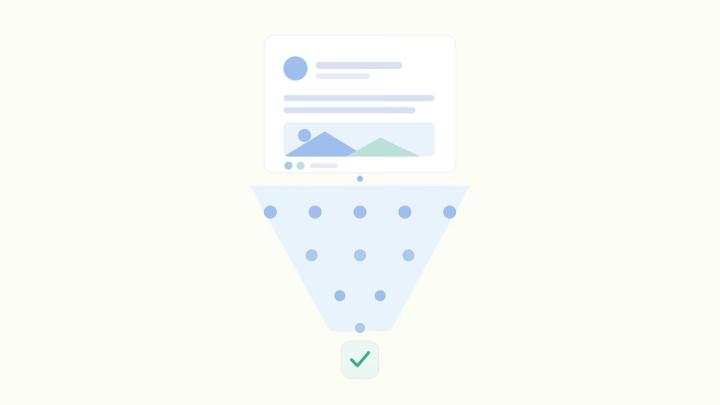
And this all ties back into my next point, which is about the LinkedIn algorithm. So the LinkedIn algorithm is pretty similar to TikTok in the sense that your post gets pushed to a small initial group of users. Then those users will either like, comment, share your content, and if they do at a very high rate, LinkedIn will then give your post a rating and push it to even more people depending on how that small group of people interacted with it first.
And that's why this engagement mechanism on Ordinal is so important, because it basically automatically guarantees engagement from your internal team when you're creating these posts.
Now, traditionally what I learned is a lot of companies would send these posts into Slack channels. Like they'll have a Slack channel called Marketing Boost. And what's really cool is Ordinal has that as well, where you can share to a Slack channel directly after posting if you wanted to do that as well.
Now, a really funny meme that sums this up is right here. This in the middle is what teams were doing before Ordinal. And on the right and left is how teams are running their B2B content now. So a lot of these companies, Clay, Zapier, Profound, many others, are all using Ordinal to run their content playbook.
Social System Structure
Now, I don't want to talk about the tool the entire time because you can give everybody a shovel, but they're not necessarily going to find diamonds, and diamonds being pipeline or revenue. So, I want to talk a little bit about the mechanics, what type of post, how teams are structuring their posts, and I want to emphasize that there's no one-size-fits-all.
So, although I'm going to go over best practices, and I'm actually going to talk about how we've been able to book 40 plus demos a week through LinkedIn, this is going to vary company to company, specifically your formats, what type of posts hit. But at a really high level, these are the five steps.
Step number one is context artifacts. So this would be, who is your ICP? Who on LinkedIn is consuming your content and is eventually going to book a demo or become a customer? You need to write that down and have that information in an MD file, in a Google Doc, in a Notion page.
As long as you have that saved so whoever is writing your LinkedIn post, whether it be yourself to give yourself a reminder or you have a dedicated team, that is what a context artifact is. It's context around who your customer is and what problems you're trying to solve.
Number two is content creation. Now, we have number one, hook ideation. I can't emphasize this enough. Now, if I open up Ordinal and I open up this post, for example, there's even a feed preview button that will show the hook.
LinkedIn specifically, the hook is three lines. Everything below the hook, somebody has to hit show more. So, this first two lines are the most important lines of your post.
But the hook is, "Being a founder in 2026 is like being Asian. Hear me out." Crazy hook. If I read this and I saw this media, I would be like, I need to learn more about this.
A post that I can actually show that I did, for example, this post has over 200,000 impressions. The hook is, "Bro had us in the first half, not going to lie. Alexandr Wang's message to his 18-year-old self at Y Combinator." That hook, "Bro had us in the first half, not going to lie," it entices some type of curiosity with the viewer.
Now, the hook is going to be the most important part of this process. And honestly, number two, in general, people are using the shovel to dig for diamonds. Digging in this sense is actually posting. So content creation is going to be, in my opinion, the most important part. This is going to be actually creating your content, creating assets, coming up with ideas.
Then we have posting procedure. Depending on your company, you're going to have a different process for this. Whether you're the one actually writing the post, this is going to be a lot simpler because it's just you scheduling your own post. But if you have somebody creating posts for you, you can set up approval workflows within Ordinal. So you can actually check those post off for yourself or for team members.
Then we have conversion assets. What is the goal of your post? Are you trying to book more demos? Are you trying to get more people onto your newsletter? Are you hosting a webinar and trying to convert those attendees into users of your platform?
And then we have measurement, which is how are you actually measuring that conversion? This is what I've seen companies at a really high level having in place to some degree.
This is like hitting a viral post. It is hitting a buzzer beater. But if you are the founder or the CMO, you are not the one taking the shot. You're actually the one sitting over here building this system so people can repeatedly take shots. You are incentivizing your team to post or incentivizing the team that is in charge of posting to post more effectively.
But if you have a startup, you might be doing both right now. You might be taking the shot and simultaneously setting up the system so you have a content flywheel going when you have more resources to do so.
LinkedIn Profile Optimization
Okay, now that the overall system is covered, I want to get into the tiny mechanics of the actual post, the actual profile. So, first things first, make sure your profile is optimized, whichever profile you are doing the posting on.
If I go back to Clay and Zapier, you'll notice that all their profiles have a clear message. Head of Go-to-Market Engineering at Clay, Head of Finance at Clay, Head of CX at Clay.
Now Jeffrey, he is the founder of Ordinal. So he's going to have, "Founder at Ordinal, social media tool for modern teams." And his header says, "Build a content engine that drives revenue." And when he posts, he actually has "Visit my website." So people see a post and it solves their problem or they really resonate with it, they can easily click the CTA to his website, which will in turn hopefully drive pipeline for his company.
Types of LinkedIn Posts Overview
Now, actual post. So I already talked about hooks, how they're most important, and I guess above the hooks, define your goal. So what is your goal? Is it top of funnel content, middle of funnel content, or bottom of funnel content?
Now what I find is a lot of these can actually overlap. It's not like a one-size-fits-all, like this is top of funnel, this is middle of funnel, this is bottom funnel. But categorizing your content like this will just help you from an organization standpoint. And you might post something that you intend to be middle of funnel, but then it converts a bunch of people. So it's actually bottom of funnel content.
But I think this is a great way of thinking about your content. You have your top of funnel, which is building awareness about you or the problem. Two is middle of funnel, and it's teaching people how to choose a solution. And then we have bottom of funnel, which is explaining why your product or service is the best solution to that problem.
Top of Funnel LinkedIn Posts
So some examples of top of funnel content really quickly are this. This is Jeffrey's story to when he was a kid to Forbes 30 Under 30. I actually ran the same format on my page before running it on Jeffrey's. And how I found this format was literally another LinkedIn account.
You know, good artists copy, great artists steal. You don't want to steal other people's content on LinkedIn, but there's a lot of these trending formats that everybody will run from time to time.
This format is great if you're just trying to raise awareness about who you are. Having a cheesy picture of you from 10 years ago and then a picture of you today and kind of your journey and what you're working on, which is probably your company, is a great top of funnel piece of content as an example.
Another top of funnel pieces of content that I want to talk about is news. So you might be like, why would I post news? And that might sound a little confusing, but it's news that's tangential to your industry.
If you're an accounting firm and something really big happens in the accounting space and it impacts your clients, but it's not necessarily a post about your specific product or service, you providing your point of view on that trending topic will just get you in front of your ICP on LinkedIn.
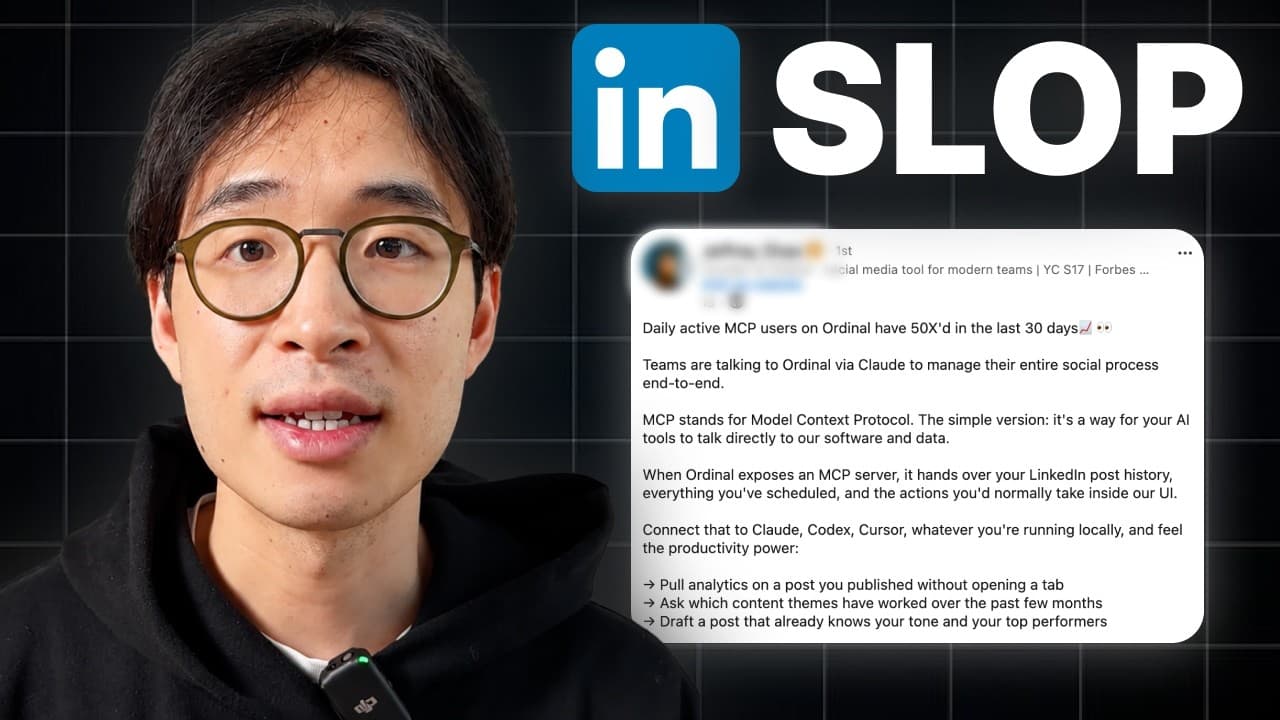
For example, when LinkedIn added the AI slop button, we did a post giving our two cents on what this means for the platform, because a lot of Ordinal customers like Clay, Zapier are using LinkedIn primarily within the social media scheduling tool. So news can be a great top of funnel piece of content for your page.
Another news example I have at here is from Forbes, can C-suite content creators are becoming the new influencers. I feel like this entire video has been about that concept. So when Forbes releases an article about it, of course we're going to screenshot it, post it, and give our two cents.
A lot of people do this with tweets as well, specifically tweets that are a bit more controversial. They'll screenshot them, post them on LinkedIn, and then give their two cents. I think these are all examples of posts you can actually implement this week if you were to walk away from this video. So those are some examples of top of funnel posts.
Middle of Funnel LinkedIn Posts
So, moving to middle of funnel, you'll actually see this tweet method I just spoke about from the founder of Morning Brew, and he's actually saying, "Hot take: companies should turn their employees into influencers. Employees become more marketable in their careers, and it builds distribution for your company, which helps with sales, hiring, and partnerships."
Now, this is a really respected thought leader giving his two cents on something Ordinal actually does. So this is a very obvious screenshot post, right, about how this applies to our business and whether we agree or disagree.
Some other formats in here are memes, listicles. I love stuff like this. And you can take a lot of the concepts I'm talking about and apply it to your own business. So for Ordinal, a lot of our customers are B2B SaaS companies. So we did the six B2B SaaS companies doing marketing really well right now. Now, a lot of these companies use Ordinal in their marketing, which is why they are on this list.
Now, if I want to go really extreme, random example, if I was a potato distributor, I could do the six best French fries in America, and I could put three of them as my customers, maybe McDonald's, Arby's, Raising Cane's, and then I could put three that are not my customers.
Then let's say somebody's intrigued by this post and they click on my website and it says, "Hey, I'm a potato distributor and I actually distribute potatoes to all of these restaurants." That is an example of taking this format and applying it to your own business.
And I would encourage you to have that lens when you look at content. Again, not in the sense of let me copy this, but how can I take this and flip it for my industry?
Now, here's another example which I've seen run to the ground, if I'm being honest, and it's our 14 favorite AI tools. And you know, we were slick and we put Ordinal in the mix because one, a lot of people use Ordinal, including some of the people on this list, and two, we're doing a little bit of marketing to drive some pipeline.
Now, I just realized this is a fake job listing, but we actually posted something like this, but it was a real job listing from Profound, social distribution manager. Profound was actually hiring a social distribution manager, which is crazy.
That's kind of what I was talking about at the beginning of this video, how I'm seeing companies build entire functions dedicated to what I'm talking about in this video. And this is a great middle of funnel post because we're showing people, hey, this is a real thing that's happening.
Bottom of Funnel LinkedIn Posts
Now, moving to bottom of funnel, which I know most people are interested in. This is a message Jeffrey sent after we found our winning format on LinkedIn. This number says 20, but we actually booked over 40 demos from a single post.
And the cool thing is we've actually run that format back multiple times. And every time we run it back, this is what the calendar ends up looking like. So this bottom of funnel format worked really well for us.
And some of these middle of funnel post have actually booked just as many demos. But I wanted to use this as an example because it's something that we've been rinsing and repeating and speaks directly to our ICP.
And being honest, this didn't happen overnight. I want to say we spent one to two months testing and testing and testing. And then when we posted it again and it hit, we knew that, hey, we have a format.
And I think the key to finding this format, which is like many other LinkedIn post, is observing what's doing well on the platform and switching it to our industry and our ICP, which is something I've said quite a few times.
LinkedIn Webinar Funnel
If we go back here to conversion, our conversion for these posts were demos, this calendar. But another post, for example, which is actually from my account, which I'm actually going to pull up.
This post, for example, got over 220,000 impressions. It was a bottom of funnel post all leading to our webinar. So, you'll see over 3,000 people saw this link. And if we go into Ordinal, we can actually track how many people clicked this link.
If I do, so this is the same link. You'll see out of the 3,000 people, over 110 clicked on this link, which is actually a funnel to a webinar that we're hosting.
Now, in this webinar, we're actually sitting down with the social system leads at Clay and Zapier because they do this better than anyone else. I'm not sure when this video is going up, but I'll leave the link to our next webinar in the description. And Clay and Zapier are basically doing what I'm doing in this video, but probably at a much higher level.
And the cool thing about the webinar, one, it's a great way to bring B2B marketers together and educate our ICP. And two, it's a lead magnet for us because everybody attending this webinar is probably going to want to use Ordinal because it's how Clay and Zapier are running their social systems.
So, the conversion mechanism for this post isn't really book demos, but it's can we get more people to attend our webinar.
Ordinal MCP: AI, Claude, ChatGPT
Now, this video is getting really long, but hopefully you learned something that you can take away and apply to your business.
If I were to add anything, I did want to mention the Ordinal MCP really quickly. You might have noticed how I had Claude in the mix here. Well, that's because Ordinal has an MCP which you can connect to Perplexity, Claude, ChatGPT.
So, I can actually go on Claude and say, "Hey, I'm making a post about this. Now, could you take a look at my last 50 posts and write me a draft based on my voice?" Boom. Claude can write it in my voice so it doesn't sound like AI slop. The Ordinal MCP is something that's super cool and great to look into.
There's a lot of information online about infographics and carousels on LinkedIn. Photos help. I think adding media to your LinkedIn post, which you probably noticed, helps increase the performance when the media is relevant.
Review With Team
And then obviously reviewing. You know, when you go and do these at-bats every week, it's very important that you sit down with your team and actually review what is working and what is not working.
I hope this video was helpful. I'll leave some links in the description of some resources. Subscribe if you got something out of this and connect with me on LinkedIn.
Chapters
- 0:00Intro
- 0:40Success Examples
- 2:55Tools Companies are Using
- 5:07The New LinkedIn Algorithim
- 6:25Social System Structure
- 10:15LinkedIn Profile Optimization
- 11:10Types of LinkedIn Posts Overview
- 11:55Top of Funnel LinkedIn Posts
- 14:05Middle of Funnel LinkedIn Posts
- 16:30Bottom of Funnel LinkedIn Posts
- 18:00LinkedIn Webinar Funnel
- 19:00Ordinal x LinkedIn MCP (AI, Claude, ChatGPT)
- 19:40Review with Team
Key Takeaways
- A viral post is a buzzer beater. If you're the founder or the CMO, your job is to build the system that lets your team take shots repeatedly.
- The teams doing this best map each person to a specific audience on LinkedIn, so founders write for other founders and department heads write for their own function.
- LinkedIn pushes a post to a small initial group first, and how that group engages decides how far the post travels. That's why early engagement from your own team matters.
- Decide whether a post is top, middle, or bottom of funnel before you write the hook, and name the conversion you want from it: demos, newsletter signups, or webinar attendees.
- Our winning demo format took one to two months of testing to find, and it came from taking a format already doing well on the platform and switching it to our industry and ICP.
You can give everybody a shovel, and they're still not necessarily going to find diamonds. I've spent the last year studying hundreds of LinkedIn posts that drive pipeline for companies, and the posting tool is the shovel. Finding pipeline and revenue depends on what type of post you publish and how your team structures the work.
A viral post is like hitting a buzzer beater. Here's my position: if you're the founder or the CMO, your job is to build the system that lets your team take that shot repeatedly, because the posts that book demos come from formats you can test and run back.
What Are the Best B2B Teams Doing on LinkedIn?
A lot of companies are running this playbook, and the most famous is probably Clay. Clay has mapped every person to a specific function on LinkedIn: the founders create content for other founders, and other leaders create content for marketing and revenue leaders or for go-to-market engineers, ops, and growth. One person runs their social, and the company page has grown to over 120,000 followers, a story we cover in our guide to LinkedIn for demand generation.
This is what we call employee and executive advocacy: people consistently posting really good content that acts as a flywheel into the business. Zapier runs the same playbook, and I've seen a much smaller team earn the impressions of a huge enterprise company. The companies I talk to have entire marketing or communications functions fully responsible for posting across employees and executives.
"Companies are turning their employees and executives into marketing channels to drive real revenue."
How Does the LinkedIn Algorithm Decide Who Sees a Post?
The LinkedIn algorithm is pretty similar to TikTok's, in the sense that your post gets pushed to a small initial group of users first. Those users like, comment on, or share it, and if they do so at a very high rate, LinkedIn gives the post a rating and pushes it to even more people.
That's why engagement from your internal team is so important. Traditionally, a lot of companies sent each post into a Slack channel with a name like Marketing Boost. The trouble is the executives: if you're Jeff Bezos, you're far too busy to like and comment on another executive's LinkedIn post.
What Does a LinkedIn Content System Look Like?
The formats and the types of posts that hit vary from company to company, so there's no one-size-fits-all answer. At a high level, though, the companies I've studied have five steps in place to some degree:
- Context artifacts. Write down who your ICP is, who on LinkedIn will eventually book a demo or become a customer, and what problems you're trying to solve. Save it in an MD file, a Google Doc, or a Notion page for whoever writes your posts.
- Content creation. Hook ideation, creating assets, and coming up with ideas. In my opinion this is the most important part.
- Posting procedure. This is simple if you write and schedule your own posts. If somebody creates posts for you, add an approval step.
- Conversion assets. The goal of the post: booking more demos, getting more people onto your newsletter, or converting webinar attendees into users.
- Measurement. How you're measuring that conversion.
Within content creation, I can't emphasize hook ideation enough. Everything below the hook sits behind "show more," so the first two lines are the most important lines of your post. One of my own hooks opened with "Bro had us in the first half," which entices some curiosity in the reader, and we've written more about LinkedIn hooks if you want examples.
A founder or CMO sits above those five steps. Your part is to incentivize the team to post, though at a startup you might be taking the shot and setting up the system at the same time.
"If you are the founder or the CMO, you are not the one taking the shot. You're actually the one sitting over here building this system so people can repeatedly take shots."
Which Posts Belong at Each Stage of the Funnel?
Before the hook, define your goal. Top of funnel content builds awareness about you or the problem, middle of funnel content teaches people how to choose a solution, and bottom of funnel content explains why your product or service is the best solution. These overlap (a post you intended for the middle can end up converting a bunch of people), but categorizing content this way keeps you organized.
Top of Funnel: Your Story and Your Take on the News
A format I like is the then-and-now story: a cheesy picture of you from 10 years ago, a picture of you today, and what you're working on. I ran it on my own page before running it on our founder's. News works too when it's tangential to your industry: if you're an accounting firm and something really big happens in the accounting space, giving your point of view gets you in front of your ICP.
Middle of Funnel: Listicles Flipped for Your Industry
I love listicles. We published a list of six B2B SaaS companies doing marketing really well right now, and a lot of them made the list because they're our customers. To go really extreme, if I were a potato distributor, I could post the six best French fries in America, with three restaurants that are my customers and three that aren't. Anyone who clicked through to my website would learn that I distribute potatoes to those restaurants.
How Do You Find a Format That Books Demos?
Bottom of funnel is the stage I know people are most interested in. We found a winning format there, we've run it back multiple times, and it keeps booking demos because it speaks directly to our ICP. It didn't happen overnight.
"I want to say we spent one to two months testing and testing and testing. And then when we posted it again and it hit, we knew that, hey, we have a format."
The key to finding it was the same as for many other LinkedIn posts: observe what's doing well on the platform and switch it to your industry and your ICP. You don't want to steal other people's content, but there are trending formats that everybody runs from time to time, so ask how you can take one and flip it for your industry.
Demos aren't the only conversion worth building a post around. One bottom of funnel post from my own account led entirely to a webinar we were hosting, which is a great way to educate our ICP and doubles as a lead magnet. Some of our middle of funnel posts have booked just as many demos as the bottom of funnel ones.
How We Run This at Ordinal
I work with Ordinal on growth, and it's where we run all of this. I can create a post from our founder's account, schedule posts across employees and executives, and add an approver who gets a notification inside Ordinal, so we don't have to send Slack messages for approvals.
Engagement is built in, which takes care of the busy-executive problem: your internal team can engage with a post and leave comments a set number of minutes after it goes live. We can also track how many people clicked a link in a post, which is how we followed the webinar funnel.
Ordinal also has an MCP that connects to Claude, ChatGPT, and Perplexity. I can tell Claude what I'm making a post about and ask it to look at my last 50 posts and write a draft based on my voice, so the draft doesn't sound like AI slop.
Final Thoughts
Write your context artifact first, then pick one format that's doing well on LinkedIn right now and flip it for your industry and your ICP. Decide what the post should convert to before you write the hook, and sit down with your team every week to review what's working and what isn't. When a post hits, post that format again, because the second hit is how you know you have a format.
Frequently Asked Questions
How Does the LinkedIn Algorithm Work?
It's pretty similar to TikTok's. Your post gets pushed to a small initial group of users, and if they like, comment, and share at a very high rate, LinkedIn pushes it to even more people. That's why I make sure a post gets engagement from the internal team early.
What Is a Context Artifact for LinkedIn Content?
It's context around who your customer is and what problems you're trying to solve. I'd write down who your ICP is and who on LinkedIn will eventually book a demo or become a customer, then save it in an MD file, a Google Doc, or a Notion page. Whoever writes your posts, including you, works from that.
What Is the Difference Between Top, Middle, and Bottom of Funnel LinkedIn Posts?
Top of funnel content builds awareness about you or the problem, middle of funnel content teaches people how to choose a solution, and bottom of funnel content explains why your product or service is the best solution. In my experience these overlap, and a post I intended for the middle of the funnel can end up converting. I still categorize content this way because it keeps the program organized.
How Long Does It Take to Find a LinkedIn Post Format That Books Demos?
For us it took one to two months of testing. We knew we had a format when we posted it a second time and it hit again, and we've run it back multiple times since. I found it by observing what was doing well on the platform and switching it to our industry and our ICP.
Should a Founder or CMO Write Every LinkedIn Post?
I think of a founder or CMO as the person building the system so that other people can repeatedly take shots. That means incentivizing the team to post, or helping the team in charge of posting do it more effectively. If you have a startup, you might be doing both right now: taking the shot and setting up the system, so a content flywheel is going when you have more resources.