


Social selling lives or dies on two things: whether the right people see your content, and whether you can prove it turned into pipeline. The tools below split along that line. Some are built to schedule and amplify content on LinkedIn. Some are built to find leads and run outbound. A few try to do both.
Here's how nine of them stack up for B2B teams heading into 2026, based only on what each vendor publishes and what verified reviews say.
1. Ordinal
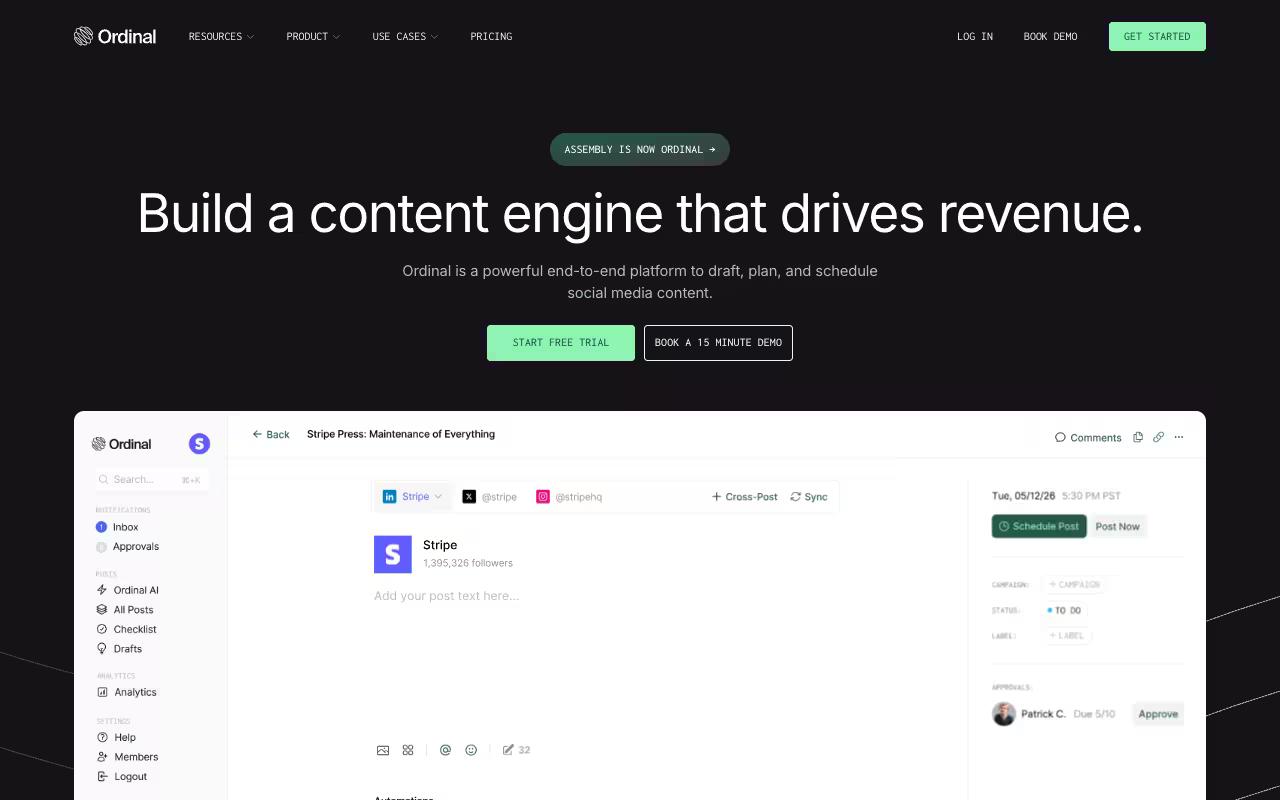
Ordinal is an end-to-end platform for drafting, planning, and scheduling social content across LinkedIn, Twitter/X, Instagram, Facebook, Threads, TikTok, and more, and it's used by over 1,000 marketing teams according to Ordinal's own site. For social selling specifically, the standout is its auto-engagement suite. It can automatically leave likes, comments, or reposts from any connected LinkedIn account, which most schedulers don't productize at all. The LinkedIn feature set runs deep too, with personal and company tagging, PDF carousel support, and a realistic preview that shows exactly where your hook cuts off before "see more."
It's aimed squarely at content agencies, founders and execs, and growth teams who take LinkedIn seriously. If you run 20 to 40 client accounts and spend hours each week pinging people for approvals or logging into client profiles to post a personal tag, the approval workflows and multi-account management are the reason to look here. The open architecture matters for the ROI conversation as well, since API, MCP, and webhook access let you push engagement data into your CRM instead of leaving it stranded inside the tool.
Pricing: Starter is $95/mo ($85/mo billed annually), Pro is $265/mo ($235/mo billed annually), and Enterprise is custom, according to Ordinal's pricing page. Auto-engagement and API/MCP/Webhooks sit on the Pro tier.
Verdict: The strongest pick for agencies and founder-led teams that want content, auto-engagement, and CRM-ready data in one place, provided you're comfortable setting your own engagement-automation policy.
2. Crono
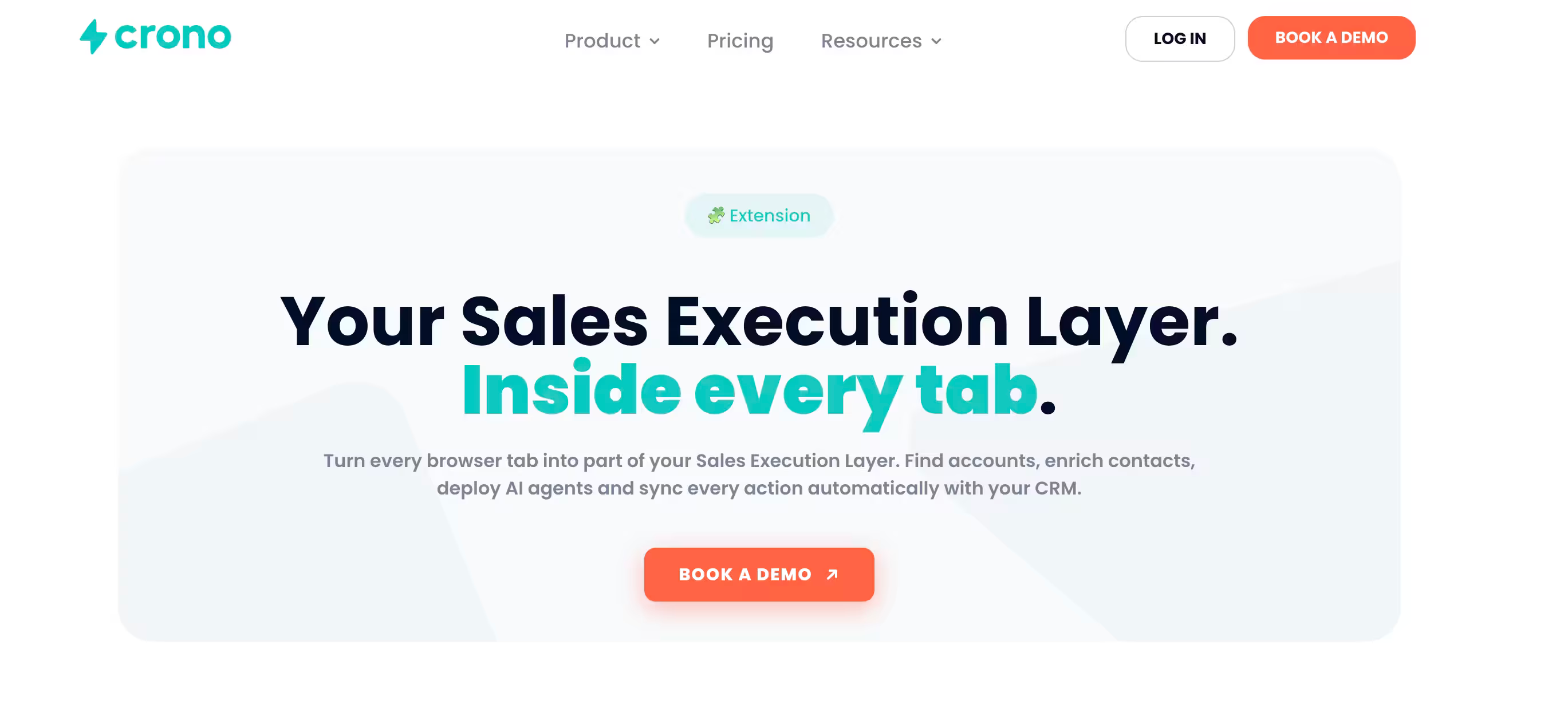
Crono calls itself a "Sales Execution Layer" for B2B revenue teams and their AI agents, pulling CRM data, buying signals, workflows, and outreach into one feed. It's built for RevOps, SDRs, AEs, and sales leaders who want lead finding, real-time lead and account scoring, and a hub of AI agents for prospecting and follow-up. It integrates natively with HubSpot, Salesforce, Pipedrive, and 50+ tools, and exposes a Public API and MCP server so agents can act on workflows directly.
Pricing: Pro is €79/user/month billed annually (min. 2 users), Ultra is €119/user/month billed annually (min. 5 users), and Enterprise is custom, per Crono's pricing page. Prices are shown in EUR on the site.
Independent reviews weren't available from verified sources at the time of research, though Crono carries a G2 4.7/5 from 115 reviews and a Capterra 5/5.
On Capterra, Crono holds 5/5 (based on three reviews). Reviewers commonly praise easy-to-use all-in-one sales automation and lead generation with strong linkedin and crm integrations and note lack of certain integrations such as outlook and limited list management and export capabilities. See the Capterra reviews page.
On G2, Crono holds 4.7/5 across 115 reviews. Reviewers commonly praise ease of use, intuitive interface, and responsive customer support and note limited integrations and need for more advanced features as the product matures. See the G2 reviews and pros and cons pages.
Verdict: A fit for outbound-heavy sales teams that want signals, enrichment, and AI agents in one execution layer rather than a LinkedIn content tool.
3. Taplio
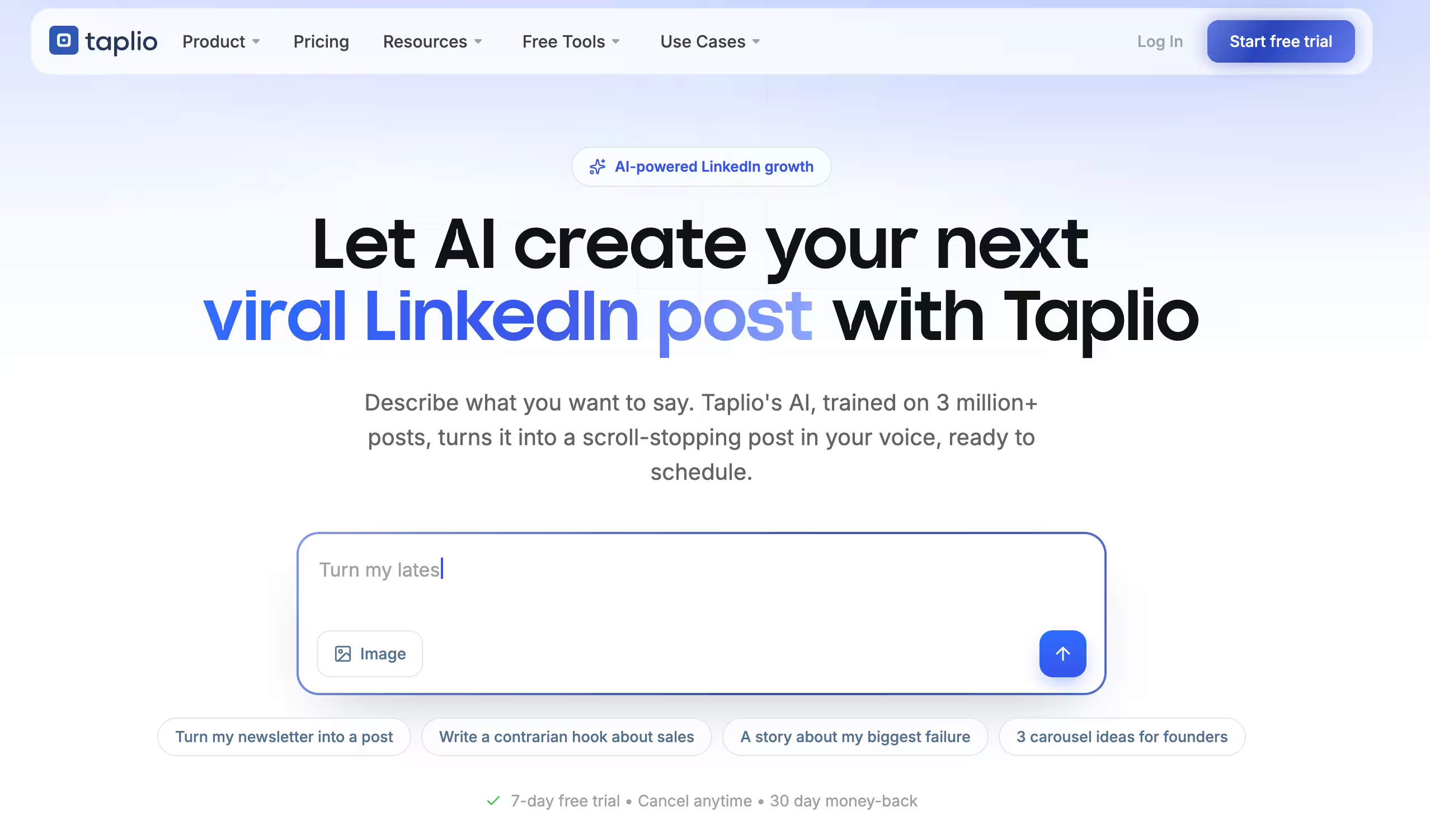
Taplio is an AI tool built around a LinkedIn "growth loop": surface post ideas, draft them in your voice, schedule at the best times, and turn engagement into warm leads. It's pitched at creators, founders, and GTM leaders who want to build a presence in roughly 10 minutes a day, including people who aren't already good at LinkedIn. The Connect step finds warm leads by title and engagement and auto-sends connection requests with follow-up DMs, which is the social-selling core.
Pricing: Starter is $39/mo, Growth is $69/mo, and Pro is $199/mo on monthly billing, with roughly 25% off on annual, according to Taplio's pricing page. There's a 7-day free trial.
On Reddit, one user said it "makes finding inspiration for my content and people to engage with a lot easier." The picture on Trustpilot is much rougher. Taplio sits at TrustPilot 2.3/5 across 14 reviews, and those reviews skew heavily negative around billing and cancellation, with one reviewer describing charges of over 60€/month after a trial ended as "quite sneaky" and others reporting difficulty cancelling. It also holds a G2 3.9/5 from 7 reviews and a Capterra 3/5. Read the billing complaints before you enter a card.
On Capterra, Taplio holds 4/5. Reviewers commonly praise useful linkedin posting and branding support for individual professionals and note mixed satisfaction with features and overall value given the subscription price. See the Capterra reviews page.
On G2, Taplio holds 3.9/5 across 7 reviews. Reviewers commonly praise linkedin-focused ai content creation and scheduling with helpful analytics and viral post inspiration and note limited depth on lower-tier plans and concerns about automation reliability and value for money. See the G2 reviews and pros and cons pages.
Verdict: Good LinkedIn content and outreach features for solo creators, but the Trustpilot billing complaints mean you should watch your renewal terms closely.
4. Apollo.io
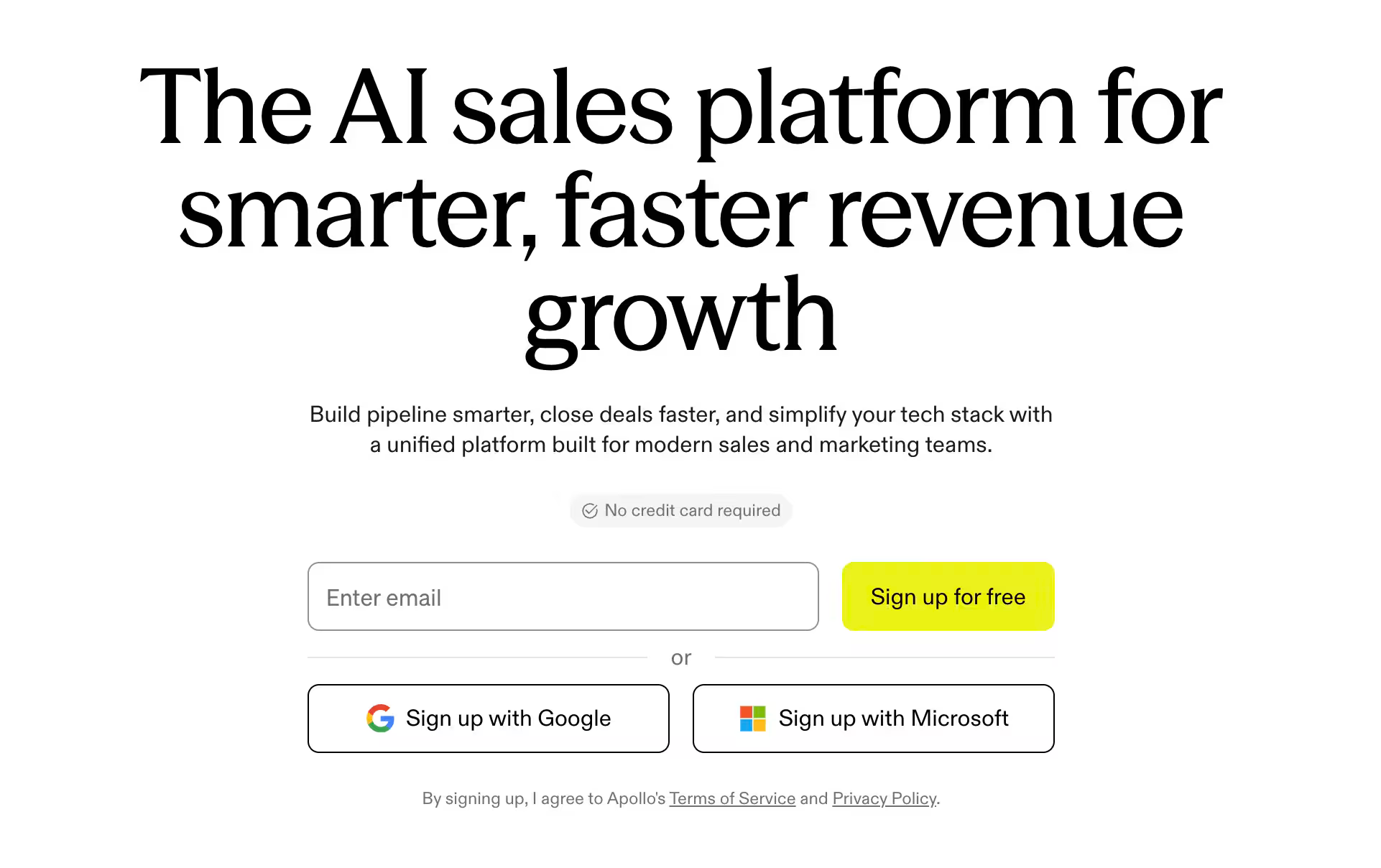
Apollo.io is an AI sales platform that bundles a large B2B data network with outreach, engagement, and deal execution, claiming 240M+ contacts and 30M+ companies and use by over 600,000 companies per its own site. It positions itself as a replacement for your data provider, outreach platform, dialer, enrichment, and CRM. This is a prospecting and outbound engine rather than a LinkedIn content tool, aimed at sales and marketing teams building pipeline.
Pricing: Free is $0, Basic is $49/user/month (annual), Professional is $79/user/month (annual), and Organization is $119/user/month (annual, min. 3 users), according to Apollo's pricing page. Annual billing saves roughly 17 to 20% over monthly.
Reviews are mixed on the data. In an r/LeadGeneration thread, the OP argued Apollo's "data is very average quality" and its cold outreach tech is "very bad," while a top reply countered that "Apollo is one of the first to offer a true all-in-one solution for sourcing, enriching, and multi-channel outreach."
On LinkedIn, one poster praised it as "strong for email-first outreach. Huge database, easy filtering, good enrichment," and a commenter said it's "better than sales navigator premium." Apollo holds a G2 4.7/5 from 9,678 reviews.
On G2, Apollo.io holds 4.7/5 across 9,678 reviews. Reviewers commonly praise all-in-one sales intelligence and outreach workflows and note contact data accuracy and occasional support responsiveness. See the G2 reviews and pros and cons pages.
Verdict: The default all-in-one for email-first outbound at scale, less so if LinkedIn content and engagement are your priority.
5. PostBeyond
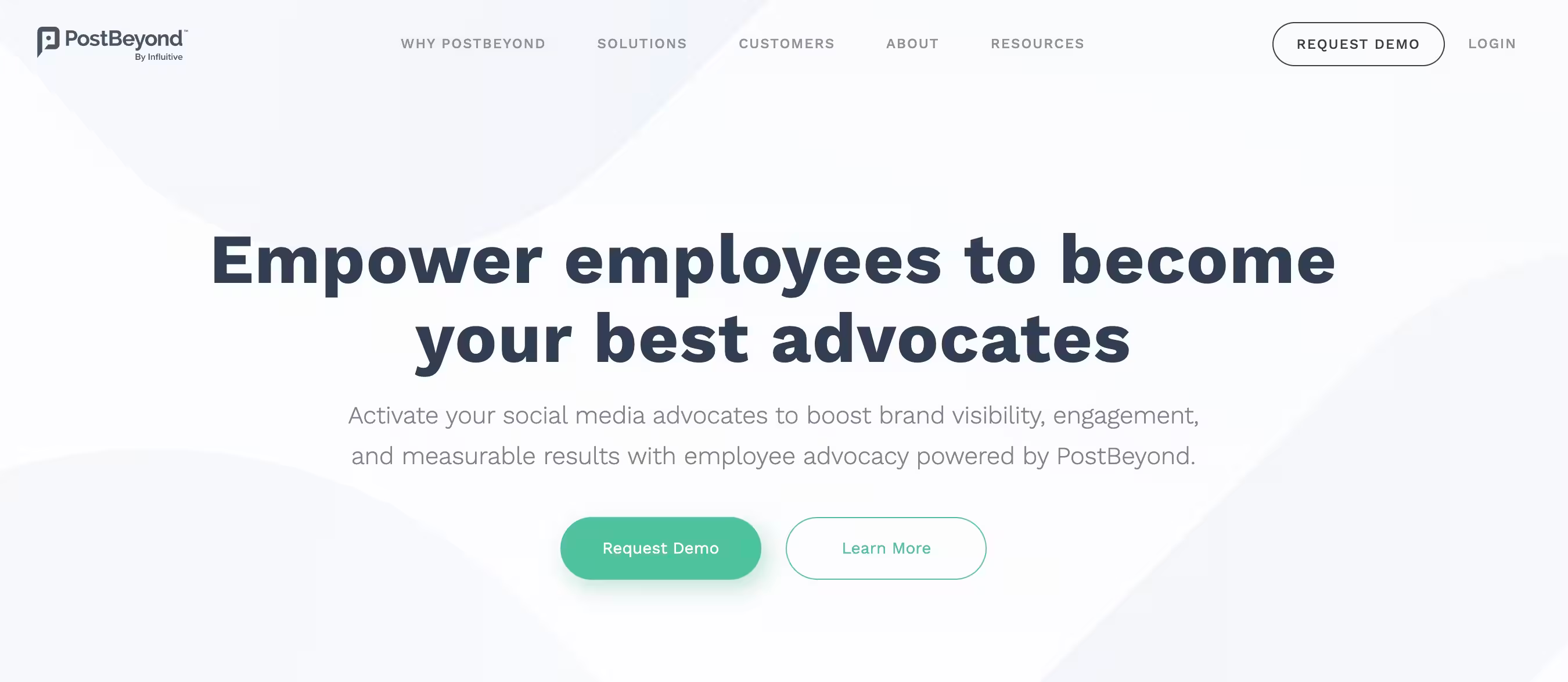
PostBeyond is an employee advocacy platform that turns employees into social sharers, giving them a centralized library of pre-approved content plus suggested copy and sharing guardrails. It's built for marketing, sales, HR, and channel partner teams that want to extend brand reach through employees' personal networks without extra ad spend.
Real-time reporting and attribution show which employees and content drive results, which matters for anyone justifying the program internally.
Pricing: There's a free 30-day trial for up to 30 employees, Growth is $1,125/month for 100 enrolled employees (minimum), and Enterprise is custom for 250+ employees, per PostBeyond's pricing page.
Independent reviews weren't available from verified sources at the time of research, though PostBeyond carries a G2 4.6/5 from 401 reviews and a Capterra 4.8/5.
On Capterra, PostBeyond holds 4.8/5. Reviewers commonly praise intuitive interface and simple content sharing workflow that makes it easy for employees to promote the brand and note occasional feature gaps and desire for more advanced analytics and integration options. See the Capterra reviews page.
On G2, PostBeyond holds 4.6/5 across 401 reviews. Reviewers commonly praise ease of use and streamlined social sharing that drives strong employee advocacy and engagement and note limited customization and reporting depth compared to some alternatives. See the G2 reviews and pros and cons pages.
Verdict: Worth it for mid-to-large organizations running a structured employee advocacy program, but the $1,125/month floor rules it out for small teams.
6. Sprinklr
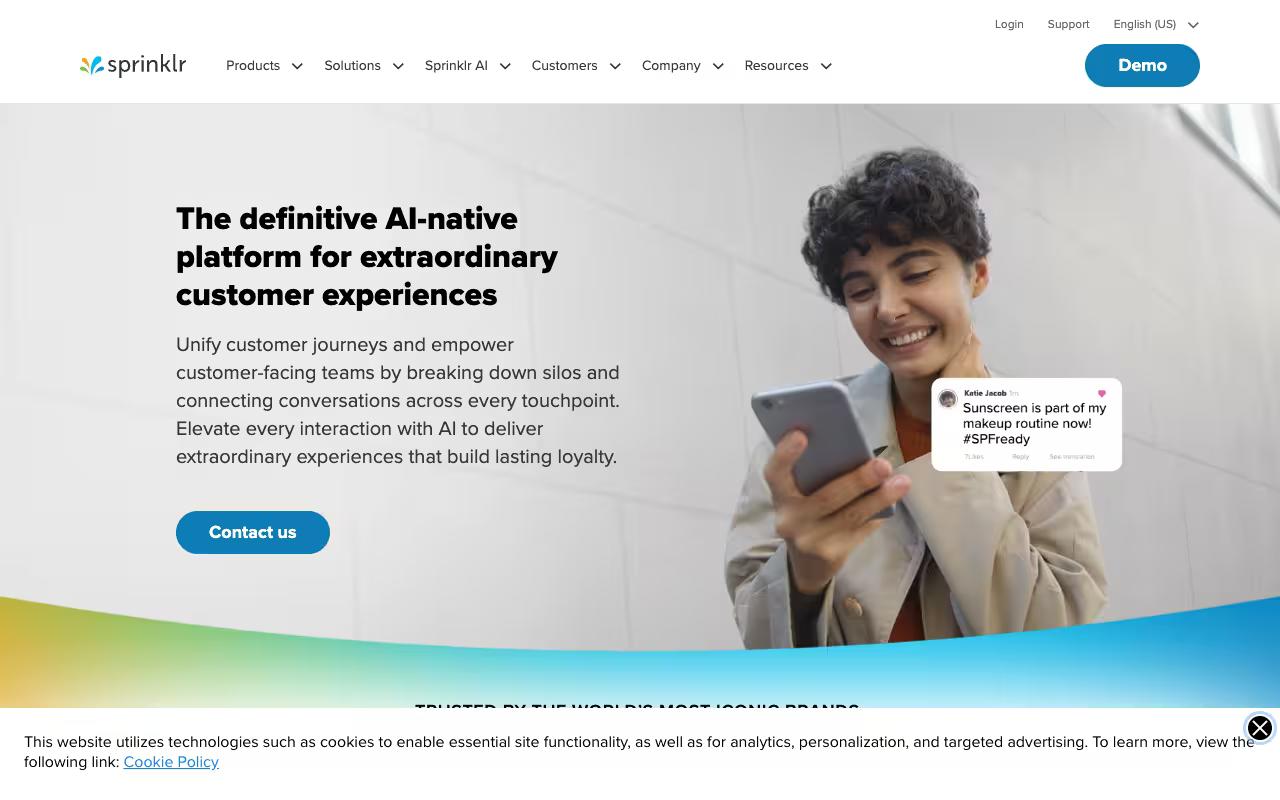
Sprinklr is a Unified Customer Experience Management platform spanning 33 products across four suites, built to operate at scale on 30+ digital and social channels. It's aimed at enterprise marketing, service, and CX teams at large brands that need centralized governance across dozens of handles. This is the heavyweight option, and it comes with heavyweight tradeoffs.
Pros:
- Very in-depth/powerful platform, especially for large content volumes across many channels and accounts (Reddit)
- Highly customizable and built for enterprise scale (Reddit, LinkedIn)
- Strong global/non-English channel coverage (e.g. Xing, Weibo/Xiaohongshu) that few competitors match (LinkedIn)
- Good fit for large organizations needing centralized governance/compliance across dozens of handles (Reddit, LinkedIn)
Cons:
- Steep learning curve and not very intuitive out of the box (Reddit)
- Clunky, complex UX/UI requiring extensive training to use well (Reddit, LinkedIn)
- Very expensive, with costs scaling quickly as more modules are added (six to seven figure enterprise contracts reported (Reddit, LinkedIn))
- Slow to implement, sometimes with junior/uncoordinated implementation teams post-sale (Reddit)
- Poor post-sale support in some cases, with generic/overseas support and little real human contact (Trustpilot)
- Disputed sentiment-scoring accuracy raised as a serious concern by at least one user (Trustpilot)
Pricing: No public pricing. Sprinklr's site only invites you to book a demo for tailored pricing.
Reviews are polarized. On Reddit, one long-time user called it "the most in depth" tool and "amazing if you have a lot of content for different platforms and accounts," while another said it's "awesome, but difficult to implement and complex AF," and a third described "a deep learning curve" and UX that's "clunky AF." A widely-read LinkedIn Pulse piece went further, calling it "ludicrously, prohibitively expensive" with base pricing around "$200 per user" scaling into "six figure contracts, easily. Sometimes seven."
On the numbers, Sprinklr sits at TrustPilot 2.8/5 from 3 reviews (all negative, citing sentiment-scoring disputes and poor post-sale support), alongside a G2 4.2/5 from 2,179 reviews and a Capterra 4.2/5. The gap between the tiny Trustpilot sample and the large G2 base is worth noting: the negative Trustpilot score reflects three specific complaints, not the broad user base.
On Capterra, Sprinklr holds 4.3/5. Reviewers commonly praise omnichannel management, customization, and collaboration and note complex setup, pricing opacity, and difficult onboarding. See the Capterra reviews page.
On G2, Sprinklr holds 4.1/5 across 2,179 reviews. Reviewers commonly praise centralized social media management, analytics, and reporting and note steep learning curve and interface complexity. See the G2 reviews and pros and cons pages.
Verdict: Powerful and genuinely enterprise-grade for global brands with governance needs and budget to match, but overkill and overpriced for most social-selling teams.
7. Loomly
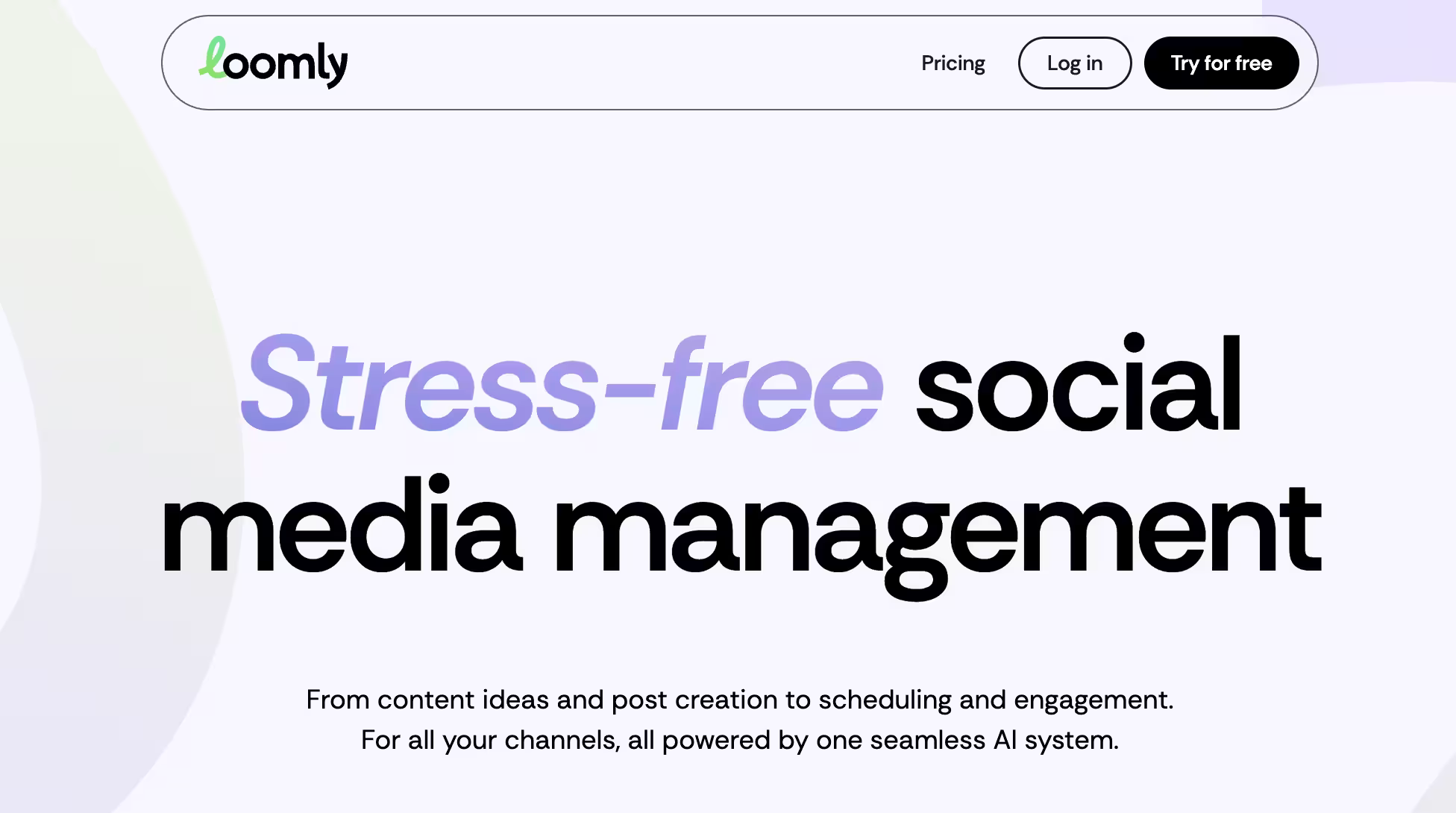
Loomly covers the full publishing process from post ideas and mockups through approval and analytics, with a workflow built for marketing teams to assign roles and review content. It's aimed at social media marketers and teams that collaborate with teammates and stakeholders on approvals. Think of it as a clean, collaboration-friendly scheduler rather than a dedicated social-selling engine.
Pros:
- Easy to use with an intuitive, clean interface for scheduling and publishing across multiple social channels
- Helpful AI assistant for generating post ideas and captions
- Responsive, hands-on customer support (e.g. helping troubleshoot TikTok connection issues)
- Simple, client-friendly approval workflow praised by long-time users and agencies
- Good value/affordability historically, especially for small agencies and freelancers (prior to 2025 price changes)
Cons:
- Major, sudden price increases in 2025 (reported as high as 300-400%) that pushed many small agencies and freelancers to switch to alternatives like SocialPilot or Recur Post
- Recent interface redesign criticized as buggy (posts not loading or scheduled posts failing to publish)
- Some feature gaps: difficulty tagging LinkedIn handles, can't insert links in stories, limited custom channel/API options after Twitter support was removed
- Occasional reports of slow or unhelpful customer support response for troubleshooting
- A few users describe the platform as glitchy or dated feeling
Pricing: Starter is $65/month ($49/month yearly), Beyond is $332/month ($249/month yearly), and Enterprise is custom, per Loomly's pricing page. There's no free plan, only a 14-day trial.
The big story in reviews is a 2025 price increase. On Reddit, one user reported "like a 400% price increase," and an agency user said they switched to SocialPilot after being on "the Advanced plan at $180/mo," calling the tools "extremely basic."
On LinkedIn, marketer Lilach Bullock praised it as "a gem" with a calendar and analytics she rated highly. Trustpilot reviewers were largely positive, calling it "easy to use" with a helpful AI assistant and responsive support. On aggregate it holds TrustPilot 3.8/5 from 104 reviews, G2 4.6/5 from 1,793 reviews, and Capterra 4.7/5.
On Capterra, Loomly holds 4.6/5. Reviewers commonly praise user-friendly social media scheduling and organized content calendar and note constraints in advanced analytics and occasional issues with certain social platforms integration. See the Capterra reviews page.
On G2, Loomly holds 4.6/5 across 1,795 reviews. Reviewers commonly praise ease of use, intuitive calendar, and collaborative approval workflows and note limited or basic analytics and frustrations with pricing tiers and changes. See the G2 reviews and pros and cons pages.
Verdict: A friendly, approval-focused scheduler that many small agencies liked until the 2025 price jump, so confirm current pricing against your plan before committing.
8. Oktopost
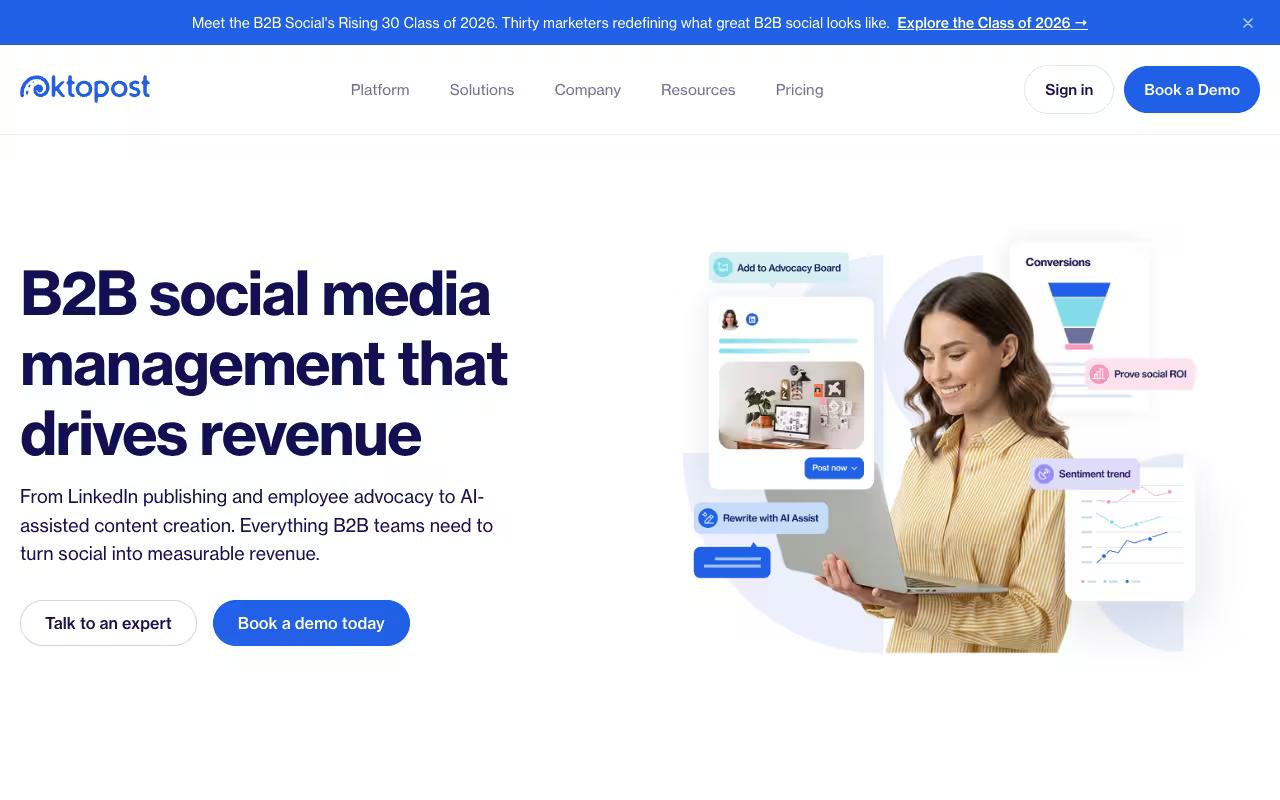
Oktopost is a social media management platform built exclusively for B2B marketing teams, connecting publishing, social listening, employee advocacy, and analytics to CRM so social activity ties back to pipeline. It's LinkedIn-first and aimed at B2B marketing leaders and sales teams doing social selling. Campaign-based publishing with UTM tracking means every post can be attributed to leads and opportunities, which is exactly the ROI story most social-selling programs struggle to tell.
Pricing: No self-serve pricing, but Oktopost's pricing FAQ discloses a Professional Package starting at $8,000/year and an Advanced Package starting at $12,000/year, with everything else quote-based.
On Reddit, a user in r/marketing described using Oktopost for employee advocacy, noting it "populates a list of pre-curated posts" that employees "can pick and choose from," with a leaderboard shown in the app, and said sharing "can be as simple as a click." Oktopost holds a G2 4.5/5 from 194 reviews and a Capterra 4.5/5.
On Capterra, Oktopost holds 4.5/5. Reviewers commonly praise comprehensive social media management tailored to b2b needs with reliable scheduling, advocacy tools, and customer support and note user interface usability issues and limited advanced customization or feature depth for some workflows. See the Capterra reviews page.
On G2, Oktopost holds 4.4/5 across 194 reviews. Reviewers commonly praise robust b2b-focused social media management and employee advocacy features with strong integrations and analytics and note learning curve and interface complexity along with occasional limitations in customization and reporting flexibility. See the G2 reviews and pros and cons pages.
Verdict: A strong LinkedIn-first choice for B2B marketing teams that need social tied to pipeline, if the $8,000+/year entry point fits your budget.
9. Planable
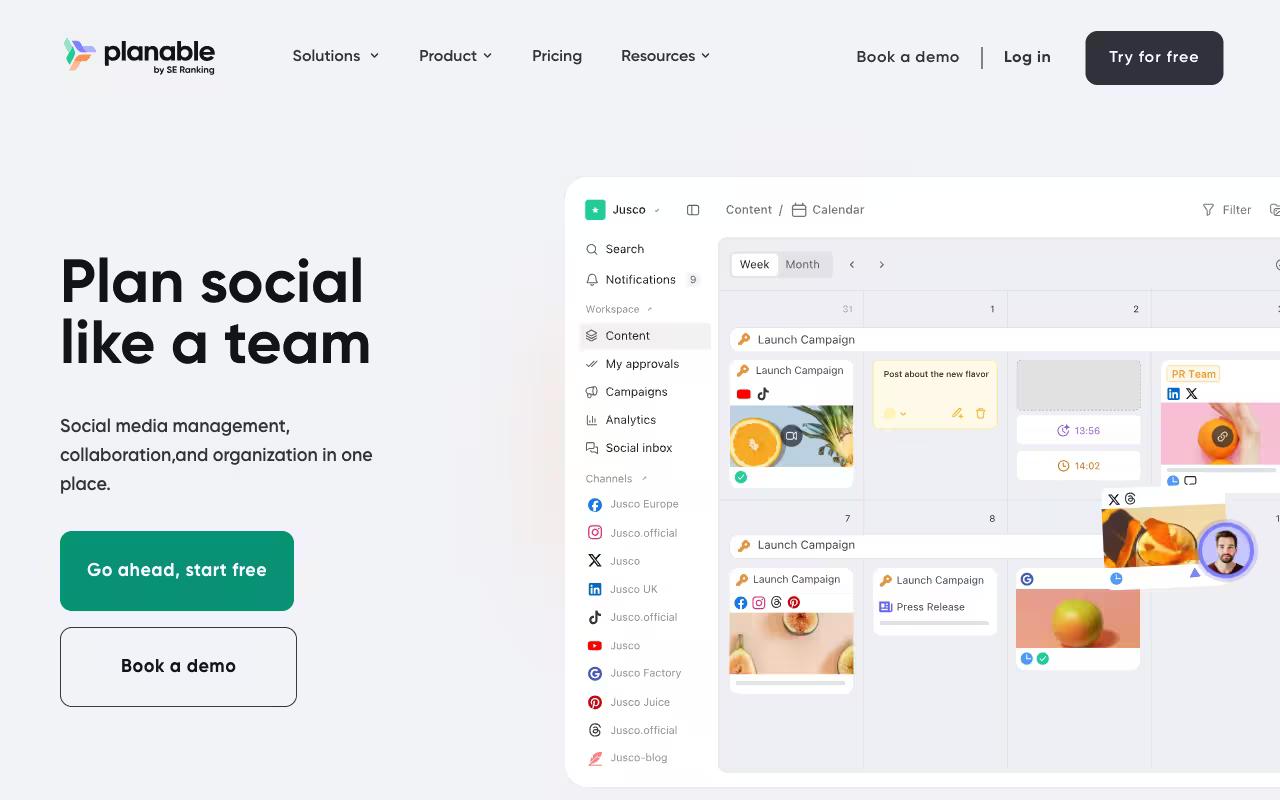
Planable is a collaboration-first content planning tool that brings creation, feedback, and approvals into one place across nine social networks plus blogs, newsletters, and briefs. It's aimed at social media teams and their collaborators, including agencies managing clients and multi-brand companies. The draw is the visual approval workflow that replaces spreadsheets and email chains, with per-brand workspaces and multi-level approvals.
Pros:
- Intuitive, easy-to-use interface for scheduling and planning posts
- Strong collaboration and client approval workflow that reduces email back-and-forth
- Visual calendar with drag-and-drop makes rescheduling easy
- Lets teams preview exactly how posts will look on each platform before publishing
- Good for straightforward, visual content planning and quick approvals
Cons:
- UI can be clunky and buggy (buttons not responding, issues on both browser and mobile app)
- Platform integrations are spotty, especially for Instagram Stories and Pinterest
- Storage is very limited on the basic plan
- Increasing number of features gated behind paid add-ons
- Some reports of scheduled posts failing to publish with little explanation
- Difficult to tag donors/partners differently across platforms when crossposting
- Feels limited for teams needing deeper cross-channel analytics and reporting
- Slow customer support response in some cases
Pricing: Basic is $33/workspace/month, Pro is $49/workspace/month, and Enterprise is custom, per Planable's pricing page. The first 50 posts are free with no time limit and no credit card.
Reviews praise the workflow and flag the rough edges. On Reddit, users liked the visual planning and approvals but were frustrated by cross-platform tagging limits and slow support. Trustpilot reviewers called the approval process a time-saver and the platform "super easy to use," while others said "the UI design and functionality is clunky and very buggy." Planable holds TrustPilot 4.3/5 from 71 reviews, G2 4.6/5 from 1,017 reviews, and Capterra 4.6/5.
On Capterra, Planable holds 4.5/5. Reviewers commonly praise intuitive interface and streamlined collaboration workflows for social media content planning and approvals and note limited analytics depth and feature set compared with full-scale social media management platforms. See the Capterra reviews page.
On G2, Planable holds 4.6/5 across 1,077 reviews. Reviewers commonly praise ease of use and visual collaboration features for planning, previewing, and approving social media content and note pricing and plan limits, which can feel high or restrictive for smaller agencies and multi-brand workspaces. See the G2 reviews and pros and cons pages.
Verdict: A good, affordable pick for agencies whose main pain is client approvals, less suited to teams needing deep cross-channel analytics.
10. Zoho Social
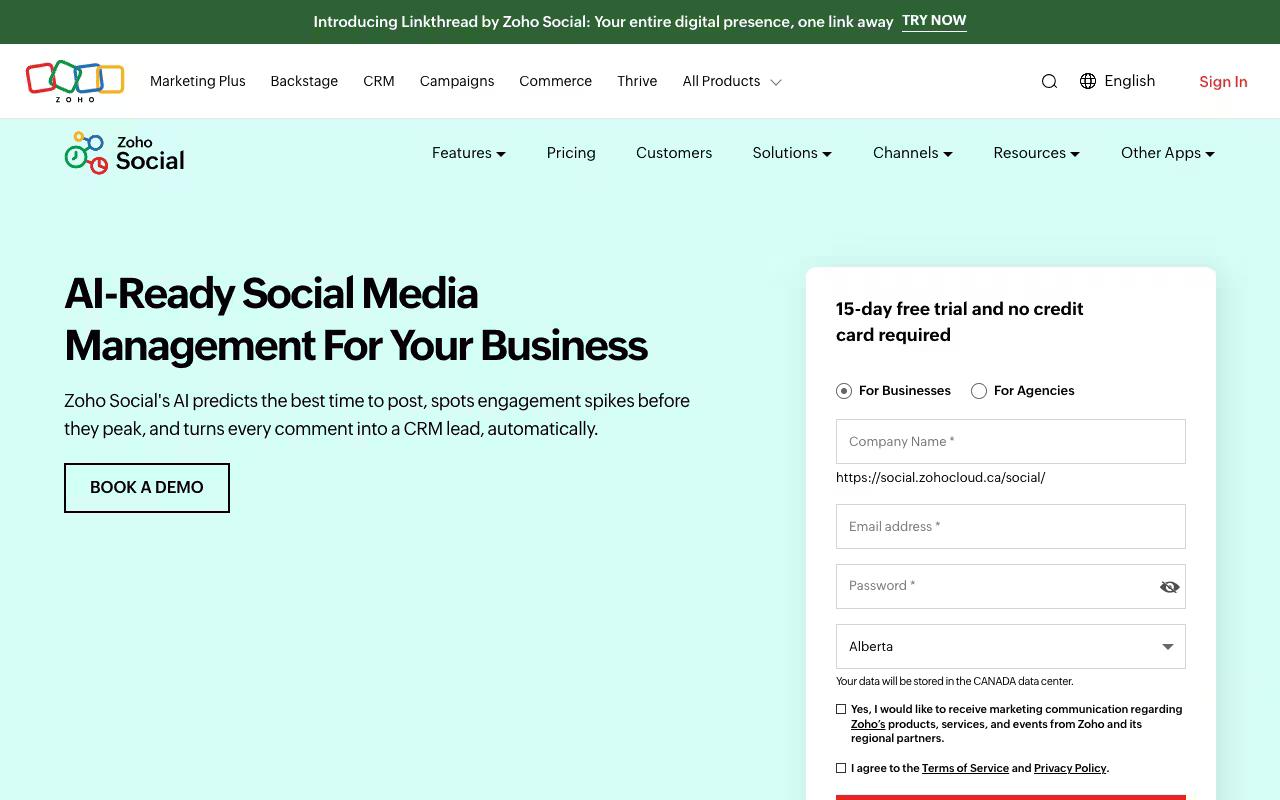
Zoho Social handles scheduling, real-time monitoring of mentions and engagement, and performance reporting from one dashboard, with an AI assistant (Zia) for drafting and SmartQ predictions for best-time posting. It scales from individuals to agencies managing multiple brands. If you already live in the Zoho ecosystem, the CRM integration is a natural fit for connecting social activity to your pipeline.
Pros:
- Easy, intuitive scheduling of posts across multiple social platforms from one dashboard (Trustpilot)
- Saves significant time by posting to multiple channels at once instead of individually (Trustpilot)
- Affordable/inexpensive pricing compared to alternatives like Hootsuite and Sprout Social (Reddit, Trustpilot)
- Good post customization options, e.g. reel covers, multiple media formats (Trustpilot)
- Comprehensive feature set for businesses/agencies managing online presence (Trustpilot)
Cons:
- Considered basic/limited for advanced social media marketing compared to Hootsuite or Sprout Social (Reddit)
- File upload quality for videos could be improved (Trustpilot)
- General Zoho account/support issues reported (confusing support pages, hard to cancel subscriptions) - not Social-specific but relevant to the Zoho ecosystem (Trustpilot)
Pricing: There's a forever-free plan, then Standard at $15/month (~$10/month annual), Professional at $40/month, Premium at $65/month, and Agency tiers from $320/month, per Zoho's pricing page.
On Reddit, one user called Zoho Social "very basic and limited if you want to take full advantage of social media marketing" and "not on the same level of Hootsuite or Sprout Social," while Zoho's own account noted the premium edition ships inside Marketing Plus. Trustpilot reviews for the broader Zoho domain that call out Social specifically were positive, with one saying it "saved me so much time" by posting to multiple platforms at once, though another asked for better video upload quality. Zoho holds TrustPilot 3.9/5 from 6,035 reviews, G2 4.6/5 from 2,870 reviews, and Capterra 4.6/5.
On Capterra, Zoho Social holds 4.7/5. Reviewers commonly praise ease of use, scheduling, and affordable social media management and note limited analytics, missing features, and occasional usability constraints. See the Capterra reviews page.
On G2, Zoho Social holds 4.6/5 across 2,945 reviews. Reviewers commonly praise ease of use, scheduling, and centralized multi-platform social media management and note limited advanced analytics, feature gaps, and missing platform integrations. See the G2 reviews and pros and cons pages.
Verdict: The value pick for small teams that want affordable multi-channel scheduling, especially if you're already using Zoho CRM.
FAQ
Which Social Selling Tool Is Best For A LinkedIn Ghostwriting Agency?
If your pain is running many client accounts through approvals and personal LinkedIn tagging, Ordinal is built for that workflow, with multi-account management, approval workflows, personal and company tagging, and auto-engagement, all available on its Pro plan at $265/mo. Planable is a lighter, cheaper alternative at $33 to $49 per workspace if your main need is client approvals rather than engagement automation. Oktopost fits larger B2B teams that need social tied to CRM pipeline but starts at $8,000/year.
What's The Difference Between A Content Tool And An Outbound Tool Here?
Tools like Ordinal, Taplio, Loomly, Planable, and Zoho Social focus on creating, scheduling, and amplifying social content, while Crono and Apollo.io are sales execution engines built around lead finding, data enrichment, and multichannel outreach. PostBeyond and Oktopost sit in the employee advocacy and B2B analytics space, connecting shared content to reach and pipeline. Which one you want depends on whether your bottleneck is publishing consistently or generating and working leads.
Which Tools Publish Pricing Openly, And Which Require A Demo?
Ordinal, Crono, Taplio, Apollo.io, Loomly, Planable, and Zoho Social all list per-seat or per-workspace pricing publicly, with entry points ranging from Zoho's free plan and Planable's $33/workspace up to PostBeyond's $1,125/month floor. Sprinklr publishes no pricing and routes everyone to a demo, and Oktopost is quote-based though its FAQ discloses packages starting at $8,000/year and $12,000/year. If budget transparency matters early in your evaluation, the self-serve tools are easier to compare.
Related Posts
Looking to learn more? The below posts may be helpful for you to learn more about social media and content marketing.